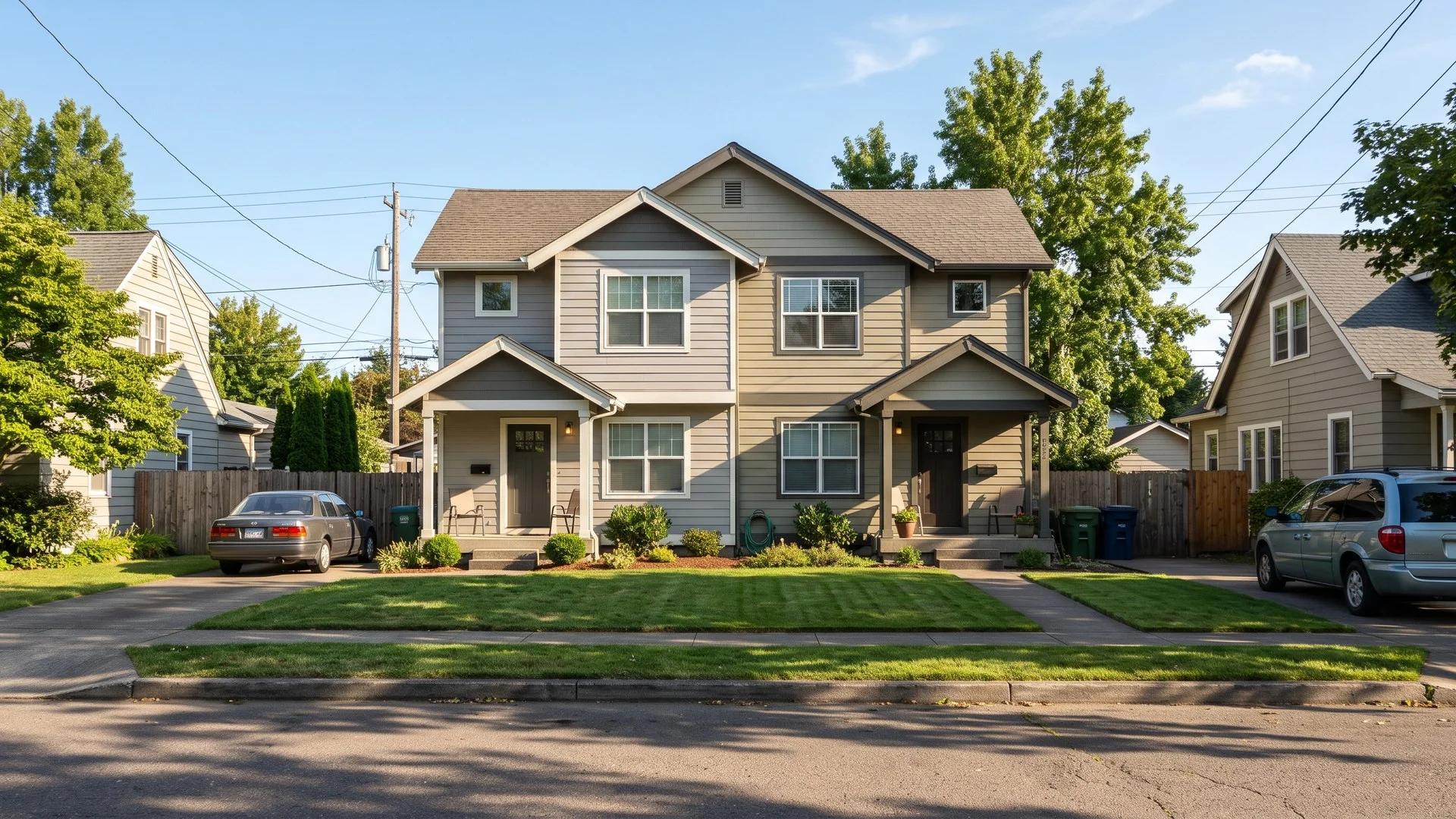
Rental property repairs vs improvements comes down to one IRS test: a cost that keeps the property in ordinarily efficient operating condition is a repair you deduct in the year paid, while a cost that betters, restores or adapts the property is an improvement you depreciate. Three IRS safe harbors let many US landlords deduct costs that would otherwise be capitalized.
This guide applies to landlords in every US state who report rentals on Schedule E. It walks through the IRS framework in Publication 527 and the tangible property regulations, with the safe harbors and a worked set of examples. Amounts are in US dollars.
US Rental Repairs vs Improvements: Landlord Checklist
A one-page checklist for US landlords sorting rental costs into deductible repairs and depreciable improvements, with the three IRS safe harbors.
Get Free PDF →What counts as a repair on a US rental property?
The Schedule E instructions for line 14 say: "Repairs and maintenance costs are those costs that keep the property in an ordinarily efficient operating condition. Examples are fixing a broken lock or painting a room." You deduct them on line 14 for the year you pay them. "However, you cannot deduct the cost of improvements" (Schedule E instructions).
Typical repairs include patching a wall, fixing a leaking faucet, replacing a broken window pane, servicing a furnace or repainting between tenants, as long as the work keeps the property as it was rather than making it better or different.
What makes a cost an improvement?
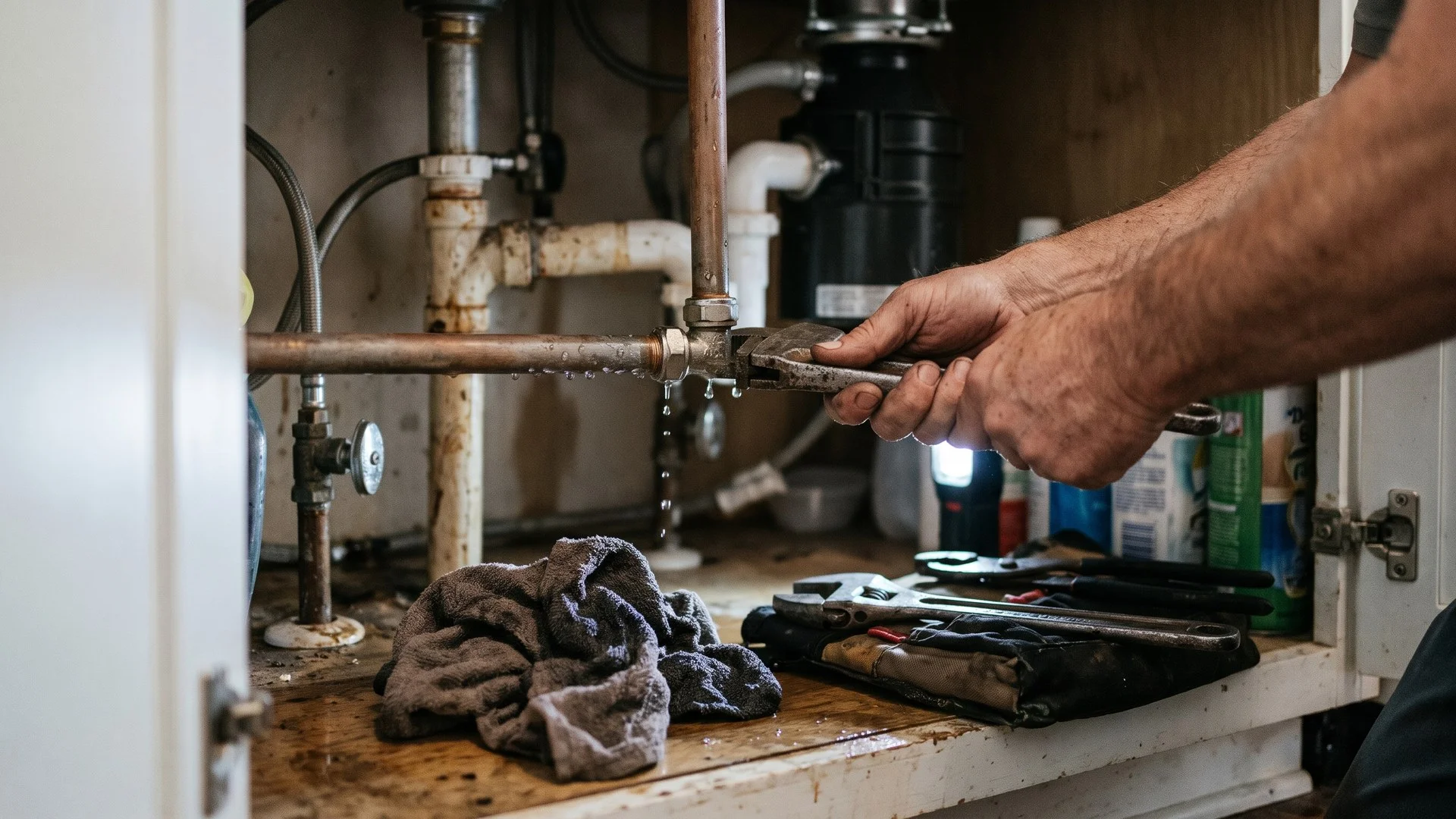
Publication 527 says an expense is for an improvement "if it results in a betterment to your property, restores your property, or adapts your property to a new or different use." Each test has its own meaning:
| Test | What it covers (Pub 527 and IRS FAQ) | Rental example |
|---|---|---|
| Betterment | Fixing a defect that existed before you bought the property; enlarging or expanding it; a material increase in capacity, strength or quality | Adding a bedroom; fixing a foundation defect you inherited at purchase |
| Restoration | Replacing a major component or substantial structural part; repairing casualty damage after a basis adjustment; rebuilding to like-new condition | Replacing the whole roof; replacing the entire HVAC system |
| Adaptation | Altering the property to a use not consistent with its intended ordinary use when you began renting it | Converting a rented house into office space |
The regulations do not define "material." The IRS FAQ says the percentage examples in the rules are illustrations, not a standard, and that you "should use common sense and reasonable judgment as applied to your own facts and circumstances."
What is the "unit of property" for a rental building?

The improvement tests are applied to a specific unit, and for buildings the IRS splits the analysis. Per the IRS FAQ, the tests apply to "the building structure and each of the key building systems":
- Plumbing
- Electrical
- HVAC
- Elevators
- Escalators
- Fire protection and alarm
- Gas distribution
- Security
That matters because replacing a "major component" is measured against the system, not the whole building. A new water heater is measured against the plumbing system, and a new furnace against the HVAC system. Publication 527's Table 1-1 lists a new roof, a water heater, a furnace, central air conditioning, wall-to-wall carpeting, flooring and kitchen modernization among its examples of improvements.
Which IRS safe harbors let a landlord deduct more?
The tangible property regulations add three simplifying rules. Each has its own conditions.
1. De minimis safe harbor
You may elect to deduct amounts paid for tangible property up to $2,500 per invoice or item if you do not have an applicable financial statement, or $5,000 if you do (Notice 2015-82; IRS FAQ). The amounts must also be deducted in your books and records. Pub 527 says de minimis costs go on line 19 of Schedule E.
- Make the election each year with a statement titled "Section 1.263(a)-1(f) de minimis safe harbor election," attached to a timely filed original return (including extensions).
- Once elected, it applies to all qualifying expenditures that year.
- It is not a change in accounting method, so no Form 3115 is filed.
2. Safe harbor for small taxpayers
You may elect not to capitalize work on a building (repairs, maintenance, improvements or similar costs) if all of these apply, per the IRS FAQ:
- Average annual gross receipts of $10 million or less.
- The building's unadjusted basis is $1 million or less.
- The total paid during the year for repairs, maintenance, improvements and similar work on that building does not exceed the lesser of 2% of its unadjusted basis or $10,000.
The election is made each year by a statement attached to the return, and again no Form 3115 is needed. Example: a rental with an unadjusted basis of $400,000 has a cap of $8,000 (2%, which is less than $10,000). If total work on it for the year is $7,500, the whole amount can be deducted under the election. If it is $8,500, the safe harbor is not available for that building that year.
3. Safe harbor for routine maintenance
Recurring work you expect to do to keep a building structure or building system in ordinarily efficient operating condition is deductible if, when the property was placed in service, you reasonably expected to do it "more than once during the 10-year period beginning when placed in service." It can cover replacing a major component, which would otherwise be a restoration, but it never covers betterments.
Worked examples for a single-family rental
| Cost | Likely treatment | Why |
|---|---|---|
| $180 to fix a broken lock | Repair, line 14 | Schedule E's own example of keeping the property in operating condition |
| $1,400 to repaint the unit between tenants | Repair, line 14 | Painting a room is the other Schedule E example |
| $1,900 new refrigerator | Deductible if the de minimis election is made; otherwise depreciated | Under $2,500 per item |
| $14,000 full roof replacement | Improvement, depreciated | Restoration of a major component; Pub 527 lists a new roof as an improvement |
| $30,000 room addition | Improvement, depreciated | Betterment: physical enlargement |
Capitalized improvements are depreciated "as if the improvement were separate property" (Pub 527); for the building and its structural parts, see rental property depreciation over 27.5 years. Whether a rental loss from these deductions can offset other income is a separate test, covered in the passive loss rules and the $25,000 allowance.
Whatever the tax treatment, paying an unincorporated contractor $2,000 or more may also require a Form 1099; see Form 1099-NEC for landlords.
Frequently asked questions
Is a new roof on a rental a repair or an improvement?
A full roof replacement is an improvement; Pub 527 Table 1-1 lists a new roof among its examples. Fixing a few damaged shingles to stop a leak is generally a repair.
Can I deduct an appliance under $2,500 on a rental?
Yes, if you elect the de minimis safe harbor for that year by attaching the required statement, and you also deduct it in your books and records. Without the election, it is depreciated.
Do I need Form 3115 to use the de minimis or small taxpayer safe harbor?
No. Both are annual elections made by a statement on the return, and the IRS says not to file Form 3115 for them.
Where do repairs go on Schedule E?
Line 14, "Repairs." De minimis safe harbor amounts go on line 19 according to Pub 527.
US Rental Repairs vs Improvements: Landlord Checklist
A one-page checklist for US landlords sorting rental costs into deductible repairs and depreciable improvements, with the three IRS safe harbors.
Get Free PDF →The bottom line
On rental property repairs vs improvements, ask whether the work keeps the property as it was (repair) or betters, restores or adapts it (improvement), then check whether a safe harbor lets you deduct it anyway. Keep invoices that separate the two. For more US landlord tax topics, browse the Tenon10 guides by topic.
Make every rental deduction count
Read Tenon10's free guides on Schedule E, depreciation and US landlord taxes.
Free • No signup required