Section 8 in Michigan is the federal Housing Choice Voucher program, which local public housing agencies run, including the Michigan State Housing Development Authority (MSHDA). The family pays part of the rent, and the agency pays the rest straight to the landlord under a Housing Assistance Payments (HAP) contract. Since April 2, 2025, a Michigan landlord with 5 or more rental units cannot turn an applicant away because they pay with a voucher (MCL 37.2502(3)-(4)).
How does Section 8 work in Michigan?
In Michigan, as in every state, the voucher program follows the federal rules in 24 CFR Part 982. A family with a voucher finds a unit, the owner and the family send the agency a request for tenancy approval, and the agency checks the unit and the rent before anyone signs. Three parties end up bound by two documents:
| Document | Between | What it does |
|---|---|---|
| Lease, with the HUD tenancy addendum | Owner and tenant | Sets the term, the rent, and who supplies which utilities and appliances (24 CFR 982.308(d)). |
| HAP contract | Owner and housing agency | The agency pays its share of the rent each month; the contract runs for the same term as the lease (24 CFR 982.451(a)). |
The tenancy addendum must be added word for word to the owner's lease, and where it conflicts with the lease, the addendum wins (24 CFR 982.308(f)(2)). Our guide to the Housing Choice Voucher program for landlords walks through the same steps in more detail.
What does the housing agency check before a Michigan voucher lease starts?
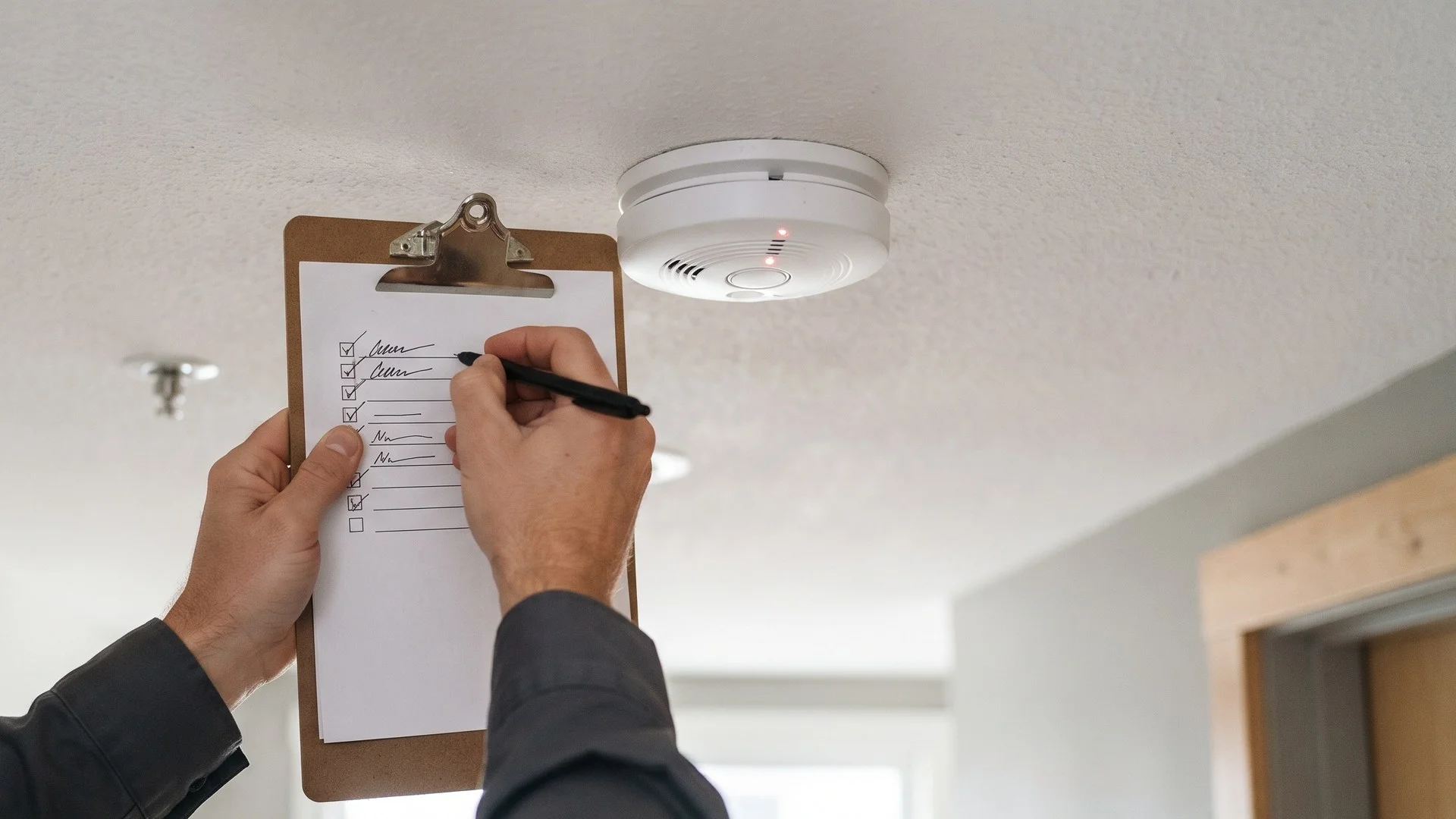
Before a Michigan voucher tenancy begins, the agency must find that the unit is eligible, passes inspection, carries the tenancy addendum, and is rented at a reasonable rent (24 CFR 982.305(a)). The inspection, the signed lease with the addendum and the lead-based paint disclosure, and the agency's approval must all be done before the first day of the lease (24 CFR 982.305(b)(1)).
- Inspection timing: an agency with up to 1,250 budgeted vouchers must inspect within 15 days of the request for approval; larger agencies must do it within a reasonable time, aiming for 15 days (24 CFR 982.305(b)(2)).
- Rent reasonableness: the rent to owner is compared with similar unassisted units nearby (24 CFR 982.507).
- The 40% cap: on a new lease where the gross rent is above the agency's payment standard, the family's share cannot exceed 40% of its adjusted monthly income (24 CFR 982.508). A rent set too high can sink an approval even when the family wants the unit.
Can a Michigan landlord refuse Section 8 tenants?

Not if the landlord, counting related entities, has 5 or more rental units in Michigan. Since April 2, 2025, the Elliott-Larsen Civil Rights Act bars those landlords from denying or ending a tenancy, setting different terms, or advertising a preference based on an otherwise eligible tenant's source of income (MCL 37.2502(3), as amended by 2024 PA 180). The rule also covers how income is counted:
- A landlord with a minimum income requirement must leave a rent voucher or subsidy out when deciding whether the applicant meets it (MCL 37.2502(3)(f)).
- Ads such as "no Section 8" are covered by the ban on publishing a preference based on source of income (MCL 37.2502(3)(h)).
- The rule does not apply to a landlord who, with all related entities, has fewer than 5 rental units in Michigan (MCL 37.2502(4)).
Federal fair housing rules apply in every state as well; see HUD's Fair Housing Act overview. A voucher holder still has to meet the same screening criteria as any applicant, such as rental history, so long as the criteria apply to everyone.
How much security deposit can a Michigan Section 8 landlord charge?
Michigan caps any security deposit at 1½ months' rent (MCL 554.602), and the cap applies to voucher tenancies too. After the tenant moves out, a landlord who keeps any of it must mail an itemized notice of damages within 30 days (MCL 554.609). The source of income rule also bars charging a voucher holder a higher deposit than other tenants, because a deposit is one of the "terms, conditions, fees" it covers (MCL 37.2502(3)(b)).
Can a Michigan landlord evict a Section 8 tenant?
Yes, but only for the grounds federal rules allow during the lease: a serious or repeated lease violation such as not paying the tenant's share of rent, a violation of law tied to the tenancy, or other good cause (24 CFR 982.310(a)). The case then follows Michigan's own eviction procedure.
| Situation | Michigan notice | Source |
|---|---|---|
| Tenant does not pay their share of rent | Written 7-day notice to quit or demand for possession | MCL 554.134(2); MCL 600.5714(1)(a) |
| Tenancy at will, other reasons | 1 month's notice, or one rental period | MCL 554.134(1) |
| Controlled substance on the premises, with a police report | 24-hour notice where the lease provides for it | MCL 554.134(4) |
Two federal limits matter most. The tenant is never liable for the agency's share of the rent, and the owner cannot evict because the agency paid late or not at all (24 CFR 982.310(b)). The owner's remedy for a late agency payment is in the HAP contract, which can carry a late penalty if the owner charges one to all tenants (24 CFR 982.451(b)(5)).
What steps should a Michigan landlord take to rent to a voucher holder?
- Check the agency's payment standard for the unit size and set a rent the agency will find reasonable.
- Screen the applicant on the same written criteria you use for everyone, leaving the voucher out of any income test.
- Sign and return the request for tenancy approval, and have the unit ready for inspection.
- Use your standard lease with the HUD tenancy addendum attached word for word, plus the lead-based paint disclosure for pre-1978 housing (see the EPA disclosure rule).
- Sign the HAP contract and keep the agency informed of rent changes, renewals and notices.
For the federal changes on immigration status verification, see our article on the HUD immigration status verification rule.
Frequently asked questions
Is Section 8 the same as MSHDA in Michigan?
No. Section 8 is the federal voucher program, and MSHDA is one of the agencies that runs it in Michigan. Many cities and counties have their own housing commission that issues vouchers in their area.
Do Michigan landlords have to accept Section 8?
Landlords with 5 or more rental units in Michigan, counting related entities, cannot refuse an otherwise eligible tenant because of a voucher since April 2, 2025. Landlords with fewer than 5 units are exempt from that state rule, though some cities have their own ordinances.
How much of the rent does the voucher pay in Michigan?
The agency's payment is set under HUD rules and can change during the contract. On a new lease where the rent is above the payment standard, the family's share cannot exceed 40% of its adjusted monthly income.
Can a Michigan landlord charge a Section 8 tenant more rent?
No. The tenant's payment plus the agency's payment cannot exceed the rent to owner in the lease, and the owner must return any excess (24 CFR 982.451(b)).
In Michigan, a voucher tenancy works like any other lease with two additions: the agency checks the unit and the rent first, and federal rules limit why the tenancy can end. Since April 2025, most larger landlords also have to consider voucher holders on the same terms as everyone else.
More guides for US landlords
Leases, deposits and evictions, state by state.
Free • No signup required