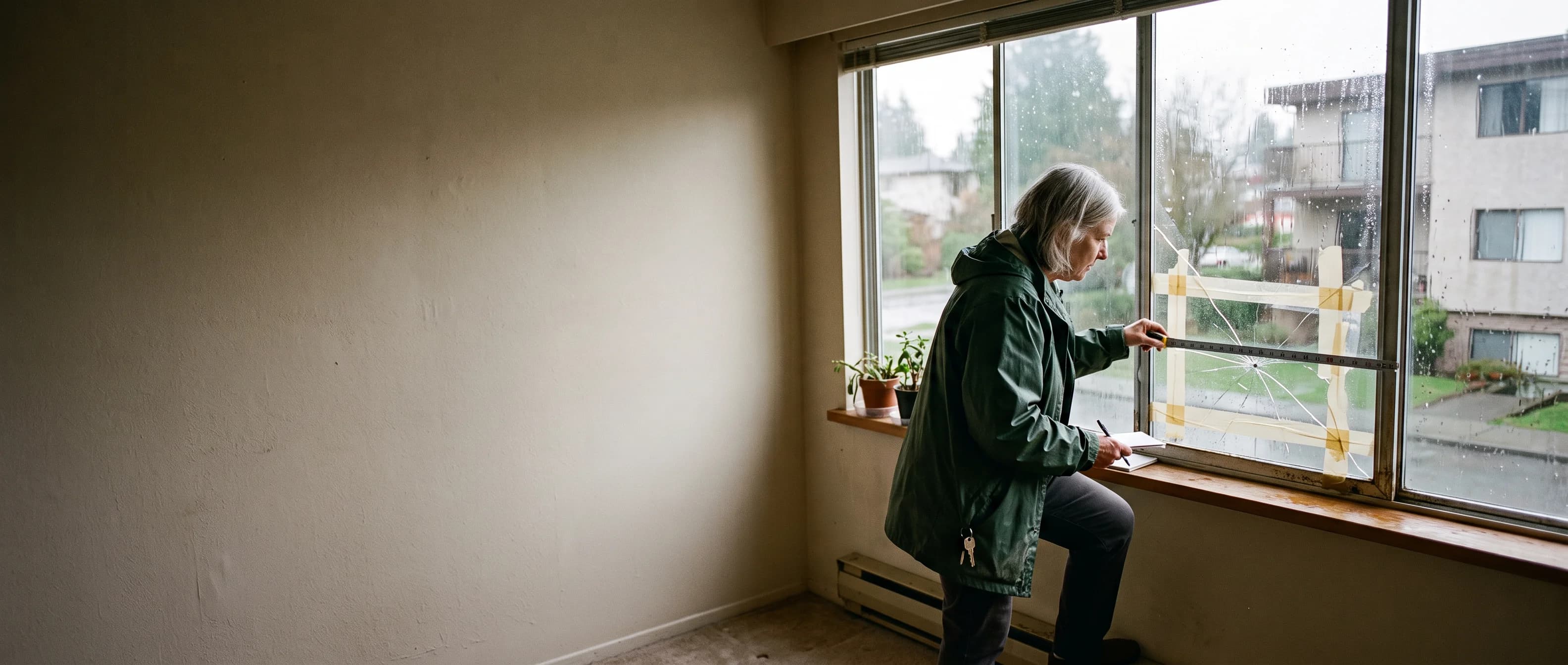
A boil-water advisory turns an ordinary tap into a hazard overnight. Calgarians saw it twice in 18 months: Alberta Health Services (AHS) put Bowness under an advisory after the Bearspaw South Feeder Main broke on June 5, 2024, and after the same pipe broke again on December 30, 2025, an advisory covered parts of Parkdale, Montgomery, Point McKay and West Hillhurst. Smaller towns across the province go through the same thing.
For a landlord, an advisory raises practical questions fast. Who tells the tenants? Is it the landlord's problem if the city's water is unsafe? What has to happen to the building's pipes when the advisory ends? This guide answers those questions for Alberta rentals, with a section for tenants on rent and compensation.
Boil-Water Advisory Checklist for Alberta Landlords
A free two-page checklist for Alberta landlords: what to do the day a boil-water advisory is announced, while it is in effect, and when it is lifted, plus the records to keep.
Get Free PDF →What a boil-water advisory is and who issues it
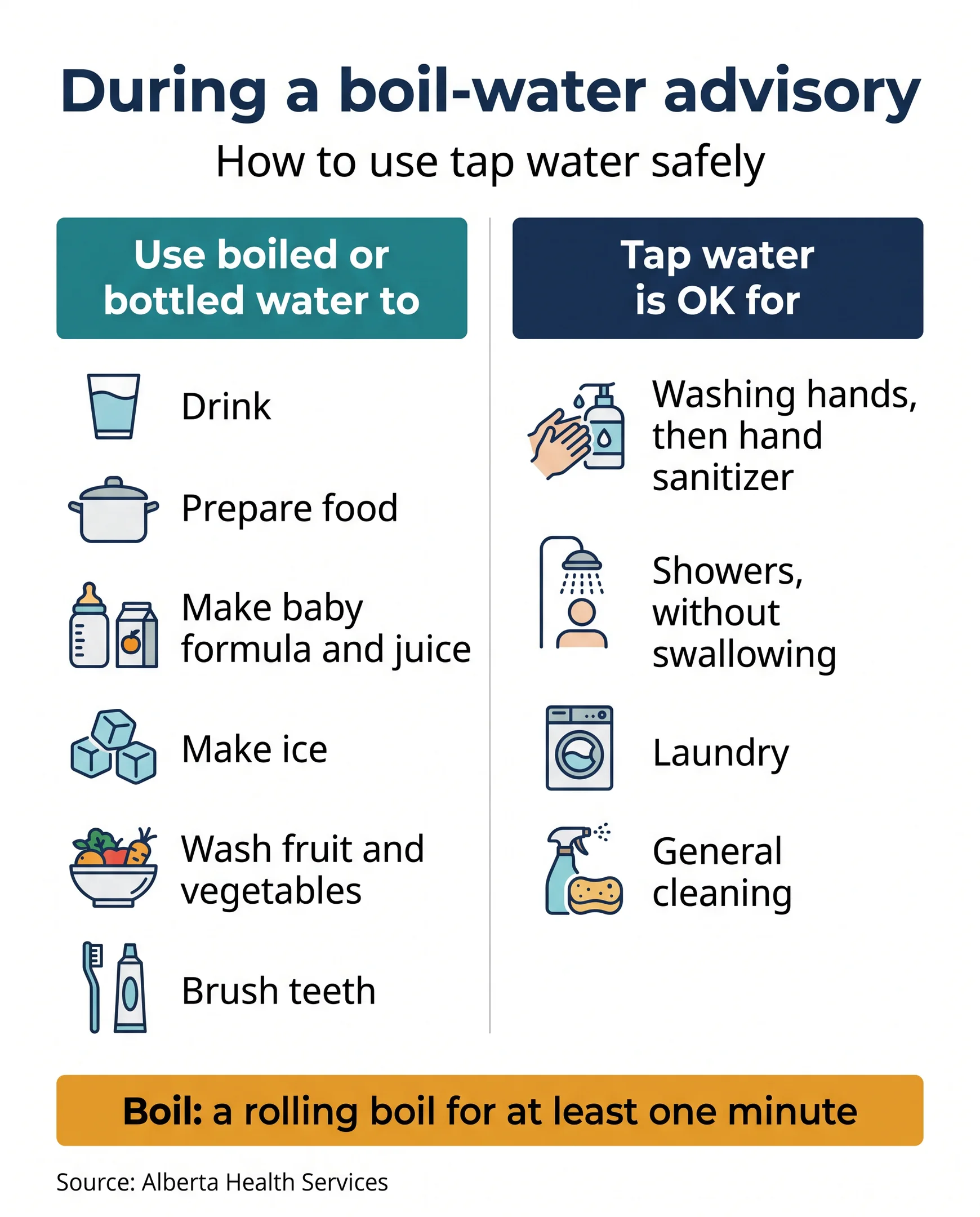
AHS explains that a boil-water advisory is issued when harmful germs, such as E. coli bacteria or the Giardia parasite, may be in a drinking water supply. Bringing the water to a rolling boil for at least one minute kills them. In Alberta, AHS issues advisories and lifts them once it confirms water quality has been restored; the city or water utility usually announces them as well and fixes the cause.
During an advisory, AHS says not to use tap water for drinking, preparing food, making baby formula or juice, making ice, washing fruit and vegetables, or brushing teeth. Use boiled water that has cooled, bottled water, or water from a safe supply that is not affected. Tap water can still be used for washing hands (followed by an alcohol-based sanitizer), for laundry and general cleaning, and for showers by healthy people who are careful not to swallow it. AHS also warns that many home filters do not remove germs, so filtered tap water is not a substitute for boiling.
City supply or building plumbing: who is responsible
Alberta's Residential Tenancies Act (RTA) makes three covenants part of every residential tenancy. One of them, s.16(c), is that the premises will meet at least the minimum housing standards made under the Public Health Act. Those standards sit in two places:
- The Housing Regulation (AR 173/99), s.3(1)(b)(iii), requires an owner to supply occupants with adequate running hot and cold water that is safe for human consumption, and s.3(2) requires the plumbing system to be free from defects and in proper operating condition.
- The Minimum Housing and Health Standards require a potable water supply of sufficient volume, pressure and temperature (s.9), and a continuous supply of water unless the rental agreement makes it the tenant's sole responsibility (s.8(d)).
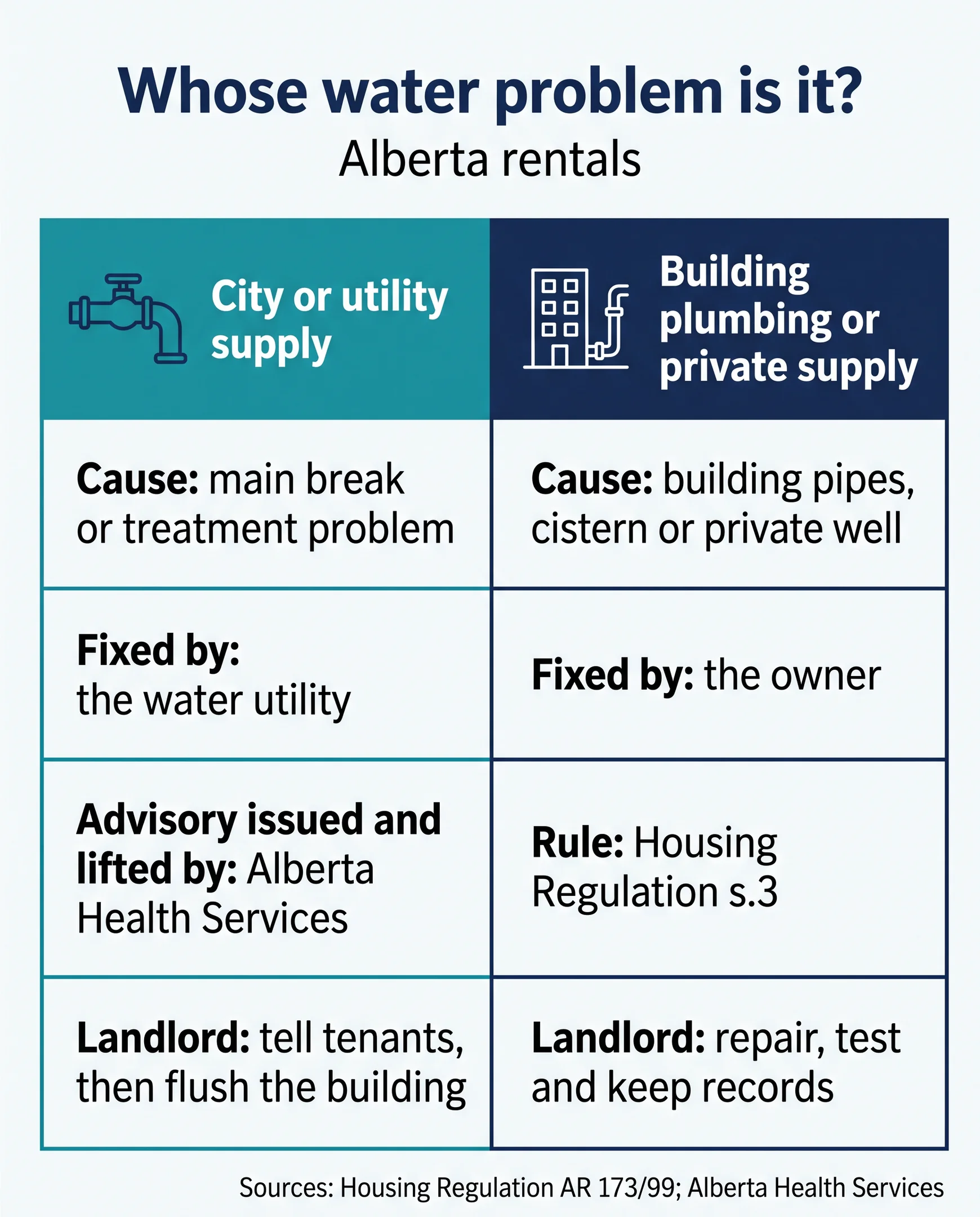
Where the problem comes from decides who fixes it. If the city's main breaks or a treatment plant has a problem, the utility repairs it and AHS decides when the advisory ends. Nothing in the RTA or the standards speaks directly to a city-wide advisory, so the conservative course for a landlord is to treat it as something to manage actively: inform tenants, make the building safe to use again, and keep records.
If the problem starts inside the property, it is the owner's to fix. Examples include contamination traced to the building's own pipes, a cistern, or a private well serving a rural rental. A landlord who supplies water from their own system is responsible for keeping it safe under s.3 of the Housing Regulation, and an AHS executive officer can order repairs under the Public Health Act.
What landlords should do while an advisory is in effect
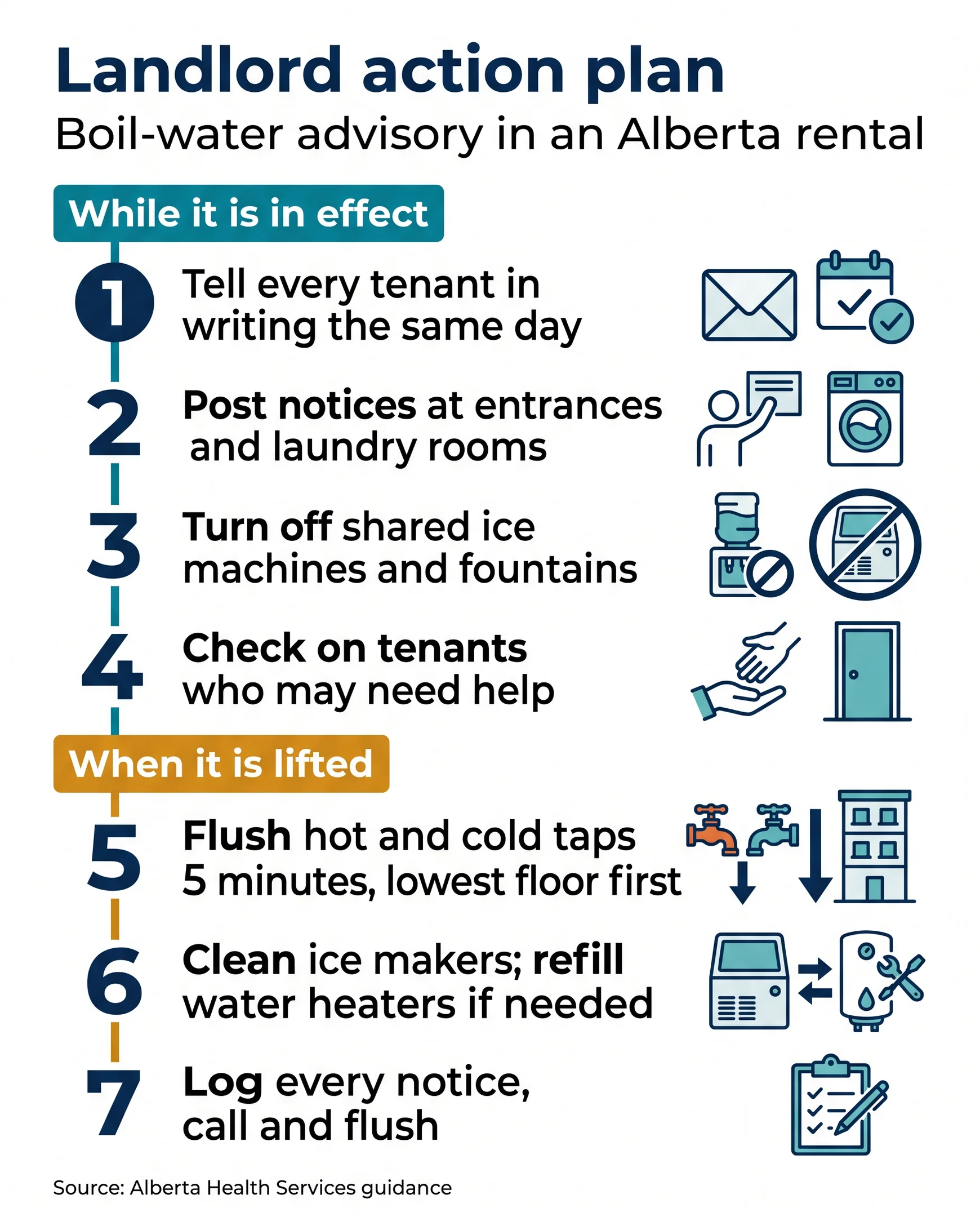
Act on the same day the advisory is announced. Tenants may not follow local news, and a notice from you is the most reliable way to reach every household.
- Confirm the area. Check the AHS announcement and your city's map to confirm the property is inside the advisory zone.
- Notify every tenant in writing. Email or text each tenant, and slide a printed copy under each door.
- Post notices at building entrances, in the laundry room and beside any shared kitchen.
- Turn off shared equipment such as drinking fountains and ice machines in common areas. AHS asks hotels to do the same.
- Keep tenants updated and send a second notice when the advisory is lifted, with flushing instructions.
Sample notice wording you can adapt:
Boil-water advisory for this building. Alberta Health Services has issued a boil-water advisory for our area as of [date]. Until it is lifted, do not drink tap water or use it for cooking, ice, baby formula or brushing teeth unless it has been brought to a rolling boil for at least one minute and cooled. You can still use tap water for showers (do not swallow it), laundry and cleaning. Shared ice machines are off. We will tell you as soon as the advisory ends and explain how to flush your taps. If you need help getting safe water, contact [name, phone].
Tenants who may need extra help
Some households cannot simply boil a pot of water. AHS advises that infants and young children get a sponge bath rather than a tub bath, that people with open wounds or recent surgery avoid showering in untreated water unless the wound is covered, and that anyone with a weakened immune system ask their doctor for advice. Older tenants or tenants with mobility limits may find it hard to lift heavy pots or carry water home.
No Alberta law we found requires a landlord to deliver bottled water during a municipal advisory. A short phone call to tenants you know may struggle, and a delivery of bottled water when an advisory runs for days, is a low-cost step that prevents harm and goodwill problems. Point anyone with health questions to Health Link at 811.
When the advisory is lifted: flushing the building
Lifting the advisory does not clean the water already sitting in your building's pipes and appliances. AHS guidance for larger buildings sets out the steps:
- Flush every tap. Start on the bottom floor, closest to the service connection, and run the hot and cold taps for five minutes. Finish every fixture on a floor before moving up to the next one.
- Clean appliances with water lines. Refrigerator water and ice dispensers should be drained, flushed, cleaned and disinfected according to the manufacturer's instructions. Throw out ice made during the advisory and sanitize ice trays.
- Check water heaters. You may need to drain and refill a hot-water tank if it lost power or gas for an extended period.
- Regenerate water softeners according to the manufacturer's recommendations, and follow the maker's instructions for any filters.
- Clean cisterns. Flush, drain, clean and disinfect any cistern that held the affected water.
In a house or a small building, tell each tenant to run their own cold and hot taps for at least five minutes before use. In a multi-unit building, coordinate the floor-by-floor flush yourself so it is done in the right order.
For tenants: rent, repairs and compensation
If you rent in an area under an advisory, follow the AHS instructions and tell your landlord about anything in your unit that needs attention, such as an ice maker or a water filter the landlord supplied.
Under s.37 of the RTA, when a landlord breaches the tenancy agreement or the Act, a tenant can apply for damages, an abatement (reduction) of rent to the extent the breach deprived them of the benefit of the agreement, compensation for performing the landlord's obligations, or termination. You can apply to the court or, under s.54.2, to the Residential Tenancy Dispute Resolution Service (RTDRS) instead.
Read that conservatively. A short municipal advisory that the landlord handled promptly may not be a breach by the landlord at all, and we found no provision or official guidance saying it is. A claim is stronger where the cause is inside the building or the landlord's own water system, or where the landlord ignored the problem. Only the RTDRS or a court can decide.
Keeping records
Whether you are the landlord or the tenant, a short record protects you if anyone later disputes what happened. Keep:
- the AHS or city announcement, with the dates the advisory started and ended;
- copies of every notice sent or received, and how each one was delivered;
- notes of calls with tenants, the utility or AHS;
- the flushing log, with dates and times for each unit or floor;
- receipts for bottled water, plumbing work or appliance service.
How Tenon10 helps
Tenon10 keeps leases, notices, maintenance requests, tenant messages and records together for each unit. When an advisory hits, you can message every tenant in a building and keep the notices, replies and flushing work on file for that unit.
Frequently asked questions
Who issues boil-water advisories in Alberta?
Alberta Health Services issues and lifts them. The city or water utility usually announces the advisory too and repairs the cause.
Does a landlord have to provide bottled water during an advisory?
We found no Alberta rule that requires it during a city-wide advisory. If the problem is in the landlord's own building or water system, the owner must restore safe running water under the Housing Regulation, and supplying safe water in the meantime is the prudent step.
Can a tenant get a rent reduction for a boil-water advisory?
A tenant can apply to the RTDRS or the court for an abatement under s.37 of the RTA, but it depends on a breach by the landlord. A claim is weaker when the cause is a municipal supply problem the landlord handled promptly.
How long should taps be flushed after an advisory is lifted?
AHS says to run hot and cold taps for five minutes. In larger buildings, start on the lowest floor and work up.
Is filtered water safe during a boil-water advisory?
Not on its own. AHS says many filtration devices do not remove harmful germs, so use boiled or bottled water.
Boil-Water Advisory Checklist for Alberta Landlords
A free two-page checklist for Alberta landlords: what to do the day a boil-water advisory is announced, while it is in effect, and when it is lifted, plus the records to keep.
Get Free PDF →Key takeaways
- AHS issues and lifts boil-water advisories in Alberta; the utility fixes the cause.
- Every Alberta tenancy includes the landlord's covenant to meet minimum housing standards, which require running water that is safe to drink.
- A city supply problem is the utility's to fix; a problem in the building's own plumbing, cistern or well is the owner's.
- Notify tenants in writing on day one, shut off shared ice machines and check on vulnerable tenants.
- When the advisory lifts, flush every tap for five minutes from the lowest floor up and service appliances with water lines.
- Tenants should not withhold rent; abatement claims go to the RTDRS or the court.
Reach every tenant in minutes
Tenon10 keeps leases, notices, maintenance requests and tenant messages together for every unit.
Built for Canadian landlords and property managers.