In Texas, a landlord has a duty to mitigate damages when a tenant abandons the rental in violation of the lease (Property Code 91.006), and a lease clause waiving that duty is void. The statute does not list the steps, so a Texas landlord should be ready to show prompt, documented efforts to re-rent the unit.
The Texas landlord duty to mitigate comes from Section 91.006, which is two sentences long: "(a) A landlord has a duty to mitigate damages if a tenant abandons the leased premises in violation of the lease. (b) A provision of a lease that purports to waive a right or to exempt a landlord from a liability or duty under this section is void." It sits in Chapter 91, the Property Code's general lease provisions, and took effect September 1, 1997. This howto turns it into steps, using the related rules in Chapter 92 of the Property Code. Amounts are in US dollars.
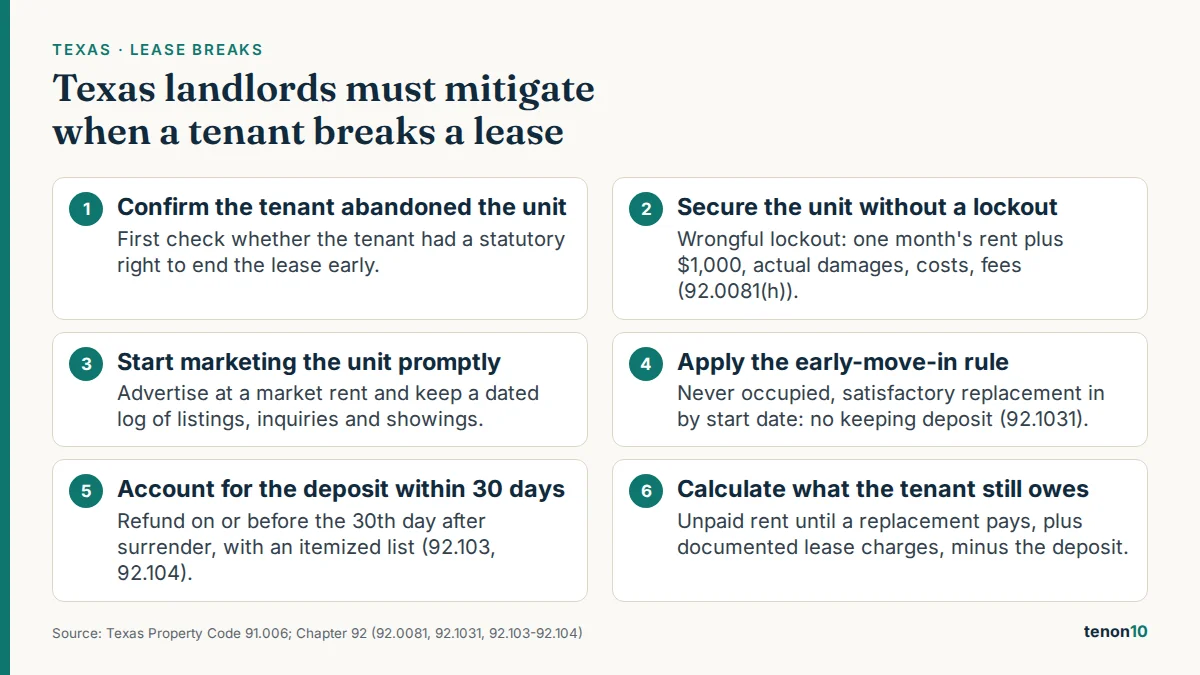
Texas Lease Break: Duty to Mitigate Checklist
A one-page checklist for Texas landlords when a tenant abandons a lease: confirm abandonment, avoid a lockout, market and log, account for the deposit in 30 days.
Get Free PDF →What will a Texas landlord need when a tenant breaks the lease?
- The lease, including any early termination, reletting fee or notice-of-surrender clause.
- Evidence that the tenant has abandoned the unit (keys returned, belongings gone, messages).
- A record of the rent paid and owed.
- Current asking rent for comparable units.
How does a Texas landlord mitigate damages step by step?
Step 1: Confirm the tenant has abandoned the unit
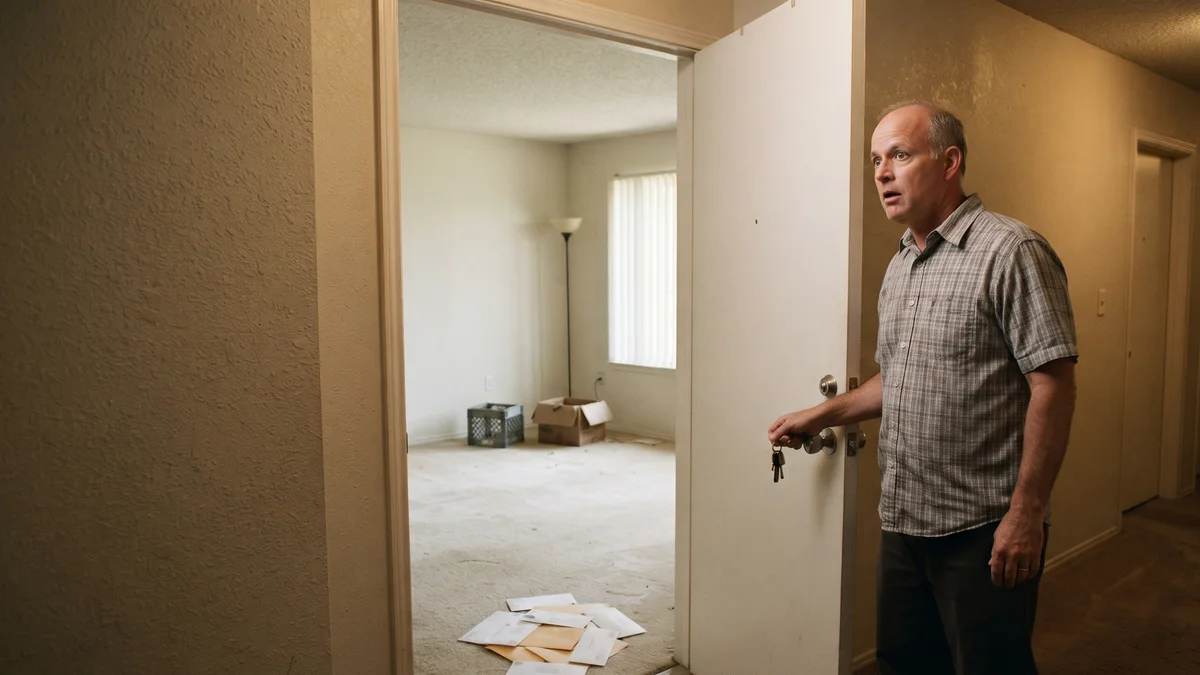
The duty in 91.006 starts when the tenant "abandons the leased premises in violation of the lease." Before you treat the unit as abandoned, check whether the tenant had a statutory right to leave early. Texas lets tenants end a lease early in situations involving family violence, certain sex offenses or stalking, and military deployment or transfer; see our Texas early termination guide. A tenant who leaves under one of those sections has not broken the lease.
Step 2: Secure the unit without locking out a tenant in possession
Property Code 92.0081(b) bars a landlord from intentionally preventing a tenant from entering the leased premises except by judicial process, with exceptions that include "removing the contents of premises abandoned by a tenant." A wrongful lockout exposes the landlord to a civil penalty of one month's rent plus $1,000, actual damages, court costs and attorney's fees (92.0081(h)). If belongings were left behind, read our guide to the Texas landlord's lien before disposing of anything.
Step 3: Start marketing the unit promptly
Advertise the unit where you normally do, at a market rent, and keep a dated log of listings, inquiries, showings, applications and reasons for any decline. The statute does not set a checklist of efforts, so your log is the evidence that you mitigated. Screen replacements with your usual criteria, consistently, as the federal Fair Housing Act requires.
Step 4: Apply the early-move-in rule if the tenant never moved in
Under Section 92.1031, if a tenant never occupies the unit and a replacement satisfactory to the landlord moves in on or before the lease start date, the landlord may not keep the deposit or rent prepayment. If the landlord found the replacement, it may deduct the lease's cancellation fee or its actual expenses, "including a reasonable amount for the time of the landlord."
Step 5: Account for the security deposit within 30 days
The landlord must refund the deposit on or before the 30th day after the tenant surrenders the premises (92.103(a)), and may deduct damages and charges for which the tenant is legally liable under the lease or because of the breach (92.104(a)), with a written, itemized list of deductions. You need not send the refund or list until the tenant gives a written forwarding address, though the tenant does not lose the refund by failing to give one (92.107). See our Texas security deposit guide.
Step 6: Calculate what the tenant still owes
Total the unpaid rent through the date a replacement tenant starts paying, plus the lease-based charges you can document, then subtract the deposit applied. Mitigation exists to reduce the loss, so credit rent from the replacement tenant against the same period. Keep the arithmetic with the marketing log.
What goes wrong most often?
- A "no duty to re-rent" clause. 91.006(b) makes it void.
- Locking out a tenant who has not actually left. 92.0081 penalties apply.
- Missing the 30-day deposit accounting. 92.109 sets penalties for bad-faith retention, including $100 plus three times the amount wrongfully withheld and attorney's fees.
Frequently asked questions
Does a Texas landlord have to re-rent after a tenant breaks a lease?
The landlord has a duty to mitigate damages when a tenant abandons the premises in violation of the lease (Property Code 91.006(a)).
Can a Texas lease waive the duty to mitigate?
No. A lease provision that waives the duty or exempts the landlord from it is void (Property Code 91.006(b)).
Can a Texas landlord keep the deposit if a new tenant moves in on time?
Not if the tenant never occupied and a satisfactory replacement moves in by the lease start date. If the landlord found the replacement, it may deduct the agreed cancellation fee or its actual expenses (Property Code 92.1031).
Texas Lease Break: Duty to Mitigate Checklist
A one-page checklist for Texas landlords when a tenant abandons a lease: confirm abandonment, avoid a lockout, market and log, account for the deposit in 30 days.
Get Free PDF →Handle Texas lease breaks by the book
Read Tenon10's free guides for US landlords on notices, deposits and evictions.
Free • No signup required