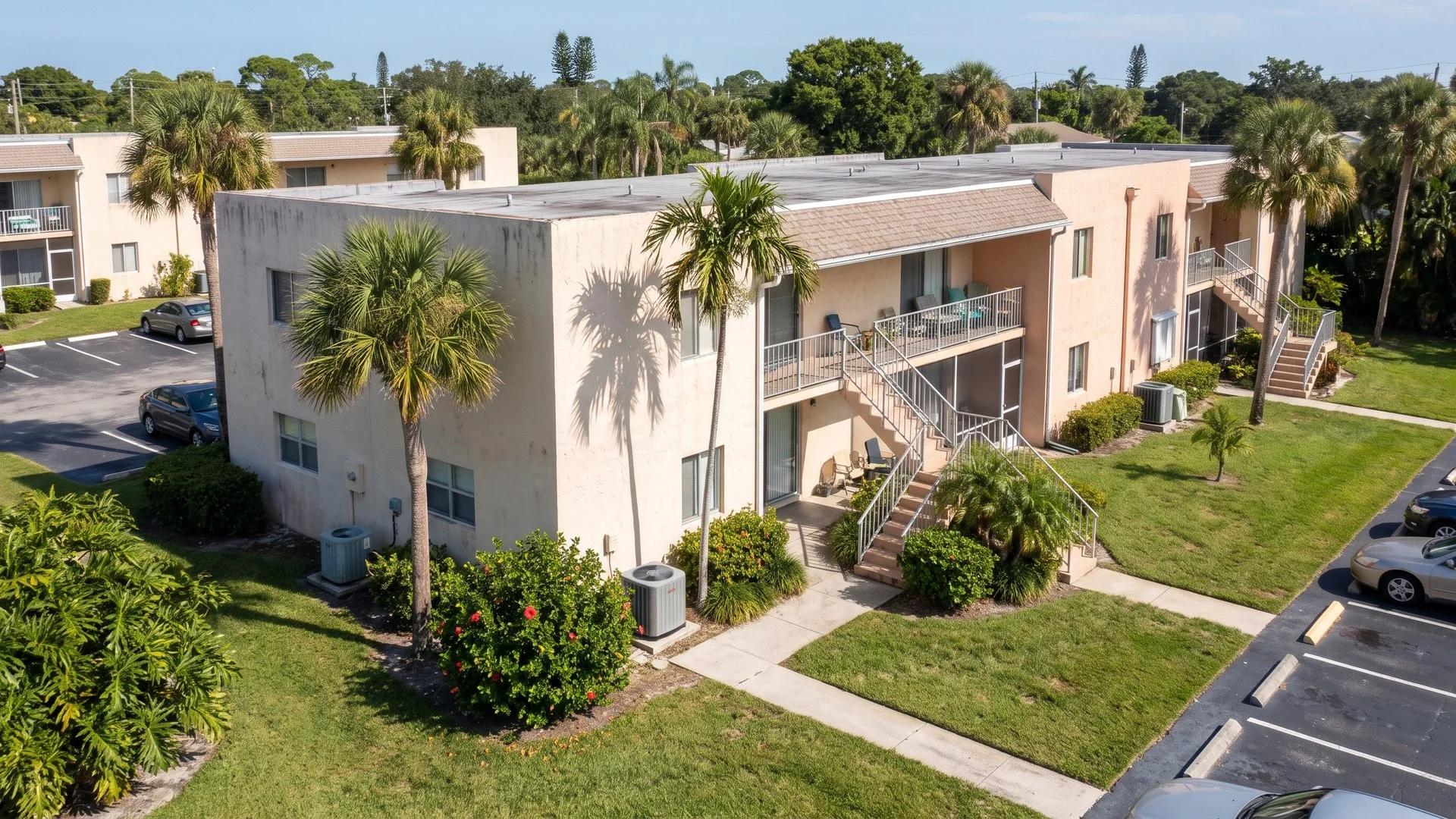
In California, state law lets almost every homeowner add an accessory dwelling unit (ADU), and a junior ADU of up to 500 square feet, to a lot with a single-family home. Cities must approve or deny a complete application within 60 days. They cannot require you to live on the property to rent the ADU out, and they cannot block a unit of at least 800 square feet with four-foot side and rear setbacks (Gov. Code §§ 66315, 66317, 66321).
What is an accessory dwelling unit in California?

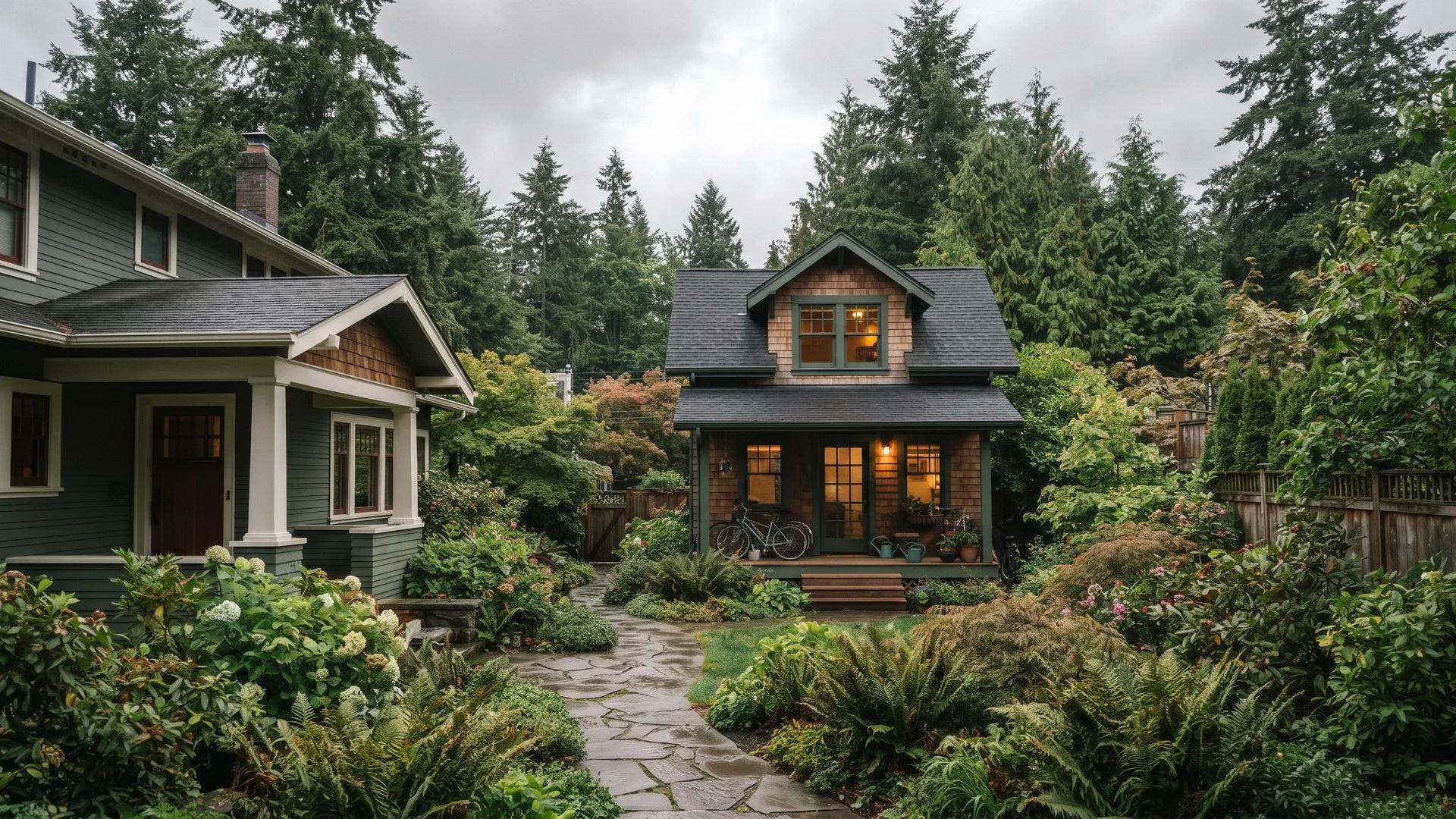
An accessory dwelling unit in California is a self-contained home on the same lot as a house or apartment building, with its own kitchen, bathroom and sleeping area. It can be detached (a backyard cottage), attached to the main house, or converted from existing space such as a garage, basement or attic. The rules are in the state's ADU law, Government Code sections 66310 to 66342, which were renumbered in 2024 by SB 477. The ADU Handbook from the California Department of Housing and Community Development (HCD), updated March 2026, explains them section by section.
A junior accessory dwelling unit (JADU) is smaller: no more than 500 square feet of interior livable space, built entirely inside a single-family home (an attached garage counts). It can share a bathroom with the main house or have its own (Gov. Code § 66313(d)).
| Type | Where it can go | Size the state guarantees |
|---|---|---|
| Conversion ADU | Inside the house or an existing accessory structure, with up to 150 sq ft added for entry and exit | No size cap set by the city (§ 66323(a)(1)) |
| Junior ADU | Inside a single-family home, including an attached garage | Up to 500 sq ft |
| New detached ADU on a single-family lot | Backyard, side yard, even the front setback | 800 sq ft, four-foot side and rear setbacks (§ 66323(a)(2)) |
| ADUs in an apartment building | Non-livable space such as storage rooms, boiler rooms, attics or garages | At least one, up to 25% of the existing units (§ 66323(a)(3)) |
| Detached ADUs on a multifamily lot | Outside the building | Up to 2 with a proposed building, up to 8 with an existing one, never more than the existing units (§ 66323(a)(4)) |
How many ADUs can you build on a California lot?
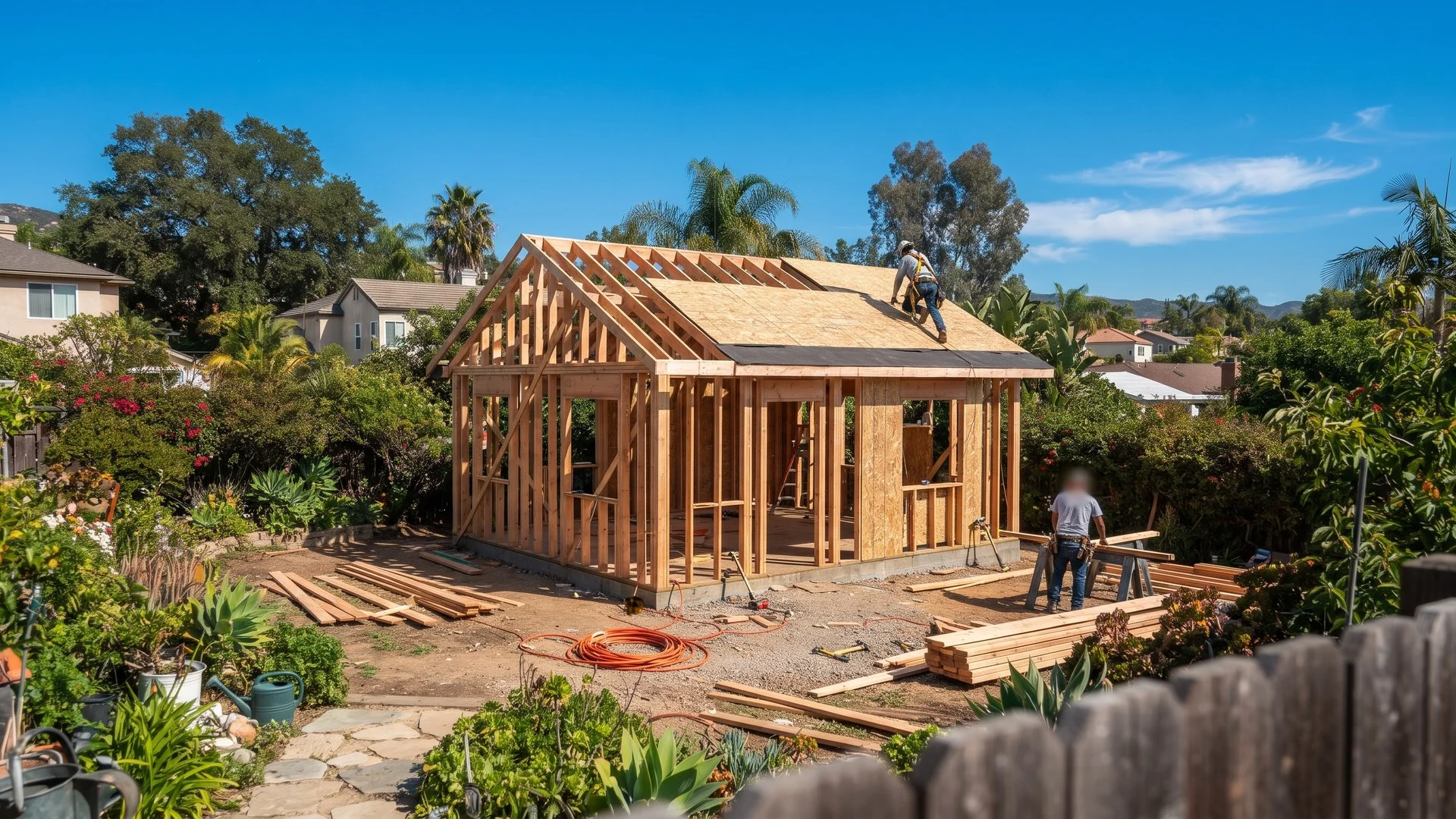
On a single-family lot in California, a city must allow at least one ADU converted from existing space, one junior ADU and one new detached ADU together (Gov. Code § 66323(a)). HCD's handbook spells out that these categories combine, so a typical house can end up with three homes on one lot.
On a multifamily lot, the city must allow ADUs in existing non-livable space (at least one, up to 25% of the existing units) plus detached ADUs. Since 2025, an existing multifamily lot can take up to eight detached ADUs, as long as the number does not exceed the existing units on the lot (§ 66323(a)(4)(A)).
California's lot-split law, SB 9, works alongside ADU law. Without a lot split, a lot can use SB 9's two primary units and its ADU allowance together. After an SB 9 lot split, each new parcel is limited to two units in total, which can be a house plus an ADU or a house plus a JADU.
How big and how tall can an ADU be in California?
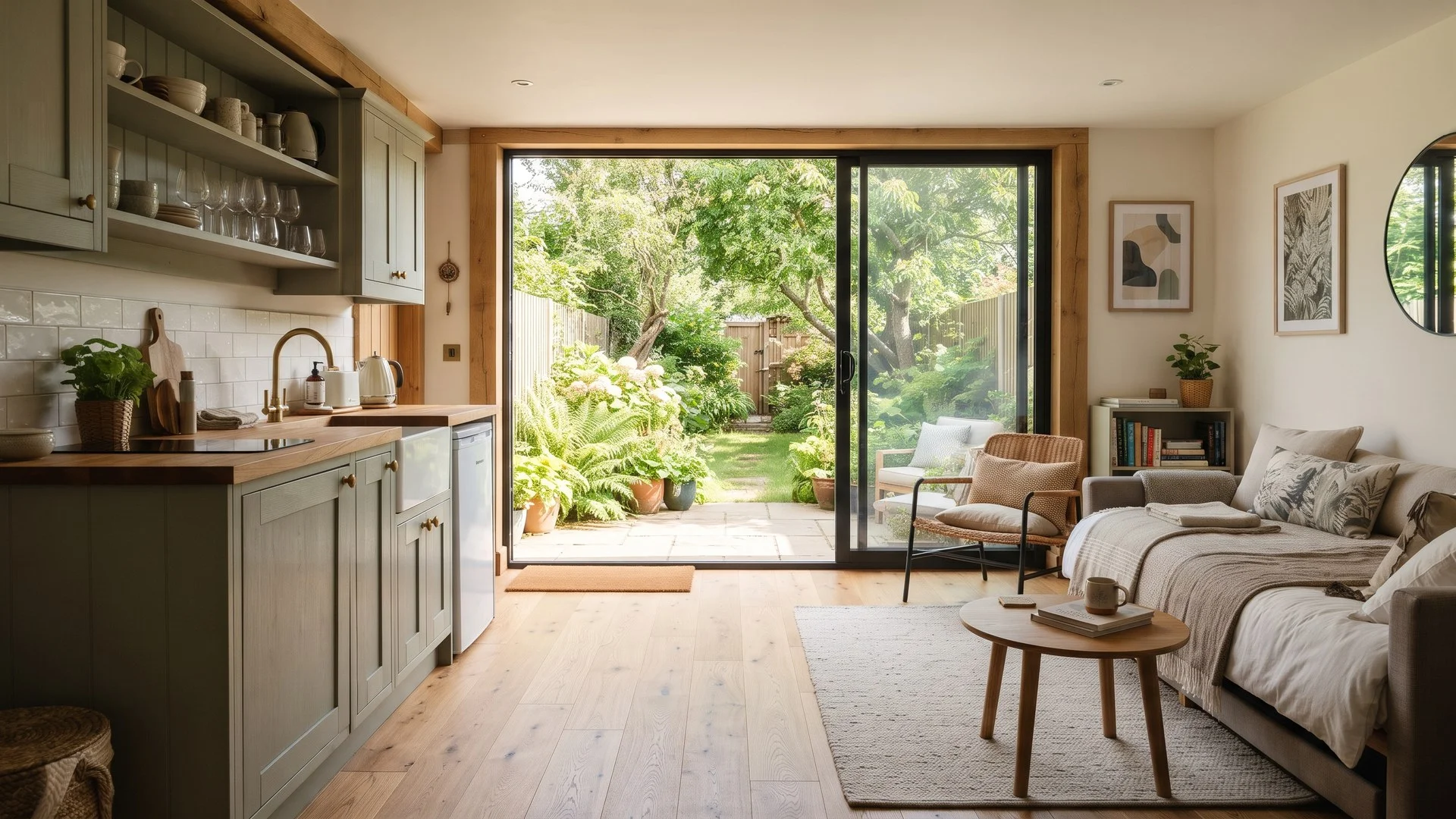
A California city can set a maximum ADU size, but it must allow at least 850 square feet of interior livable space, or 1,000 square feet for an ADU with more than one bedroom (Gov. Code § 66321(b)(2)). Where a city has no compliant ordinance, a new detached ADU can be up to 1,200 square feet, and an attached ADU up to 50% of the main home's floor area (§ 66314(d)(4)-(5)).
Whatever the local rules on lot coverage, floor area ratio, open space or minimum lot size, they cannot stop an ADU of at least 800 square feet with four-foot side and rear setbacks (§ 66321(b)(3)).
| Height rule | Limit |
|---|---|
| Detached ADU, base limit | 16 feet (§ 66321(b)(4)(A)) |
| Detached ADU within a half-mile walk of a major transit stop or high-quality transit corridor | 18 feet, plus up to 2 feet to match the main home's roof pitch |
| Detached ADU on a lot with a multistory multifamily building | 18 feet |
| Attached ADU | 25 feet, or the main home's height limit if lower; no more than two stories required |
How long does a California city have to approve an ADU?
A California permitting agency must approve or deny a complete ADU or JADU application within 60 days when there is an existing house or apartment building on the lot (Gov. Code § 66317(a)(3)). Approval is ministerial, with no discretionary hearing.
- Completeness: since the 2025 changes, the agency has 15 business days to tell you in writing whether the application is complete, with a list of what is missing if it is not (§ 66317(a)(2)).
- Denial: a denial must come in writing within the 60 days, with every deficient item and how to fix it (§ 66317(b)).
- Appeal: the agency must offer an appeal of an incompleteness finding or a denial and decide it in writing within 60 business days (§ 66317(d)(1)).
- Coastal zone: a coastal development permit for an ADU must also be decided within 60 days of a complete application (§ 66329(a)).
An unpermitted ADU built before January 1, 2018 cannot be refused a permit just because it breaks building standards or local ADU rules, unless fixing the violation is needed to protect health and safety (§ 66311.7).
Can you rent out an ADU in California?
Yes. California law bars cities from requiring the owner to live on the property in order to rent an ADU (Gov. Code § 66315), so you can rent both the main house and the ADU. A city may require that an ADU be rented for terms longer than 30 days, which rules out using it as a short-term vacation rental.
Junior ADUs are stricter. A JADU that shares a bathroom with the main house requires the owner to live in either the main house or the JADU. A JADU with its own bathroom does not. Since 2025, a JADU cannot be a short-term rental, and if rented it must be for longer than 30 days (§ 66333(b), (g)).
Once a tenant moves in, the ADU is a rental home like any other. Federal fair housing rules apply in every state (HUD, Fair Housing Act), and a home built before 1978, including an older garage being converted, triggers the federal lead-based paint disclosure rule.
What fees and parking can a California city charge for an ADU?
A California ADU with 750 square feet of interior livable space or less pays no impact fees to the city, special districts or water corporations. A larger ADU pays impact fees in proportion to the main home's square footage (Gov. Code § 66311.5(c)). A JADU of 500 square feet or less is also exempt. School districts may charge fees on ADUs larger than 500 square feet (Education Code § 17620).
Parking cannot exceed one space per ADU or per bedroom, whichever is less, and the space can be tandem on a driveway (§ 66314(d)(10)). No parking can be required at all for an ADU that is:
- within a half-mile walk of public transit;
- in an architecturally and historically significant district;
- part of the main house or an existing accessory structure;
- where on-street parking permits are required but not offered to the ADU occupant; or
- within one block of a car-share vehicle (§ 66322(a)).
When a garage, carport or parking space is demolished to build an ADU, the city cannot make you replace those spaces.
Can you sell an ADU separately in California?
Usually not. An ADU in California stays on the same parcel as the main home unless the city has adopted an ordinance allowing the house and ADU to be sold separately as condominiums (Gov. Code § 66342), or the narrow nonprofit exception in § 66341 applies. Check your city's ordinance before you plan a sale.
How is ADU rental income taxed?
Rent from an ADU is rental income reported on Schedule E (Form 1040). The cost of the building, not the land, is depreciated over 27.5 years as residential rental property, and expenses for the rented unit are deductible (IRS Publication 527). A Canadian who owns a California home with an ADU reports US rent on Form 1040-NR. For more US rental guides, see Tenon10 guides by topic, and for federal voucher programs read HUD's PHA accountability dashboard for voucher landlords.
How to add an ADU in California: step by step
- Read your city's ADU ordinance and preapproved plans, then compare them with state minimums. Where a city ordinance was not submitted to HCD on time, only state ADU law applies (§ 66326(d)).
- Pick the type: conversion, junior ADU, detached, or a combination.
- Size it. 750 square feet or less avoids impact fees; check height against the 16-, 18- and 25-foot limits.
- Submit a complete application. Expect a completeness notice within 15 business days and a decision within 60 days.
- Build, pass inspection and get a certificate of occupancy before anyone moves in.
- Rent it out for terms longer than 30 days if your city requires that, with a written lease and federal disclosures.
Frequently asked questions
Do I need to live on the property to rent an ADU in California?
No. Government Code § 66315 bars owner-occupancy requirements for ADUs. The exceptions are a junior ADU that shares a bathroom with the main house and an ADU sold to a qualified buyer under § 66341.
What is the maximum ADU size in California?
Without a compliant local ordinance, a new detached ADU can be up to 1,200 square feet. A city that sets its own maximum must still allow at least 850 square feet, or 1,000 square feet with more than one bedroom.
Can I put an ADU in my garage in California?
Yes. A garage can be converted to an ADU, and an attached garage can become a junior ADU. The city must issue the demolition permit for a detached garage being replaced with an ADU at the same time as the ADU permit.
Can I Airbnb my ADU in California?
Often not. Cities may require ADUs to be rented for terms longer than 30 days, and junior ADUs can no longer be short-term rentals anywhere in the state.
How much are ADU impact fees in California?
None for an ADU of 750 square feet or less. Above that, impact fees are charged in proportion to the size of the main home, and school districts may charge their own fee above 500 square feet.
California has turned the backyard unit into a by-right addition with deadlines on the city's side. Check your city's ordinance against the state minimums, size the unit with fees and rent in mind, and you can plan around the 60-day clock.
More US rental guides
State rules for landlords and tenants, checked against the statutes.
Free • No signup required