RTDRS or court? In Alberta, a landlord or tenant with a dispute under the Residential Tenancies Act can choose either the Residential Tenancy Dispute Resolution Service (RTDRS) or the courts (s.54.2). Whoever files first sets the forum for both sides (s.54.3). RTDRS is a telephone tribunal with lower fees; a court is the only choice for some remedies.
At a glance
- Both forums: claims up to $100,000 (RTDRS and the Alberta Court of Justice).
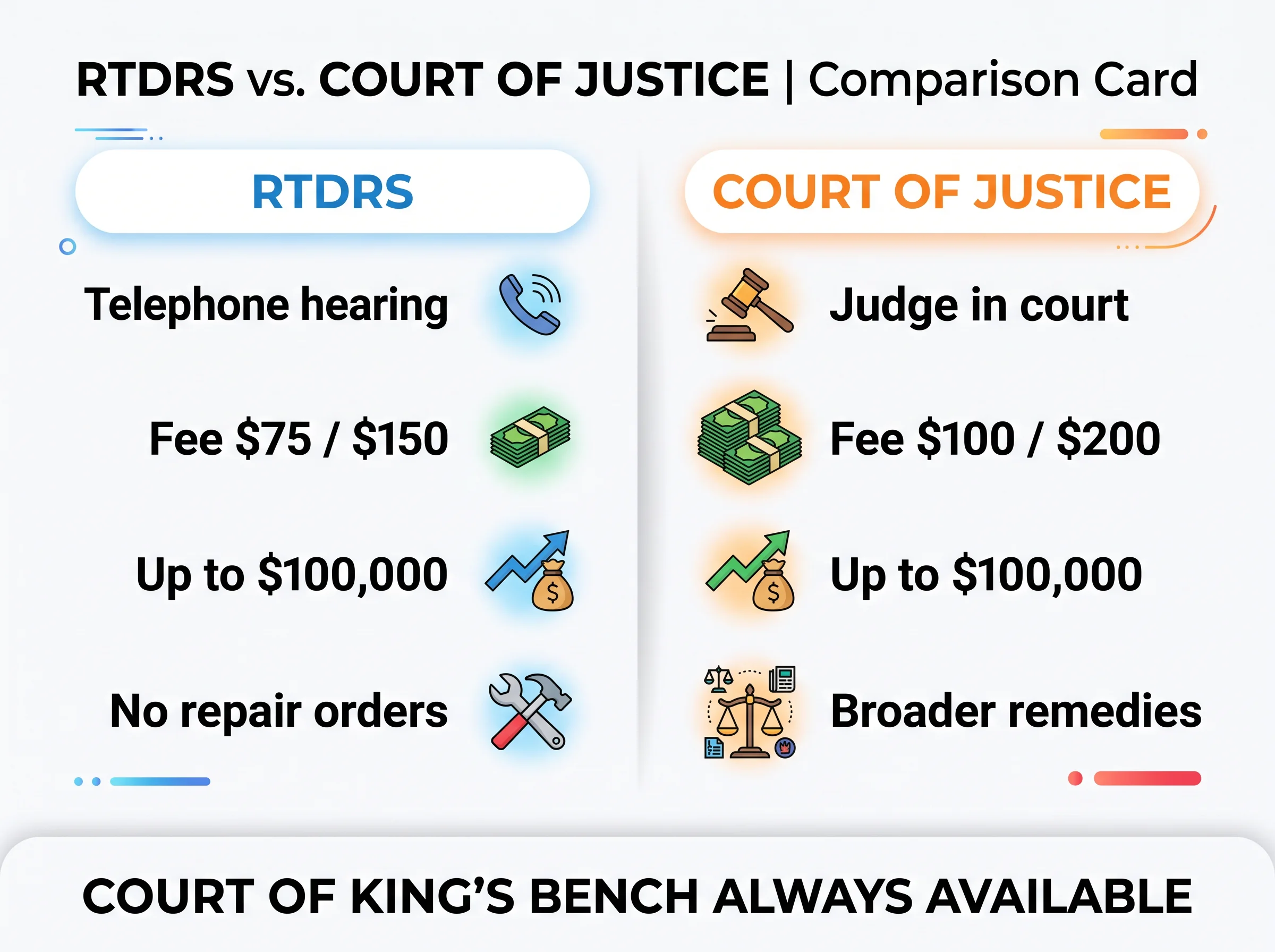
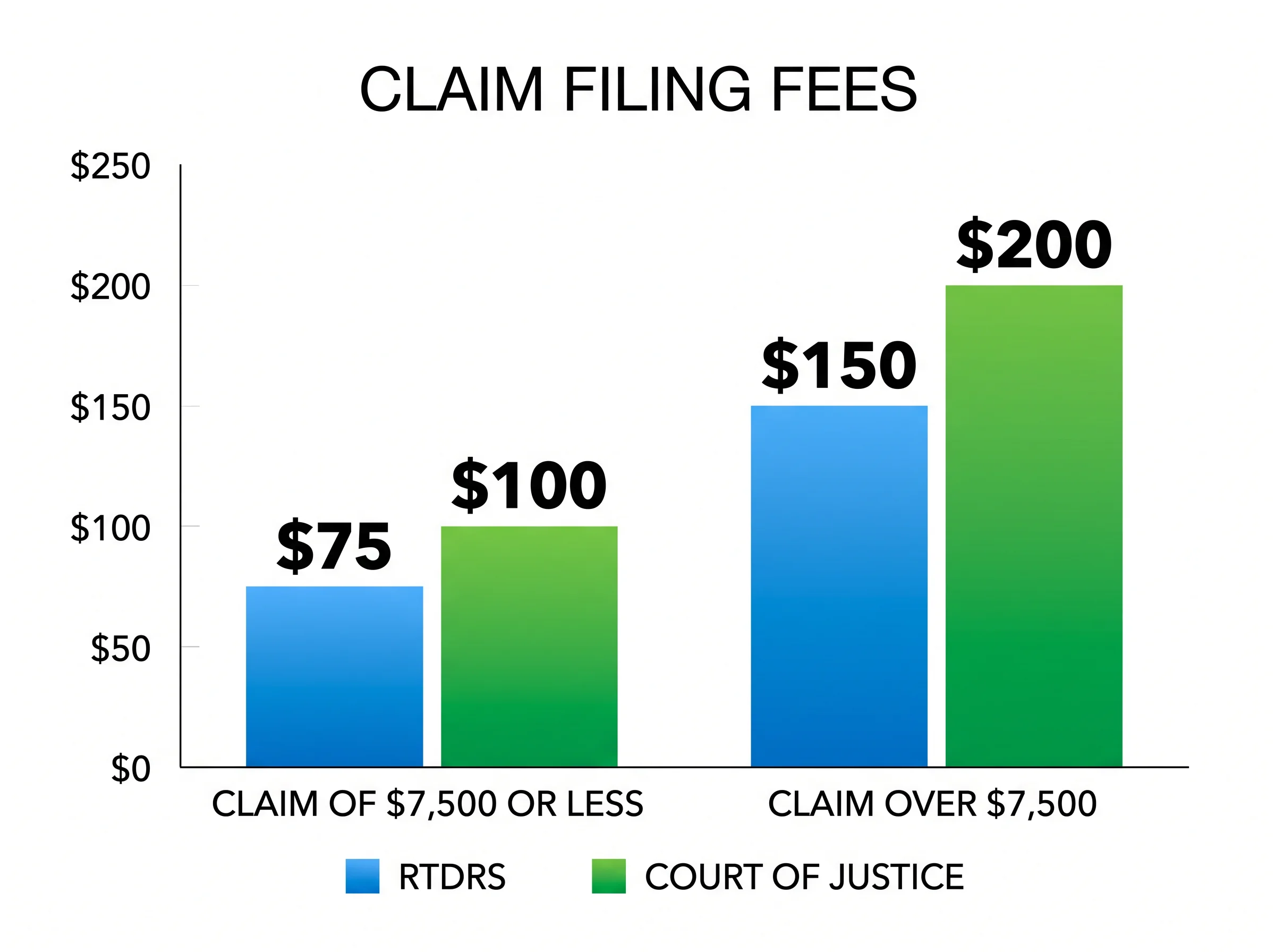
- Filing fee: RTDRS $75 or $150; Court of Justice $100 or $200.
- Binding choice: once one side files at RTDRS, neither can go to court on the same or a related dispute unless it is withdrawn (s.54.3(3)).
- RTDRS cannot: order repairs, stop a future act such as a rent increase, or fine anyone (alberta.ca).
- Court of King's Bench: always available (s.48(2)).
Most provinces send tenancy disputes to a single board. Alberta lets you pick. This comparison helps landlords and tenants make that choice; for how RTDRS works step by step, read RTDRS Explained.
RTDRS or Court: Decision Checklist
Work through these points before you file an Alberta tenancy dispute.
Get Free PDF →How do RTDRS and the courts compare in Alberta?
In Alberta, RTDRS and the Court of Justice can both hear most landlord and tenant claims up to $100,000, but they differ in cost, format and the remedies they can give.
| RTDRS | Alberta Court of Justice | Court of King's Bench | |
|---|---|---|---|
| Who decides | A Tenancy Dispute Officer | A judge | A justice |
| Claim limit | $100,000 | $100,000 | Not capped at $100,000 (s.48(2)) |
| Filing fee (tenancy application) | $75 up to $7,500; $150 over | $100 up to $7,500; $200 over, to $100,000 | King's Bench fees |
| Hearing | By telephone | In court | In court |
| Orders to repair or to stop a future act | No | Ask the court | Ask the court |
| Challenging the decision | Set aside request; appeal to King's Bench on law or jurisdiction within 30 days of filing | Appeal to King's Bench within 30 days after the order is entered and served (s.53) | Under that court's own rules |
Fees and limits: alberta.ca/rtdrs-apply and the Alberta Courts Court of Justice fee schedule, both read October 24, 2026. The RTDRS fees match our article on RTDRS filing fees from April 2026.
When is RTDRS the better choice?
RTDRS usually suits money and possession disputes: unpaid rent, ending a tenancy after a 14-day notice, a deposit, or damages. Its fees are lower, and hearings are held by telephone before a Tenancy Dispute Officer (alberta.ca, Hearings and orders).
RTDRS in short: File within 2 years of discovering the claim, serve the other side at least 3 clear days before the hearing, and file the order at the Court of King's Bench as soon as you get it. How to apply on alberta.ca
Keep its limits in mind. Alberta.ca says RTDRS cannot order specific performance such as repairs, investigate offences or bylaw and building code violations, issue fines, stop a landlord from doing something in the future such as a rent increase, require an insurance claim, or deal with defamation.
An RTDRS order is enforced through the Court of King's Bench, and possession needs a civil enforcement agency (alberta.ca, Hearings and orders).
When should you go to court instead?
Choose the courts when you need something RTDRS cannot give, when the claim is over $100,000, or when there is an issue outside tenancy law. The Court of Justice can grant any remedy under the Act except a judgment over its limit or a remedy reserved for King's Bench (s.48(1)), and nothing stops a landlord or tenant from going to the Court of King's Bench (s.48(2)).
Court in short: A tenant's court application can seek damages, rent abatement, the cost of doing the landlord's obligations, or termination, supported by an affidavit (s.37). Alberta Court of Justice Civil
For repairs, also think beyond either forum. Rental housing must meet the provincial minimum housing standards, and public health can inspect and order work. See repairs and minimum housing standards in Alberta.
Does the other side have to follow your choice?
Yes. A landlord's application to RTDRS binds the tenant to that forum, and a tenant's binds the landlord (s.54.3(1)-(2)). While an RTDRS application is filed, neither side can apply to court for the same remedy or a related one unless the RTDRS application is withdrawn first (s.54.3(3)). It works the other way too: no RTDRS application while a court application on the dispute is filed (s.54.2(3)). If both are filed on the same day, the court application goes ahead and the RTDRS one is discontinued (s.54.4(3)).
Our recommendation
For most Alberta landlords and tenants, RTDRS is the practical first choice for rent, deposits, damages and possession. Go to court when you need an order RTDRS cannot make, when the claim is over $100,000, or when the facts need a full trial. Whichever you choose, the outcome depends on your records: the lease, the inspection reports, the notices and proof of service.
Frequently asked questions
Can I switch from RTDRS to court after filing?
Only by withdrawing the RTDRS application first (s.54.3(3)). RTDRS does not refund fees for withdrawn matters (alberta.ca/rtdrs-apply).
Can I appeal an RTDRS decision?
You can appeal to the Court of King's Bench within 30 days of the date the order is filed, on an error of law or jurisdiction. Simply disagreeing is not a ground (alberta.ca, Hearings and orders). If you missed the hearing for lack of notice, ask RTDRS to set the order aside instead.
Is an RTDRS order as strong as a court judgment?
It is filed at the Court of King's Bench and enforced there. Alberta.ca says that, with some exceptions, RTDRS orders are valid for 10 years.
Can I split a $150,000 claim to stay under the limit?
Do not plan on it. RTDRS takes claims of up to $100,000 only; a larger claim belongs in the Court of King's Bench.
How Tenon10 helps
Tenon10 builds the records either forum will ask for: the Alberta lease, move-in and move-out inspection reports, deposit return dates and, for unpaid rent, a 14-day notice following Form 3's layout. You file with RTDRS or the court yourself.
RTDRS or Court: Decision Checklist
Work through these points before you file an Alberta tenancy dispute.
Get Free PDF →Walk into your hearing with the paperwork ready
Keep leases, inspection reports and notices for every Alberta unit in one place.
Free • No signup required