Your tenant moved out three months ago, but their roommate is still in the unit paying rent. You've been accepting payments, figuring you'd "deal with it later." What you don't realize: that roommate is now legally your tenant — with full RTA protections and rent control intact. One missed deadline just cost you $20,000+ in future revenue.
Ontario's Residential Tenancies Act contains a hidden trap that catches even experienced landlords off guard. Section 104(4) — what we call the "60-Day Rule" — automatically converts unauthorized occupants into legal tenants if landlords fail to act within a strict 60-day window. No warning. No extensions. No exceptions.
This guide breaks down exactly how the 60-Day Rule works, when your clock starts ticking, and the three specific actions you can take to protect your investment. You'll learn from real LTB cases where landlords won — and lost — based on this single deadline.
The 60-Day Rule Survival Checklist: Protect Your Rental Income Before Time Runs Out
Don't let one missed deadline cost you $28,000+. This step-by-step checklist guides Ontario landlords through the critical 60-day window to protect their rights when unauthorized occupants are discovered.
Get Free PDF →Understanding the 60-Day Rule: What Every Ontario Landlord Must Know
Section 104(4) of Ontario's Residential Tenancies Act creates what's called a "deemed assignment." In plain English: if someone is living in your rental unit without authorization, and you don't take action within 60 days of discovering them, the law automatically treats the situation as if you consented to them becoming your tenant — retroactive to when they first moved in.
The Three Critical Conditions
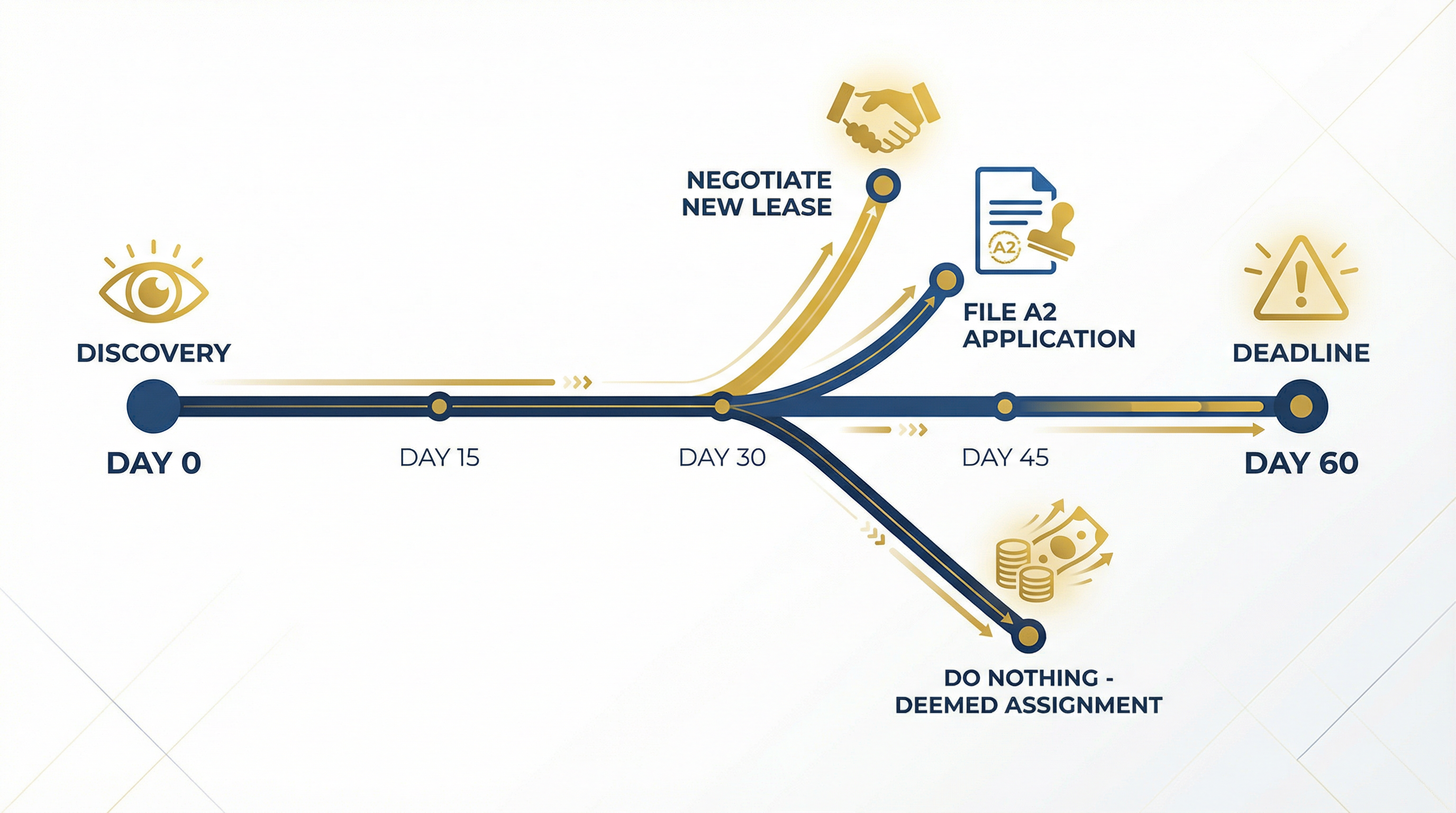
For a deemed assignment to occur, ALL three conditions must be met:
- No new tenancy agreement signed within 60 days of discovery
- No A2 application filed with the LTB within 60 days of discovery
- No application to evict an overholding subtenant within 60 days
If you fail on all three fronts, the unauthorized occupant becomes a legal tenant under the original lease terms — including the original rent amount.
Why This Matters Financially
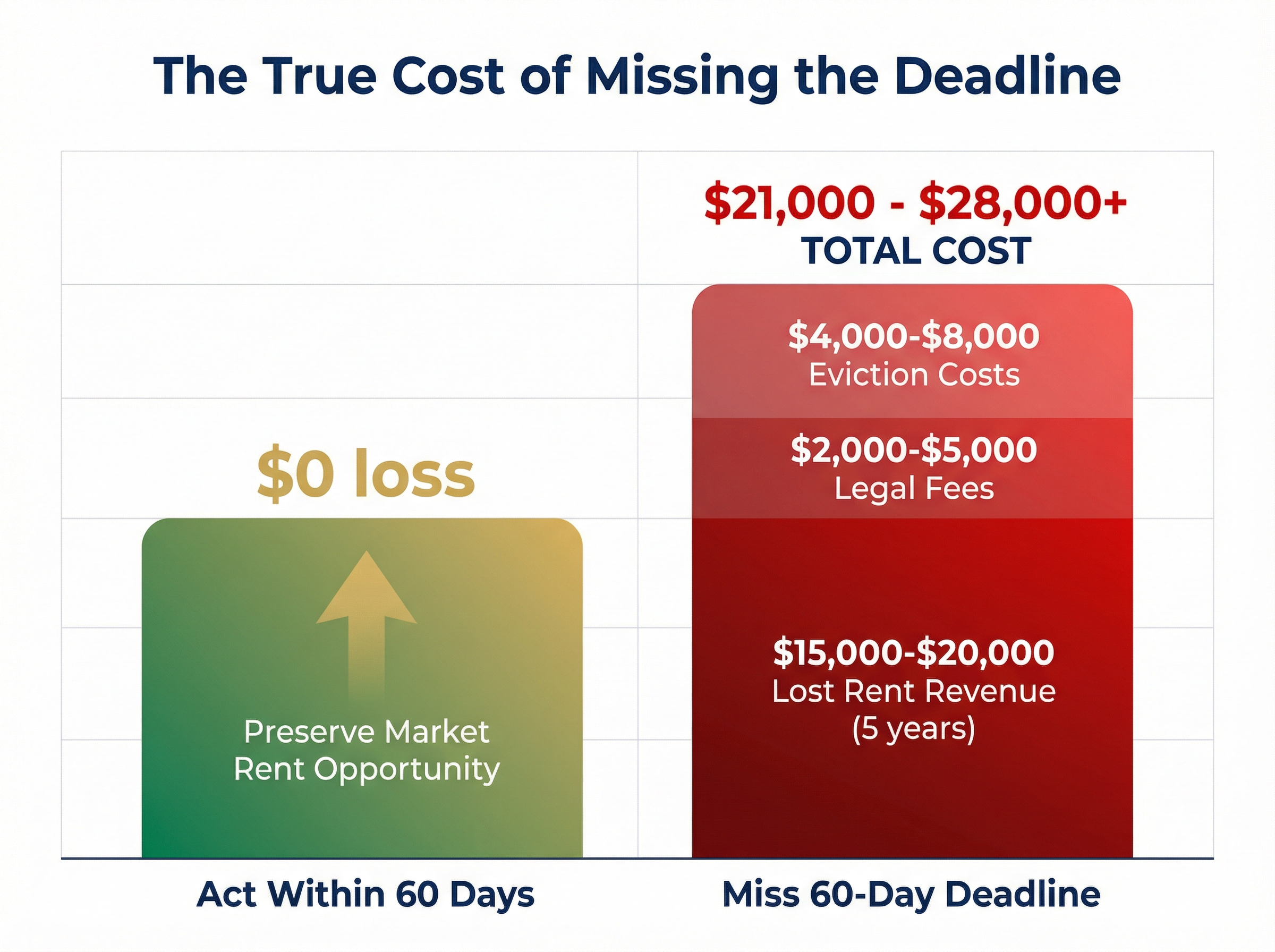
The financial consequences are severe. You lose your vacancy decontrol opportunity, meaning you cannot reset rent to market rates. Rent control applies at the maximum 2.1% annual increase for 2026. And full RTA protections kick in, requiring the standard eviction process for any future removal.
Consider a $2,000/month Toronto unit where market rent is now $2,400. If you miss the 60-day deadline, you're locked in at $2,000 with only guideline increases allowed. That's $400/month in lost revenue — $4,800/year. Over five years, the cumulative loss approaches $15,000-$20,000. Add potential legal fees of $2,000-$5,000 if you later need to evict for cause, and the total cost of missing this deadline can exceed $21,000-$28,000.
Who This Affects Most
This rule creates the highest risk for student housing landlords dealing with frequent tenant turnover, condo investors who often self-manage with less monitoring, out-of-province owners who may experience delayed discovery of occupancy changes, and properties with roommate situations where the tenant leaves but the roommate stays.
Key Distinction: Roommate vs. Unauthorized Occupant
While a tenant lives in the unit, they can have roommates without your permission — the RTA protects this right. The 60-Day Rule only applies when the original tenant vacates and someone else remains. This is the critical trigger point that starts your clock.
When Does Your Clock Start? Understanding "Discovery"
The 60-day clock doesn't start when the unauthorized person moves in — it starts when you discover (or reasonably should have discovered) the situation. The Supreme Court of Canada in Central Trust Co. v. Rafuse (1986) established that discovery occurs when "the material facts have been discovered or ought to have been discovered by the plaintiff by the exercise of reasonable diligence."
What Counts as Discovery
Discovery can occur through multiple channels: direct observation when you see unfamiliar people during an inspection, written communication when a tenant informs you they've moved out, rent payment changes when someone new starts paying, neighbour reports about new occupants, mail or package deliveries with names you don't recognize, or even social media when a tenant posts about their new address elsewhere.
The "Should Have Known" Standard
Courts apply a "reasonable diligence" test. If you failed to conduct routine inspections, ignored obvious signs of occupancy changes, or didn't follow up on tenant communications, the clock may have started earlier than you realized. Willful blindness does not extend your deadline.
Real Case: The Importance of Documentation
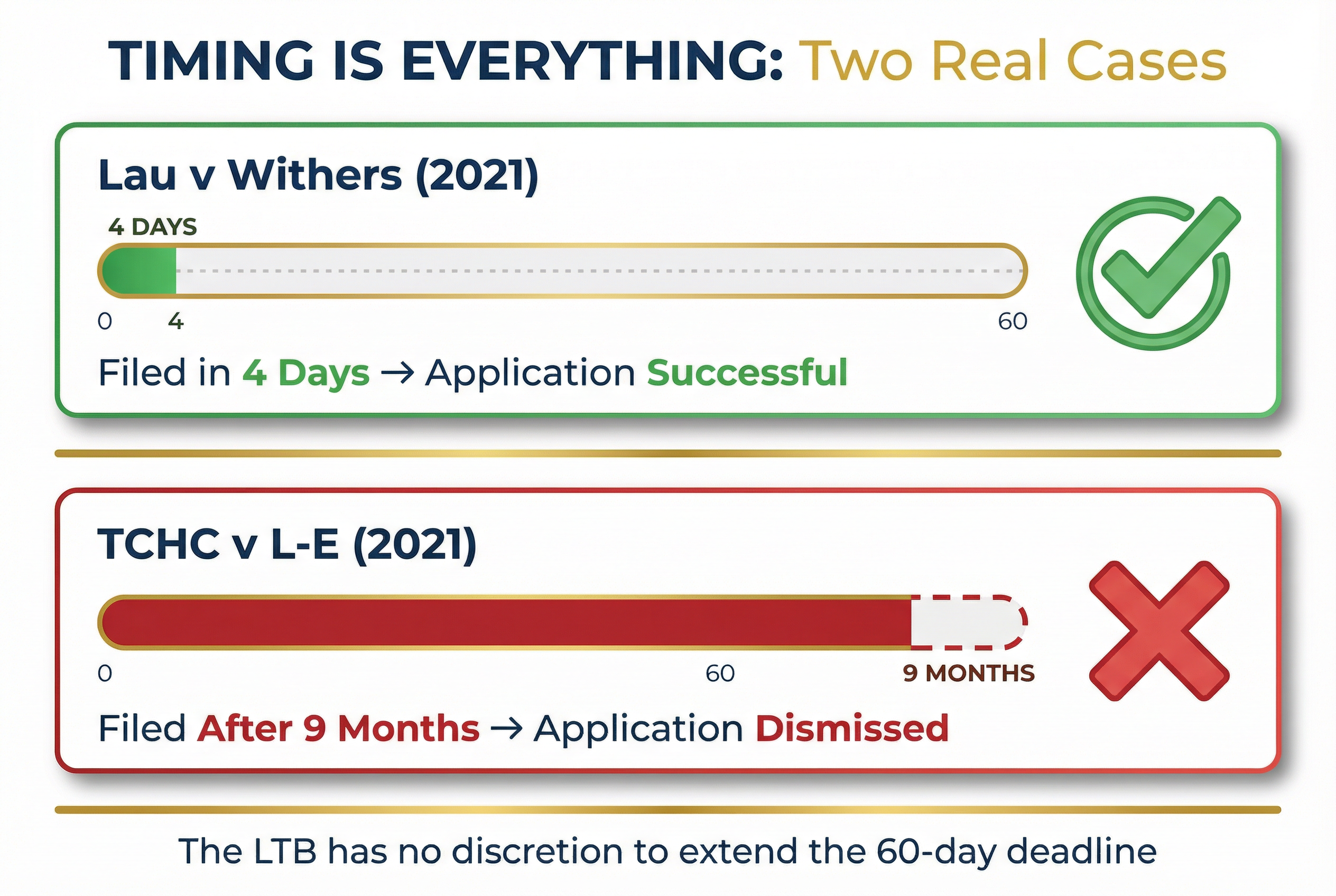
In Lau v Withers (2021), the landlord became aware of unauthorized occupancy on February 22, 2020, and filed their A2 application on February 26 — just 4 days later. The application proceeded successfully. Contrast this with TCHC v L-E (2021), where the landlord knew about the tenant's daughter living in the unit in February 2019 but didn't file until November 2019. Result: application dismissed for being outside the 60-day window.
How to Document Discovery Properly
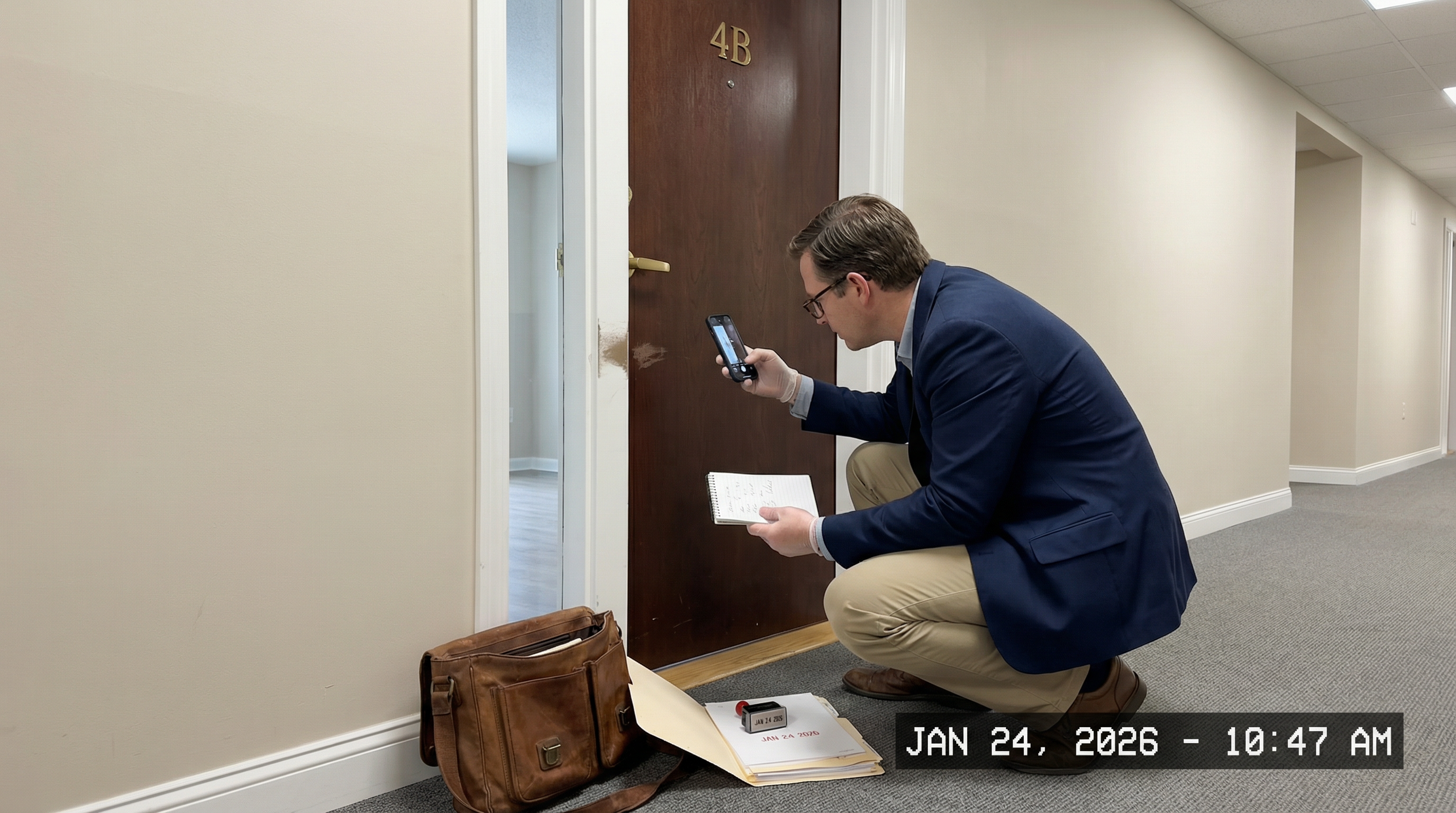
The moment you become aware of potential unauthorized occupancy, you need to take immediate action. Record the exact date and time. Document how you learned about it — whether through inspection, email, phone call, or other means. Take timestamped photos if possible. Send written acknowledgment to the named tenant. Preserve all communications in a dedicated file. This documentation becomes critical evidence if your timeline is ever challenged at the LTB.
Your Three Options — And What Happens If You Choose None
Within 60 days of discovery, you have exactly three paths. Choose wisely — or the law will choose for you.

Option A: Negotiate a New Tenancy Agreement (Best Financial Outcome)
Within 60 days of discovery, you can negotiate a brand-new lease with the unauthorized occupant. This is often the best financial option because you can set rent at current market rates (vacancy decontrol applies), you can screen the new tenant properly, you establish a fresh landlord-tenant relationship, and all Ontario Standard Lease terms apply.
For example, if the original rent was $1,800/month and market rate is now $2,300/month, by negotiating within 60 days, you capture $500/month additional revenue — $6,000/year. The new agreement must be signed within the 60-day window to preserve your right to set market rent.
Option B: File an A2 Application with the LTB (Eviction Path)
If you want the unauthorized occupant out, file Form A2 — Application About a Sublet or an Assignment — with the Landlord and Tenant Board. The filing fee is $201, it must be filed within 60 days of discovery, and you can file online via the Tribunals Ontario Portal. You can combine it with compensation claims for use and occupation. Current wait time for a hearing is 5-7 months.
Through the A2 application, you can claim compensation for unauthorized use (calculated as monthly rent divided by 30 for each day), application filing costs, and an eviction order for both the tenant and unauthorized occupant.
In Pinedale Properties v Hossain (2024), the landlord successfully obtained an order for $43,329.60 — the highest unauthorized occupancy penalty found in recent case law.
Need to file an A2? Use our step-by-step form wizard to ensure you don't miss any required fields. Start your A2 Application →
Option C: Do Nothing (Worst Outcome)
If you take no action within 60 days, section 104(4) automatically converts the unauthorized occupant into a legal tenant. The consequences are significant: the deemed assignment takes effect retroactively from when occupancy began, the original rent amount applies with no market rate adjustment, rent control locks in at the maximum 2.1% annual increase for 2026, full RTA protections apply meaning you need cause to evict using N4, N5, N12 or other notices, and the standard eviction timeline of 3-7+ months kicks in with $2,000-$5,000 in legal costs.
Decision Framework
If the occupant is stable and can pay market rent, negotiate a new lease (Option A). If the occupant is problematic or won't agree to terms, file the A2 application (Option B). If you're unsure or need time to decide, file the A2 to preserve your rights — you can still negotiate later.
Real Cases, Real Consequences: Learning from LTB Decisions
Understanding how the LTB has ruled in actual cases helps illustrate what works and what doesn't when dealing with unauthorized occupants.
Case Study 1: The $43,000 Lesson
Pinedale Properties v Hossain (2024) represents the highest penalty on record. An unauthorized occupant sublet individual bedrooms to multiple people without the landlord's knowledge or consent. The LTB ordered payment of $43,329.60 — compensation for the entire period of unauthorized use and occupation. The lesson: subletting schemes can create massive liability, and regular property inspections might have caught this earlier.
Case Study 2: Acting Fast Wins
In Lau v Withers (2021), the landlord discovered unauthorized occupancy on February 22, 2020 and filed their A2 application on February 26 — just 4 days later. The application proceeded to hearing without jurisdictional challenges. The lesson: speed matters, and the landlord's immediate action preserved all their options while strengthening their case.
Case Study 3: Nine Months Too Late
Toronto Community Housing knew the tenant's daughter was living in the unit in TCHC v L-E (2021) as early as February 2019. They didn't file their application until November 2019 — over 9 months later. Result: application dismissed. The 60-day deadline had long passed. The LTB confirmed it has "no discretion to alter the limitation period in section 100(2)." The deadline is absolute, regardless of circumstances.
Case Study 4: When Tenants Die
In TSL-85613-17 (2017 CanLII), the tenant passed away on September 22, 2016. Under section 91(1) of the RTA, the tenancy automatically terminated 30 days later on October 22. The tenant's adult children remained in the unit. The landlord filed their A2 on November 7, 2016 — within 60 days of the tenancy termination. Result: successful eviction of unauthorized occupants. The lesson: tenant death creates a specific trigger point, and the 30-day automatic termination starts the clock for the 60-day rule.
The Pattern in Winning Cases
Landlords who succeed share common traits: immediate documentation of the discovery date, fast decision-making usually within 2 weeks, proper filing procedures followed exactly, and evidence preservation from day one.
Your 60-Day Action Plan: A Day-by-Day Checklist
When you discover an unauthorized occupant, every day counts. Here's exactly what to do and when.
Days 0-7: Discovery and Documentation Phase
Day 0 — The Moment of Discovery: Record the exact date, time, and method of discovery. Take timestamped photos or screenshots of any evidence. Send written notice to the named tenant via both email and registered mail. Create a dedicated file for this matter. Note names of any witnesses.
Days 1-7 — Initial Assessment: Confirm whether the original tenant still resides in the unit. Identify all unauthorized occupants by name. Review original lease terms and rent amount. Check current market rent for comparable units. Calculate the daily compensation rate by dividing monthly rent by 30.
Days 8-30: Decision and Preparation Phase
This is when you must choose your path. If you're negotiating a new lease (Option A), obtain current market rent comparables, prepare a new Ontario Standard Lease at market rate, screen the occupant with credit check and references, and set a signing deadline for Day 55 at the latest.
If you're filing the A2 application (Option B), download Form A2 from Tribunals Ontario, gather supporting evidence, calculate your compensation claim, and prepare the $201 filing fee. If you're unsure which path to take, lean toward filing the A2 — it preserves your options.
Days 31-55: Filing Window
Complete Form A2 with all required information. Attach the evidence package including the lease, photos, and communications. Include compensation calculation if applicable. Pay the $201 filing fee. File via Tribunals Ontario Portal. Serve copies on both the tenant and unauthorized occupant. Obtain and preserve proof of service. Set a calendar reminder for the hearing.
Days 56-60: Final Verification
Confirm the LTB has received and accepted your application. Verify the application status shows "Filed" in the Tribunals Ontario Portal. Double-check your filing date is within 60 days of discovery. Confirm all parties have been properly served. If negotiating, ensure the new lease is signed before Day 60. Save confirmation emails and portal screenshots to your file.
Day 60: Hard Deadline
If no action is taken by the end of Day 60, the unauthorized occupant becomes a deemed tenant. Original rent terms apply permanently. Rent control activates. Full RTA protections begin. There are no extensions. There is no second chance.
The 60-Day Rule Survival Checklist: Protect Your Rental Income Before Time Runs Out
Don't let one missed deadline cost you $28,000+. This step-by-step checklist guides Ontario landlords through the critical 60-day window to protect their rights when unauthorized occupants are discovered.
Get Free PDF →Common Misconceptions About Unauthorized Occupants
Many landlords operate under assumptions that can cost them dearly. Let's clear up the most dangerous misconceptions.
"I can evict an unauthorized occupant anytime." Reality: After 60 days from discovery, the occupant becomes a deemed tenant with full RTA protections. You cannot evict without cause and proper notice.
"Accepting rent from an unauthorized occupant creates a tenancy." Reality: Section 103(2) explicitly states that accepting compensation does NOT create a tenancy unless both parties agree. However, this "non-waiver" protection doesn't extend past 60 days.
"The 60 days starts when the unauthorized person moved in." Reality: The clock starts when the landlord discovers (or should have discovered) the unauthorized occupancy — not when the person actually moved in.
"I can just serve an N5 notice for unauthorized occupants." Reality: The N5 is for interference, damage, or illegal activity — not for unauthorized occupancy after the tenant has vacated. The A2 application under section 100 is the correct remedy.
"My lease says no guests beyond 14 days, so I can evict." Reality: Lease clauses restricting guests are largely unenforceable under the RTA. Tenants have the right to have guests and roommates. The issue arises only when the tenant vacates and someone else remains.
"Roommates are unauthorized occupants." Reality: While the tenant resides in the unit, they can have roommates without landlord consent. Unauthorized occupancy only occurs when the tenant transfers occupancy by leaving.
"The LTB will extend the 60-day deadline for good reasons." Reality: Multiple LTB decisions confirm the Board has "no discretion to alter the limitation period in section 100(2)." The deadline is absolute.
Key Takeaways
The 60-Day Rule under section 104(4) of Ontario's Residential Tenancies Act is one of the most consequential — and most overlooked — deadlines in landlord-tenant law. Miss it, and an unauthorized occupant automatically becomes your legal tenant, locked in at the original rent with full RTA protections. The financial impact can exceed $20,000 over five years.
The good news: this is entirely preventable. Document discovery immediately, decide your path quickly, and take action well before Day 60. Whether you negotiate a new market-rate lease or file an A2 application, acting within the window preserves your options and protects your investment.
Remember these critical numbers: 60 days to act from discovery, $201 for the A2 filing fee, 5-7 months current LTB wait time, and $21,000-$28,000+ potential cost of inaction over five years.
Don't Let a Missed Deadline Cost You Thousands
Tenon10 helps Ontario landlords track critical timelines, store evidence securely, and generate compliant LTB forms — so you never miss a deadline that costs you money.
Free • No signup required • Updated for the Bill 60 changes in force 21 Sep 2026
Frequently Asked Questions
Does accepting rent from an unauthorized occupant create a tenancy?
No — not automatically. Section 103(2) of the RTA explicitly states that accepting compensation for use and occupation does NOT create a tenancy unless both parties agree to it. However, this protection only applies within the 60-day window. After 60 days, the deemed assignment provision in section 104(4) creates a tenancy regardless of whether you intended to.
What if I discovered the unauthorized occupancy more than 60 days ago?
Unfortunately, your options are limited. The unauthorized occupant is now legally your tenant under a deemed assignment. You cannot evict them without cause. Your only path forward is standard termination procedures — N4 for non-payment, N5 for interference, N12 for personal use — each with their own requirements, timelines, and grounds needed.
Can a roommate become an unauthorized occupant?
Only when the original tenant vacates. While the tenant lives in the unit, they have the right to have roommates without your consent — the RTA protects this. The 60-Day Rule only applies when the tenant transfers occupancy by leaving the unit while someone else remains behind. That's when your clock starts.
Will the LTB extend the 60-day deadline for good reasons?
No. Multiple LTB decisions confirm the Board has "no discretion to alter the limitation period in section 100(2)." Even if you had a good reason for the delay — illness, travel, seeking legal advice — the deadline remains absolute. This is why immediate action upon discovery is critical.
What happens if my tenant dies and their family member stays in the unit?
Under section 91(1) of the RTA, a tenancy automatically terminates 30 days after the sole tenant's death. If family members or other occupants remain after that 30-day period, they become unauthorized occupants. Your 60-day clock to file an A2 application starts from when you discover they're still there after the tenancy terminated. There's also a spouse exception under Ontario Regulation 516/06 that may apply in certain circumstances.