A Toronto landlord spent 8 months waiting for an LTB hearing—only to have his case dismissed in under 5 minutes. The reason? Three small errors on his lease that made his entire application invalid. He's not alone: an estimated 29% of LTB applications get withdrawn before reaching a hearing, many due to preventable lease mistakes.
Most Ontario landlords don't realize their lease contains errors until it's too late—when a tenant disputes a rent increase, withholds rent, or challenges an eviction. By then, those "small" mistakes have already cost thousands in lost rent, legal fees, and wasted time.
This guide gives you a practical lease audit framework to identify problems in your existing leases before they become expensive disputes. You'll learn the most common technical errors (not just illegal clauses), how to fix them mid-tenancy, and what to do if you've already collected illegal deposits.
Ontario Lease Audit Checklist: 15 Points to Bulletproof Your Lease Before the LTB
Stop lease errors from costing you thousands. This 15-point checklist helps you audit your Ontario lease in under 5 minutes—catch the technical mistakes that get 29% of LTB applications dismissed.
Get Free PDF →The 10-Point Lease Audit Checklist
Before diving into what's wrong, let's establish what "right" looks like. Use this quick self-assessment to score your current lease.
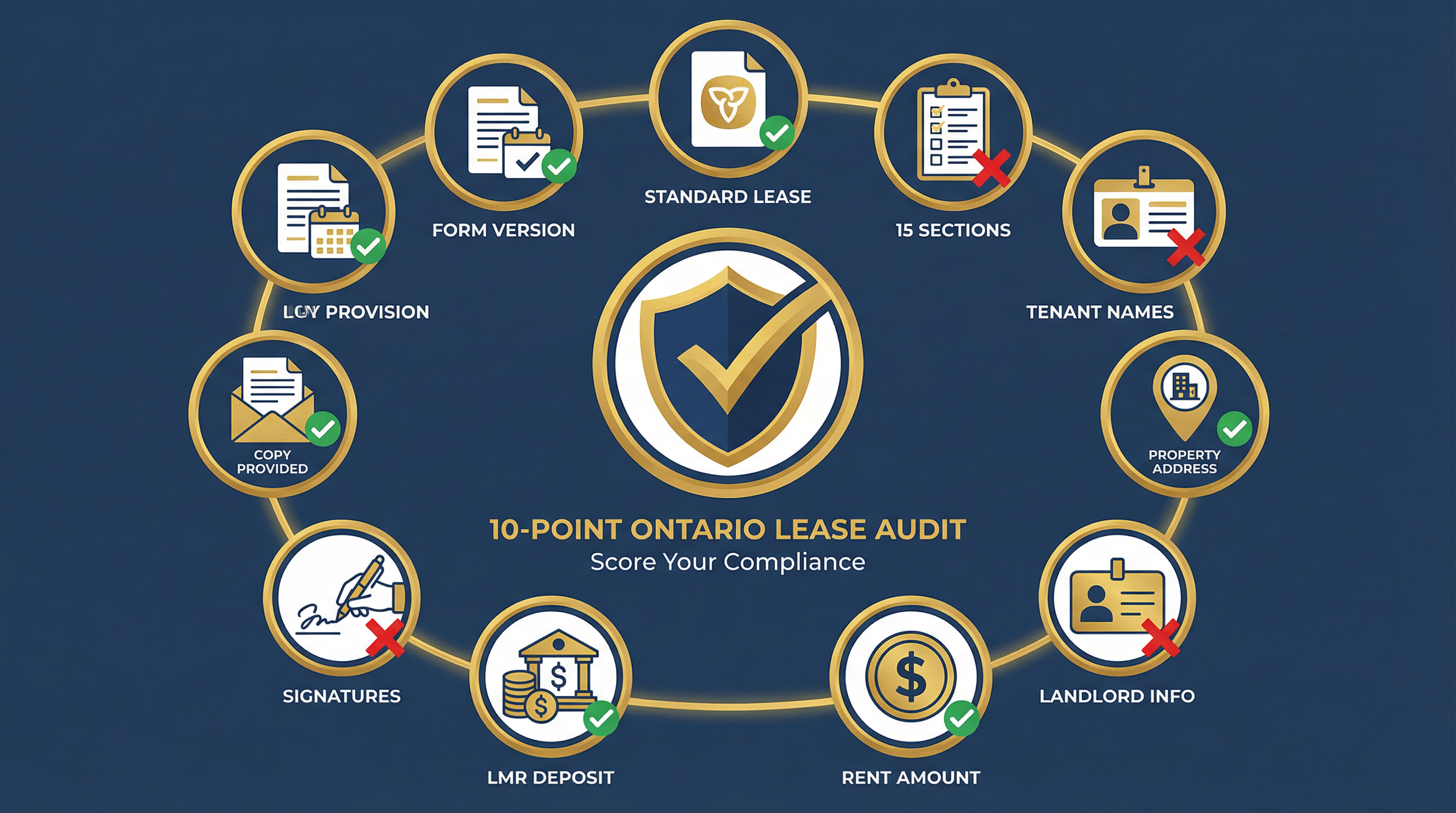
Form Verification (3 points)
- Are you using the official Ontario Standard Lease (Form 047-2229)?
- Is it the December 2020 version (required since March 1, 2021)?
- Are all 15 mandatory sections completed without alterations to pre-printed text?
Information Accuracy (3 points)
- Are all tenant names spelled correctly and all occupants listed?
- Is the full municipal address correct, including unit number?
- Is the landlord's legal name and contact information complete?
Financial Terms (2 points)
- Is rent amount, due date, and payment method clearly stated?
- Is the only deposit collected Last Month's Rent (equal to one month's rent)?
Documentation (2 points)
- Did all parties sign before move-in?
- Was a signed copy provided to the tenant within 21 days?
Scoring Guide
- 10 points: Your lease is compliant—proceed with confidence
- 7-9 points: Minor issues—fix immediately before any disputes arise
- 4-6 points: Significant problems—prioritize corrections this week
- 0-3 points: Critical risk—your lease may not protect you at the LTB
Red Flags — Signs Your Lease Has Problems
Even if you didn't create the lease yourself, these warning signs indicate potential problems that could undermine your legal position.
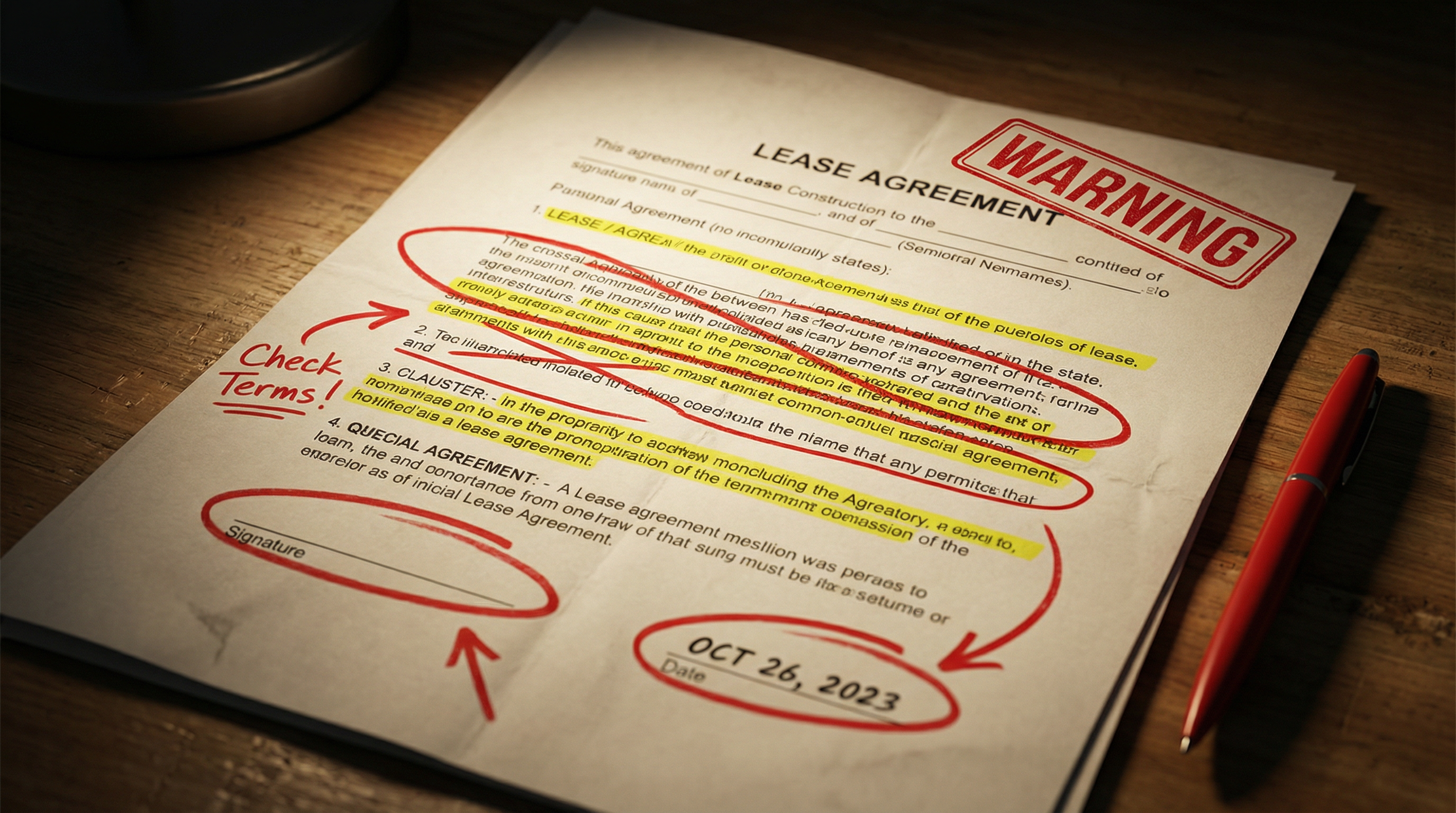
Visual Red Flags
- Wrong header: The form doesn't say "Standard Form of Lease" at the top
- Old version date: Check bottom corner—anything before December 2020 is outdated
- Missing Ontario logo: Official forms have the Ontario government insignia
- Altered pre-printed sections: Crossed-out or modified standard terms
- Handwritten additions in margins: These are often unenforceable
Content Red Flags
- Tenant name doesn't match ID: Even minor spelling errors can cause problems
- Address differs from property records: Unit numbers must match municipal records
- Rent amount is ambiguous: "Approximately" or ranges aren't acceptable
- Multiple deposit types listed: Only LMR should appear
- Missing signatures from any tenant: All adults on the lease must sign
Process Red Flags
- No copy provided to tenant: Creates grounds for rent withholding
- Signed after move-in: Weakens enforceability
- Additions made after signing: Requires new signatures to be valid
The Address Error That Cost $4,200
A Mississauga landlord listed "Unit 1" on the lease, but the legal municipal address was "Unit A." When filing an L1 for non-payment, the LTB dismissed the application because the address didn't match property records. By the time he refiled with the correct address, he'd lost 3 additional months of rent.
The 5 Most Common Lease Errors (Not Illegal Clauses)
Illegal clauses get all the attention, but technical errors cause just as many LTB dismissals. These five mistakes don't involve prohibited terms—they're paperwork failures that void your legal standing.
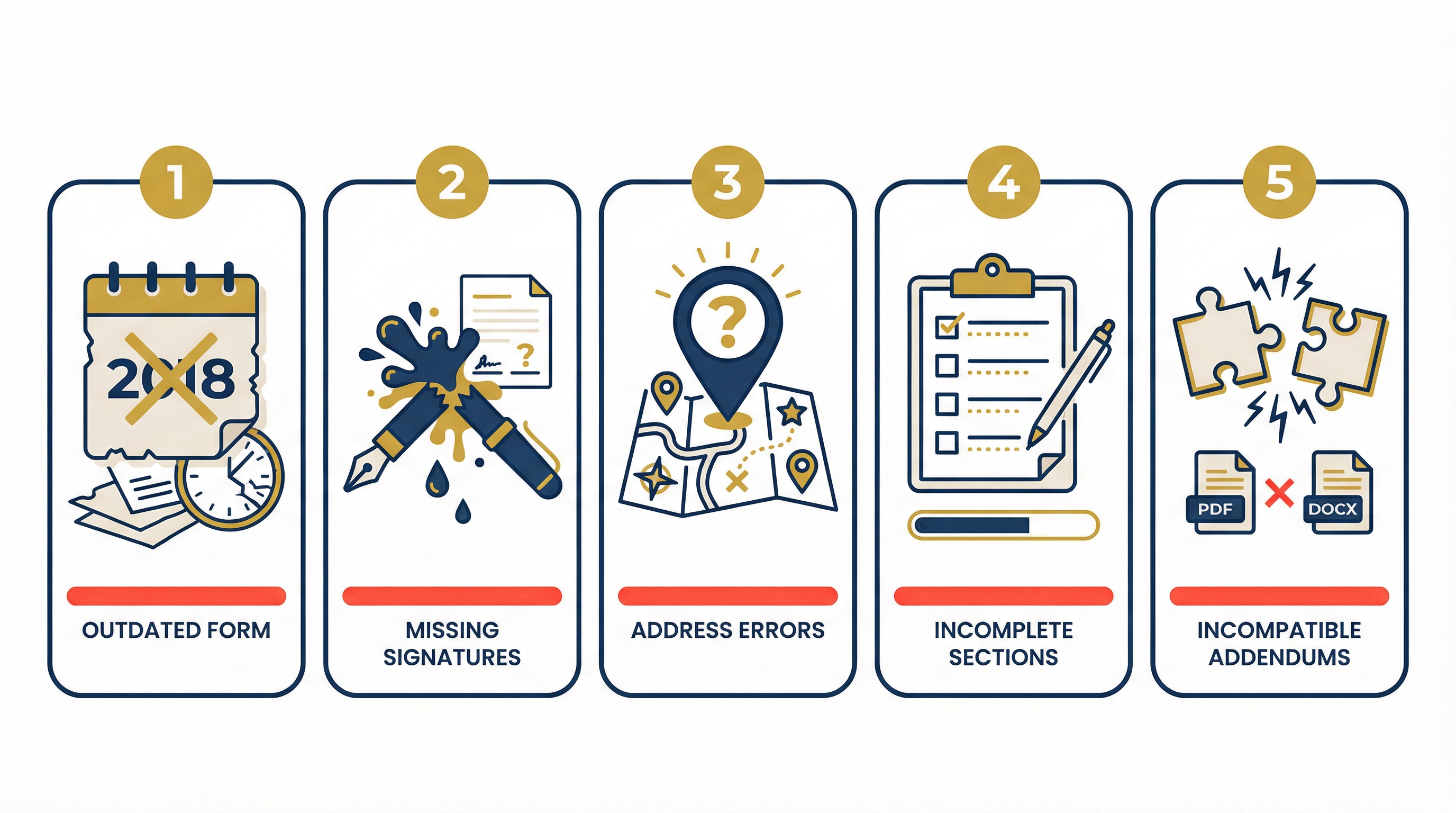
Error #1: Using the Wrong or Outdated Form Version
The current required version is Form 047-2229 (December 2020). Using an older version—or worse, a generic template downloaded from the internet—can invalidate your entire lease.
How to check: Look at the bottom left corner of your lease. It should say "047-2229E (2020/12)". Anything else is outdated.
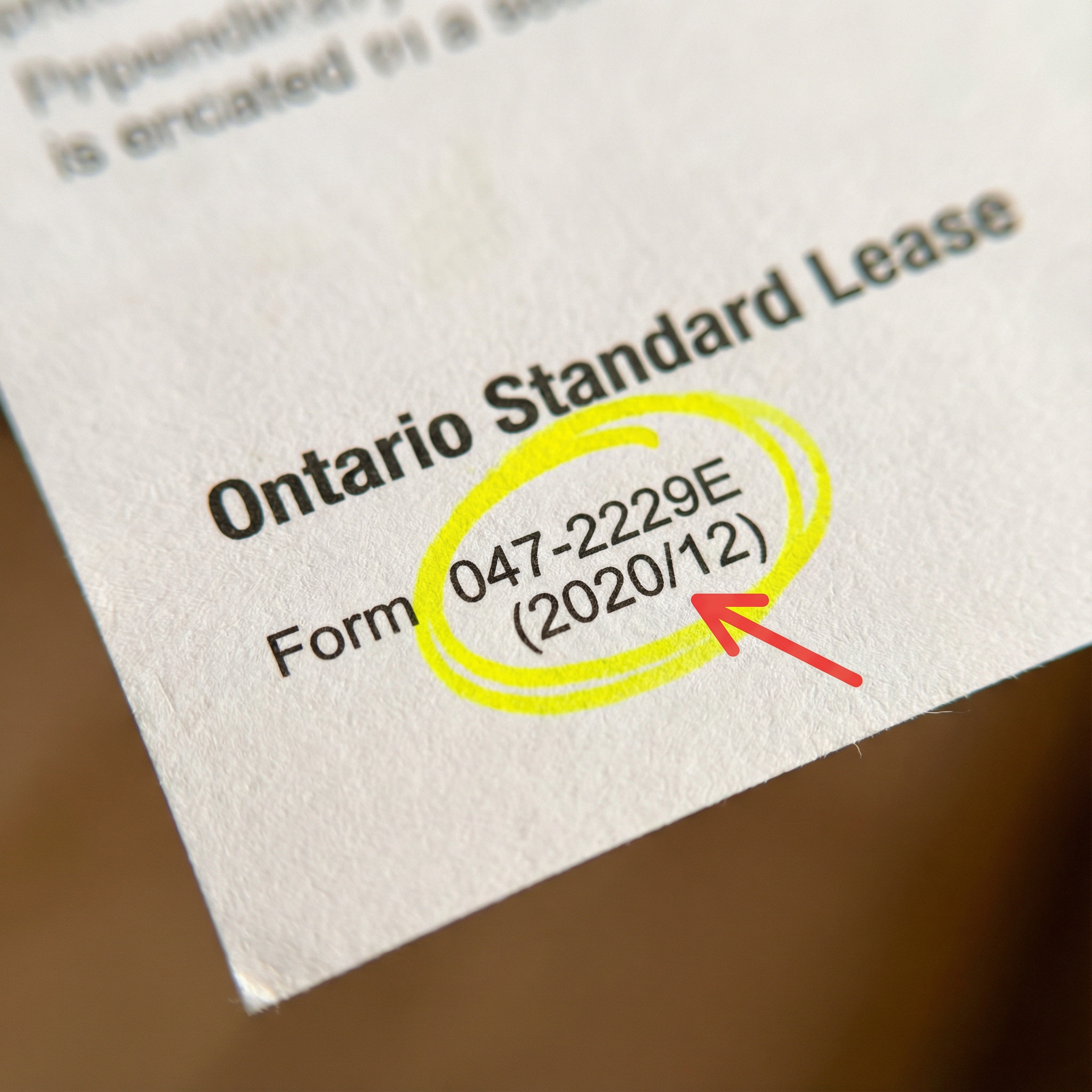
Real consequence: If your tenant requests the Standard Lease and you provide an old version, they can withhold one month's rent. If you still don't provide the correct version within 30 days, they keep that rent permanently.
Error #2: Missing or Incomplete Signatures
Every adult tenant listed on the lease must sign. A spouse who lives in the unit but didn't sign isn't bound by the lease terms—and you may have difficulty evicting them.
Common scenarios:
- Roommate added later but never signed
- Tenant's partner moved in without being added
- Landlord's representative signed without proper authorization
Error #3: Property Address Doesn't Match Legal Records
The address on your lease must exactly match the municipal property records. This includes street number and name spelling, unit/apartment designation (Unit 1 vs. Apt 1 vs. Suite 1), and city name (not neighbourhood).
How to verify: Check your property tax bill or search your address on the Ontario Land Registry.
Error #4: Incomplete Mandatory Sections
The Standard Lease has 15 sections. Leaving any blank—even if you think it doesn't apply—creates ambiguity that can work against you.
Commonly skipped sections:
- Section 7: Rent Discounts (leave as "No" if none apply)
- Section 8: Rent Deposit (must specify amount even if zero)
- Section 10: Smoking Rules (must indicate yes, no, or specific areas)
- Section 11: Tenant Insurance (must indicate if required)
Error #5: Mixing Standard Lease with Incompatible Addendums
OREA Form 400 (Schedule for Condominium) is designed to work WITH the Standard Lease, not replace it. Using Form 400 alone, or attaching incompatible addendums, creates legal confusion.
What works:
- Standard Lease + OREA Form 400 for condos
- Standard Lease + Section 15 additional terms
- Standard Lease + Condo rules as attachment
What doesn't work:
- OREA Form 400 alone (not a valid lease)
- Standard Lease + contradictory addendum terms
- Any form that predates April 2018
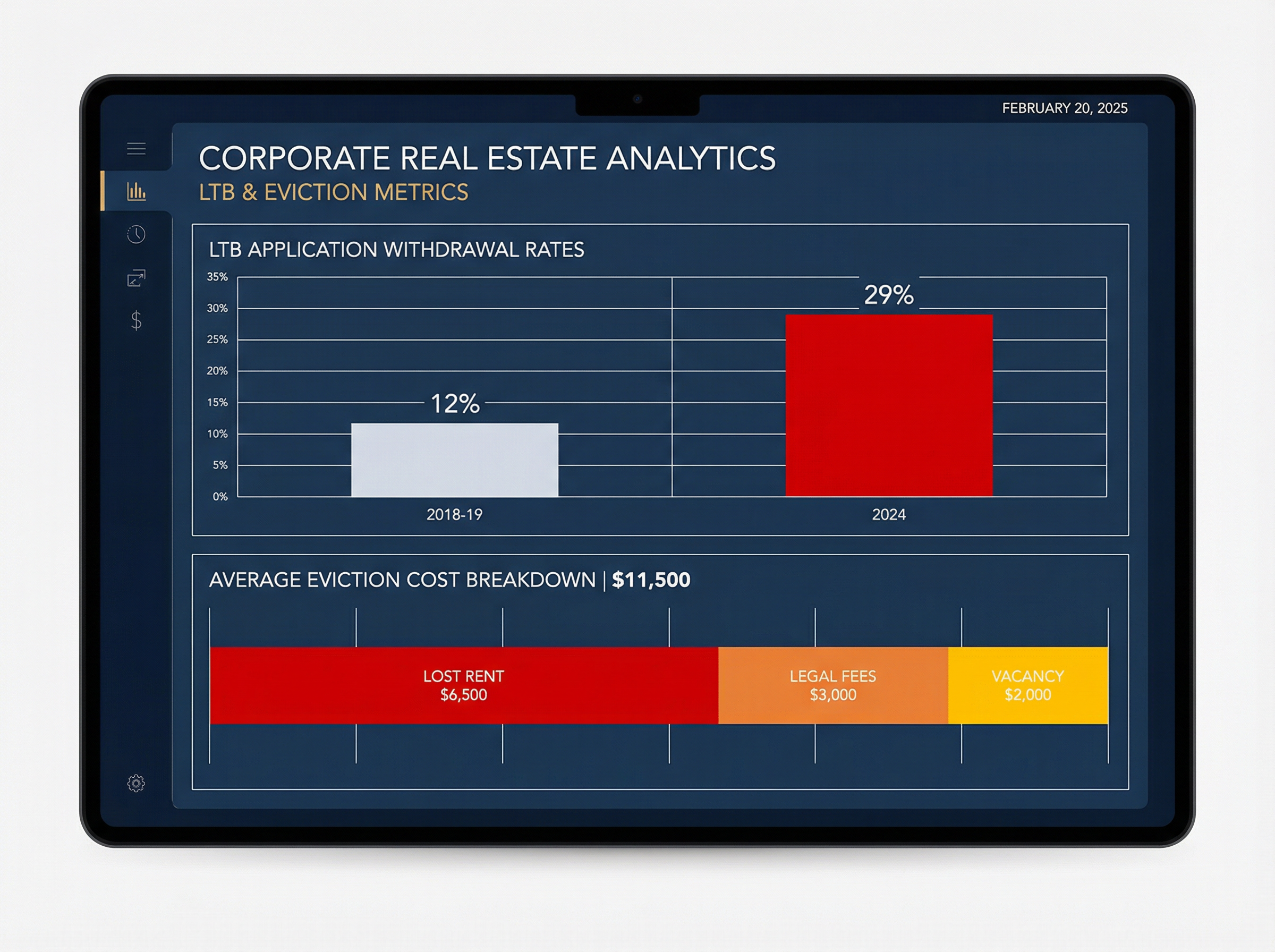
LTB applications have a 29% withdrawal rate—up from just 12% in 2018-19. Many of these withdrawals happen after landlords discover their lease documentation won't survive scrutiny.
Bill 60 Update: Bill 60 (Fighting Delays, Building Faster Act) was passed on November 27, 2025, but Schedule 12 containing the RTA changes is being brought into force in stages (parts took effect July 1 and September 21, 2026, including the 7-day N4 for notices given on or after September 21, 2026), and any part not yet proclaimed still has no effect—it requires a separate activation order. The N4 notice period is now 7 days for notices given on or after September 21, 2026 (it was 14 days for monthly and yearly tenancies before that). Check Ontario's e-Laws for whether other parts, such as flexibility for LTB staff to overlook minor form errors on applications, are in force. However, your lease must still be compliant regardless—Bill 60 doesn't fix lease problems, only minor application form errors. Read our Bill 60 guide →
How to Fix Your Lease Mid-Tenancy
Discovered problems in an existing lease? Don't panic. Most issues can be corrected—but the process matters.
When You Can Make Corrections
You can fix lease errors at any time IF:
- Both parties agree in writing
- The correction doesn't change material terms (rent amount, tenancy length) without proper notice
- You document the amendment properly
Step-by-Step Correction Process
Step 1: Identify the Specific Error
Document exactly what's wrong. Is it a typo, missing information, or a structural problem with the form itself?
Step 2: Prepare the Amendment
For minor corrections (spelling, missing checkbox), create a simple amendment document stating the original lease date, specific section being corrected, original text/status, corrected text/status, and date of amendment.
For major corrections (wrong form, missing sections), prepare a new Standard Lease and include a transition clause in Section 15 noting it replaces the previous agreement.
Step 3: Get Tenant Agreement
Present the amendment or new lease to all tenants, explain why the correction is needed, and ensure both parties sign and date.
Step 4: Document and Distribute
Keep the original lease AND the amendment together, provide copies to all tenants within 21 days, and store securely for at least 3 years after tenancy ends.
What If the Tenant Refuses?
You cannot force a tenant to sign a corrected lease. However, the original lease terms still apply (even if flawed), you can note the refusal in writing for your records, and if the error benefits the tenant unfairly, document your correction attempt for any future LTB hearing.
Transitioning Verbal or Pre-2018 Leases
For month-to-month tenants who started before April 30, 2018 (when Standard Lease became mandatory), you can request they sign a Standard Lease. They can refuse since they're grandfathered under old rules. If they refuse, continue under existing terms. If they request a Standard Lease, you must provide one within 21 days.
Need compliant additional terms? Get copy-paste templates in our guide on Ontario Standard Lease additional terms. Read the guide →
What If You've Collected Illegal Deposits?
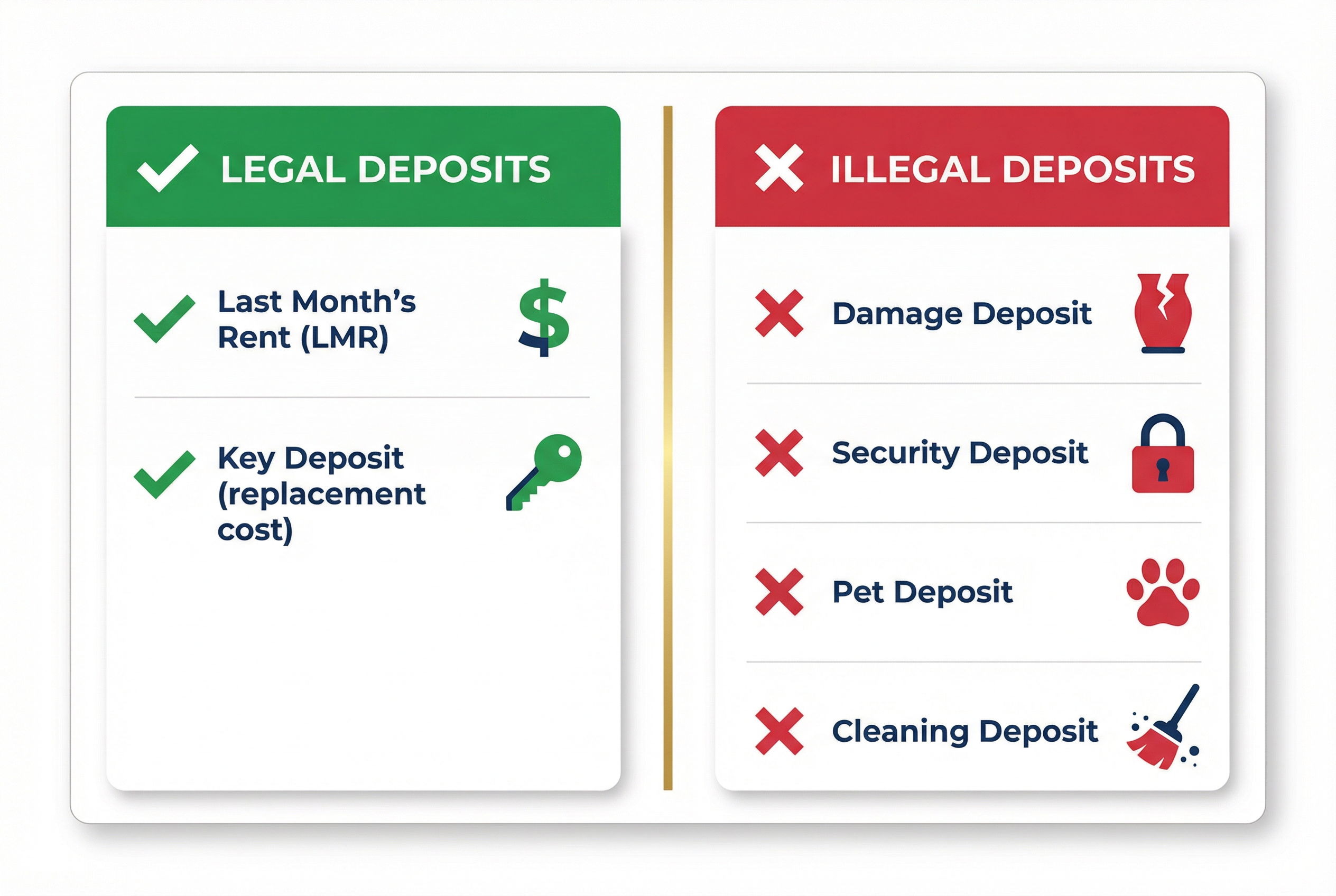
If you've collected a damage deposit, security deposit, pet deposit, or any deposit beyond Last Month's Rent, you've collected an illegal deposit. Here's how to fix it before your tenant files a T1.
The Legal Reality
Under the RTA, the only deposits a landlord can legally collect are:
- Last Month's Rent (LMR): Maximum one month's rent
- Key deposit: Actual replacement cost only, refundable when keys returned
Everything else—regardless of what you called it or whether the tenant agreed—is illegal and must be refunded.
In Zhou v. He (2024), the landlord collected a $6,400 "damage deposit." The tenant signed an agreement. The LTB ordered the full amount returned plus interest, stating the RTA applies "despite any agreement or waiver to the contrary."
Step-by-Step Refund Process
Step 1: Calculate What You Owe
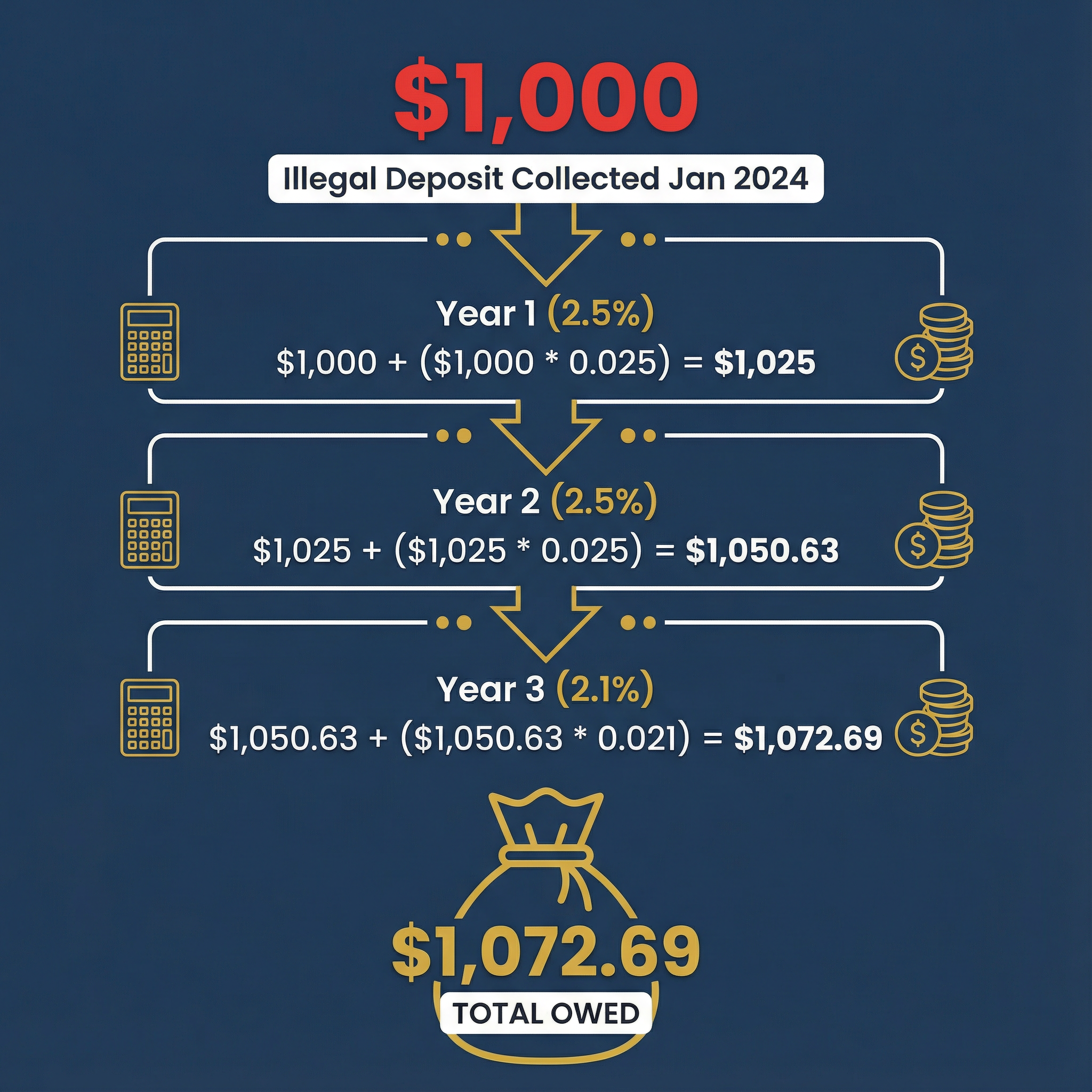
Take the original illegal deposit amount and add interest at the rent increase guideline rate for each year held: 2024 at 2.5%, 2025 at 2.5%, and 2026 at 2.1%. Compound annually from the date collected.
Example calculation: $1,000 deposit collected January 2024
- After Year 1 (2024): $1,000 × 1.025 = $1,025
- After Year 2 (2025): $1,025 × 1.025 = $1,050.63
- After Year 3 (2026): $1,050.63 × 1.021 = $1,072.69
- Total owed: $1,072.69
Step 2: Notify the Tenant in Writing
Send a letter or email stating you've identified an error in your deposit collection, the specific amount you're refunding, how you calculated the interest, and when they can expect the refund (within 30 days recommended).
Step 3: Process the Refund
Use e-transfer or cheque and keep proof. Get written acknowledgment of receipt. Do NOT deduct from last month's rent without tenant's written agreement.
Step 4: Document Everything
Keep copies of the original deposit receipt, interest calculation, refund notification, proof of payment, and tenant's acknowledgment.
When It's Too Late to Fix
Sometimes the damage is done. Understanding these scenarios helps you minimize losses and avoid repeating mistakes.
Scenario 1: Tenant Has Already Withheld Rent
If your tenant requested a Standard Lease, you failed to provide it within 21 days, and they've withheld one month's rent—after 30 more days pass, that rent is theirs permanently. You cannot recover it through the LTB. Providing the lease now stops further withholding but doesn't recover past rent.
Damage mitigation: Provide the correct lease immediately to prevent additional months of withholding.
Scenario 2: LTB Application Already Filed
If you've filed an L1, L2, or other application and the tenant's defense reveals lease problems, withdraw the application before the hearing to avoid dismissal on record, fix the lease issues, and refile with correct documentation. Accept that you've lost the time and filing fee ($186-$201).
Damage mitigation: Better to withdraw and refile correctly than have a dismissal that could prejudice future applications.
Scenario 3: Tenant Has Filed a T1 for Illegal Deposits
If the tenant beat you to it, respond to the application honestly, acknowledge the error and show proof you've already refunded (if applicable), and demonstrate good faith efforts to comply.
Damage mitigation: Proactive compliance and genuine acknowledgment often result in lower penalties than contested denials.
Scenario 4: Eviction Based on Invalid Lease Terms
If you served an N5 for violating a clause that's actually unenforceable (like a no-pet clause), the N5 is likely invalid, any L2 application based on it will fail, and you've wasted months and potentially damaged the landlord-tenant relationship.
Damage mitigation: Before serving any notice, verify the underlying lease clause is actually enforceable.
The average eviction in Ontario costs $11,500+ when you factor in lost rent, legal fees, and vacancy. Most of that cost comes from delays—delays caused by paperwork errors, dismissed applications, and having to restart processes. An hour spent auditing your lease now can save months of headaches later.
Ontario Lease Audit Checklist: 15 Points to Bulletproof Your Lease Before the LTB
Stop lease errors from costing you thousands. This 15-point checklist helps you audit your Ontario lease in under 5 minutes—catch the technical mistakes that get 29% of LTB applications dismissed.
Get Free PDF →Key Takeaways
Quick Wins Checklist (Do Today)
- Verify your lease is Form 047-2229 dated December 2020
- Confirm all tenant names match their government ID exactly
- Check property address against your tax bill or land registry
- Ensure all adult occupants have signed
- Confirm you've only collected LMR (no damage/security/pet deposits)
- Verify tenant received a signed copy within 21 days
Long-Term Strategy
- Create a master lease template with your compliant Section 15 additional terms pre-loaded
- Use digital lease tools (like Tenon10's Lease Builder) that enforce compliance automatically
- Audit existing leases annually, especially before serving any notices
- Document everything—keep copies of all lease-related communications for at least 3 years
- Stay updated on regulatory changes—Bill 60 and future amendments continue to reshape requirements
Conclusion
A lease is more than a piece of paper—it's the foundation of your entire landlord-tenant relationship and your legal protection at the LTB. Technical errors that seem minor on move-in day become expensive disasters when disputes arise.
The good news: most lease problems are fixable if you catch them early. Use the 10-point audit checklist on every existing lease in your portfolio. Fix what you can, document your corrections, and transition to compliant Standard Leases for all new tenancies.
If you've discovered illegal deposits or problematic clauses, address them proactively. A voluntary refund with interest costs far less than a T1 ruling against you. An amended lease signed today prevents a dismissed L1 application next year.
Ready to Build Bulletproof Leases?
Tenon10's Lease Builder automatically generates compliant Ontario Standard Leases with built-in safeguards against every common error.
Free • No signup required • RTA compliant
Frequently Asked Questions
Can a tenant void my entire lease if it contains one illegal clause?
No. Under the RTA, illegal clauses are void and unenforceable—but the rest of the lease remains valid. For example, if your lease contains an illegal "no pets" clause, a tenant can ignore that clause while still being bound by the legal terms like rent amount and payment dates. The clause is void; the lease continues.
I'm using OREA Form 400. Is that sufficient as a lease?
No. OREA Form 400 (Agreement to Lease - Residential Condominium) is a pre-lease agreement used during purchase negotiations. It is not a valid tenancy agreement under the RTA. You must still use the Ontario Standard Lease (Form 047-2229) and can attach Form 400 as a supplementary schedule if applicable.
My tenant has been month-to-month since 2015. Do I need to switch them to the Standard Lease?
Not unless they request it. Tenancies that began before April 30, 2018 are grandfathered under previous rules. However, if your tenant requests a Standard Lease, you must provide one within 21 days. The Standard Lease cannot change existing rent or terms—it simply formalizes the current arrangement.
How long should I keep copies of old leases?
Keep lease documents for at least 3 years after the tenancy ends. LTB applications can reference historical tenancy information, and you may need documentation for tax purposes, insurance claims, or disputes that arise after a tenant moves out. Digital backups are acceptable.
Can I fix a lease error after I've already filed an LTB application?
You can fix the error, but it won't save the current application if the error is material. If your L1 application is based on a lease with significant errors (wrong address, missing signatures), consider withdrawing the application, correcting the lease with tenant consent, and refiling. This costs you the filing fee and time but avoids a dismissal on your record.
What if my tenant refuses to sign a corrected lease?
You cannot force them to sign. Document your correction attempt in writing (email is fine), keep a copy for your records, and continue under the existing lease terms. If the error ever becomes relevant at an LTB hearing, your documented good-faith effort to correct it works in your favour.