The last month's rent deposit is the most common deposit in Ontario — and the most misunderstood. Most landlords picture it as a "security deposit" they can dip into for damage or cleaning at move-out. In Ontario, they can't. Understanding the last month's rent deposit rules matters because getting them wrong can cost you: a tenant can file a T1 application and claw back money you were never entitled to hold.
The rules are narrow and specific — what you can collect, what the deposit can be used for, the interest you owe every year, and the payment methods you can't demand. None of it is complicated, but each piece trips up landlords who assume Ontario works like everywhere else. This guide walks you through all of it: what's legal to collect at move-in, what the deposit can and can't cover, the mandatory annual interest and the top-up when rent rises, and how to recover damage the lawful way.
One note before we start: this is general information, not legal advice. For your specific situation, confirm with the Landlord and Tenant Board or a licensed professional.
The Last Month's Rent Deposit & Interest Checklist
What you can legally collect, what the deposit can (and can't) cover, and the interest you owe — a one-page Ontario reference to keep by your desk.
Get Free PDF →What You Can Legally Collect at Move-In
Ontario keeps this short. A landlord may collect exactly one general deposit — a rent deposit (the last month's rent, or LMR) of at most one month's rent, on or before the tenancy starts. On a weekly tenancy it's one week's rent. That's the whole allowance for a rent deposit.
The only other thing you can ask for is a key deposit — and even that is tightly limited. It's allowed only if it's refundable and no more than the actual replacement cost of the key, fob, or access card. It's meant to cover replacing keys, not to pad your position.
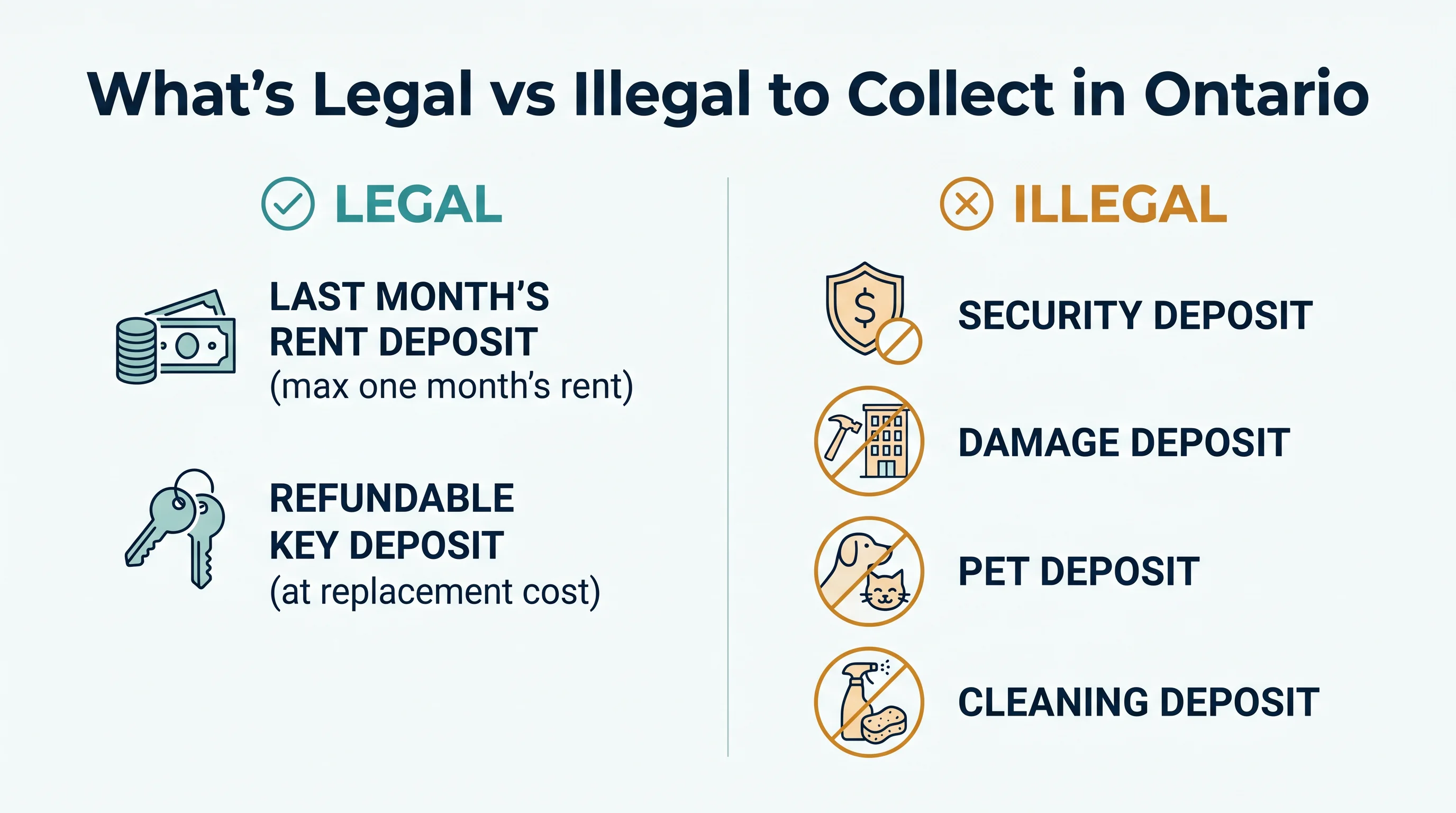
Everything else is illegal. No security deposit, no damage deposit, no pet deposit, no cleaning deposit, no "a little extra just in case." Ontario simply doesn't permit them — a point worth internalizing if you've rented in other provinces or countries where damage deposits are routine.
What about "first and last month's rent"? That's legal and common, but it's not two deposits. The "first" is just the first month's rent, applied to month one when the tenant moves in. The "last" is the single LMR deposit. So when a landlord asks for "first and last," they're collecting one month's rent up front plus one month's rent as the deposit — not two separate deposits on top of the rent.
One more move-in obligation: on request, you must give a receipt for any rent payment or deposit, free of charge. That duty extends even to a former tenant who asks within 12 months of the tenancy ending. It's a small thing, but refusing — or charging for it — is itself a breach.
What the Last Month's Rent Deposit Can (and Can't) Be Used For
Here's the rule that matters more than any other, and the one landlords get wrong most often: the LMR deposit can only be applied to the rent for the final month of the tenancy. Full stop. It cannot be used for damage, cleaning, unpaid utilities, or mid-tenancy arrears.
The reason so many landlords slip here is a mental filing error. They think of the deposit as a "security deposit" — money held against the tenant misbehaving — because that's how deposits work in a lot of places. In Ontario, it's pre-paid rent, not a damage buffer. Treating it as a damage deposit is the single most common landlord mistake with this deposit.
A few practical corollaries follow from that one rule. You can't double-dip: you can't hold the deposit and charge the tenant rent for that final month, because the deposit is that month's rent. It's applied to the tenant's actual last month of occupancy, even if they end the tenancy early — it's pre-paid rent, not a penalty you get to keep. And if a prospective tenant pays a deposit and then doesn't move in, the money has to be returned.

Consider a common scenario: a tenant moves out and the carpets need cleaning, so the landlord keeps the last month's rent deposit to cover it. Because the deposit can only be applied to the last month's rent, the tenant files a T1 and recovers the full amount — and the landlord, who had a legitimate cleaning cost, is left having to pursue it separately through the Landlord and Tenant Board. The lesson isn't that the landlord had no claim; it's that they used the wrong tool to collect it.
Interest and Top-Ups: The Rule Landlords Forget
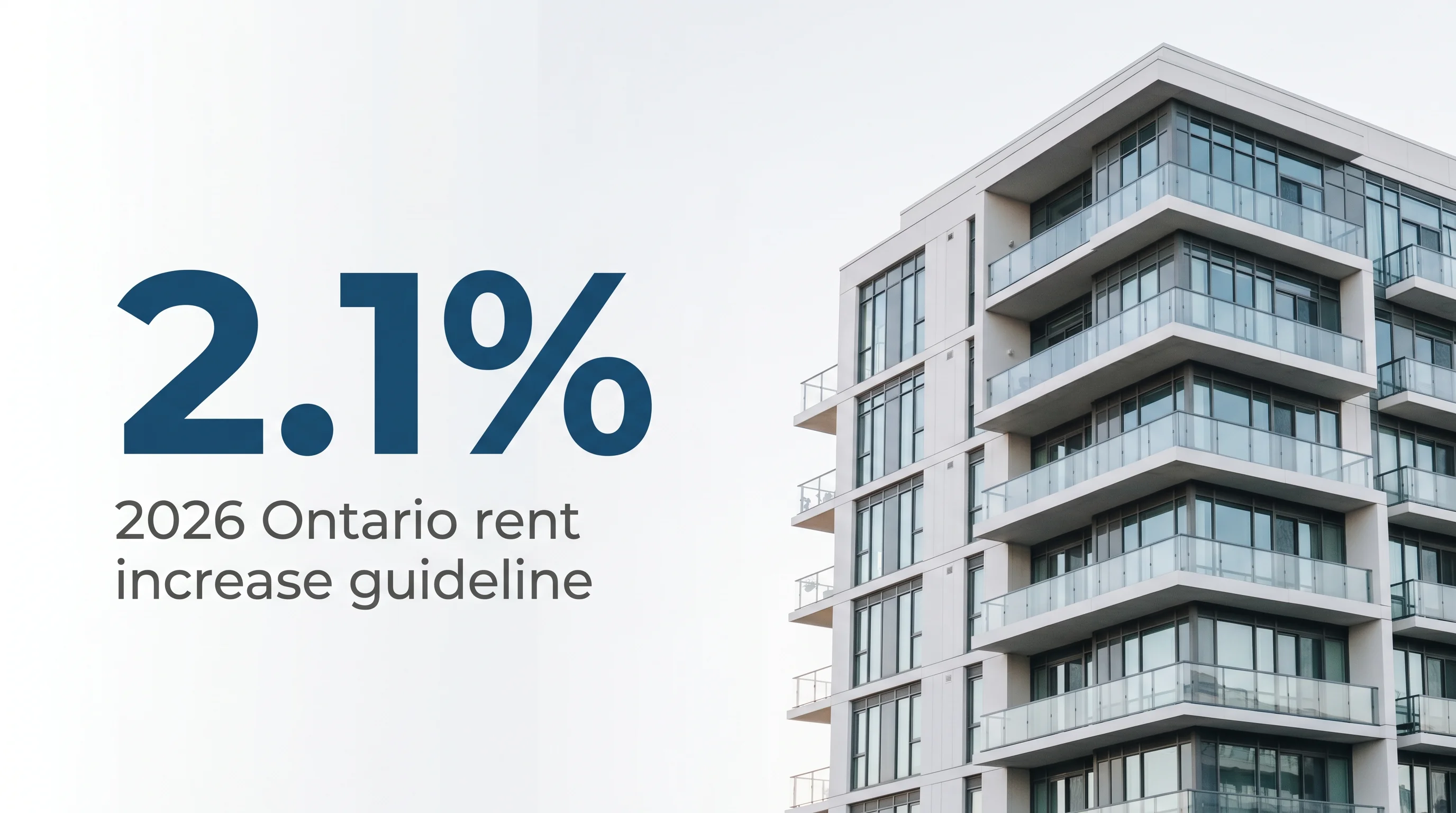
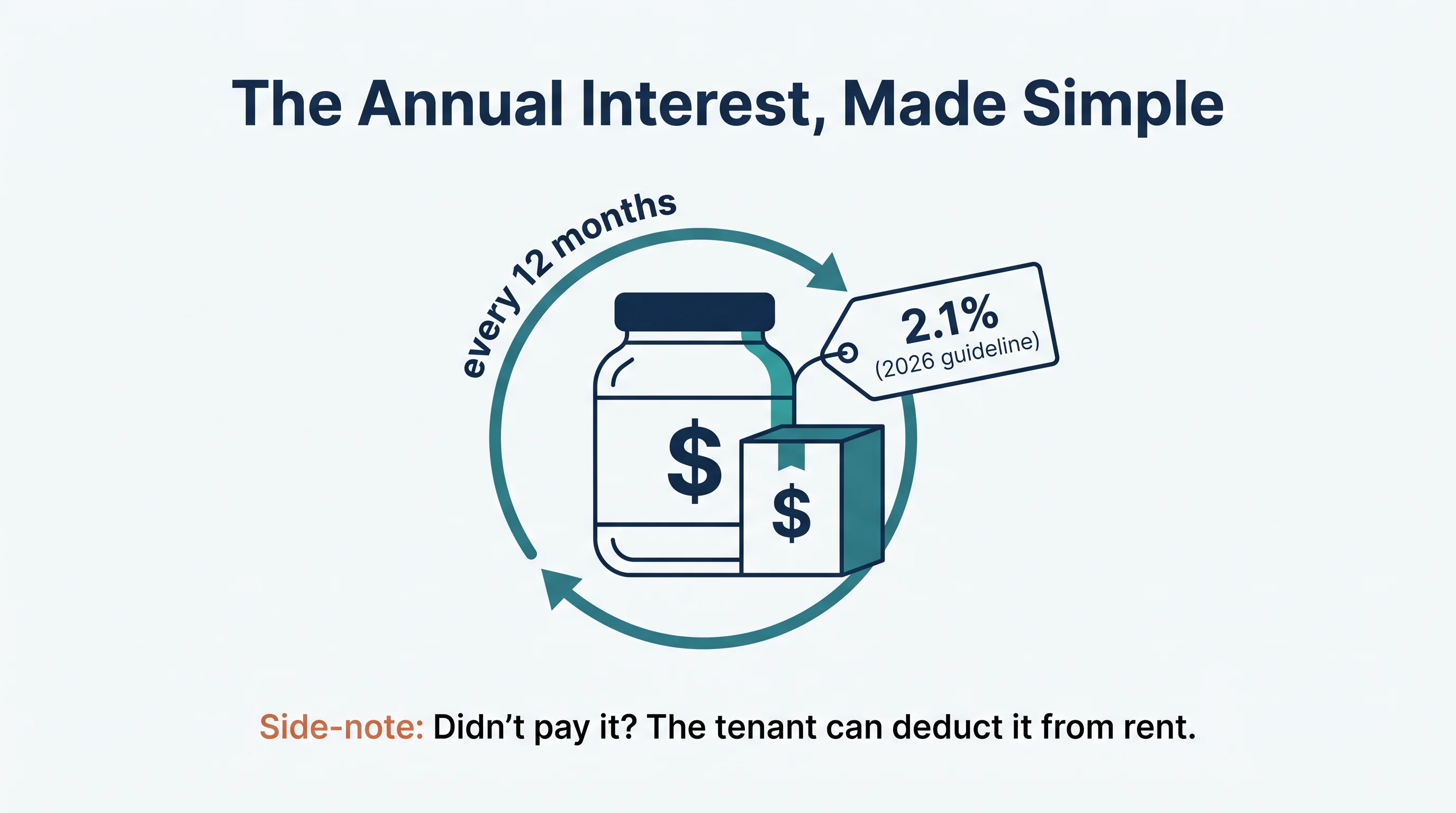
Every year, you owe your tenant interest on the last month's rent deposit. This isn't optional and it isn't a technicality — the Residential Tenancies Act requires it, and you must pay it every 12 months at a rate equal to the annual rent-increase guideline. For 2026, that rate is 2.1% (down from 2.5% in 2025 — the lowest guideline in four years). Verify the current guideline rate at publish, as it's set annually.
This is one of the most commonly forgotten landlord obligations, and it has real teeth. If you don't pay the interest, the tenant is legally allowed to deduct it from a rent payment. They can also claim it retroactively. So skipping it doesn't make it disappear — it just hands the tenant a lever, and leaves you looking non-compliant if a tenancy ever ends up before the Board.
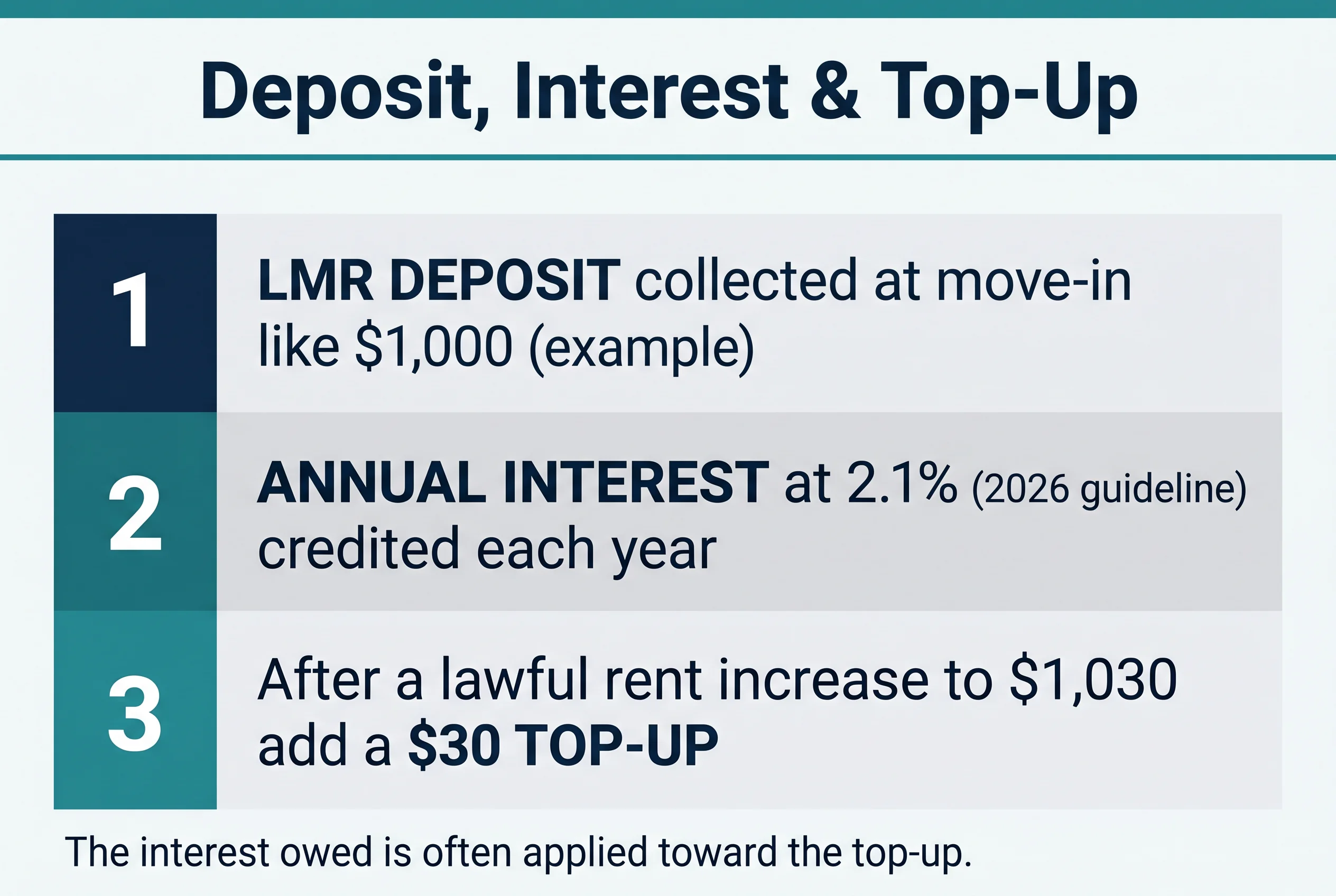
The companion rule is the top-up. When rent legally increases, you may require the tenant to top up the deposit so it matches the new rent. If rent rises from $1,000 to $1,030, you can ask for the $30 difference — which keeps the deposit equal to a full month's rent as rent climbs over a long tenancy. In practice, the annual interest you owe is often applied toward that top-up, so the two net against each other and little or no cash actually changes hands.
One important condition: a top-up rides on a lawful rent increase. That means a proper N1 notice, at least 90 days' notice, the 12-month rule between increases, and the guideline cap for rent-controlled units. No valid increase, no top-up. If you're working through an increase, our 2026 N1 rent-increase guide walks through the timing and the notice.
Payment Methods You Can't Demand — and Recovering Damage Lawfully
There's a payment-method rule that catches a lot of landlords, especially newer ones setting up their first tenancy: you cannot require a tenant (or an applicant) to provide post-dated cheques, or to permit automatic debit, credit-card, or any other automatic payment of rent. A lease clause that requires it is unenforceable.
The nuance is that voluntary is fine. A tenant can choose to give you post-dated cheques or set up auto-pay — plenty do, because it's convenient for them too. It just can't be a condition of getting the unit. And once you and the tenant have agreed on a payment method, it can't be changed unless you both agree. While we're on the subject of things you can't charge for: you can't charge a fee for giving a receipt, or collect any commission or fee for renting the unit.
Now, the flip side of the "you can't touch the deposit for damage" rule: how do you recover damage or unpaid rent? Through the Landlord and Tenant Board. For a current tenant who owes rent, that's an L9 application. For a former tenant who moved out still owing you money — rent arrears or damage beyond normal wear — that's an L10 application. Those are the lawful routes; the deposit isn't one of them.
And the cost of getting the deposit rules wrong is concrete. Collect an illegal deposit — a damage deposit, a pet deposit, or more than one month's rent — and the tenant can file a T1; the Board can order you to repay it, plus interest. RTA breach applications generally have to be brought within one year, but that's cold comfort if you've been holding an illegal deposit the whole time.
A couple of edge cases worth flagging rather than glossing over: the RTA generally doesn't apply where the tenant shares a kitchen or bathroom with you, the owner; some student housing and care homes have special rules; and commercial tenancies are outside the RTA entirely. If your situation is unusual, check what the RTA does and doesn't allow or confirm with the LTB before you rely on the general rules above.
Key Takeaways
The last month's rent deposit comes down to a short set of habits:
- Collect at most one month's rent as the deposit, on or before the tenancy starts.
- Collect no other deposit — no security, damage, pet, or cleaning deposit. A key deposit is OK only if refundable and at replacement cost.
- Apply the deposit only to the last month's rent — never to damage, cleaning, or arrears.
- Pay the tenant interest every 12 months at the guideline rate (2.1% for 2026) — or apply it toward a top-up.
- When rent legally increases (valid N1), you may require a top-up to match the new rent.
- Don't require post-dated cheques or automatic payment — the tenant can agree voluntarily.
- Recover damage or arrears through the LTB (L9 or L10), not from the deposit — and give receipts on request.
The quick win is to stop treating the deposit as a damage buffer and to diarize the annual interest date for each tenancy. The long game is a clean system that tracks the deposit, its interest, and any top-ups, so you're dispute-ready if a tenancy ever ends badly. For the neighbouring pieces, see the Ontario Standard Lease guide and, if you're just starting out, becoming a landlord in Ontario.
The Last Month's Rent Deposit & Interest Checklist
The whole set of rules on one printable page — collect it right, apply it right, and never miss the interest you owe.
Get Free PDF →Conclusion
The last month's rent deposit is simple once you see it clearly: one month's rent, collected up front, applied only to the final month, with interest paid every year and a top-up when rent rises. No damage deposit, no security deposit, no required post-dated cheques. That's the whole framework.
None of it is hard — it's a handful of rules, and getting them right keeps you out of a T1 dispute and on solid ground if a tenancy ever ends badly. Two things to do this week: check your current leases for an illegal deposit or a required-post-dated-cheque clause, and diarize the interest date for each tenancy.
Reminder: this is general information, not legal advice. Rules can be fact-specific and some tenancies are exempt. For your situation, confirm at ontario.ca or with the Landlord and Tenant Board.
Track every deposit — and never miss the interest
Tenon10 records each tenant's deposit, flags the annual interest date, and keeps clean receipts and records — so a deposit question is a two-minute lookup, not a dispute.
Free to start • Built for Ontario landlords
Frequently Asked Questions
How much can a landlord charge for a deposit in Ontario?
At most one month's rent as a last month's rent deposit (one week's rent for a weekly tenancy), plus an optional refundable key deposit at the cost of replacing the key. No security or damage deposit is allowed.
Can a landlord use the last month's rent deposit for damage?
No. The deposit can only be applied to the last month's rent — never to damage, cleaning, or arrears. Damage is recovered through the Landlord and Tenant Board, not the deposit.
Do landlords have to pay interest on the last month's rent deposit?
Yes — every 12 months, at a rate equal to the annual rent-increase guideline (2.1% for 2026). If you don't pay it, the tenant can lawfully deduct it from their rent.
Can a landlord require post-dated cheques in Ontario?
No. Under the RTA a landlord can't require post-dated cheques or automatic payments as a condition of tenancy. A tenant can agree to them voluntarily, but it can't be forced.
Can a landlord ask the tenant to top up the deposit?
Yes — when rent legally increases, you can require a top-up so the deposit matches the new rent. In practice, the annual interest you owe is often applied toward it.