Your tenant is behind on rent — but they're otherwise a good tenant, and in today's softer market the last thing you want is an empty unit. So do you really have to evict just to get your money? No. The L9 application in Ontario lets you collect the arrears you're owed while keeping the tenant in place.
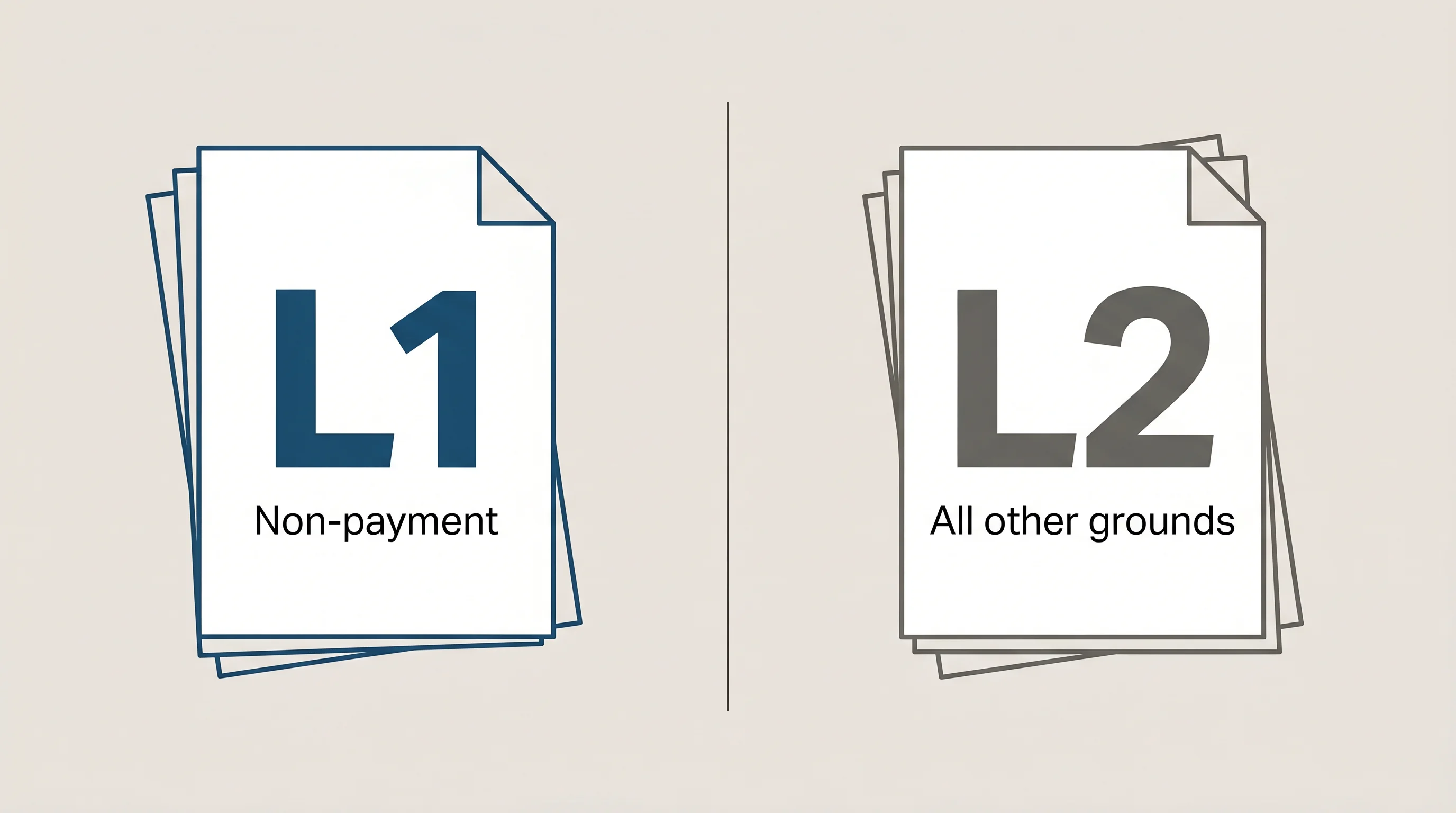
Here's the catch most landlords miss: they assume every rent problem means an N4 and an eviction fight. That's the L1 path. The L9 is the quieter option — no notice required, no eviction — and reaching for the wrong tool (or assuming you need a notice you don't) can waste months. This is a plain-language walkthrough of the L9: what it is, when to use it instead of an L1 or L10, exactly what you can claim, how to file it, the realistic timeline, and how to actually collect once you win. We'll cover it in four parts — what the L9 is and who it's for; L9 versus L1 versus L10; how to file and win at the hearing; and the 2026 outlook, including Bill 60 and the enforcement reality.
This article is general information, not legal advice. Confirm current fees and procedures with the LTB or a licensed paralegal before you file.
The L9 Filing & Evidence Checklist
A free step-by-step checklist to choose the right form, build the numbers, and bring the evidence that wins your L9 hearing.
Get Free PDF →What the L9 Is and Why It Exists
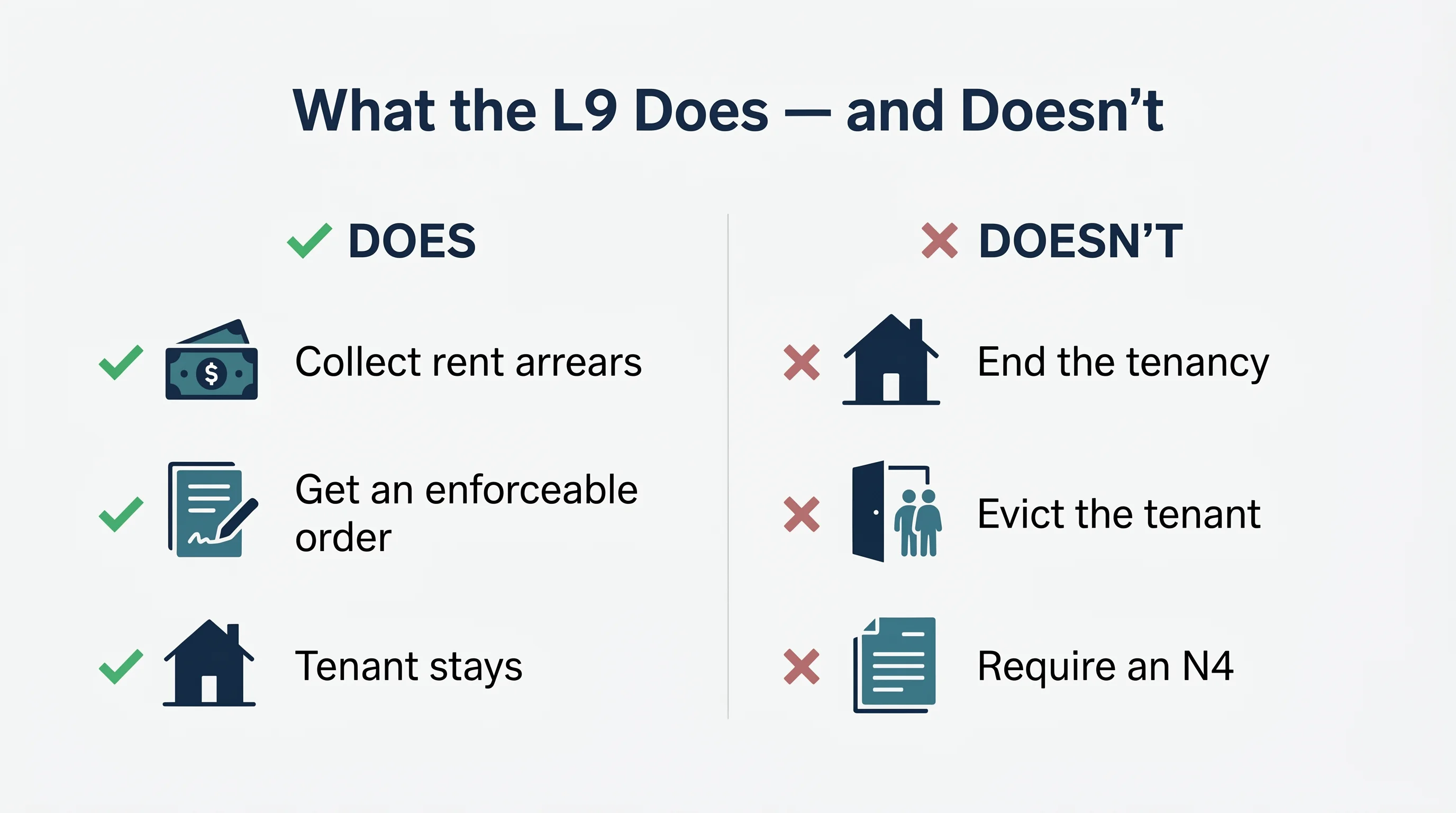
Form L9, the "Application to Collect Rent the Tenant Owes," asks the Landlord and Tenant Board (LTB) for an order that a current tenant pay the rent arrears they owe. The key word is collect: it does not end the tenancy. The tenant keeps living in the unit; you're simply seeking a money order for what's owed.
The single most important thing to understand — and the point most landlords get wrong — is that no notice is required. Unlike the L1, there's no N4 (or any other notice) that goes with an L9. You can file as early as the day after rent is due and unpaid.
Two guardrails apply. First, the tenant must still be living in the unit; if they've already moved out, you'd use an L10 instead (more on that below). Second, the LTB's monetary limit is $50,000 — for anything above that, you'd go to court.
What you can claim
You can claim the rent arrears owed as of your filing date. New rent that comes due after you file is paid as usual — it isn't covered by that application. If a rent cheque bounced, you can also add NSF cheque charges: the bank's charge, the statutory per-cheque charge, and a reasonable administration charge. What you generally can't put on an L9 is unpaid utilities or damage — those belong on an L2 (current tenant) or an L10 (former tenant), and the LTB won't make an order against a guarantor, since a guarantor isn't a tenant.
Why does this matter so much in 2026? With national average asking rent down around $2,123 after roughly a year of decline and vacancy forecast near 3–5%, turning over a unit can cost more than the arrears themselves. A new tenant often pays only modestly more than a sitting one, and re-renting carries vacancy and risk. Keeping a fixable tenant and collecting what's owed is frequently the smarter financial play.
L9 vs L1 vs L10: Which One Do You Need?
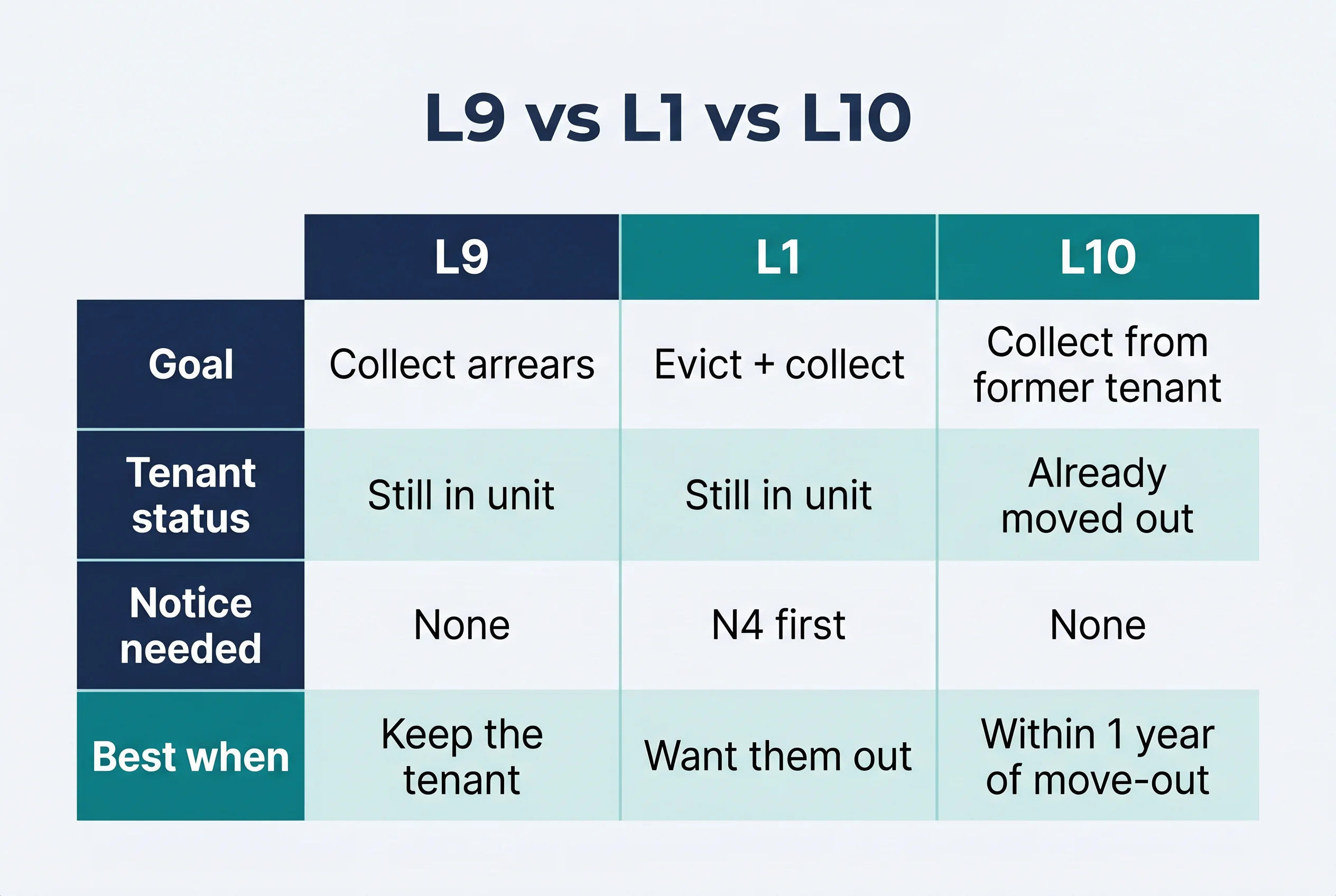
This is the decision that trips landlords up, so let's make it simple. Three forms, three different goals:
- L9 — collect only. The tenant stays, no N4 is needed. Use it when you want your money but want to keep the tenancy going.
- L1 — evict and collect. Requires an N4 served first, then the L1 after the notice period. Use it when you want the tenant out as well as the arrears.
- L10 — collect from a former tenant. For a tenant who has already moved out (on or after September 1, 2021); it must be filed within one year of the move-out date.
A quick way to choose: "good tenant, rough patch" points to an L9 (or a payment plan). "Won't pay and won't communicate" points to an N4 plus an L1. "Already gone, still owes me" points to an L10 — and don't sit on it, because the one-year clock is firm.
The economics reinforce the point. A full eviction path can run months and cost a landlord thousands of dollars, on top of the vacancy and re-rent risk that follows in a softer market. Against that, carrying a short arrears plan with a tenant who's paying again can be far cheaper. As the Landlord's Self-Help Centre puts it, the L9 asks only for an arrears order, not termination — if what you actually want is the unit back, that's a different process built around the N4 and L1. (If you're weighing eviction routes, our guide on L1 vs L2 applications breaks those down.)
How to File the L9 and Win at the Hearing
You can file an L9 online through the Tribunals Ontario Portal (the fastest route), by mail, or in person at certain ServiceOntario locations. You'll pay a filing fee, and a Fee Waiver is available if you can't afford it. Only the landlord or a licensed paralegal or lawyer can sign the application — and an unsigned form can be dismissed.
The form itself has several parts: the rental unit address, the total amount owed, landlord and tenant details (use a Schedule of Parties if there are more than the form fits), the reasons, the rent-owing calculation table, an NSF section if applicable, and the fee. In practice you total the arrears plus any NSF charges plus the fee into the "amount owing." Keep your filed copy and your fee receipt — if you win, you can ask the LTB to order the tenant to repay the fee.

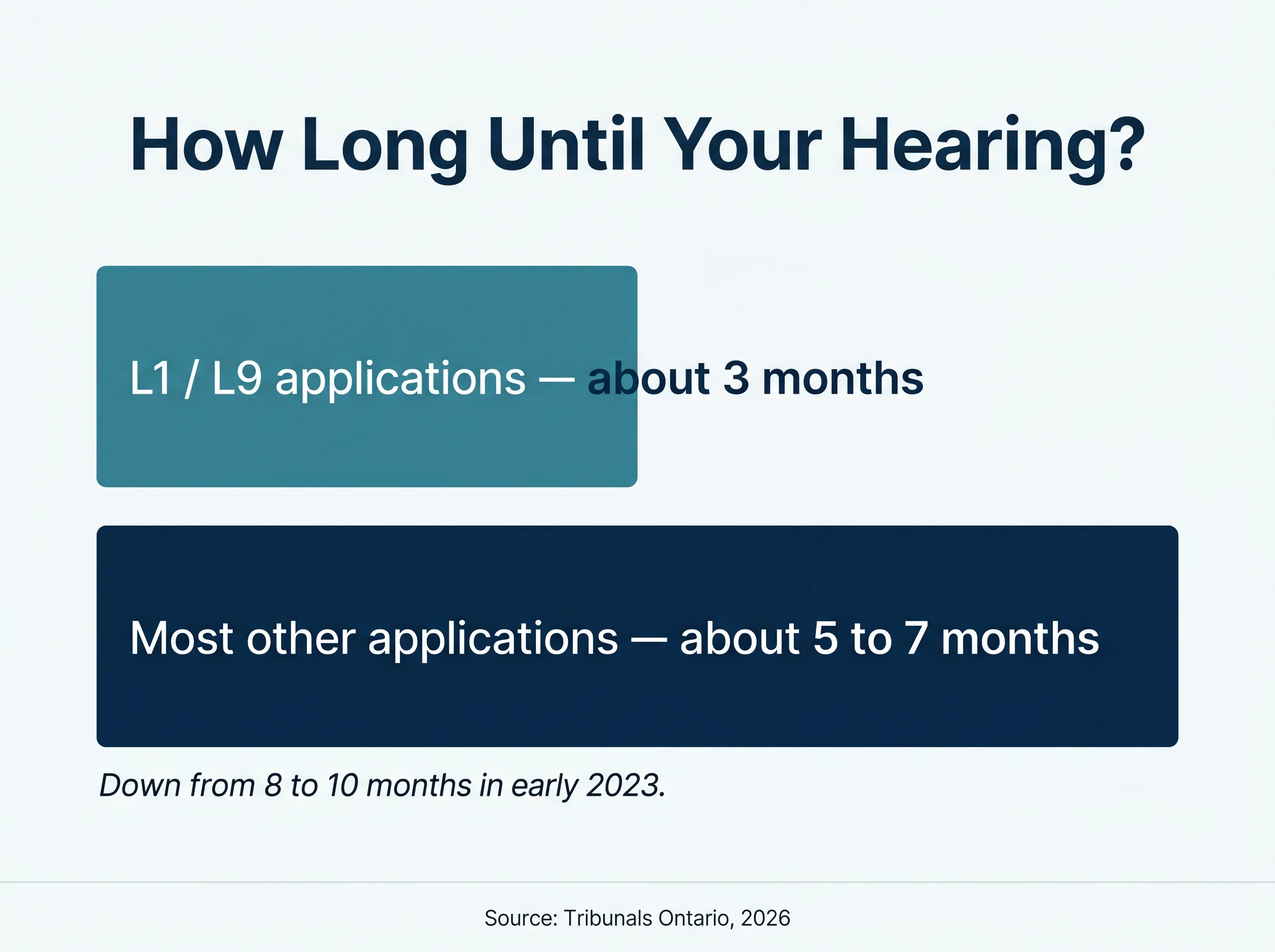
On timing, set expectations honestly: the L9 sits in the fast lane. Non-payment applications (L1 and L9) are currently being scheduled within roughly three months of filing, compared with five to seven months for most other application types — and down sharply from the eight-to-ten-month waits of early 2023. The written order follows the hearing.
What wins at the hearing is clean evidence: the lease, an organized rent ledger or payment records, and any correspondence or payment-plan messages. Improper service and weak records are the leading reasons rent cases get dismissed or delayed.
2026 Outlook: Bill 60, Enforcement, and Getting Paid
One expectation to set clearly: winning an L9 gives you an enforceable order, but it's a debt, not a cheque. If the tenant still won't pay, you may have to enforce it through the courts — for example, by garnishing wages. Know that route before you need it, and factor it into your decision to file.
On the regulatory side, the Fighting Delays, Building Faster Act, 2025 (Bill 60) passed on November 24, 2025, but as of mid-2026 its RTA amendments aren't all in force yet — treat this as a transition period and watch for LTB updates. The changes mostly touch the eviction side rather than the L9 itself: the N4 notice period drops from 14 days to 7, the window to request a review shortens from 30 days to 15, and tenants must pay at least 50% of the claimed arrears before raising counter-issues at a hearing. The L9's core — collect only, no notice, tenant stays — is unchanged. (Our Ontario rental law changes 2026 guide tracks the full picture.)
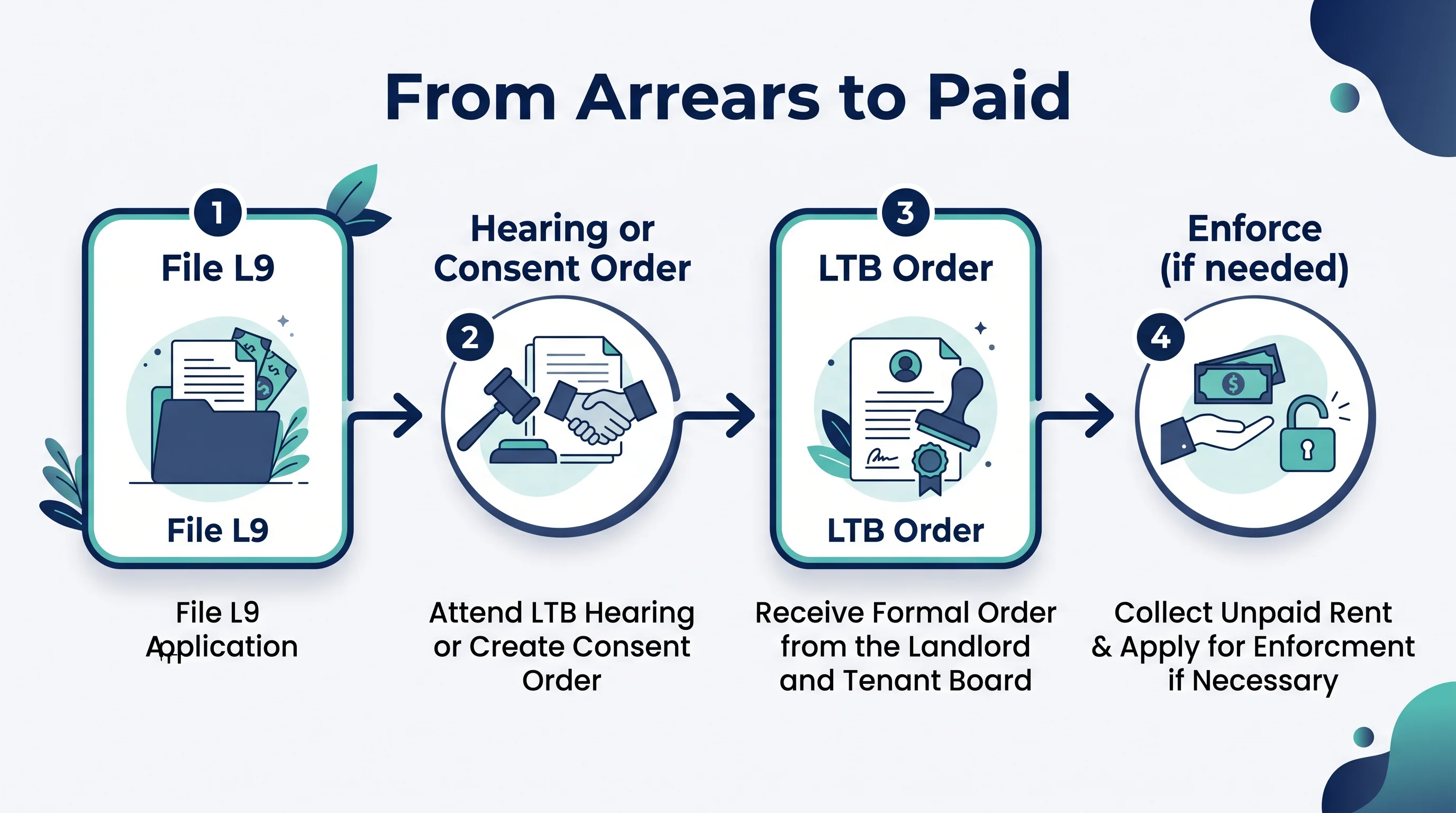
The way to prepare is straightforward: track rent tightly, file early rather than letting arrears snowball, keep clean records, and know your enforcement route in advance. In a softer market, a disciplined collect-and-keep approach — an L9 paired with a sensible payment plan — protects your cash flow without the cost and risk of turnover.
The L9 Filing & Evidence Checklist
A free step-by-step checklist to choose the right form, build the numbers, and bring the evidence that wins your L9 hearing.
Get Free PDF →Key Takeaways: Before You File an L9
Run through this before you file:
- Confirm the tenant is still living in the unit — if they've moved out, file an L10 within one year instead.
- Decide L9 (collect, keep the tenant) versus L1 (evict and collect, which needs an N4 first).
- Remember no N4 or notice is needed — you can file the day after rent is late.
- Build the numbers: arrears plus any NSF charges (bank + statutory + admin) plus the fee.
- Gather evidence: the lease, a rent ledger, payment records, and any payment-plan messages.
- File via the Tribunals Ontario Portal (fastest), pay the fee, and keep your receipt.
- Consider a Payment Agreement for a consent order without a hearing — and know your enforcement route if the tenant still doesn't pay.
The quick win is filing early with clean records. The long-term play is tight rent tracking and a documented payment-plan process, so arrears rarely reach a hearing in the first place. For the official details, see the LTB's L9 form and instructions and the Tribunals Ontario fees page.
Conclusion
The L9 is the landlord's "collect without evicting" tool — no notice required, the tenant stays, and you walk away with an enforceable order for the arrears. Choose it over an L1 when the tenancy is worth keeping, use an L10 if the tenant has already gone, and keep the $50,000 cap and the enforcement step in mind.
It's faster than most LTB applications, and paired with a payment plan it can resolve arrears without the expense and uncertainty of turnover. Confirm the tenant is still in the unit, total what's owed, gather your records, and file — or set up a payment plan — promptly rather than letting the balance grow.
Reminder: this is general information, not legal advice. For your specific situation, consult a licensed paralegal or lawyer.
Stay ahead of arrears before they snowball
Tenon10 tracks rent, flags late payments early, and keeps the clean ledger and records you'll need if you ever file an L9.
Free to start • Built for Ontario landlords
Frequently Asked Questions
Do I need to serve an N4 before filing an L9?
No. Unlike the L1, the L9 needs no notice. You can file as early as the day after rent is due and unpaid.
Does filing an L9 evict my tenant?
No. The L9 only collects arrears; the tenancy continues. To evict for non-payment, you'd serve an N4 and file an L1.
Can I file an L9 if my tenant already moved out?
No. The tenant must still be in the unit. If they moved out on or after September 1, 2021, file an L10 within one year of the move-out date.
How much can I claim on an L9?
The rent arrears owed at filing, plus NSF cheque charges if applicable — up to the LTB's $50,000 limit. For more than that, you'd go to court.
How long does an L9 take?
L9 and L1 applications are currently scheduled within roughly three months of filing — faster than most other LTB applications.