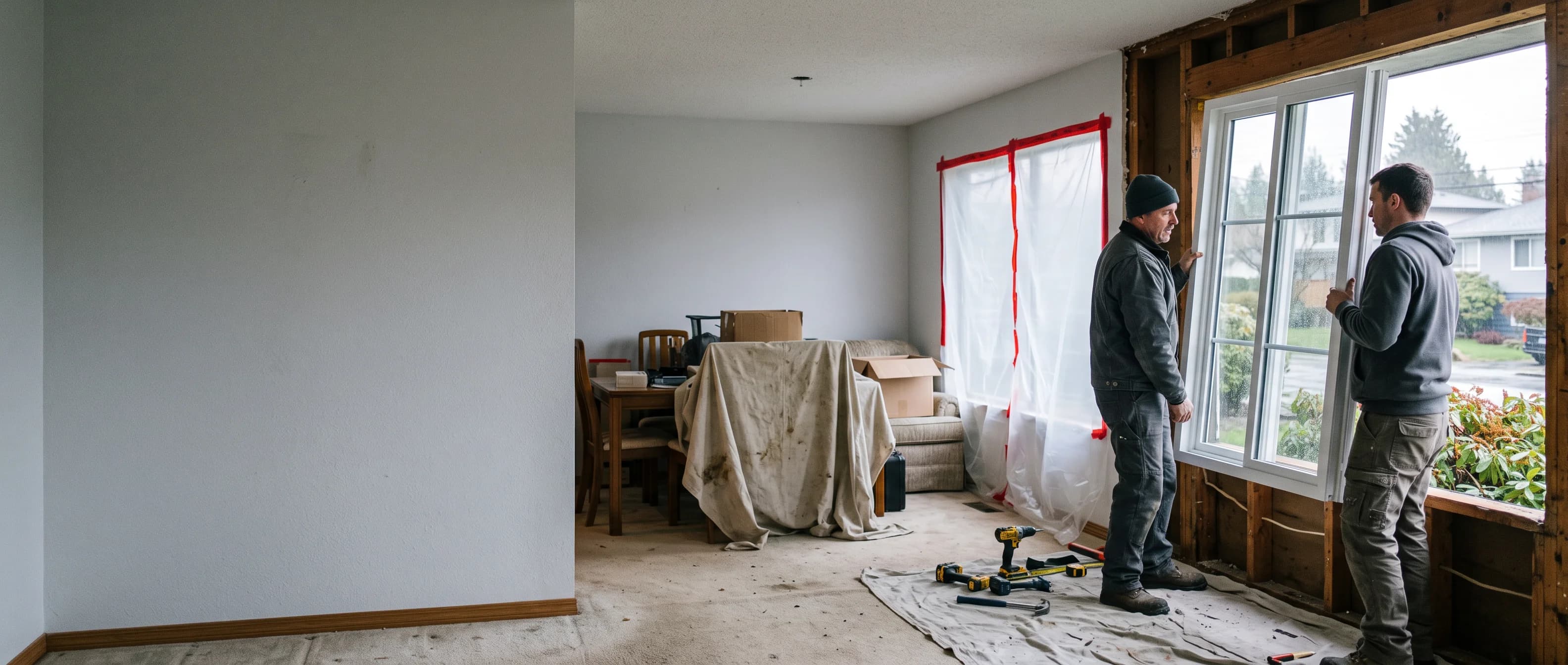
Every fall, Alberta landlords call in the same trades: furnace and boiler techs, plumbers, glaziers, electricians and handypeople. The work is seasonal, but the standard it has to meet is not. A rental in Alberta must meet the province's Minimum Housing and Health Standards (M.O. 57/2012) all year, and section 16(c) of the Residential Tenancies Act makes those standards a term of every residential tenancy.
This checklist is for the trades who do the work and the landlords who hire them. It ties each pre-winter check to the section of the Standards it supports, and sets out the entry rules for getting into an occupied unit.
Alberta Rental Winter Checklist
A pre-winter checklist for Alberta rentals and the trades who do the work: heat, windows, plumbing, hot water, smoke alarms and entry notice.
Get Free PDF →The winter standards in one table
| Area | What the Standards require | Section |
|---|---|---|
| Roof and cladding | Maintained waterproof, windproof and weatherproof | 2(a) |
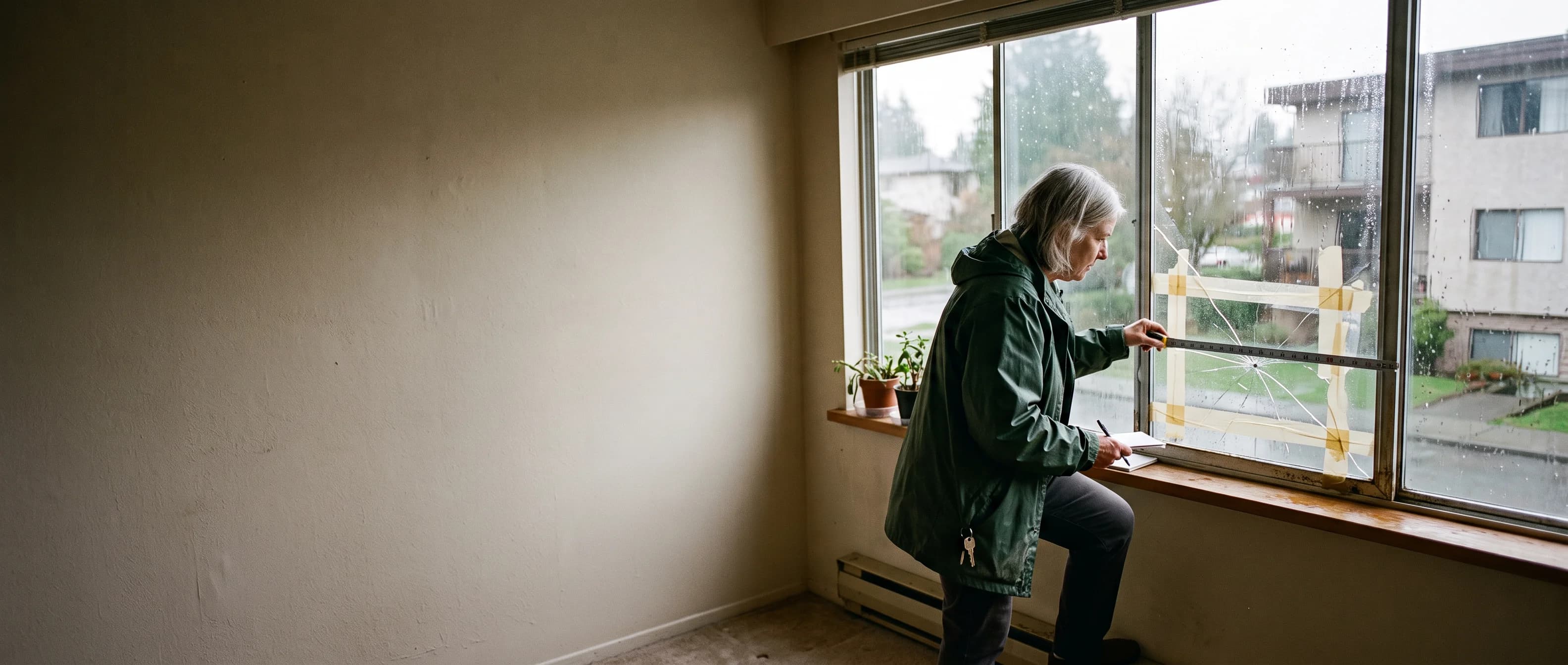
| Windows and exterior doors | In good repair, free of cracks and weatherproof | 2(b)(i) |
| Winter windows | In premises used in winter, windows in habitable rooms protect against cold through a storm sash, double glazing or another durable thermal barrier approved by an Executive Officer | 2(b)(ii) |
| Screens | Effective screens on ventilation windows during the part of the year when flying insects are a problem | 2(b)(iii) |
| Plumbing and drains | Maintained in proper operating condition; fixtures serviceable and free from leaks | 6(a), 6(c) |
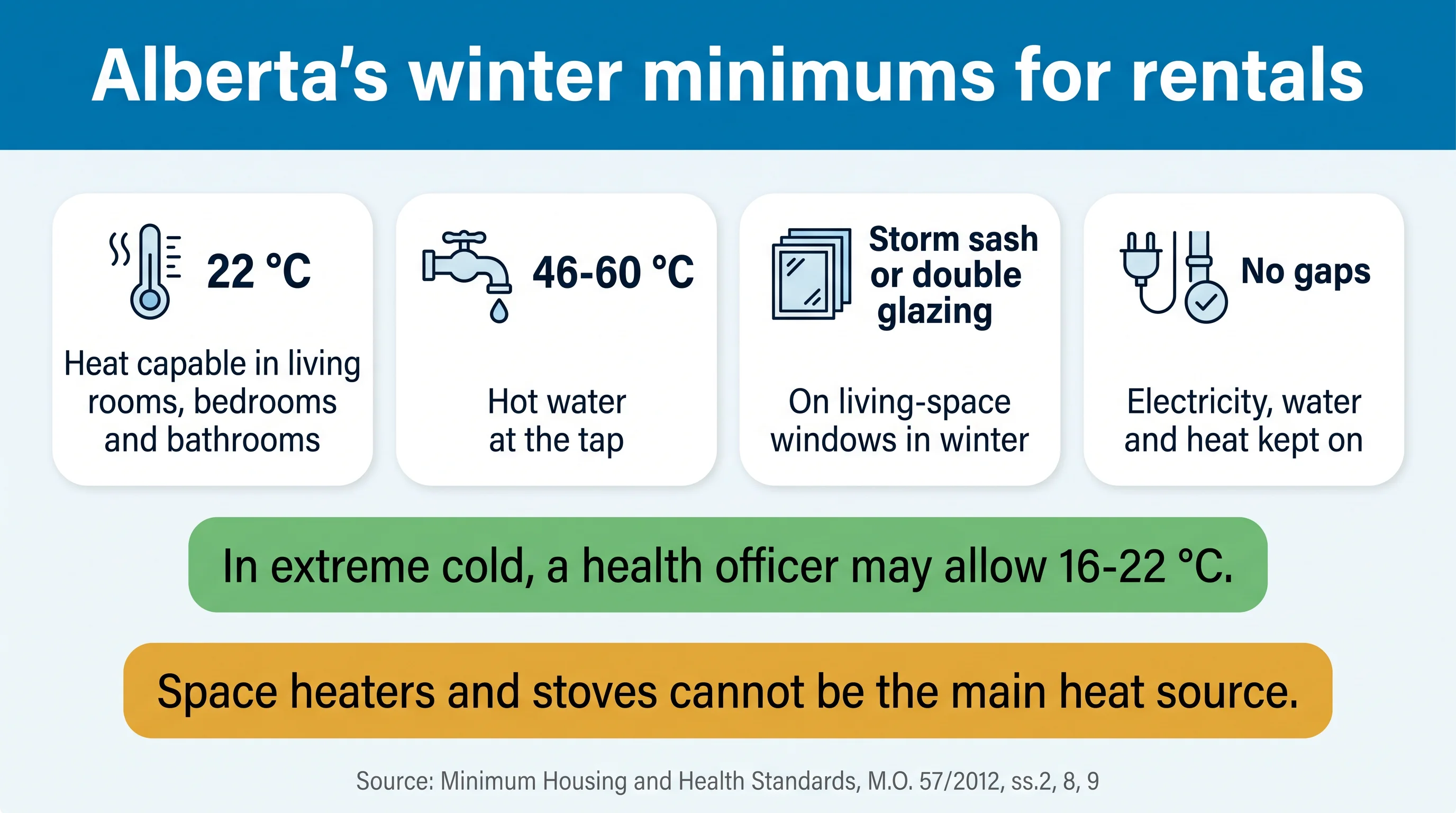
| Heating | Properly installed, in good working condition, and capable of heating all habitable rooms, bathrooms and toilet rooms to at least 22 °C | 8(a) |
| Heat controlled by someone else | Maintained at 22 °C or more where a person other than the occupant controls the heat | 8(a) |
| Primary heat source | Cooking appliances and portable space heaters cannot be the primary source of the required heat | 8(c) |
| Utilities | The owner ensures a continuous supply of electricity, water and heat unless the rental agreement makes them the occupant's sole responsibility | 8(d) |
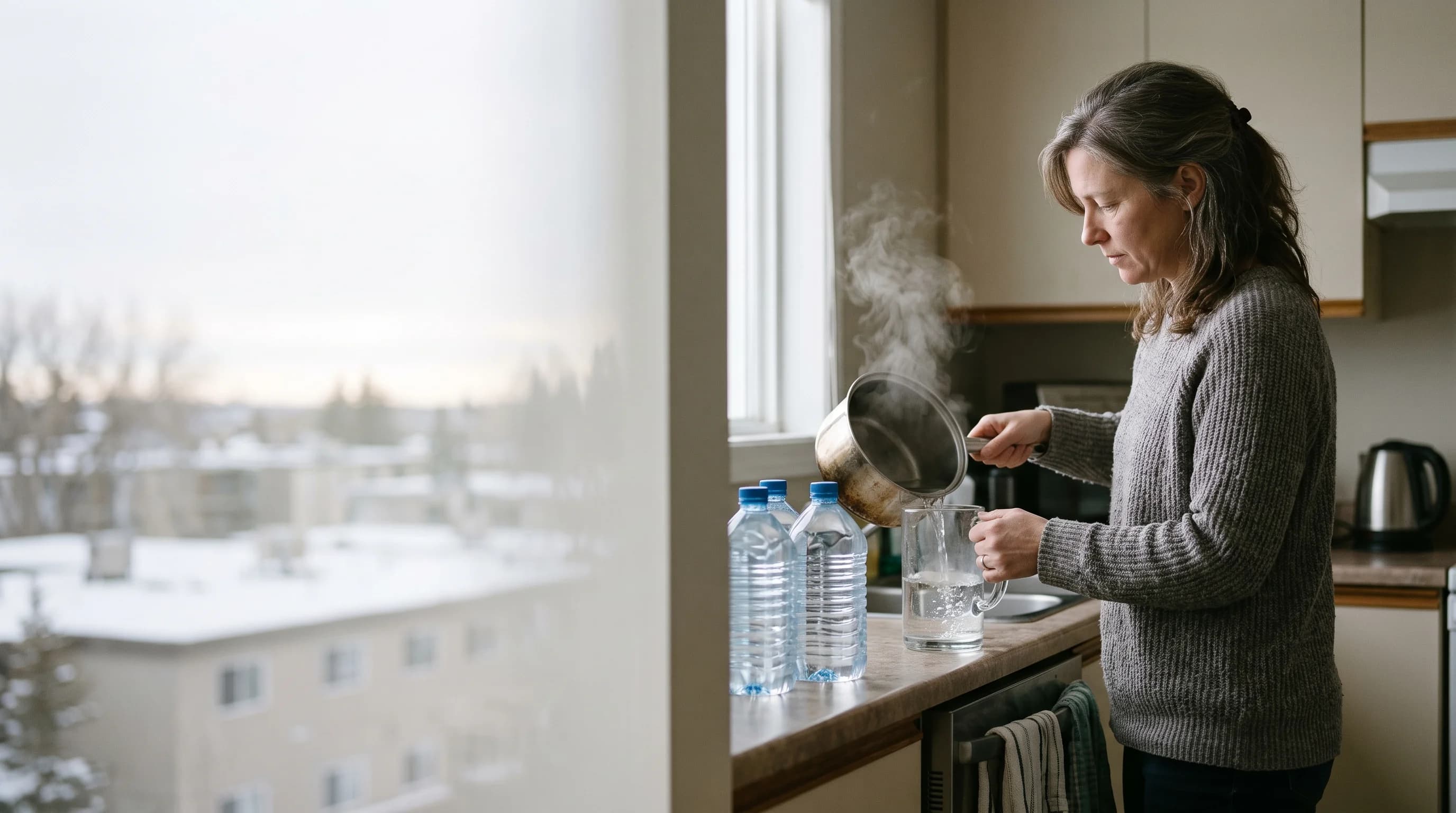
| Hot water | Not less than 46 °C and not more than 60 °C at the fixture | 9(a) |
| Electrical | Outlets, switches and fixtures properly installed and in good, safe working condition | 11 |
| Smoke alarms | Between each sleeping area and the rest of the suite, and operational and in good repair at all times | 12 |
Section 8(b) allows one exception. When the outdoor temperature is colder than the winter design temperature in the Alberta Building Code, an Executive Officer may permit an indoor temperature of less than 22 °C but more than 16 °C.
The pre-winter checklist
Heating (s.8)
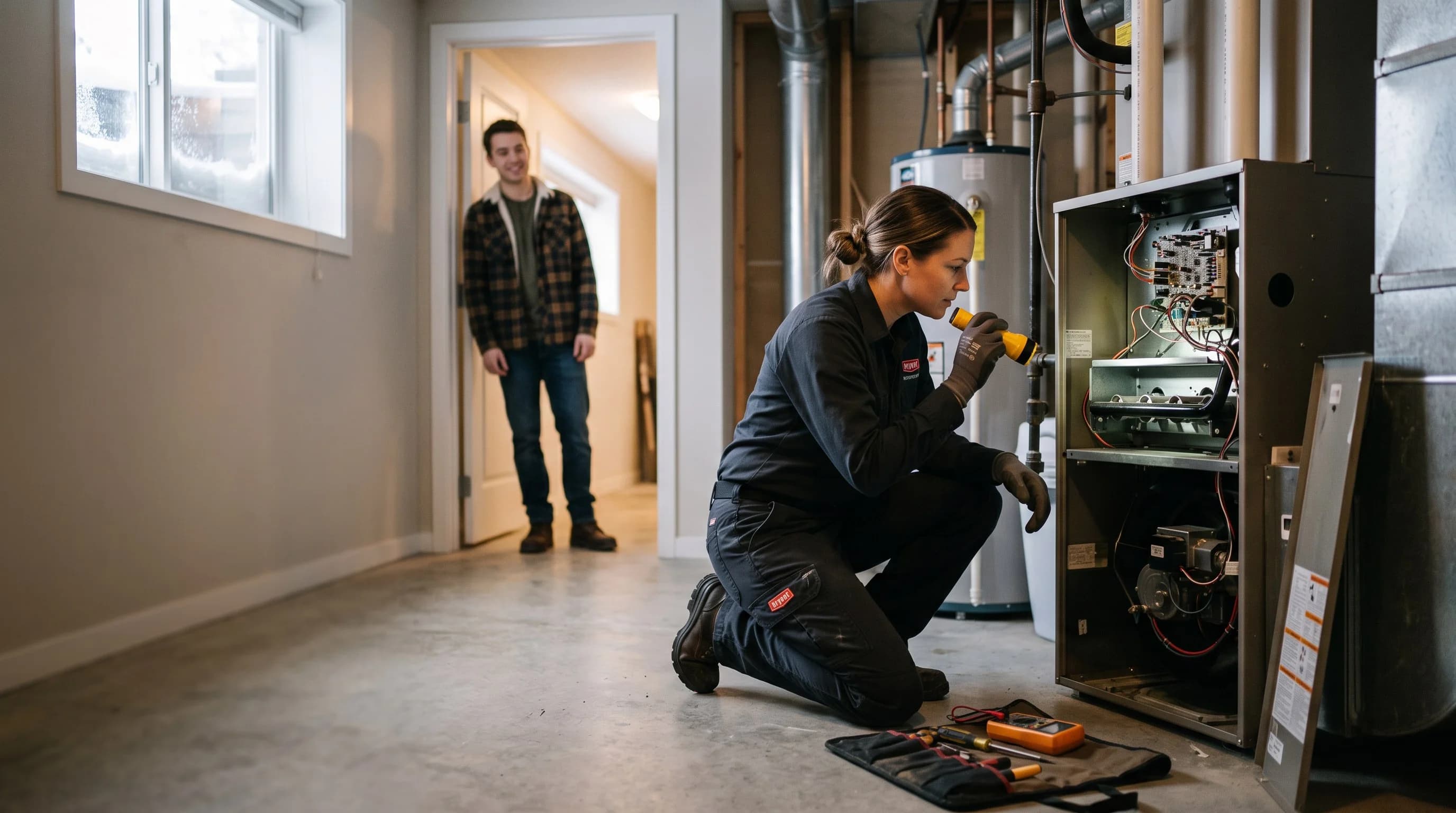
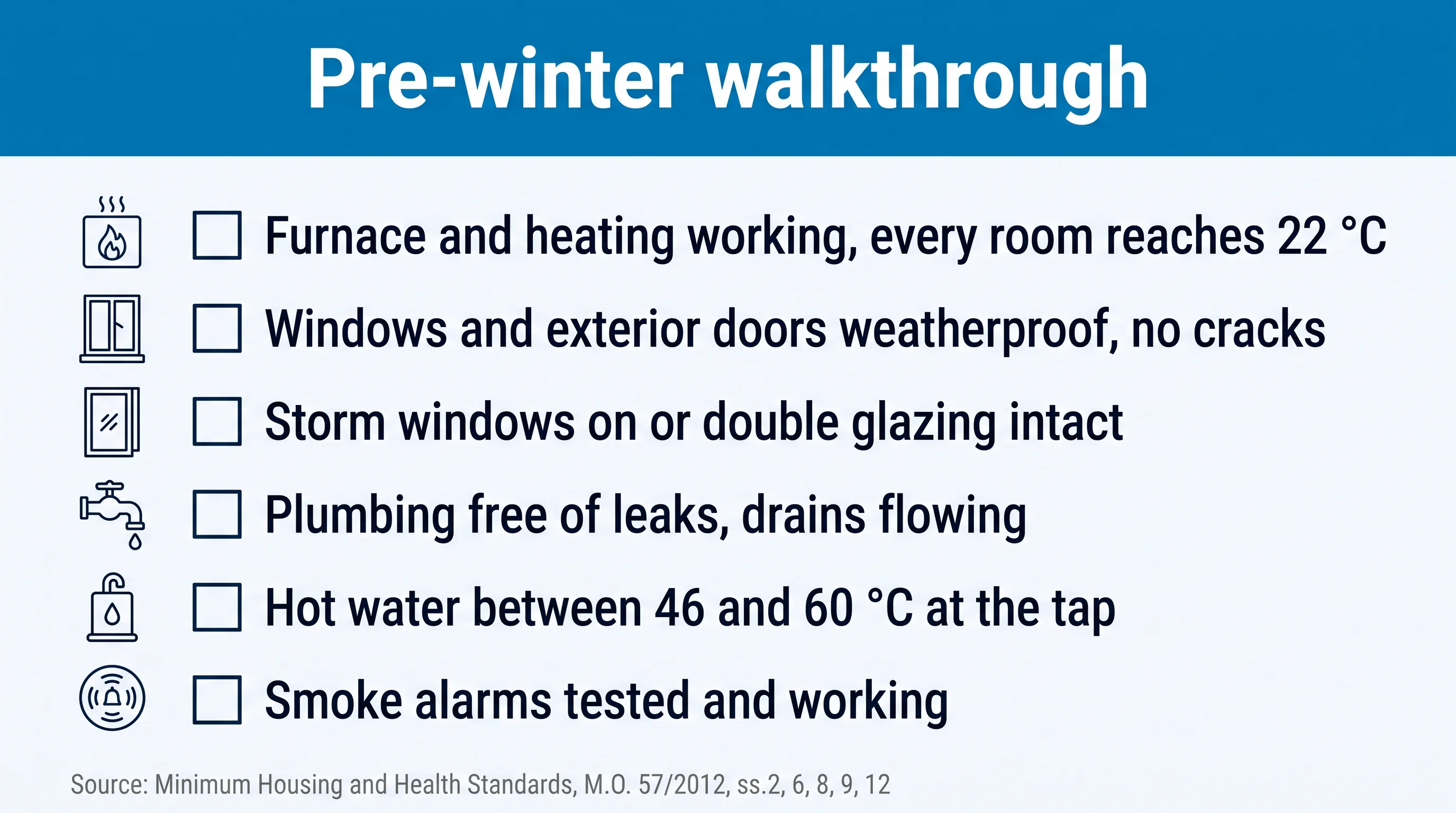
- Heating equipment is properly installed and in good working condition.
- Each habitable room, bathroom and toilet room can reach at least 22 °C.
- Where the landlord controls the heat, the set point keeps those rooms at 22 °C or more.
- No room relies on a space heater or cooking appliance as its main heat.
Windows, doors and the building envelope (s.2)
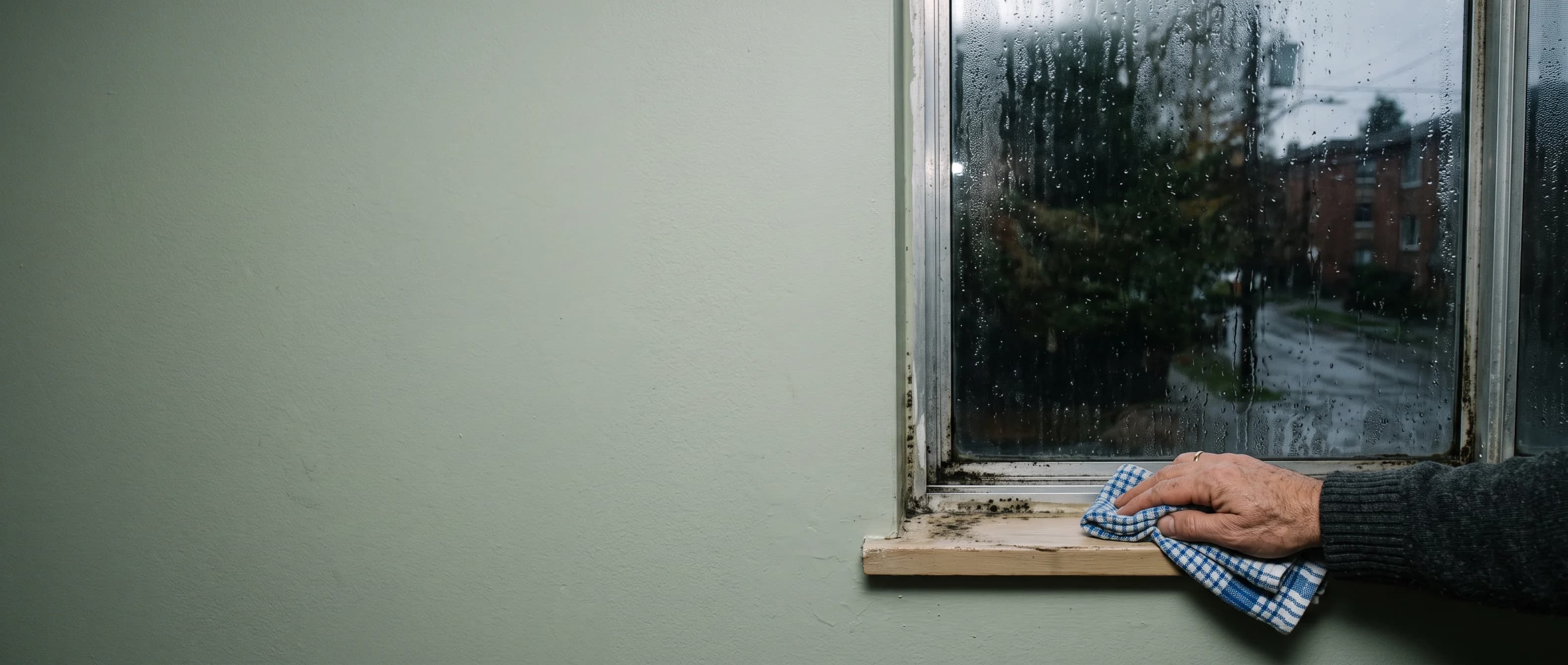
- Windows and exterior doors are free of cracks and weatherproof.
- Storm sashes are on, or double glazing is intact, on habitable-room windows.
- Roof and exterior cladding are waterproof and windproof.
- Screens are stored and ready to go back on for the insect season.
Plumbing and hot water (ss.6, 9)
- The plumbing and drainage system is in proper operating condition.
- Fixtures are serviceable and free from leaks.
- Hot water at the fixture reads between 46 °C and 60 °C.
Electrical and life safety (ss.11, 12)
- Outlets, switches and fixtures are in good, safe working condition.
- Smoke alarms are in place between each sleeping area and the rest of the suite, and they work.
Utilities (s.8(d))
- Confirm from the lease who is responsible for electricity, water and heat. Unless the lease makes the tenant solely responsible, the owner must keep them continuously supplied.
- Plan any shut-off for a repair so the supply returns as quickly as the work allows.
Getting into an occupied unit
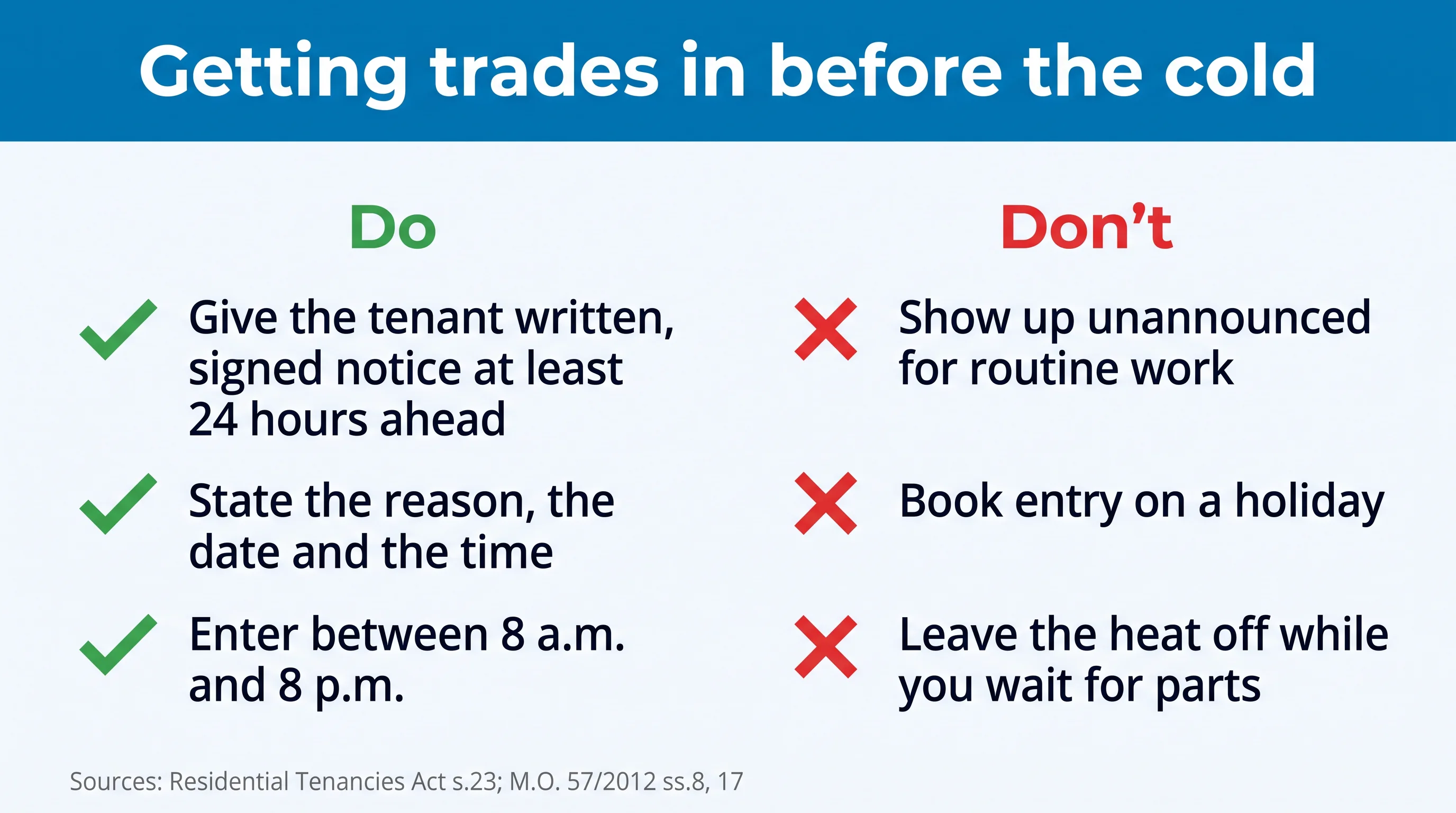
Section 23 of the Residential Tenancies Act lets a landlord enter without the tenant's consent to inspect the state of repair or to make repairs, but only after written notice. Section 17 of the Standards says every tenant must allow access for repairs as the Act requires.
- Notice: served on the tenant at least 24 hours before the entry.
- Form: in writing, signed by the landlord or the landlord's agent, stating the reason and a date and time of entry. The time can be a window of reasonable length that starts and ends at set times.
- Hours: between 8 a.m. and 8 p.m.
- Days: not on a holiday, and not on the tenant's day of religious worship if the tenant has given the landlord written notice of that day.
- Emergencies: a landlord may enter without consent or notice if they have reasonable grounds to believe an emergency requires it.
For trades: quoting and booking winter work
- Ask which unit is occupied. Occupied units need the landlord's 24-hour written notice; vacant units do not.
- Quote to the standard. Write up findings against the item in the Standards, such as "bedroom 2 cannot reach 22 °C", so the landlord can see what is a legal minimum and what is an upgrade.
- Book a time window. The Act allows a window, as long as it starts and ends at set times, inside 8 a.m. to 8 p.m.
- Flag heat-loss risks early. If a repair means the heat will be off, tell the landlord how long, so the tenant can be told in the notice.
- Leave a written record. Readings taken, such as room temperatures and hot water at the fixture, help the landlord show the unit met the standard.
Common mistakes
- A space heater as the fix. It cannot be the primary heat source under s.8(c).
- Checking only the thermostat. Every habitable room, bathroom and toilet room must be capable of 22 °C.
- Hot water set too high. The upper limit is 60 °C at the fixture.
- Showing up on a holiday. Entry with notice cannot be on a holiday.
- Leaving screens off in spring. They are required in the insect season.
What to do next
- Landlords: book heating, window and plumbing checks for each occupied unit before the first hard frost, and serve written notice for each.
- Trades: send the landlord a findings list tied to the sections above, with readings.
- Keep the notice, the work order and the readings together in the property file.
How Tenon10 helps
For the landlords you work with, Tenon10 runs the Alberta move-in and move-out inspection reports, so the condition of windows, fixtures and heating is recorded at the start and end of each tenancy.
Tenon10 also lets landlords create an Alberta lease, which is where it is set out who pays for electricity, water and heat.
Frequently asked questions
What temperature must an Alberta rental be?
Heating must be capable of heating habitable rooms, bathrooms and toilet rooms to at least 22 °C, and maintained at 22 °C or more where someone other than the occupant controls the heat. In extreme cold, an Executive Officer may allow less than 22 °C but more than 16 °C.
Are storm windows required?
In premises used in winter, windows in habitable rooms must protect against cold through a storm sash, double glazing, or another durable barrier approved by an Executive Officer.
How much notice does a landlord need to send in a furnace tech?
At least 24 hours' written, signed notice stating the reason, date and time, for an entry between 8 a.m. and 8 p.m. that is not on a holiday.
What hot water temperature is required?
Between 46 °C and 60 °C, measured at the fixture.
Alberta Rental Winter Checklist
A pre-winter checklist for Alberta rentals and the trades who do the work: heat, windows, plumbing, hot water, smoke alarms and entry notice.
Get Free PDF →Record the condition before winter starts
Run Alberta move-in and move-out inspection reports in Tenon10, and keep each unit's lease and condition record together.
Built for Canadian landlords and property managers.