A Georgia lease cannot take away the landlord's duty to keep the home in repair, excuse the landlord from Georgia's security deposit law or local laws, let the landlord evict without going to court, or make only the tenant pay attorney fees. The Georgia Department of Community Affairs (DCA) lists these as illegal lease clauses in its Landlord-Tenant Handbook.
This guide walks through the illegal lease clauses Georgia law names, the clauses the DCA suggests tenants ask about, and the 15 items the handbook says a Georgia lease should cover. The rules on void provisions sit in Georgia's landlord-tenant code, O.C.G.A. Title 44, Chapter 7 (Code section 44-7-2), and the 2024 Safe at Home Act (House Bill 404) added a habitability promise and a deposit cap that every new or renewed lease now carries. Amounts are in US dollars.
Georgia Lease Review: Landlord Checklist
A one-page checklist for reviewing a Georgia residential lease: the clauses the DCA lists as illegal, the HB 404 habitability and deposit rules, and what a lease should include.
Get Free PDF →Which lease clauses are illegal in Georgia?

The DCA's Georgia Landlord-Tenant Handbook (revised August 29, 2024) says it is a violation of the law if a lease says anything like the following:
- The landlord removes or reduces the duty to keep the property habitable and in good repair.
- The landlord removes or reduces responsibility for damage caused by the landlord's failure to repair.
- The landlord does not have to follow local laws.
- The landlord does not have to follow Georgia security deposit law.
- The landlord can evict without going through the eviction process in court.
- The tenant pays the landlord's attorney fees if the tenant breaches, but the landlord does not pay the tenant's fees if the landlord breaches.
Each one maps to a duty the code puts on the landlord, so a clause that tries to switch the duty off does not change it. The sections below take them one at a time.
Repairs and habitability
Georgia's repair rule is Code section 44-7-13. House Bill 404 rewrote it so that subsection (a) says the landlord "shall keep the premises in repair," and a new subsection (b) says any contract, lease, license or similar agreement, oral or written, for the rental of real property as a dwelling place "is deemed to include a provision that the premises is fit for human habitation." The Act applies to residential leases entered into or renewed on or after July 1, 2024 (HB 404, Section 6).
Because the fitness promise is "deemed" part of the lease, a clause saying the home is rented "as is" with no repair duty cannot remove it. Our guide to Georgia landlord repair duties covers what the duty requires in practice.
Damage from the landlord's failure to repair
A clause making the tenant hold the landlord harmless for damage the landlord caused by not repairing is on the DCA's illegal list. A lease may still make the tenant responsible for damage the tenant or the tenant's guests cause; what it cannot do is shift the cost of the landlord's own failure to repair.
Security deposit law
A lease cannot excuse the landlord from Georgia's deposit rules. Those rules include the new cap in Code section 44-7-30.1, added by HB 404: "No landlord shall demand or receive a security deposit in an amount that exceeds the equivalent of two months' rent." The DCA handbook adds that a landlord must return the deposit within 30 days when a tenant gives proper notice and leaves without owing rent or causing damage, and that larger landlords (more than ten units, counting units owned by a spouse or children, or any landlord using a management agent) must keep deposits in an escrow account or post a bond and run a move-in inspection list. The full process is in our Georgia security deposit guide.
Local laws
A lease cannot say the landlord is exempt from local ordinances. The DCA points out that Georgia does not regulate how many people may live in a rental, but local ordinances may set occupancy limits, and a lease does not override those.
Evicting without court
Removing a tenant in Georgia goes through the dispossessory process in court. A clause letting the landlord change the locks, remove belongings or take back the unit on a missed payment is on the DCA's illegal list. The handbook also notes that a landlord may not knowingly and willfully suspend a tenant's heat, cooling, light or water service before the judge's final decision in an eviction. The steps are in our guides to the Georgia 3-day notice to pay or vacate and the Georgia dispossessory process.
One-sided attorney fees
A lease that makes the tenant pay the landlord's attorney fees after a tenant breach, without making the landlord pay the tenant's fees after a landlord breach, is on the DCA list. If you want a fee clause at all, write it to run both ways.
Which clauses does the DCA tell tenants to ask about?
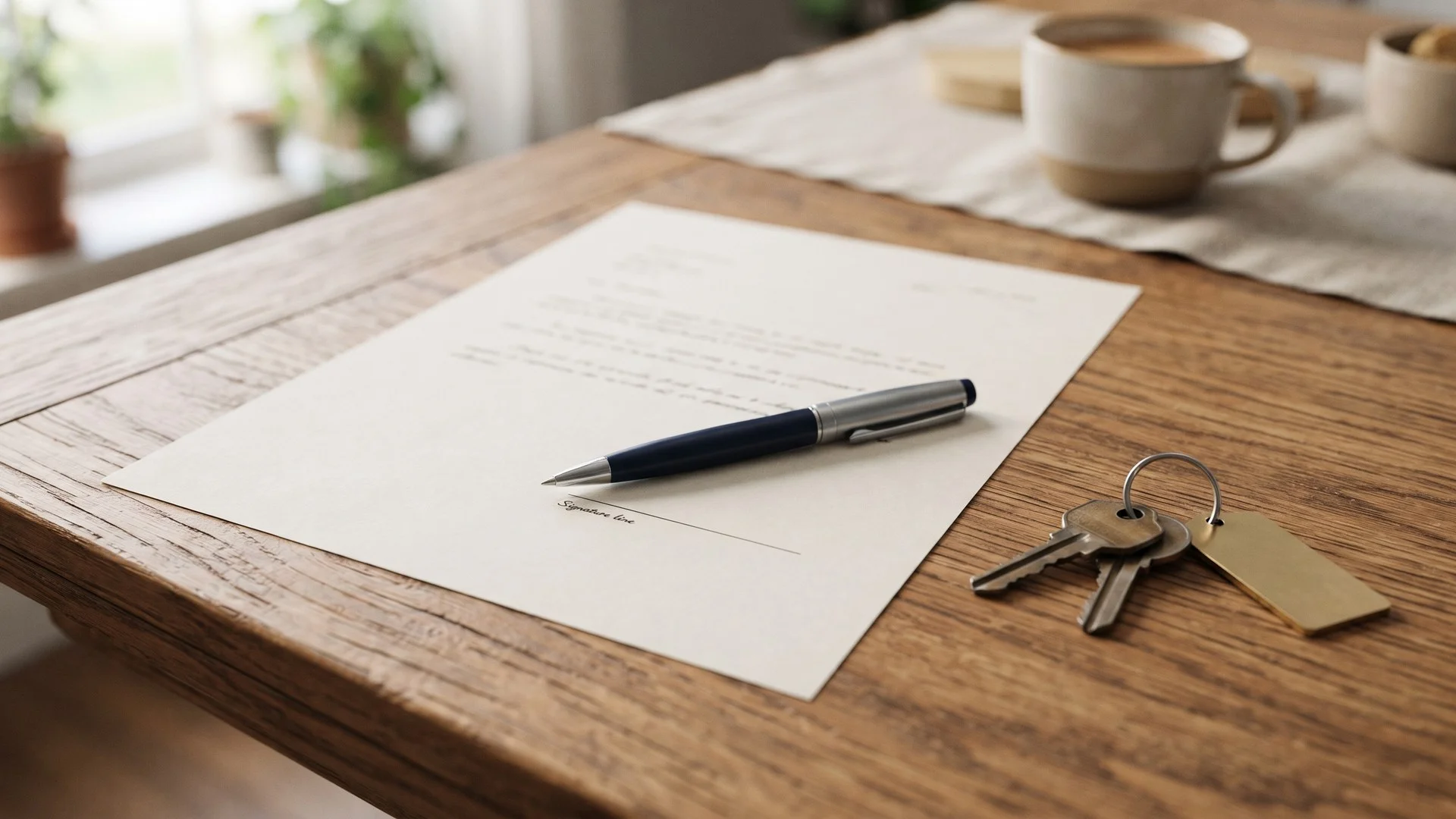
These are not illegal, but the handbook lists them as terms a tenant may want to ask about before signing. A landlord may refuse to change them, and the tenant then decides whether to sign:
- Very long terms with early termination penalties or fees. The handbook says an early termination fee is allowed only if the landlord's damages are hard to estimate, both sides intend the fee to cover damages rather than to punish, and the fee is a reasonable estimate of those damages.
- Automatic rent increases during the term. Rent can only go up during a lease if the lease says so.
- References to rules the tenant has not received.
- How utilities will be paid, including master metering.
- When and how the landlord can enter the unit. The handbook says the lease sets the entry conditions; if it gives no right of entry, the tenant may refuse entry except in an emergency.
What should a Georgia lease include?
The DCA handbook's "What should be in a lease?" page lists 15 items. A lease that covers all of them leaves few gaps for a dispute:
| Item | What to write |
|---|---|
| Parties | Tenant, landlord or agent, and the person or company managing the property |
| The unit | Description, included appliances, heating and cooling sources |
| The real property | Legal or street description, if a single-family home |
| Term | How long the lease runs and when it ends |
| Rent | Amount, due date, any grace period, late charges and returned-check charges |
| Payment method | How rent is delivered: check, money order, cash or other |
| Early termination | How the lease can end early, including any fee |
| Security deposit | The amount |
| Utilities | Who pays each one |
| Amenities | Laundry, pool, common areas the tenant may use |
| House rules | Pets, guests, noise and consequences for breaking them |
| Parking | Spaces provided, if any |
| Pest control | Whether provided and how often |
| Repair requests | How requests are handled, including emergencies |
| Entry | When the landlord may enter the unit, including notice |
Disclosures that go with the lease
Two disclosures sit beside the lease. The handbook says the tenant must receive the name and address of the owner or an authorized agent for legal notices, and should receive the property manager's name and address when the lease is signed. If a residential rental has flooded at least three times in the past five years and the flooding damaged the living space, the landlord must give written notice of the property's likelihood to flood before the lease is signed. See Georgia flooding and owner-agent disclosures.
How do these rules play out after signing?
- Rent increases. A fixed-term lease allows an increase only if it says so. For a tenancy at will, the handbook says the landlord gives 60 days' notice of a rent change; see Georgia tenancy at will and the 60-day notice.
- Automatic extensions. A lease may extend itself unless the tenant gives notice. Spell out the notice date and method so both sides know when the next term starts.
- Retaliation. A landlord may not answer a repair complaint with retaliation; see Georgia landlord retaliation rules.
- Early exits the lease cannot block. Family violence orders and military orders give tenants statutory exits; see Georgia early lease termination.
Frequently asked questions
Can a Georgia lease make the tenant responsible for all repairs?
No. The landlord's duty to keep the premises in repair cannot be removed by the lease, and for leases entered into or renewed on or after July 1, 2024, every residential rental agreement is deemed to promise that the premises are fit for human habitation (Code section 44-7-13, as amended by HB 404).
What is the maximum security deposit in Georgia?
Two months' rent. Code section 44-7-30.1 says no landlord shall demand or receive a security deposit that exceeds the equivalent of two months' rent.
Is an oral lease valid in Georgia?
The handbook treats oral leases as leases but warns they often lead to misunderstandings and can be ended with less notice. A written lease gives both sides a record.
Can a Georgia landlord charge an early termination fee?
Yes, if the lease provides for it and the fee meets the three conditions the DCA describes: hard-to-estimate damages, intent to compensate rather than penalize, and a reasonable estimate.
Georgia Lease Review: Landlord Checklist
A one-page checklist for reviewing a Georgia residential lease: the clauses the DCA lists as illegal, the HB 404 habitability and deposit rules, and what a lease should include.
Get Free PDF →The bottom line
A Georgia lease can set rent, rules and fees, but it cannot waive the landlord's repair duty, the deposit law, local laws or the court process, and any attorney-fee clause should run both ways. Cover the DCA's 15 items, give the disclosures, and keep the deposit at or under two months' rent. More Georgia topics are in the Tenon10 guides by topic.
More guides for Georgia landlords
Read our free guides on Georgia deposits, notices, repairs and evictions.
Free • No signup required