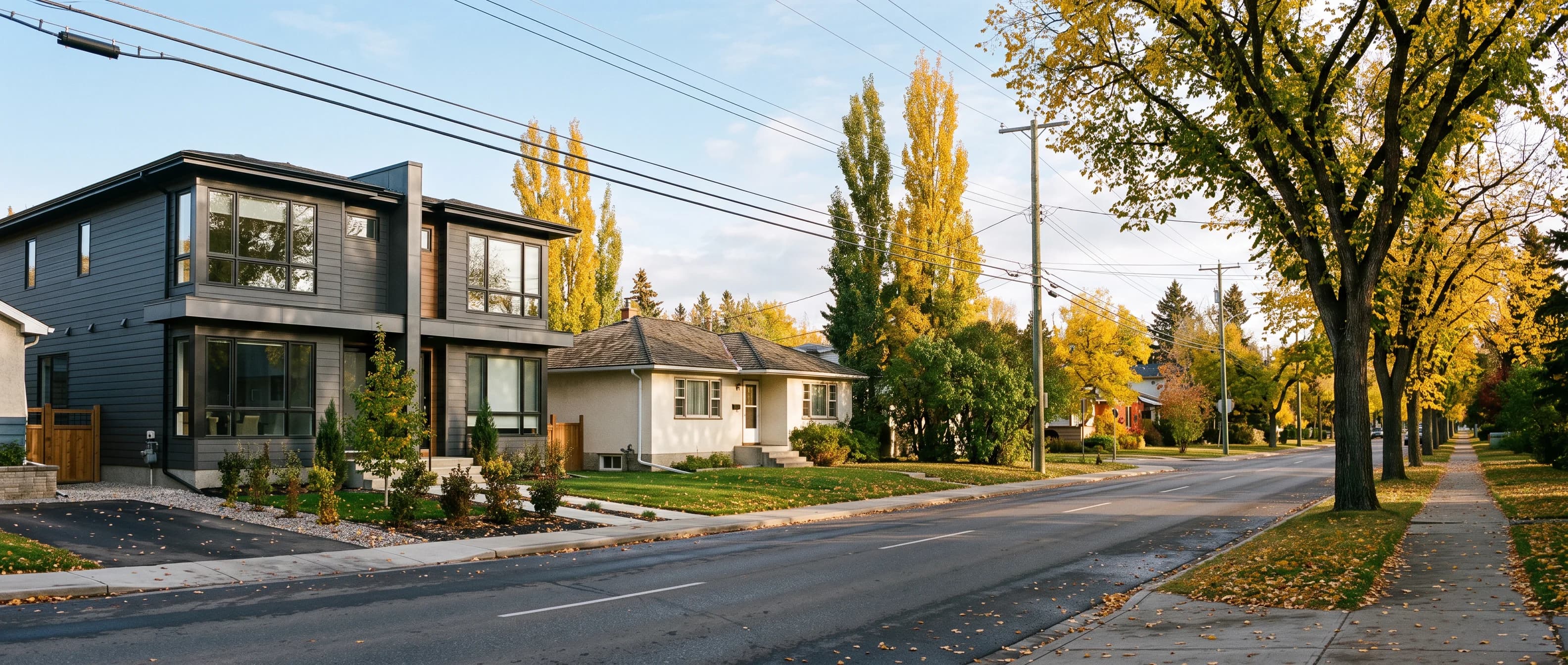
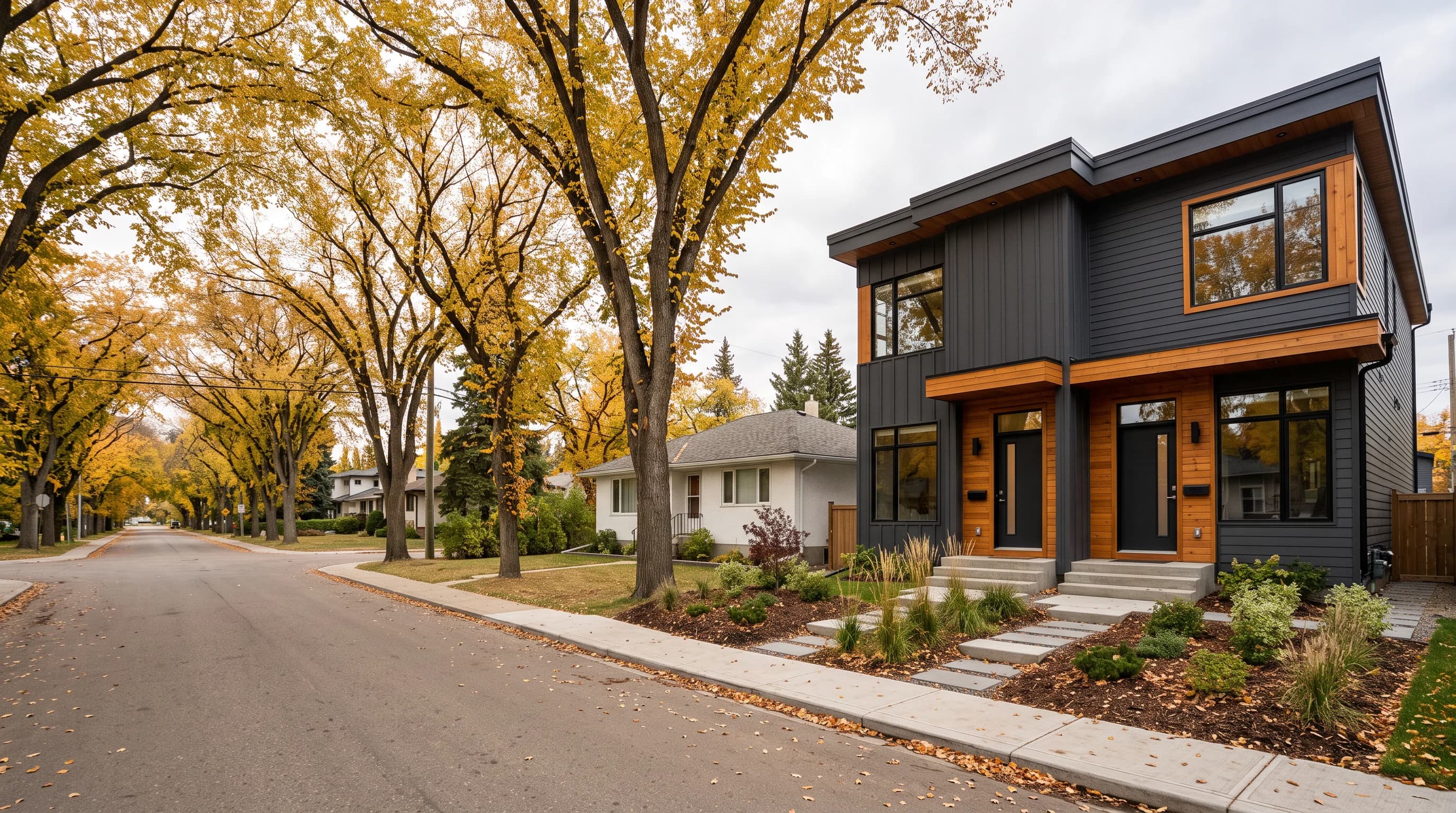
CALGARY, Alberta, October 28, 2026: The Calgary rezoning repeal that City Council approved on April 8, 2026 took effect August 4, and the City's Housing Accelerator Fund (HAF) agreement reached its end date on October 27, 2026. Most residential parcels are back on pre-2024 zoning. The federal decision on the final HAF payment had not been announced when we checked.
What did Calgary City Council decide on citywide rezoning?
On April 8, 2026, Calgary City Council approved amendments to Land Use Bylaw 1P2007 that restore the low-density districts and the parcel zoning that existed before the citywide Rezoning for Housing, which Council approved in May 2024 and which took effect August 6, 2024, according to the City's April 8 news release. The changes took effect on August 4, 2026. Council decided follow-up bylaws on July 21, 2026.
The City's FAQ says 99% of properties returned to their pre-2024 zoning on August 4. A parcel kept its 2024 zoning if it had an approved R-CG, R-G or H-GO development permit, building permit or subdivision before the bylaw took effect, had applied before first reading, or was rezoned on the owner's own application after August 6, 2024. Council directed that extensions to permits behind an exemption will not be granted.
What can you build on a Calgary residential lot now?
On most Calgary residential lots, the zone is again the one the lot had before August 2024. The City lists the reinstated districts as R-C1, R-C1L, R-C1N, R-C2, R-1, R-1N, R-2 and R-CGex. R-CG rules also changed for new development:
| Rule | Before August 4, 2026 | From August 4, 2026 |
|---|---|---|
| Zoning of most residential parcels | Citywide Rezoning for Housing districts | The district the parcel had before August 6, 2024 |
| R-CG maximum height | 11 m | 10 m |
| R-CG maximum lot coverage | 60% | 55% |
| R-CG maximum density | 75 units per hectare | 75 units per hectare (Bylaw 24P2026) |
Zero lot line developments are no longer allowed in R-CG. Bylaw 26P2026 makes secondary suites a permitted use in all low-density districts; a property may have a secondary suite or a backyard suite, not both, and backyard suites need parking again. If you rent out a suite, our Calgary secondary suite registry guide covers registration.
How is the rezoning repeal tied to the Housing Accelerator Fund?
Calgary's HAF award was $228.5 million for seven initiatives, with $22.8 million added in March 2025 along with two more initiatives, paid in four equal annual advances until the agreement ends in October 2026, according to the City's HAF page. City-initiated rezoning was one of those initiatives. The City received its third $64 million advance in the second quarter of 2026, and lists the final attestation and progress report, and the final $64 million advance, for the fourth quarter of 2026.
In a letter dated April 21, 2026, federal Housing and Infrastructure Minister Gregor Robertson approved the third payment with two conditions: that Council clearly indicate it will adopt a zoning replacement allowing a minimum of four units on a lot for a significant majority of lots across the city, and that the replacement be in effect or significantly developed before the agreement's end date of October 27, 2026. The letter says approval of the final payment "is subject to meeting these conditions." We found no City, CMHC or federal statement of a decision on that payment as of October 28.
What did Alberta's October 22 regulation add for Calgary?
Alberta's City Land Use Bylaw Direction Regulation (A.R. 255/2026, O.C. 353/2026) was filed on October 22, 2026, and under section 2(2) of the Regulations Act it came into force that day. Section 3 requires Calgary, within 3 months, to pass a bylaw creating an overlay over the parcels rezoned by Bylaw 9P2026. Section 4 requires a review of the Land Use Bylaw against the provincial infill policy by September 1, 2027, and bars a bylaw changing the overlay's overall zoning until then. See our infill regulation report.
What it means for landlords
Zoning decides what can be built; it does not change an existing tenancy. Alberta's Residential Tenancies Act still governs leases, rent increases, deposits and notices, and disputes still go to the Residential Tenancy Dispute Resolution Service (RTDRS). Our Alberta landlord guide and Calgary landlord and tenant guide cover those rules.
What to do now
- Check your parcel's current district on the City's map before planning a project.
- Confirm your exemption status with the City if you applied or held a permit before August 4, 2026.
- Watch three dates: the City's final HAF attestation (fourth quarter of 2026), Calgary's overlay bylaw (due within 3 months of October 22, 2026) and the provincial review deadline of September 1, 2027. The federal decision on the final payment is not yet announced.
When a new suite is ready to rent, Tenon10 creates Alberta leases, runs move-in inspection reports and tracks deposits.
Renting out a Calgary suite?
Start with the right paperwork: free landlord and tenant forms, ready to fill in.
Free • No signup required