An Alberta landlord can claim damages at the RTDRS for losses the security deposit does not cover, using the Landlord's Application for Damages. You must prove the loss, that the tenant's breach caused it, and its dollar value, net of depreciation and normal wear and tear, within 2 years of discovering the claim and up to $100,000.
The Residential Tenancy Dispute Resolution Service (RTDRS) can award "damages", meaning money the respondent must pay when they did not meet their obligations and the applicant suffered a loss, according to the province's Applying for damages tip sheet. The deposit comes first: what it cannot cover is what you claim. This how-to walks through both, step by step.
Step 1: What losses can an Alberta landlord claim?
Under the Residential Tenancies Act (RTA) a landlord may seek recovery of damages resulting from a tenant's breach (s.26(1)(d)), arrears of rent (s.26(1)(a)) and compensation for an overholding tenant's use and occupation (s.26(1)(b)), and the RTDRS can hear any of these instead of a court (s.54.2). Common heads of claim:
| Loss | Legal basis | What to prove |
|---|---|---|
| Physical damage beyond normal wear and tear | RTA s.21(e), s.26(1)(d) | Condition at move-in and move-out; cost of repair |
| Cleaning a unit left dirty | RTA s.21(f) | Hours and a reasonable rate |
| Lost rent after a tenant abandons a lease | RTA s.27(3) | The term left and your efforts to re-rent |
| A tenant who stayed past the end date | RTA s.26(1)(b), s.32 | Days overheld; any liability to an incoming tenant |
Normal wear and tear is not claimable. The RTA defines it as the deterioration that occurs over time with use even though the premises receive reasonable care and maintenance (s.46(1)(b)), and the tip sheet gives scuffs and nail holes from pictures as examples. See security deposit deductions in Alberta for the line between the two.
Step 2: How does the security deposit fit in?
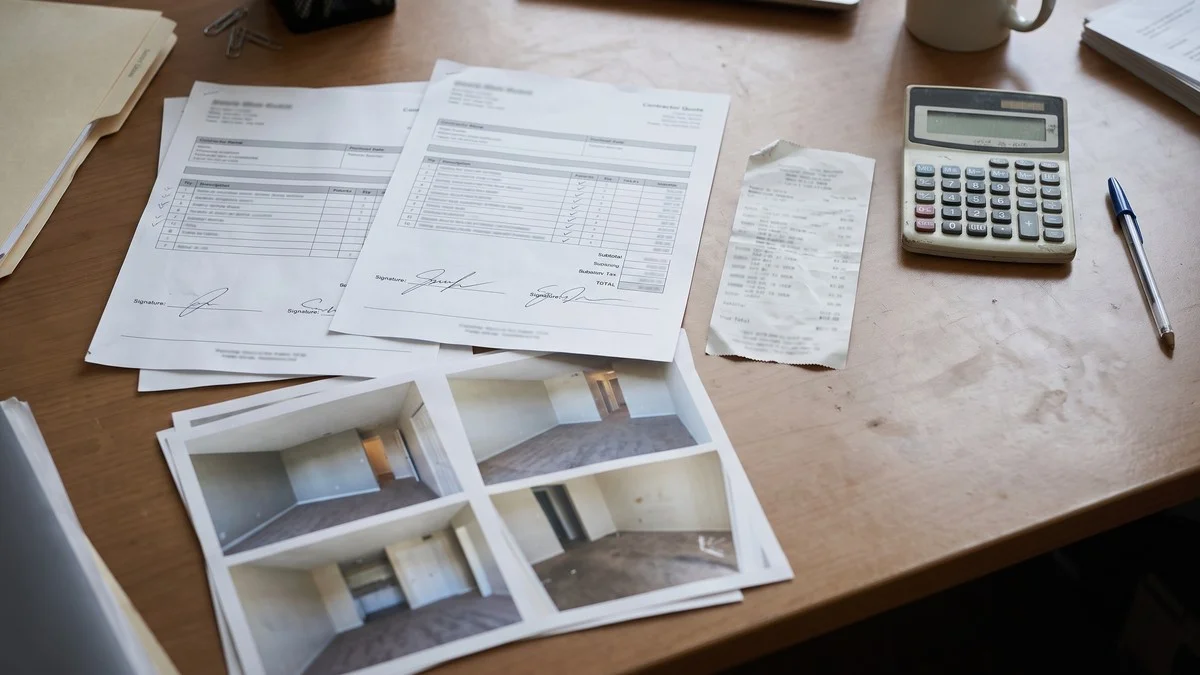
Deal with the deposit on time first. Within 10 days after the tenant gives up possession, the landlord must return the deposit or deliver the balance with a statement of account; if the amount of a deduction cannot yet be worked out, the landlord delivers an estimated statement and a final one within 30 days (RTA s.46(2)). No deduction for damage may be made unless the inspection report requirements in s.19 were met (s.46(6)). The timelines are set out in how long an Alberta landlord has to return a deposit.
Step 3: Gather evidence that meets the standard
The applicant must prove the claim on a balance of probabilities, which the tip sheet explains as more likely than not. For each item, the evidence must show that you suffered a loss, that the loss is a direct result of the tenant's failure to meet their obligations, and what it cost in money. Useful evidence, per the RTDRS How to apply page, includes the lease, inspection reports, photographs, invoices, receipts and recordings. The rules for the reports are in Alberta's inspection report rules.
Step 4: Price the claim the way an officer will
Tenancy dispute officers award an amount that is fair and reasonable to both parties, the tip sheet says, and they apply three principles:
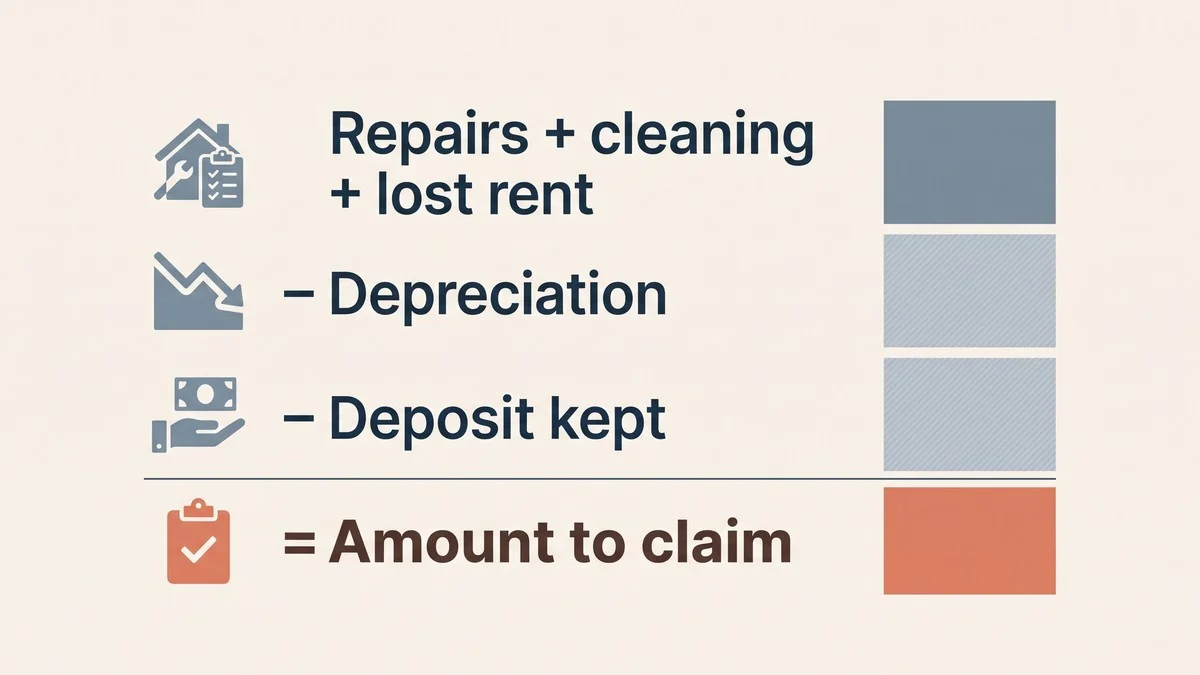
- Made whole, not better. Damages put you back where you would have been. An item that was not new is valued after depreciation, using the RTDRS depreciation table as a guideline.
- Mitigation. You must take reasonable steps to keep the loss down, such as getting more than one quote, choosing sensibly between repair and replacement, and, where possible, giving the tenant a chance to fix the damage first. For lost rent, the RTA itself requires reasonable efforts to re-rent (s.27(4)).
- Reasonable cost. Paying $500 for cleaning that could have been done for $250 will not get you $500. Officers typically award between $15 and $35 an hour for cleaning, depending on the case.
Step 5: File the Landlord's Application for Damages
File online through the RTDRS eFiling Service, or by fax or mail. The application must be made within 2 years from the date the claim is discovered and the claim cannot exceed $100,000. The filing fee is $75 for claims of $7,500 or less and $150 for claims over $7,500, and a fee waiver is available on proof of income, according to the How to apply page. Related issues, such as unpaid rent, can go on one application if the same facts must be heard.
Step 6: Serve, attend and enforce
Serve a copy of the filed application package on each respondent at least 3 clear days before the hearing and file the Declaration of Service. At the telephone hearing, walk the officer through each item with its evidence. If you win, the order must be filed with the Court of King's Bench and served before it takes effect, and an unpaid judgment is collected through the court. For the forum choice, see RTDRS or court.
Frequently asked questions
Can I claim for my own time spent repairing?
Yes, if you can show the value is reasonable. The tip sheet says an applicant who did repairs or cleaning themselves must explain the hourly rate claimed and may produce receipts for supplies.
Can I claim for stress or inconvenience?
Officers can award damages that are hard to value, such as emotional distress or inconvenience, but the tip sheet calls such awards rare because the loss must be proved to result directly from the breach.
Does a tenant have to agree to deductions?
No agreement is needed to apply to the RTDRS. A deposit deduction, however, must follow the conditions agreed to by the tenant in the tenancy agreement (RTA s.46(2)(b)).
What if the damage is more than $100,000?
The RTDRS limit is $100,000, so a larger claim belongs in court.
Start with the evidence
Fill in Alberta's move-in or move-out inspection report step by step, the record every damages claim relies on.
Free • No signup required