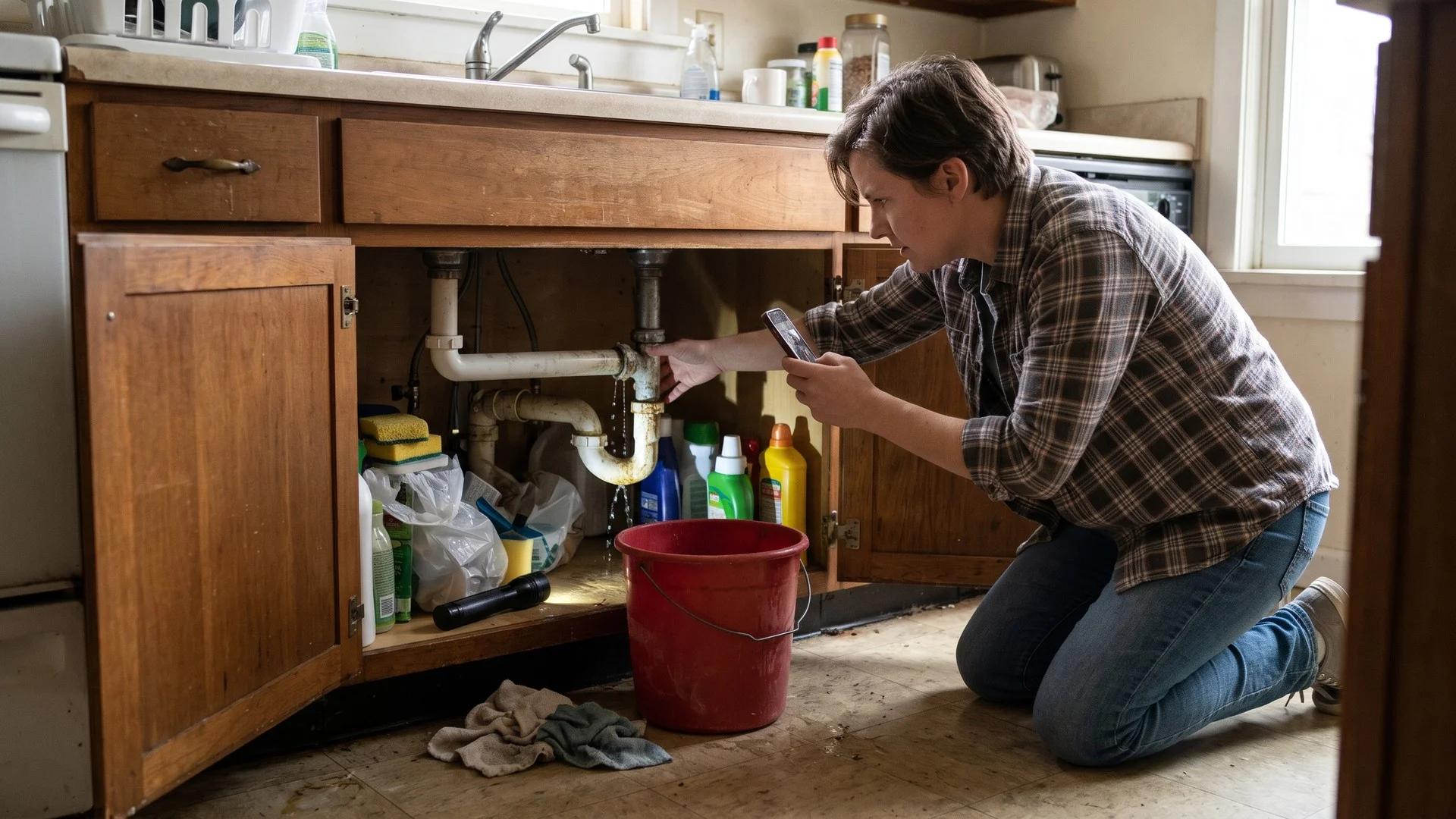
In Alberta, mould from a roof leak, a wet basement or a bathroom that cannot vent is usually the landlord's to fix. The Minimum Housing and Health Standards require rentals to be waterproof, basements free of water infiltration, and plumbing free of leaks. Report it in writing, and if nothing happens, contact Environmental Public Health.
Window condensation gets most of the attention in an Alberta winter, and we cover it separately in Condensation and Mould on Rental Windows in Alberta. This guide is about the other places mould grows in a rental: under sinks, along basement walls, behind a shower surround, on a ceiling below a leaky roof. These are usually signs of a building problem, not of how you live in the home, and the law treats them that way. For more renter guides, see the Alberta Tenant Resource Center.
Mould in an Alberta Rental: Renter Checklist
A one-page checklist for Alberta renters with mould from leaks, basements or bathrooms: what to record, what to clean, what the landlord must fix and where to go next.
Get Free PDF →Why does mould keep showing up in a rental?
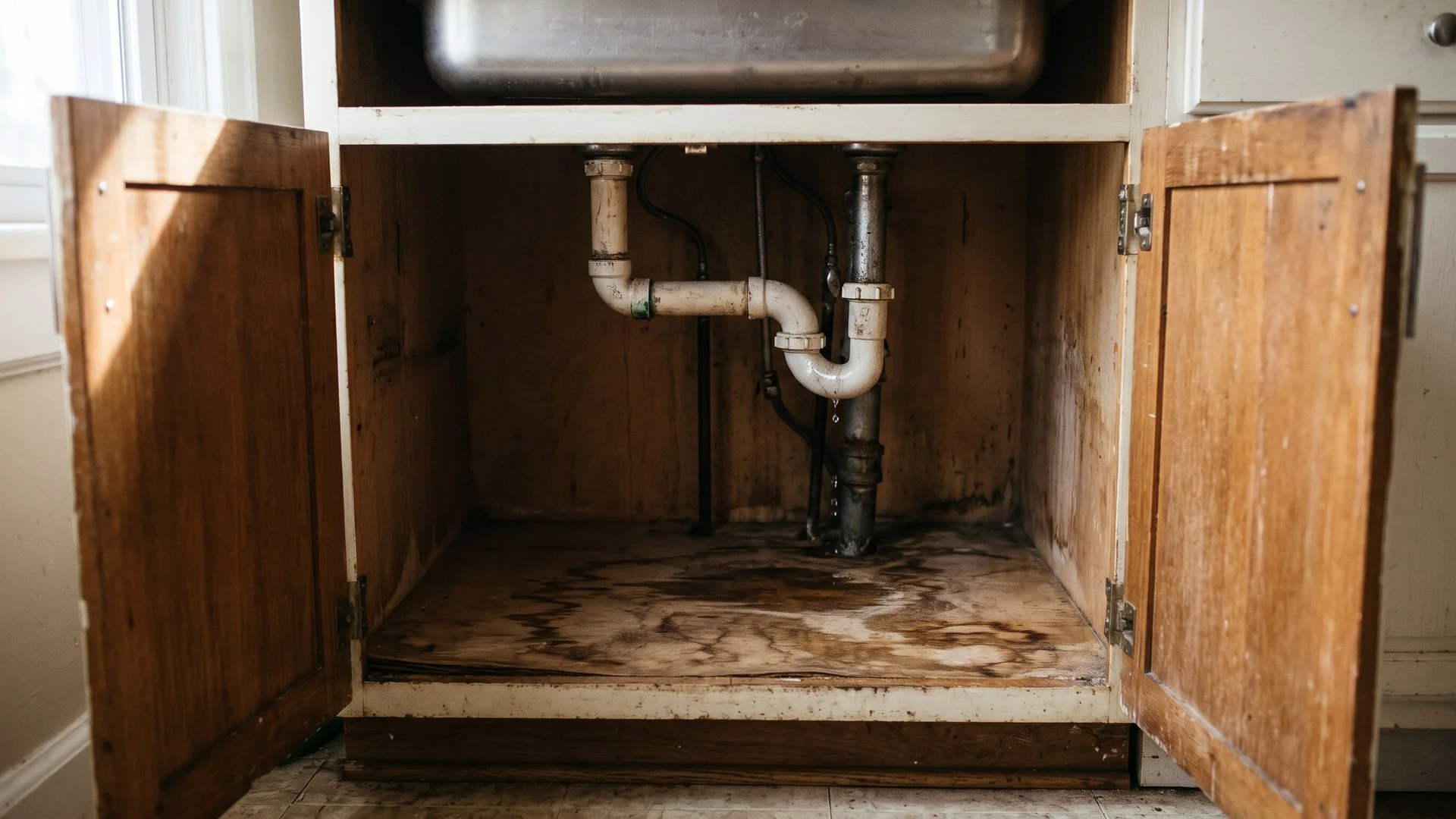
Mould needs moisture. Health Canada's guide on moisture and mould says mould can begin to grow in an area with excess moisture within 48 hours, and that unless the cause of the moisture is found and fixed, the mould will come back. Mould that returns after cleaning usually means the moisture source has not been dealt with. Mould can also be hidden behind walls or above ceiling tiles.
The common sources outside the windows are:
- Plumbing leaks under sinks, behind toilets and in walls.
- Water coming in from outside through roofs, cladding, foundations and basement walls.
- Bathrooms where a shower runs daily and the exhaust fan is weak, broken or missing.
- Everyday moisture from cooking, laundry and showers, which ventilation has to carry away.
What does Alberta law require of the landlord?
Every Alberta residential tenancy agreement includes the landlord's promise that the premises will meet at least the minimum standards for housing under the Public Health Act (Residential Tenancies Act s.16(c)). Those standards are set out in the province's Minimum Housing and Health Standards, and several of them go straight to the causes of mould:
| Where the mould is | What the standard says the owner must do |
|---|---|
| Ceilings and upper walls after rain or melt | Keep the roof and exterior cladding waterproof, windproof and weatherproof (s.2(a)) |
| Basement walls and floors | Keep basements, cellars and crawl spaces in good repair and free from water infiltration and accumulation (s.1(b)) |
| Rotting drywall, trim or subfloor | Repair or replace building materials that are damaged or show rot or other deterioration (s.1(c)) |
| Under sinks, around toilets and tubs | Keep all plumbing fixtures serviceable and free from leaks (s.6(c)) |
| Bathroom walls, grout and caulking | Bathroom walls and floors must be smooth, non-absorbent to moisture and easy to clean, with watertight joints at the tub or shower (s.5(a)) |
| Bathroom ceilings | Every room with a toilet, tub or shower needs natural or mechanical ventilation (s.7(c)) |
| Bedrooms | An openable window of 0.28 m² or mechanical ventilation (s.4) |
The standards are enforced by public health inspectors, on a routine or complaint basis. Because a breach of the s.16(c) promise is defined in the Act as a substantial breach by the landlord (s.1(1)(p)(ii)), these are not small matters under Alberta law.
What is the tenant responsible for?
Tenants have duties too. Under the Residential Tenancies Act, a tenant must keep the premises reasonably clean and must not do or permit significant damage (s.21(e) and (f)). In practice that means:
- Using the bathroom fan when you shower and for a while after, as Health Canada recommends.
- Telling the landlord about a drip, a stain or a musty smell early, before it becomes damage.
- Wiping up spills and splashes and not blocking vents.
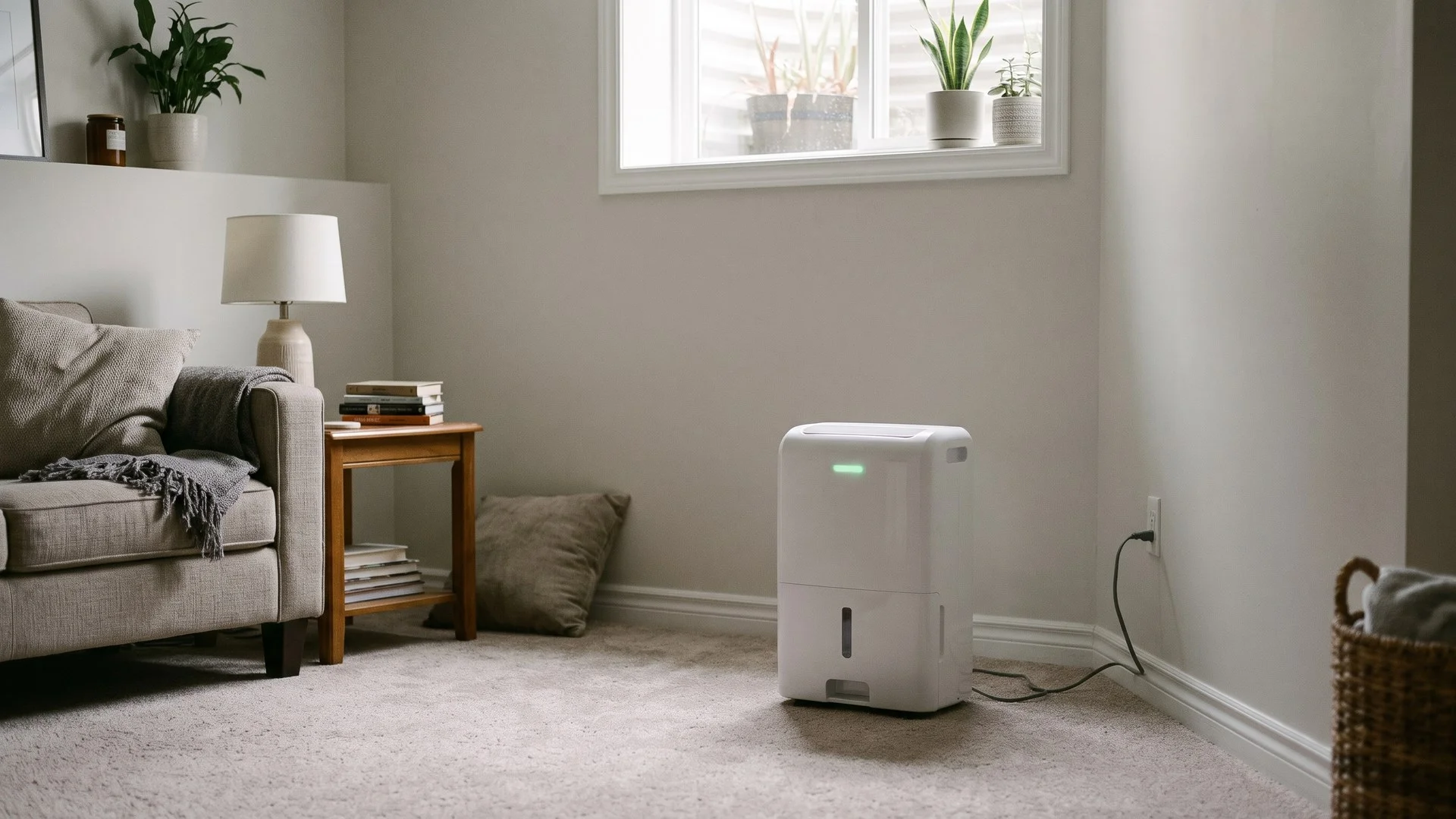
Health Canada also suggests keeping indoor relative humidity between 30% and 50%, with a dehumidifier in the basement if needed. Daily habits help, but they cannot stop water coming through a foundation or a leaking pipe in a wall.
Can you clean the mould yourself?
Health Canada calls an area small if it covers one square metre or less, and large if a single patch is bigger than three square metres. It recommends a qualified professional for large areas, for mould that comes back after cleaning, and where hidden mould is suspected. For small areas, it recommends scrubbing with an unscented soap solution, wearing safety glasses, an N95 respirator and gloves, and keeping infants, children, older people, pregnant people and anyone with asthma or other breathing conditions away. It says never to use bleach.
MyHealth Alberta lists rental homes among the places where a professional should be hired for mould clean-up, and notes that a flood or sewer backup can leave harmful bacteria. Cleaning a small spot on your own tile is reasonable. Tearing out drywall or treating a wet basement is the landlord's call and the landlord's cost.
Testing the air is rarely useful. Health Canada says that in most situations it does not recommend air testing, and MyHealth Alberta says air testing is usually not recommended, especially when you can see the mould.
How do you get the landlord to fix it?
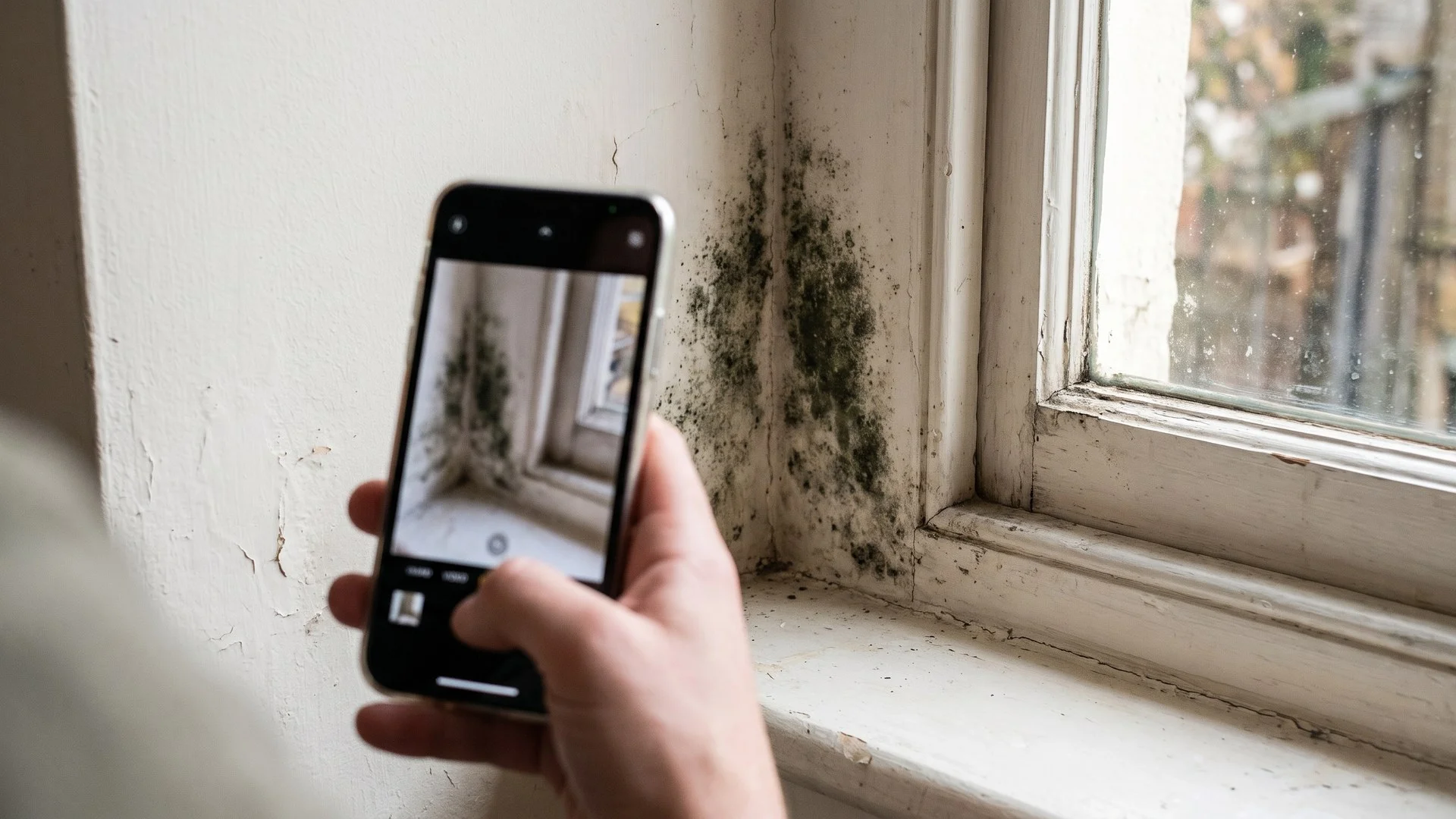
- Write to the landlord. Describe where the mould is, how big it is, the likely source (a leak, a wet wall, a dead fan) and ask for the repair. Keep a copy. Both Health Canada and MyHealth Alberta say renters should start by talking to the landlord.
- Allow access. The landlord can enter to inspect or repair after giving at least 24 hours' written notice, between 8 a.m. and 8 p.m. (RTA s.23).
- Follow up in writing if nothing happens within a reasonable time.
- Contact Environmental Public Health. MyHealth Alberta says to contact Environmental Public Health for unresolved health concerns in rental homes. The steps are in How to Request a Public Health Inspection for an Alberta Rental.
What if the landlord still will not act?
If a landlord breaches the tenancy agreement, the tenant can apply for remedies including damages, a rent abatement for the extent the breach deprives the tenant of the benefit of the tenancy, compensation for the cost of doing the landlord's work, and in serious cases termination of the tenancy (RTA s.37). Where to file is covered in RTDRS or Court?
If a public health inspector has issued an order about the problem and you believe on reasonable grounds that the landlord has not complied, you may end the tenancy with at least 14 days' written, signed notice that gives the reasons and the end date (RTA s.28). The notice has no effect if, within 7 days, the landlord objects in writing because the order has been complied with or stayed. More detail is in When a Landlord Breaches: How Alberta Tenants Can End a Tenancy Early.
Do not stop paying rent while you wait. Rent paid when due is a tenant covenant, and holding it back can give the landlord grounds to end your tenancy; see Can You Withhold Rent for Repairs in Alberta?
Frequently asked questions
Is mould in a basement suite the landlord's responsibility in Alberta?
If it comes from water getting in, yes in most cases. The Minimum Housing and Health Standards require basements to be kept free from water infiltration and accumulation.
My bathroom has no fan. Is that allowed?
The standards require natural or mechanical ventilation in every room with a toilet, tub or shower.
Should I pay for a mould test?
Usually not. Both Health Canada and MyHealth Alberta say air testing is generally not recommended, especially when mould is visible.
Can I use bleach on bathroom mould?
Health Canada says never to use bleach to clean up mould. Use an unscented soap solution on small areas.
Who inspects mouldy rentals in Alberta?
Public health inspectors with Environmental Public Health enforce the Minimum Housing and Health Standards.
Mould in an Alberta Rental: Renter Checklist
A one-page checklist for Alberta renters with mould from leaks, basements or bathrooms: what to record, what to clean, what the landlord must fix and where to go next.
Get Free PDF →Key takeaways
- Mould from leaks, wet basements and poor bathroom ventilation usually points to a building defect the landlord must fix.
- Report it in writing, keep photos, and give the landlord access with proper notice.
- Clean only small patches yourself, without bleach; leave large or recurring mould to a professional.
- Unresolved problems go to Environmental Public Health, and remedies go through the RTA.
Looking for a drier place in Alberta?
Browse rental listings on Tenon10.