

Roughly one in five rental applications now contains dishonest information — and the fakes are better than ever. A pay stub built in twenty minutes can look more polished than a real one. So the most useful skill in screening today isn't spotting the obviously bad application; it's catching the "perfect" one that falls apart after you've handed over the keys. Knowing the real tenant application red flags — and how to act on them lawfully — is what separates a clean tenancy from a five-to-twelve-month eviction.
Here's the tension this guide resolves. With non-payment evictions running five to twelve months, a single fraudulent tenant can erase a year of profit. But over-correct — screen on the wrong signals — and you land at the Human Rights Tribunal instead. The fix is to make every red flag about conduct, finances, or document integrity, and never about who someone is. We'll cover four things: the one rule that keeps red-flag spotting legal, how to spot a fake pay stub, the conduct and reference red flags that matter, and how to verify and act without crossing the line. For the full lawful process behind all of this, see our guide to how to screen tenants in Ontario.
This is general information, not legal advice.
The Tenant Application Red-Flags Checklist for Ontario Landlords
A free, Code-compliant checklist: how to spot fake pay stubs and dishonest applications — and verify them lawfully. Keep it by your desk while you review.
Get Free PDF →The One Rule That Keeps Red-Flag Spotting Legal
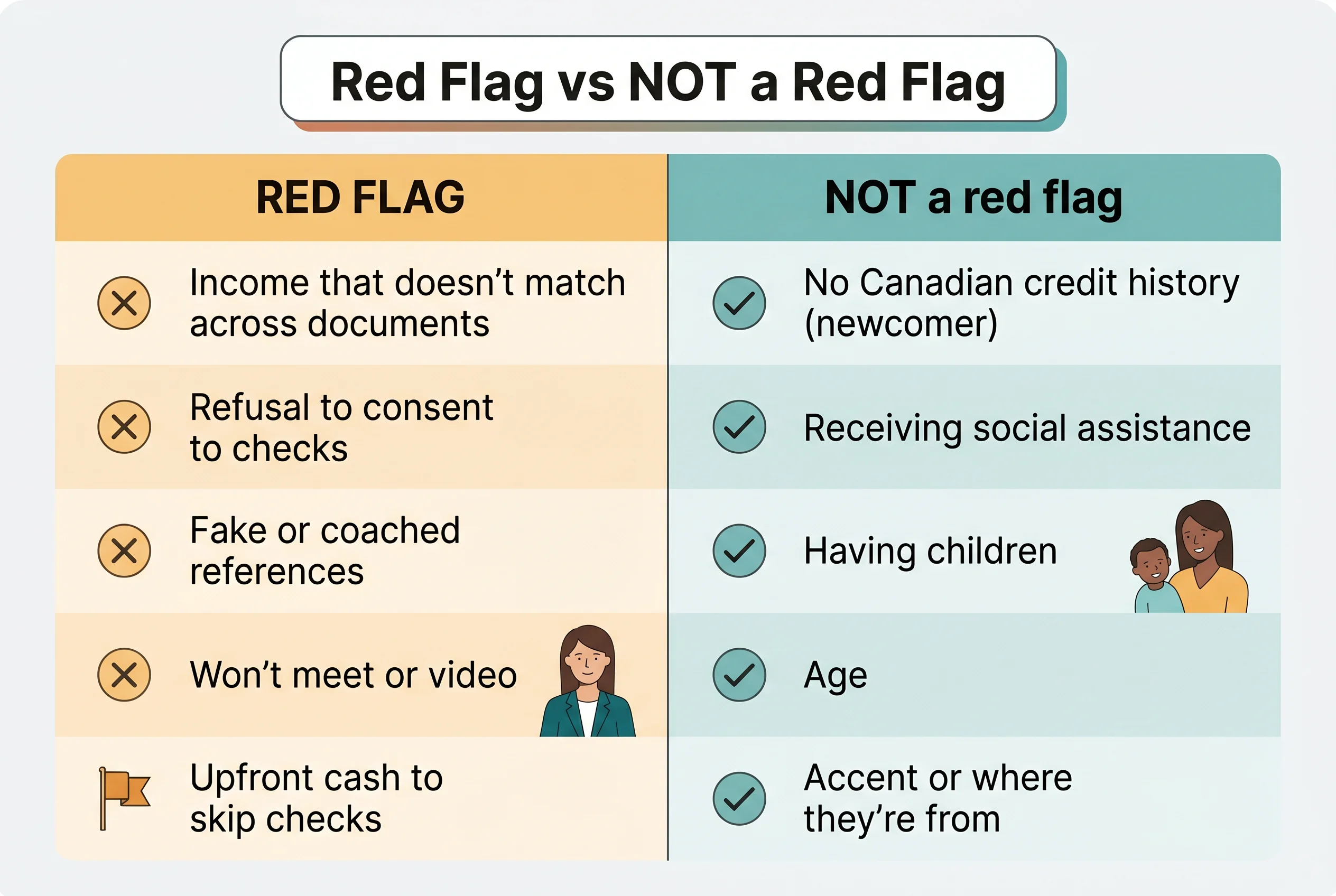
Before any list of warning signs, internalize this: a red flag is a conduct, financial, or document-integrity warning sign — never a personal characteristic. The entire practice of red-flag spotting rides on that line, because the moment a "red flag" becomes about who someone is, it stops being diligence and becomes discrimination.
So here's what is never a red flag, and must be ignored: being a newcomer or having no Canadian credit history; receiving social assistance; having children (family status); age; or simply a "feeling" about someone. Treating any of these as a reason to reject is exactly what becomes a Human Rights Tribunal complaint.
The reason is structural. The Ontario Human Rights Code prohibits choosing or refusing a tenant on protected grounds, and Regulation 290/98 limits you to five categories of information: income, credit checks, credit references, rental history, and guarantees. Real red flags live inside those categories — they're about whether the information is true and what the applicant's conduct shows, not about identity.
The golden rule that follows: decide on conduct, finances, and document integrity; document the basis; and run the same checks on everyone. Consistency isn't just fairer — it's simultaneously your best fraud defence and your best legal defence. Selective scrutiny is the trap; an identical process is the protection.
Document-Fraud Red Flags: Spotting a Fake Pay Stub
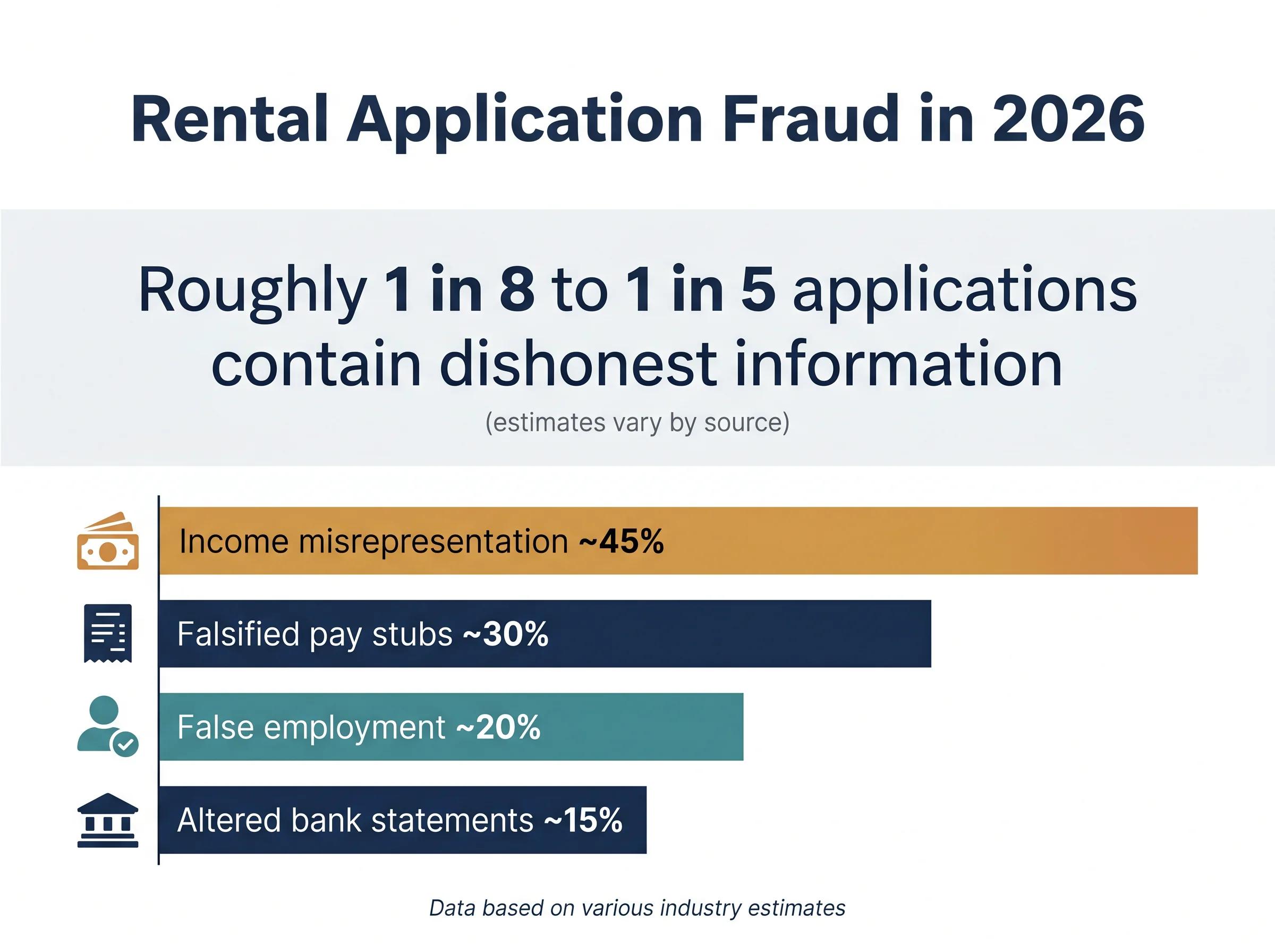
Application fraud is the fastest-growing screening problem in Canada, and the 2026 numbers are sobering. Estimates vary by source and method, but they all point the same way: somewhere between roughly one in eight and one in five applications contains some dishonest information, with income misrepresentation and falsified pay stubs leading the list. Cheap design tools and AI make convincing fakes easy, and there's even a template market that sells ready-made ones.
The trap most landlords fall into is what one Ontario property manager calls the "verified applicant illusion": a file that looks complete and credible but doesn't hold up. Most fraud isn't crude forgery — it's a temporary role presented as permanent, a short window of high income, or references coordinated among friends. The cure isn't checking whether each document is present; it's checking whether they're consistent with each other.
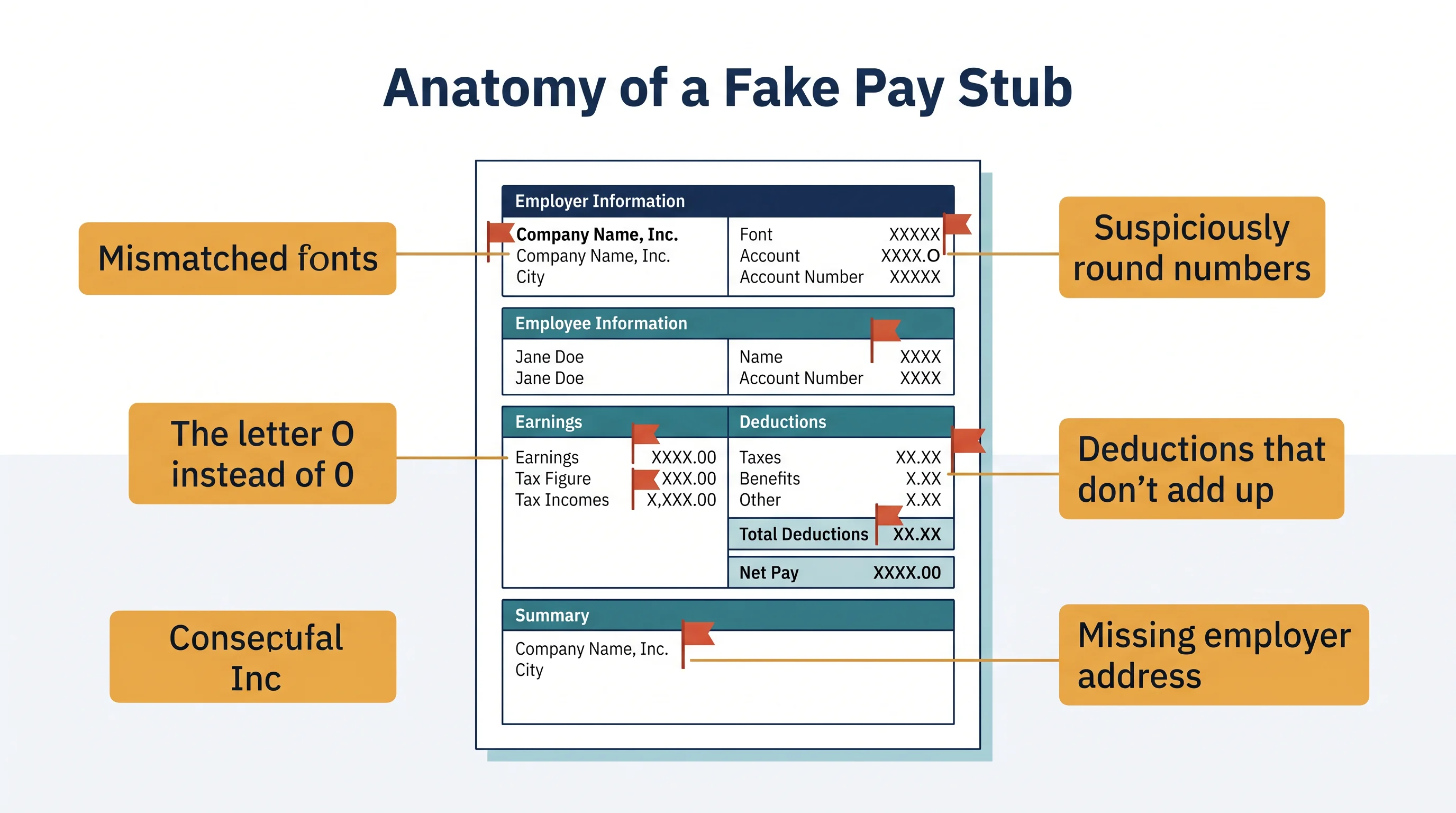
Start with the pay stub, since it's the most-faked document. Look for mismatched or inconsistent fonts, suspiciously round numbers, the letter "O" used in place of a zero, misaligned columns, spelling or grammar errors, and math that doesn't add up — gross minus deductions should equal net, and the CPP, EI, and tax amounts should match CRA norms. A missing pay period or employer address is another tell.
The same logic applies across the file. On an employment letter, a contact that traces to a personal Gmail rather than a corporate domain, or a phone number only the applicant supplied, deserves a second look. On bank statements, watch for deposits that don't match the stated income. And don't accept an applicant-supplied credit-report PDF at face value — those can be doctored to raise a score or erase negatives, so pull your own instead. The master tell, above all, is cross-document inconsistency: names spelled differently, addresses that don't match, dates that don't line up, or income that differs between the pay stub, the letter, and the bank deposits. Checking across sources breaks the illusion fastest.
Conduct and Reference Red Flags
Documents aren't the only signal — how an applicant behaves during the process tells you a lot. The clearest conduct red flag is a refusal to consent to a credit, reference, or identity check; an honest applicant has no reason to refuse independent verification. Close behind is pressure and urgency: pushing you to skip steps, manufacturing a deadline, or offering several months' — even a year's — rent upfront to discourage checks. (As we'll see, you can't lawfully require more than last month's rent anyway, so a big upfront offer is a dodge, not a gift.)
Watch, too, for evasive answers or a story that doesn't match the paperwork — a job, start date, schedule, or rental history that drifts when you ask about it. An applicant who won't meet in person or by live video can be masking their identity behind a new email, a prepaid phone, or an altered ID. And there's fraud by omission: conveniently leaving out a prior eviction or a policy-breaking pet, hoping you won't dig.
References are their own category. Fake references — friends or family posing as previous landlords, giving coached and glowing reviews — are common, and the giveaway is often a reference number or address that doesn't line up with the stated rental history. The defence is the previous-landlord rule: call the previous landlord, not just the current one. A current landlord may hand out a glowing reference precisely to offload a problem tenant; the previous one has no such motive. Ask for specifics only a real landlord would know — the exact rent, the lease term, who handled a past repair.
How to Verify and Act — Lawfully
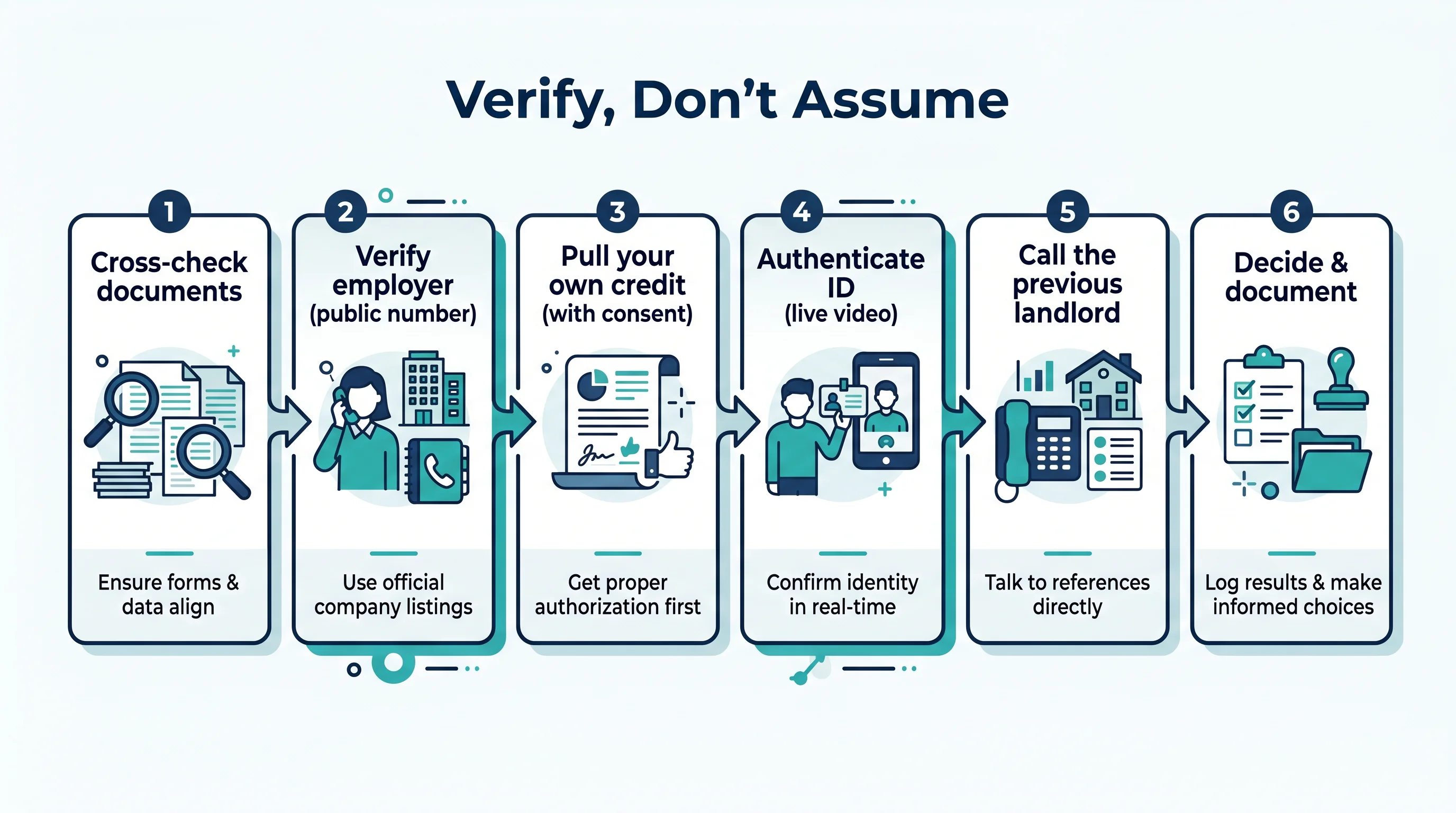
Spotting a red flag is only half the job; verifying it without breaking the law is the other half. The verification toolkit is built from steps that are hard to fake and easy to confirm. Verify employment on a publicly listed number, never the one written on the application. Cross-check the pay stub, employment letter, and bank deposits for matching income, dates, names, and addresses. Pull your own credit report with written consent rather than trusting the applicant's copy — and remember that since November 2024 rental credit checks are soft inquiries with no score impact, so there's no fairness reason to skip consent.
Two more steps close the gaps. Authenticate identity — compare the photo ID to the person, in person or by live video, check the expiry, and make sure the address fits the rental history — and do it for everyone, identically. And ask for about 90 days of bank statements as a pattern check: you're looking for stable deposits that match the stated income, not just a healthy balance on one day.
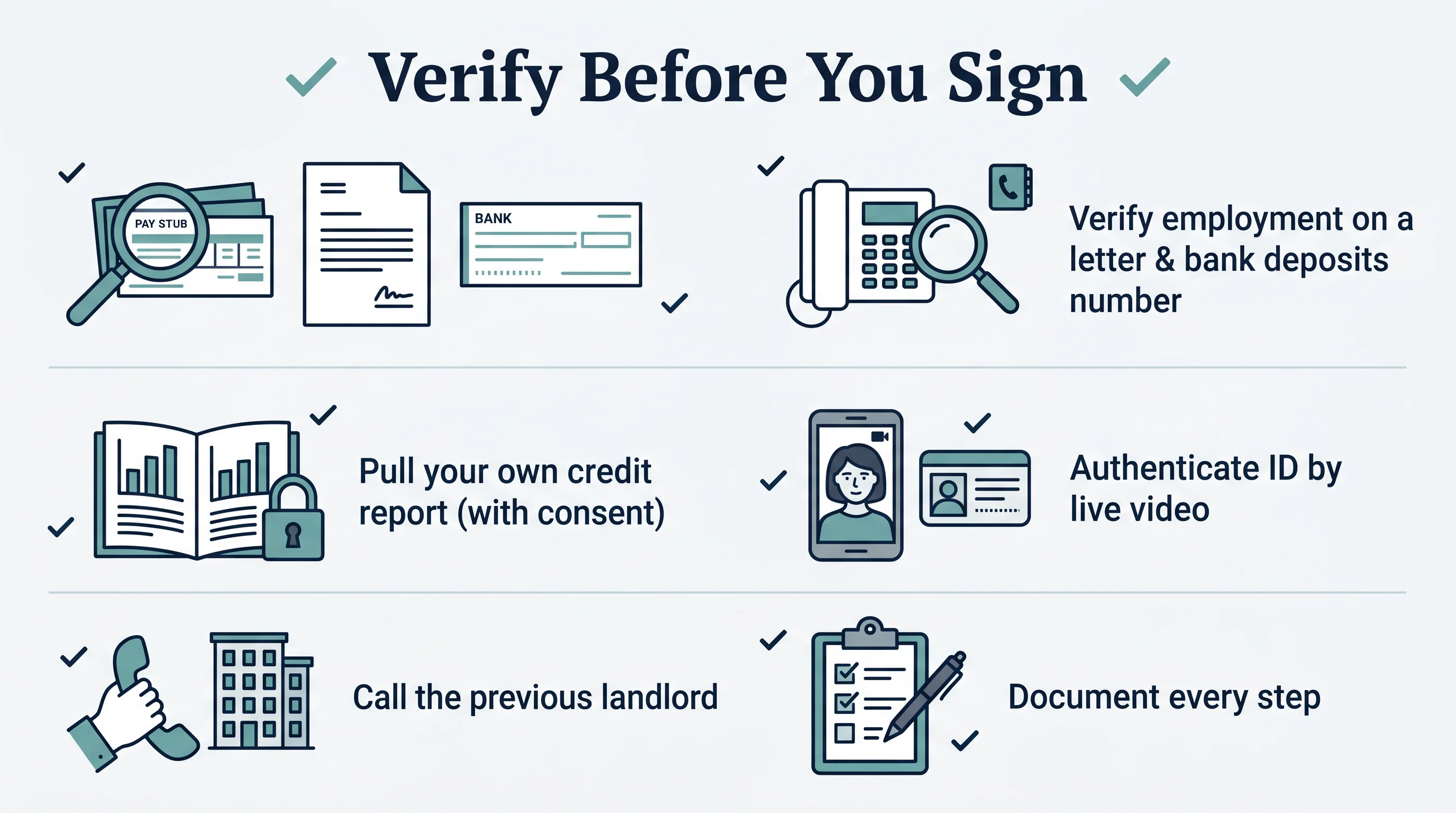
Then act lawfully. Apply the same checks to everyone and document each verification and the basis of the decision — that record is both your fraud defence and your Human Rights Code defence. Stay inside deposit law even under pressure: last month's rent is the only legal deposit, there are no damage, security, or pet deposits, you can't require a year upfront, and you owe 2.1% interest on the last month's rent in 2026. If you are defrauded, keep the document and consider a police report — but bear in mind the Residential Tenancies Act limits how quickly you can remove a non-paying tenant, which is exactly why prevention through screening is the real defence. An hour of verification is cheap insurance against five to twelve months of eviction.
Key Takeaways
A verification routine that catches fraud and stays compliant comes down to a few habits:
- Run the same verification steps on every applicant, and write down the basis of each decision.
- Cross-check the pay stub, employment letter, and bank deposits for matching income, names, dates, and addresses.
- Scan pay stubs for fake tells: fonts, "O" versus "0", round numbers, bad math, CRA-inconsistent deductions.
- Verify employment on a publicly listed number; call the previous landlord and ask for specifics.
- Pull your own credit report with consent; authenticate ID by photo versus live video.
- Treat refusal to consent, won't-meet, and upfront-cash-to-skip-checks as conduct red flags.
- Ignore protected-ground traits — newcomer status, no Canadian credit, social assistance, family status, age. Never red flags.
The quick win is adding an employer-verification call and an ID check to your process today. The long game is a documented, identical verification routine that catches fraud and survives a complaint. For the full lawful screening process this fits inside, read the tenant screening pillar, and build the ontario standard lease into your onboarding once you approve.
The Tenant Application Red-Flags Checklist for Ontario Landlords
A free, Code-compliant checklist: how to spot fake pay stubs and dishonest applications — and verify them lawfully. Keep it by your desk while you review.
Get Free PDF →Conclusion
The red flags that matter are about document integrity, conduct, and references — not identity. Spot fake pay stubs by checking consistency across documents; treat refusal to consent and upfront-cash dodges as conduct signals; call the previous landlord; verify employment and ID independently; and document everything. Rigorous, identical verification is both how you stop fraud and how you stay compliant.
That's the whole balance in one line: selective scrutiny is the trap, and consistency is the protection. Tighten your routine, keep your decisions documented, and you'll catch the fakes without ever putting yourself at legal risk.
Reminder: this is general information, not legal advice. For your situation, consult a licensed paralegal or lawyer, or the Ontario Human Rights Commission.
Run the same check on every applicant
Tenon10 runs the same documented verification on every application — standard form, consent, income and reference checks, and a recorded decision — so fraud gets caught and every file is defensible.
Free to start • Built for Ontario landlords
Frequently Asked Questions
What are the biggest red flags on a rental application?
Document inconsistencies (income that differs between the pay stub, employment letter, and bank deposits), refusal to consent to checks, evasive answers, fake or coached references, and pressure to skip verification. All are about conduct and documents — not personal characteristics.
How can I spot a fake pay stub?
Look for mismatched fonts, suspiciously round numbers, the letter "O" used instead of a zero, math that doesn't add up, and deductions that don't match CRA norms — then confirm the income against the employment letter and bank deposits, and verify the employer on a publicly listed number.
Is no Canadian credit history a red flag?
No. That's common for newcomers and is a protected ground — rejecting someone for it can be discrimination. Assess them on references and proof of past rent or bill payments instead.
Is a tenant offering a year's rent upfront a good sign?
Usually the opposite — it's often a move to discourage verification, and you can't lawfully require more than last month's rent anyway. Run your normal checks regardless.
Why call the previous landlord instead of the current one?
A current landlord may give a glowing reference to move a problem tenant along. The previous landlord has no such motive — ask for specifics only a real landlord would know, like the exact rent or who handled a past repair.


