

Tax time is painful only when you leave everything to April. Handle four things through the year and your rental return becomes a 20-minute export, not a weekend of dread. That's the whole idea behind landlord year-end tax prep in Canada: a short routine that replaces the annual scramble.
Most landlords treat rental taxes as one big April panic — hunting for receipts, guessing at what's deductible, and missing the deadlines and decisions that actually move the bill. The fix isn't working harder in April. It's four steps: gather your income, sort your expenses, make the two decisions that shape your tax bill, and file on time.
This checklist walks each one, with the deadlines you can't miss and the record-keeping that protects you if the CRA ever asks. It's general information, not tax advice — take your own numbers to a CPA and verify the current-year details with the CRA.
The Landlord's Year-End Tax Prep Checklist
The four-step routine to get your rental return ready — on one printable page.
Get Free PDF →Step 1: Gather Your Income (All of It)
Start with everything you took in. All gross rents go on the T776 — cash, cheque, e-transfer — and you report them on the accrual basis, meaning rent counts when it's earned, not when it lands. December's rent paid in January is still December income.
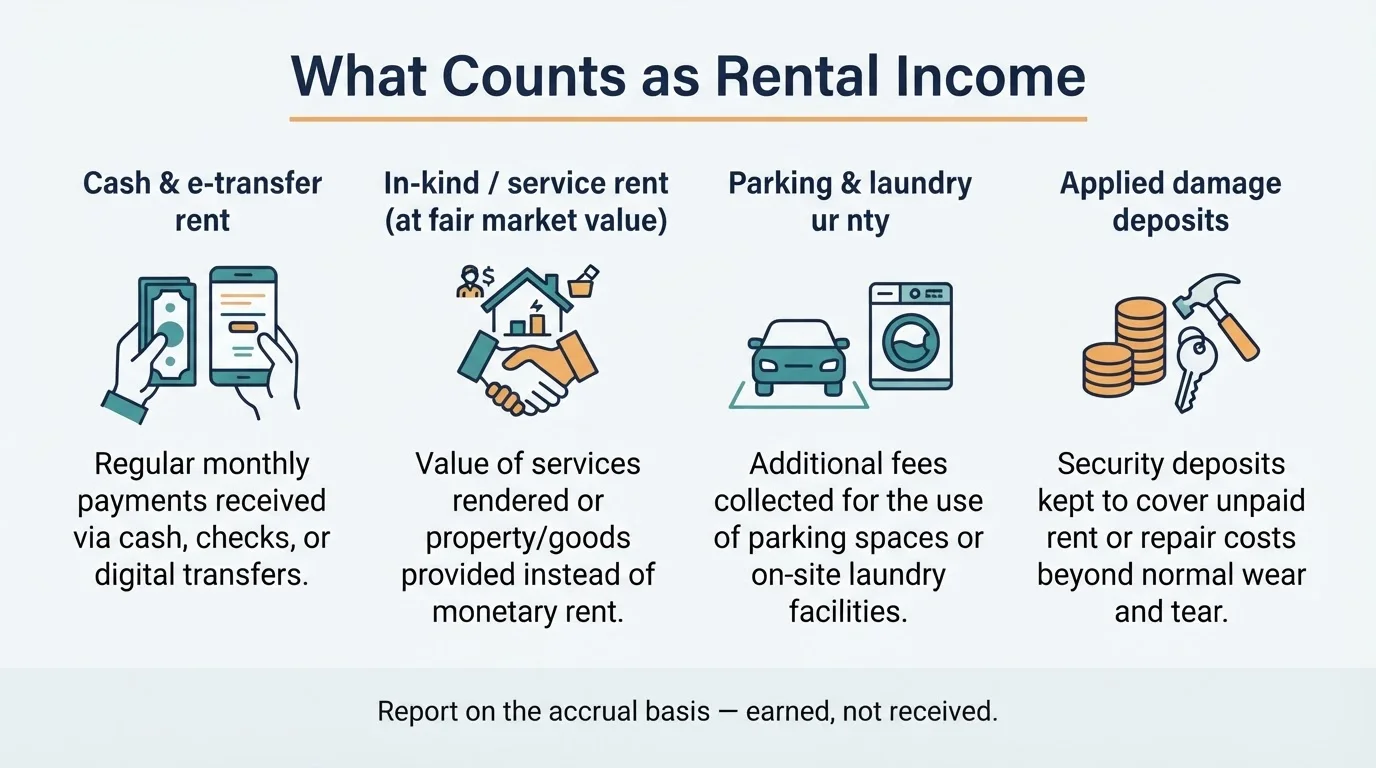
The piece people miss is income that doesn't arrive as money. If a tenant provides a service in exchange for reduced rent — plowing the lot, say — you report the fair market value of that service as income (and you can then deduct it as an expense). Parking and laundry income count too, as does any damage deposit you kept and applied to unpaid rent; a security deposit isn't income until you apply it. Report all of it. Cash, in-kind, and short-term-rental income are exactly where the CRA looks, and under-reporting is the costliest common landlord error.
Step 2: Sort Your Expenses & Pull Your Records

Next, gather the paperwork and sort it as you go. Pull every receipt, invoice, and statement — your mortgage statements (for the interest-versus-principal split), property tax and insurance, utility bills, and any management or professional invoices. As you collect each cost, drop it into one of two buckets: current (deductible in full this year) or capital (claimed over time through CCA). That single sort drives your net rental number more than anything else, and the deductions deep-dive covers the line-by-line if you want the detail.
Two record-keeping rules matter here. Prepaid costs get spread over the years you benefit — three years of insurance paid up front is deducted roughly a third at a time, not all at once. And the CRA can deny any expense you can't support: no receipt, no deduction. Keep your records for six years from the end of the tax year; you don't file them, but you have to produce them on request. The repairs the RTA required you to make this year are generally current expenses — worth pulling those invoices while you're at it.
Step 3: Make the Two Decisions That Move the Bill
With income totalled and costs sorted, two decisions do the real work on your tax bill.
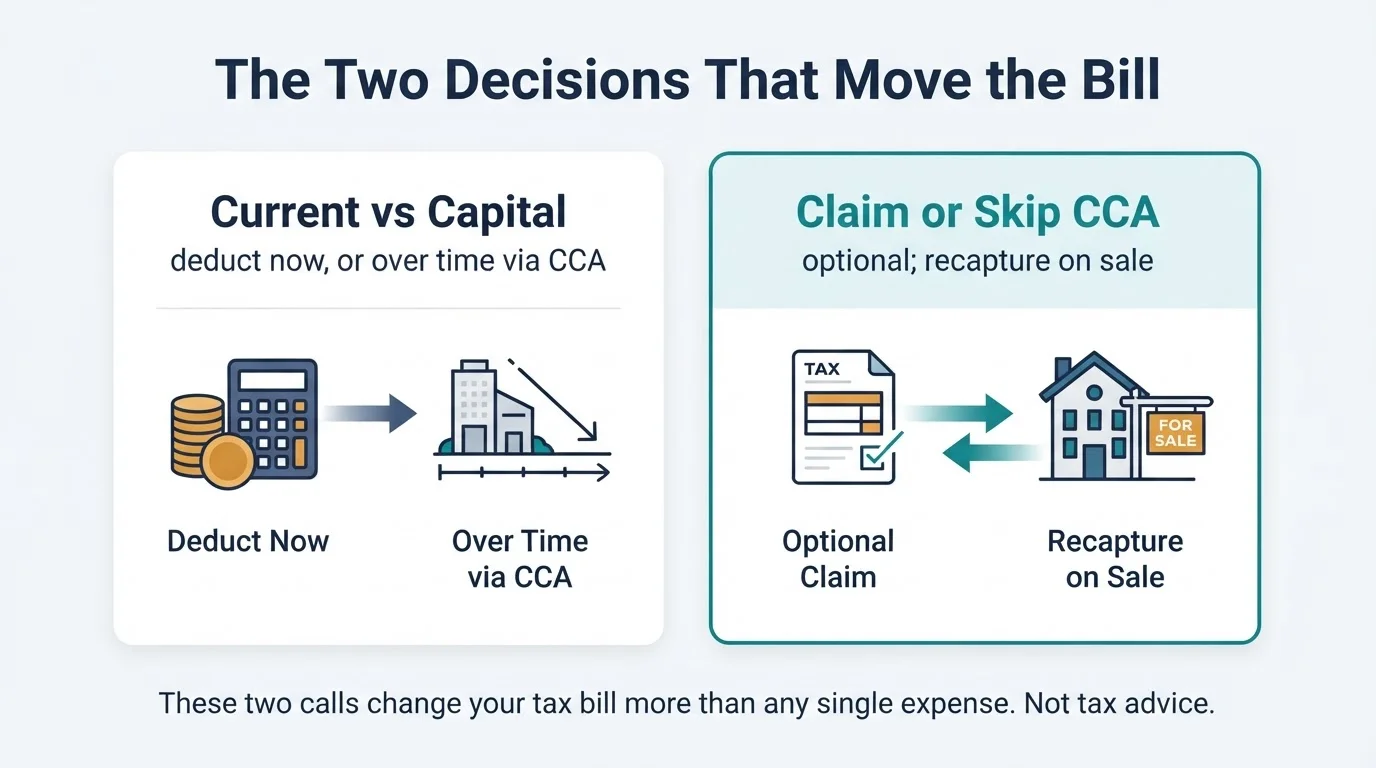
The first is the current-versus-capital call on the bigger items — a major repair, or work done on a property you just bought, can swing a deduction from the full amount now to roughly four percent a year through CCA. The second is whether to claim CCA at all. It's optional, it can't create or increase a rental loss, and it triggers recapture — taxed at your full rate — when you sell; claiming it on a home or a basement suite can also cost you the Principal Residence Exemption. As a rule of thumb, claiming tends to make sense with positive income and a long hold, and skipping tends to be smarter when a sale or a future move-in is likely. The CCA guide walks the whole decision. One more: if you co-own the property, agree on the ownership-percentage split before anyone files, because mismatched co-owner returns invite a review. (And note rental income isn't self-employment, so CPP doesn't apply.)
Step 4: File on Time (and the Dates You Can't Miss)
Finally, file — and get the dates on your calendar now, because this is where avoidable penalties happen.
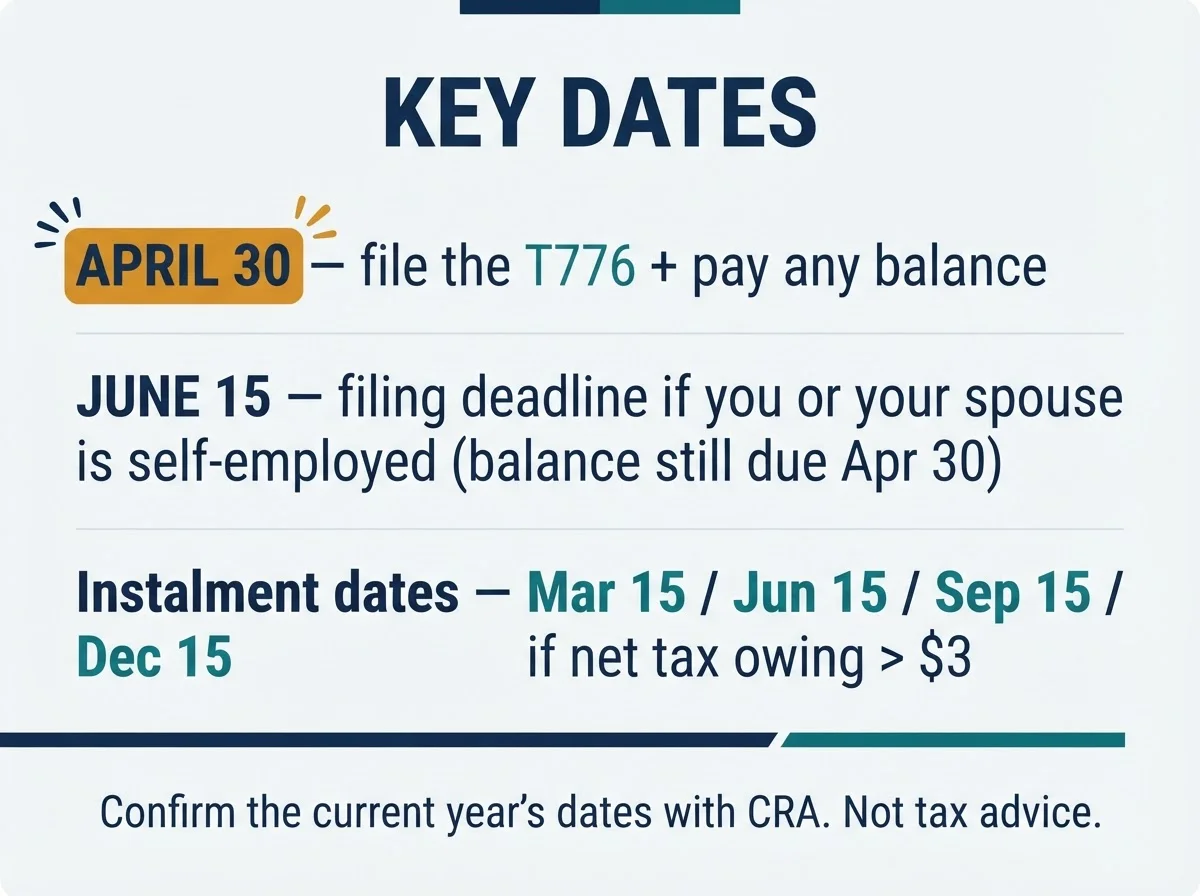

You file the T776 with your T1 personal return, and the key date is April 30 — that's both the filing deadline and the day any balance owing is due; interest starts running May 1. If you or your spouse is self-employed, the filing deadline moves to June 15, but the balance is still due April 30, so that later date is a trap if you owe. File even in a loss year — you're required to, and a rental loss can offset your other income. Watch the instalment threshold, too: if your net tax owing tops $3,000 in the current year and either of the two prior years, the CRA can move you to quarterly instalments (March 15, June 15, September 15, December 15), which is a cash-flow shift worth planning for. When you file, gross rent goes to line 12599 and net rental income to line 12600; attach your partnership slip (T5013) if you have one, and confirm your short-term-rental municipal compliance, since non-compliant short-term rentals lose the ability to deduct expenses. This is general information, not tax advice — take anything uncertain to a CPA and verify the current rules with the CRA.
Do the routine all year, not in April
Track income, expenses, and the current-vs-capital tag as they happen — so year-end prep is already done and the T776 is a one-click export.
Free • No signup required • Built for Ontario
Key Takeaways
- Total all income — including rent paid in services — on the accrual basis, and file even at a loss.
- Pull every receipt and sort each cost into current vs capital; keep records six years.
- The two decisions that move the bill: the current-vs-capital calls, and whether to claim CCA.
- File the T776 with your T1 by April 30 — and pay any balance the same day.
- Watch the instalment threshold ($3,000), and confirm short-term-rental compliance.
Conclusion
Rental taxes are only painful when you leave them to April. Gather all your income, including rent paid in services; pull and sort your receipts into current versus capital; make the two decisions that actually move the bill — the current-versus-capital calls and whether to claim CCA — and file the T776 with your T1 by April 30, paying any balance the same day. File even at a loss, watch the instalment threshold, and keep your records for six years.
It's four steps and a folder. Do them through the year and filing is a formality. This is general information, not tax advice — set up the folders now, take the grey-area calls to a CPA, and verify the current-year deadlines with the CRA at canada.ca.
Frequently Asked Questions
When is the deadline to file rental income taxes in Canada?
Your T776 is filed with your T1 personal return, due April 30. Any balance owing is also due April 30. If you or your spouse is self-employed, the filing deadline is June 15, but the balance is still due April 30.
What documents do I need to file my rental property taxes?
Total rent received (including rent paid in services, at fair market value), plus receipts, invoices, and statements for every expense — mortgage (interest/principal split), property tax, insurance, utilities, and management or professional fees. Keep them six years.
Do I have to file if my rental lost money?
Yes. You must file a T776 even in a loss year — and a rental loss can often be used to offset your other income.
How long do landlords keep tax records in Canada?
Six years from the end of the tax year they relate to. You don't file the records, but the CRA can ask to see them, and unsupported expenses can be denied.
Do landlords have to pay tax instalments?
You may have to. If your net tax owing exceeds $3,000 in the current year and either of the two prior years, the CRA can require quarterly instalments (March 15, June 15, September 15, December 15).
Is rental income self-employment income?
No. Rental income is generally property income, not self-employment, so CPP contributions don't apply — though the June 15 filing deadline can still apply if your spouse is self-employed.


