An Alberta tenant can end a tenancy early for a landlord's breach in two main ways: apply to the RTDRS or court to terminate the tenancy because the breach is serious enough, or, when the unit fails minimum health standards and a public health order has not been obeyed, serve a 14-day notice. Moving out without either can leave you owing rent.
The Residential Tenancies Act (RTA) gives tenants a short list of exits when a landlord breaks the agreement, and each has its own conditions. The province's position on the obvious shortcut is clear: a tenant cannot withhold rent because they believe the landlord is not meeting its obligations (Common problems). This guide sets out each lawful route, what it needs, and what it gets you. For the ordinary notice periods, see how a tenant gives notice in Alberta.
What landlord breaches let a tenant end a tenancy in Alberta?
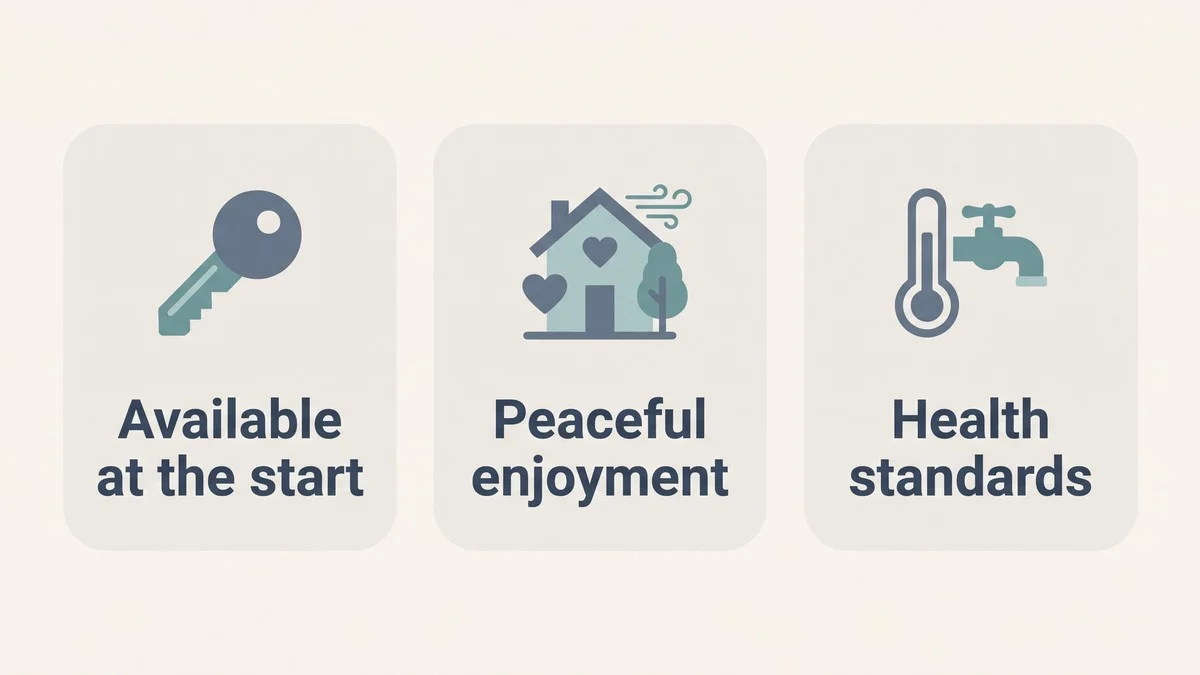
Every Alberta tenancy includes three landlord covenants: the premises will be available at the start of the tenancy, the landlord will not significantly disturb the tenant's possession or peaceful enjoyment (subject to the entry rules), and the premises will meet at least the minimum housing standards under the Public Health Act (RTA s.16). Beyond the covenants, a tenant has remedies whenever the landlord breaches the agreement or contravenes the Act (s.37).
The Act uses "substantial breach" narrowly for landlords: it means a breach of the s.16(c) health-standards covenant (s.1(1)(p)(ii)). That matters for the 14-day notice below.
| Route | When it applies | How the tenancy ends | Section |
|---|---|---|---|
| Termination order | Any breach or contravention significant enough that the tenancy should end | RTDRS or court order on the date it sets | RTA s.37(1)(d) |
| Tenant's 14-day notice | Health-standards breach, a public health order issued, and the landlord not complying | 14 days after service, unless the landlord validly objects | RTA s.28 |
| Repudiation at move-in | Unit not available, or below health standards, at the start of the tenancy | The tenant repudiates the agreement | RTA s.38 |
| Frustration | Unit destroyed, or closed or made unfit by a public health order, among other cases | By law, under the rules on frustrated contracts | RTA s.40 |
How do you get an order ending the tenancy for a landlord's breach?
You apply to the Residential Tenancy Dispute Resolution Service (RTDRS) or to court. If a landlord breaches the agreement or contravenes the Act, the tenant may seek termination of the tenancy where, in the decision-maker's opinion, the breach is of such significance that the tenancy should be terminated (s.37(1)(d)). The RTDRS can hear it instead of a court (s.54.2(2)), and its How to apply page lists "ending the tenancy due to a landlord's breach" among the things a tenant can apply for on the Tenant's Application.
In the same application you can ask for the other s.37 remedies: damages, an abatement of rent to the extent the breach deprived you of the benefit of the agreement, and compensation for the cost of performing the landlord's obligations. A court application must set out the details of the breach and the termination date you want (s.37(2)(d)); give the RTDRS the same.
When can an Alberta tenant serve a 14-day notice for the landlord's breach?

Only when three things line up (s.28(1)): the landlord has committed a substantial breach, meaning the premises fall below the minimum housing standards; an executive officer has issued an order under s.62 of the Public Health Act about those circumstances; and the tenant believes on reasonable grounds that the landlord has not complied with the order. The tenant may then serve a notice at least 14 days before the termination day, or apply to court instead.
The notice must be in writing, signed by the tenant, and state the reasons and the termination date (s.28(2)). It is ineffective if, within 7 days after receiving it, the landlord serves a written objection on the grounds that the landlord has complied with the order or obtained a stay, and the landlord has in fact done so at that time (s.28(3)). The public health order usually comes from an inspection, which the province's minimum housing standards guide explains.
What if the unit was never ready at move-in?
If at the beginning of the tenancy the premises are not available, or do not meet the minimum health standards, the tenant may repudiate the agreement or apply to the Court of King's Bench for specific performance, and may recover general damages and foreseeable special damages (s.38). Specific performance is a court remedy; the RTDRS says it cannot require a landlord to do repairs or improvements.
When does a tenancy end by frustration?
A tenancy agreement is frustrated if the premises are destroyed; if the premises or the property are so damaged that a reasonable landlord would not repair or a reasonable tenant would not stay; if a Public Health Act s.62 order closes the premises or declares them unfit; or if the property breaches a health and safety enactment and the condition is not remedied (s.40(1)). The general law of frustrated contracts then applies (s.40(2)).
What happens if a tenant just leaves?
The landlord may treat it as a repudiation and claim the rent lost until a fixed term would have ended or until the earliest date a periodic tenancy could have been ended, though the landlord must make reasonable efforts to re-rent (s.27). That is why the routes above matter. For fixed terms, ending a tenancy in Alberta explains why no notice is needed at the end date but leaving early is different. Tenants leaving because of domestic violence have a separate route, covered in Alberta's Safer Spaces certificate.
Frequently asked questions
Is noise or harassment by the landlord grounds to end the lease?
It can be. Significantly disturbing the tenant's peaceful enjoyment breaches s.16(b), and a tenant may apply under s.37 for termination if the breach is serious enough, as well as for damages or an abatement.
Can I use the 14-day notice for a broken appliance?
Only if it puts the unit below the minimum housing standards and a public health order has been issued and not obeyed. Otherwise use an RTDRS application.
Does the RTDRS charge a fee for a tenant's application?
Yes. The filing fee is $75 for claims of $7,500 or less and $150 for claims over $7,500, with a waiver available on proof of income.
Can the landlord stop a 14-day notice?
Yes, by serving a written objection within 7 days of receiving it, having already complied with the public health order or obtained a stay of it.
Do I keep paying rent while I apply?
Yes. Alberta tenants cannot withhold rent to force a landlord to act. In a damages or compensation application a court may direct rent to be paid into court (s.39).
Serving a tenant's substantial breach notice?
Fill in Alberta's AR211-F6 tenant's notice step by step, for a breach covered by a public health order the landlord has not complied with.
Free • No signup required