

If you got a 14 day eviction notice in Alberta for unpaid rent, paying all the rent due before the termination date makes the notice ineffective and your tenancy continues (RTA s.29(4)(a)). For any other reason, serve the landlord a written objection with your reasons before that date (s.29(4)(b)). Either way, you cannot be removed without an order.
At a glance: your options after a 14-day notice
- Unpaid rent: pay all rent due before the termination date and the notice has no effect.
- Another breach: serve a written objection with your reasons before the termination date.
- Not paying or objecting: move out by the date, or the landlord can apply to the RTDRS or the court.
- Removal: needs an RTDRS or court order; a civil enforcement agency may evict only under an order for recovery of possession (s.34.1).
This guide is for Alberta renters who have just received a 14-day notice to end their tenancy. It explains what the notice must say, the options you have, and what happens if the landlord goes to the Residential Tenancy Dispute Resolution Service (RTDRS) or the court. The rules were checked against the Residential Tenancies Act (RTA), its regulations and the Government of Alberta's guidance on October 24, 2026.
Alberta 14-Day Notice: Tenant Checklist
What to do after your landlord serves a 14-day notice in Alberta (rules as of October 24, 2026).
Get Free PDF →What is a 14-day notice in Alberta?
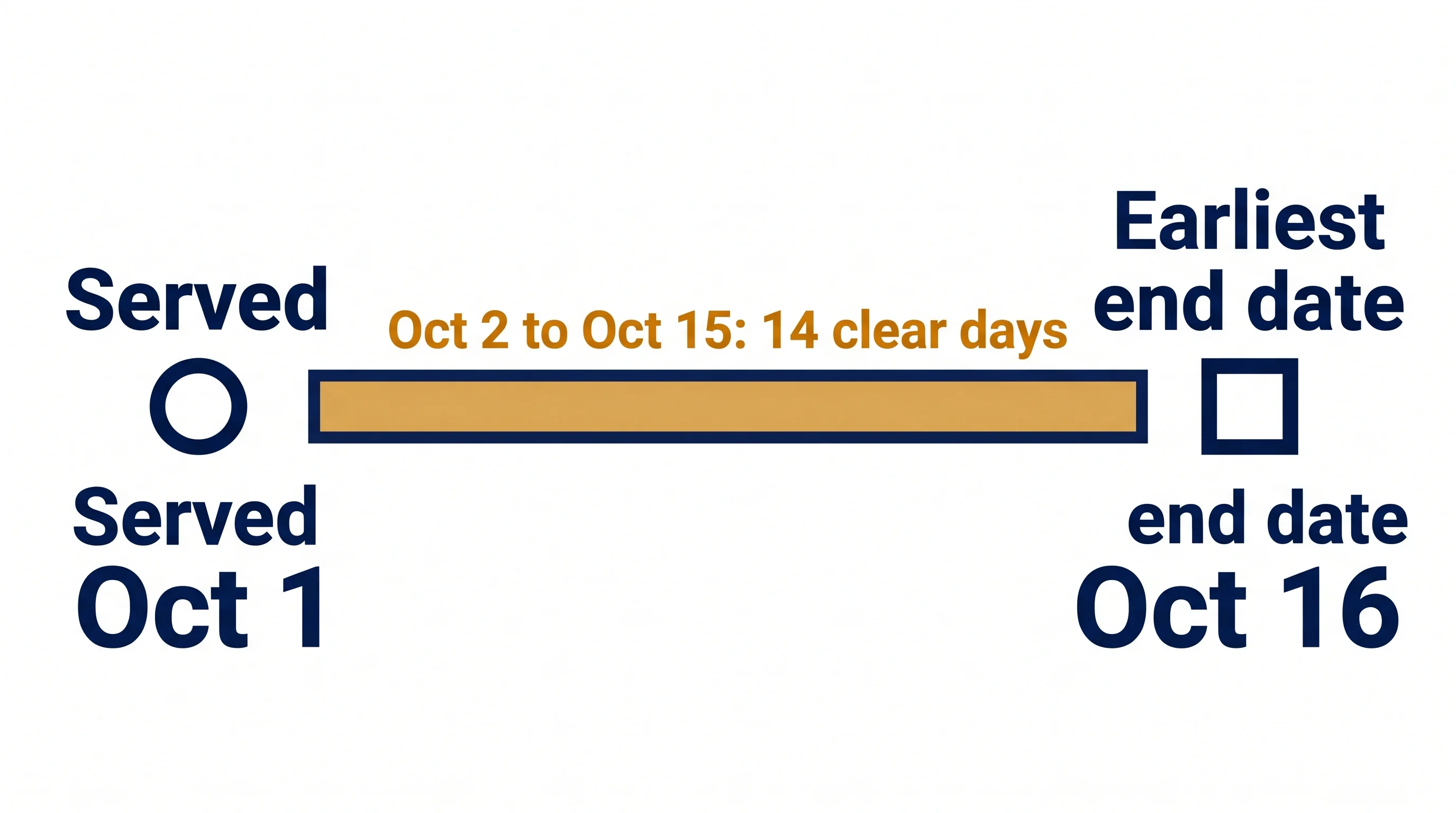
A 14-day notice is a landlord's written notice ending your tenancy for a "substantial breach", which includes not paying rent when it is due (RTA s.29(1); s.1(1)(p); s.21(a)). The landlord must serve it at least 14 days before the termination date, and the Government of Alberta says those are clear days: the day it is given and the day the tenancy ends do not count.
A substantial breach can also be a breach of another tenant covenant, such as seriously interfering with the landlord or other tenants, endangering others or significantly damaging the premises, or a series of breaches that together are substantial (s.1(1)(p); s.21). The notice must (s.29(2)-(3)):
- be in writing and signed by the landlord or the landlord's agent;
- set out separately the rent due as of the date of the notice and any additional rent that may become due during the notice period;
- give the reasons and the termination date; and
- for unpaid rent, state that the tenancy will not end if you pay the rent due, and any additional rent that has become due, on or before the termination date.
Example: a notice served on October 1 has 14 clear days from October 2 to October 15, so the earliest termination date it can give is October 16.
How do you stop a 14-day notice for unpaid rent?
Pay all the rent due as of the date you pay, before the termination date on the notice, and the notice becomes ineffective (RTA s.29(4)(a)). The amount is not just the arrears on the notice: it includes any rent that has come due since, such as the next month's rent if the 1st has passed.
- Work out the full amount. Start with the rent due shown on the notice and add any rent that has fallen due since (s.29(2)(c), (3)).
- Pay in a way you can prove. Use a method that leaves a record, such as a bank transfer or a cheque, and keep the confirmation.
- Get a receipt in writing. Ask the landlord to confirm in writing that the rent is paid and the notice no longer applies.
If you can pay only part, talk to the landlord before the date. The Government of Alberta notes a landlord can let a tenant pay later or over time, but is under no obligation to do so, so get any arrangement in writing. A partial payment alone does not cancel the notice.
What if the notice is for something other than rent?
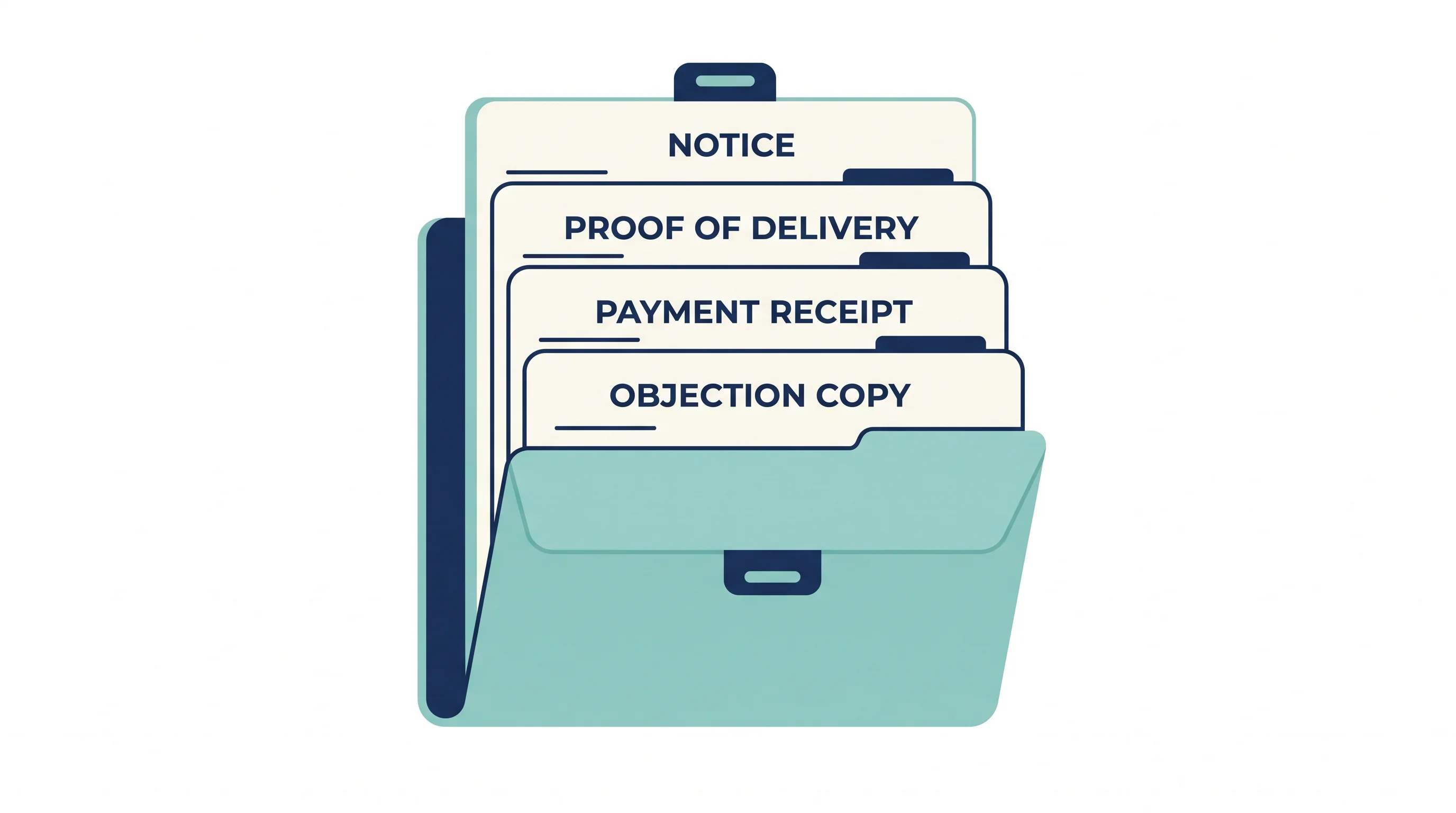
If the 14-day notice gives a reason other than unpaid rent, serve the landlord with a written objection that sets out your reasons before the termination date, and the notice becomes ineffective (RTA s.29(4)(b)). The landlord would then have to apply to the RTDRS or the court to end the tenancy.
Keep the objection short and factual: your name, the rental address, the date of the notice, that you object, and why. Sign and date it, deliver it in person or by registered mail (s.57(1)), and keep a copy with proof of delivery. Gather what supports your side, such as messages, photos or witness names, in case there is a hearing.
What happens if you do not pay, object or move out?
If you stay after the termination date without paying or objecting, the landlord can apply to the RTDRS or the court for an order ending the tenancy and giving back possession, and the Government of Alberta says you may remain until that order is issued. A civil enforcement agency may evict only under an order for recovery of possession, and only once that order has been served on you (RTA s.34.1).
| Your situation | What to do | Result |
|---|---|---|
| Notice for unpaid rent, you can pay | Pay all rent due before the termination date | Notice ineffective (s.29(4)(a)) |
| Notice for another breach, you disagree | Serve a written objection with reasons before the date | Notice ineffective; landlord must apply (s.29(4)(b)) |
| You cannot pay or do not dispute it | Move out by the termination date | Tenancy ends; rent owing and deposit rules still apply |
| You stay without paying or objecting | Expect an RTDRS or court application | An order is needed before removal (s.34.1) |
If the landlord applies, you will be served with the application and the hearing date. Attend, bring your evidence and any payment records. If an order was made without you, because you did not get notice of the hearing or missed it through an accident or mistake, you can ask the RTDRS to set it aside within 20 days after you received it or learned of it (Residential Tenancy Dispute Resolution Service Regulation, AR 98/2006 s.19.1(3), (5)). See RTDRS explained for how hearings work.
If you move out, what happens to your deposit and the rent owing?
Moving out ends the tenancy, but any rent you owe remains a debt, and the landlord can deduct it from your security deposit where the lease allows, or claim it through the RTDRS or the court. The landlord must return the deposit, or the balance with a statement of account, within 10 days after you give up possession (RTA s.46(2)).
Ask for a move-out inspection within one week of leaving (s.19(2)) and give a forwarding address in writing. No damage can be deducted unless both inspection reports were done (s.46(6)). The Alberta security deposit guide explains the return.
Frequently asked questions
Can my Alberta landlord change the locks after a 14-day notice?
A 14-day notice alone does not give the landlord possession. If you stay, the landlord has to apply to the RTDRS or the court for an order, and a civil enforcement agency may evict only under an order for recovery of possession (RTA s.34.1).
Does a 14-day notice count calendar days?
The Government of Alberta says a 14-day notice must be given at least 14 clear days before the tenancy ends, so the day it is given and the end date do not count. A notice served on October 1 cannot end the tenancy before October 16.
I paid after the termination date. Is the notice cancelled?
Not automatically. The Act makes the notice ineffective only if you pay all rent due before the termination date (s.29(4)(a)). Ask the landlord in writing whether they will continue the tenancy, and get the answer in writing.
What is the difference between a 14-day and a 24-hour notice?
A 24-hour notice is for significant damage or for physically assaulting or threatening to assault the landlord or another tenant (s.30(1)). A 14-day notice is for other substantial breaches, including unpaid rent (s.29).
How is this different from BC or Ontario?
BC uses a 10 Day Notice with 5 days to pay or dispute, and Ontario uses the N4. If you are new to Alberta, see got a 10 Day Notice in BC for comparison, and the Alberta tenant guide for your rights here.
A 14-day notice is serious but not final: pay the full rent due before the date, or object in writing to a non-rent reason, and keep proof of what you did. The landlord's side of the same process is in how Alberta's 14-day notice works.
Alberta 14-Day Notice: Tenant Checklist
What to do after your landlord serves a 14-day notice in Alberta (rules as of October 24, 2026).
Get Free PDF →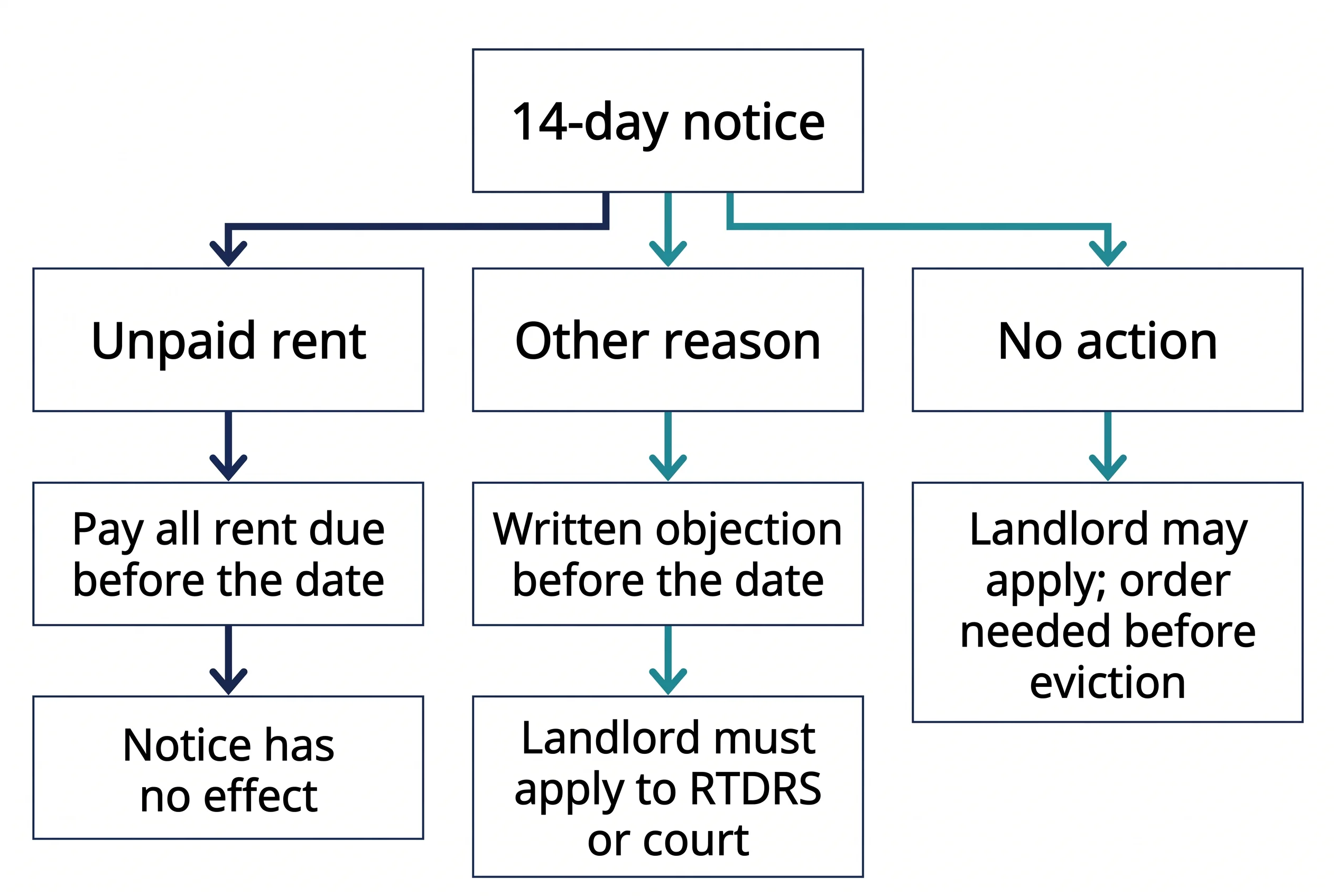
Stay ahead of rent day
Tenon10 sends rent reminders, runs move-in and move-out inspection reports and tracks your deposit's return date.
Free • No signup required


