When a Canadian sells US real estate, FIRPTA withholding generally requires the buyer to hold back 15% of the sale price and pay it to the IRS; it is a prepayment, not the final tax, which you settle by filing Form 1040-NR to report the actual gain and claim the withholding as a credit.
FIRPTA is the Foreign Investment in Real Property Tax Act. This how-to covers the withholding at closing and what the seller does next, from IRC section 1445, IRS Publication 515 (2026) and Publication 519 (2025). Applying to reduce the withholding before closing has its own article in this series, and the series pillar, Canadians Who Own a US Rental: The Complete Tax Guide, covers the rental years before a sale.
How much does the buyer withhold?
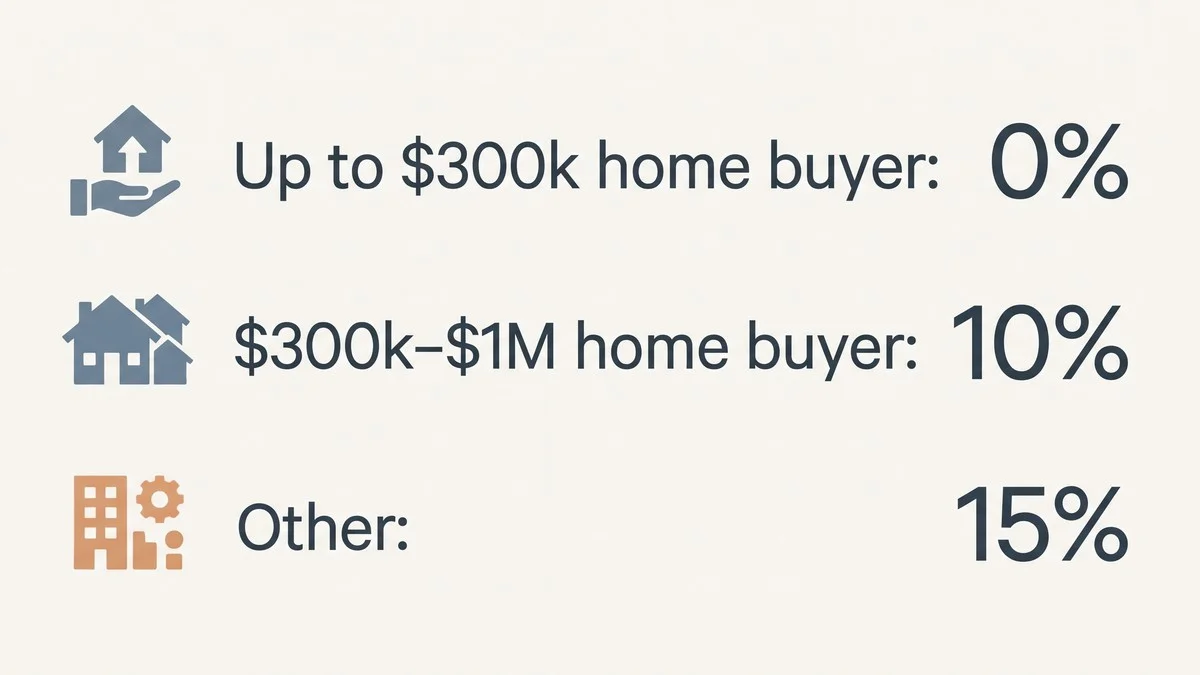
Section 1445(a) requires the transferee to "deduct and withhold a tax equal to 15 percent of the amount realized on the disposition". The amount realized is generally the sale price. Publication 515 sets lower rates when the buyer acquires the home as a residence:
| Sale price (amount realized) | Buyer acquires it as a residence | Any other buyer |
|---|---|---|
| US$300,000 or less | No withholding | 15% |
| Over US$300,000 up to US$1,000,000 | 10% | 15% |
| Over US$1,000,000 | 15% | 15% |
For the residence rule, Publication 515 says the buyer must be an individual, and the buyer or a family member must have definite plans to live in the property for at least 50% of the days it is used during each of the first two 12-month periods after the transfer.
Worked examples (illustrative figures only)
- A Canadian sells a Florida condo for US$500,000 to an investor: 15% × 500,000 = US$75,000 withheld.
- The same condo sold to a buyer who will live in it: 10% × 500,000 = US$50,000.
- A US$280,000 cottage sold to a buyer who will live in it: no withholding.
Compare that with the gain. If the condo cost US$350,000 and US$50,000 of depreciation was allowed or allowable (Publication 527 says basis is reduced by depreciation "allowed or allowable"), the adjusted basis is about US$300,000, before selling costs and improvements, and the gain about US$200,000. The US tax on that gain depends on your rates and can be more or less than the amount withheld; the 1040-NR settles the difference.
What does the seller need before closing?

- A US taxpayer identification number. Publication 515 says the stamped Copy B of Form 8288-A "will not be provided" if your TIN is not on the form; Form W-7 Exception 4 lets a seller apply for an ITIN with the FIRPTA paperwork.
- Your purchase records, improvement invoices and depreciation schedule, to work out the adjusted basis.
- A decision on whether to apply for a withholding certificate on Form 8288-B before the transfer.
What happens at and after closing, step by step?
- The buyer withholds at closing. The IRS FIRPTA page says the buyer is in most cases the withholding agent.
- The buyer files Form 8288 and Form 8288-A and pays the withholding, in most cases by the 20th day after the transfer, per Publication 515 and the Form 8288 instructions.
- The IRS stamps Copy B of Form 8288-A and sends it to you.
- The closing agent reports the sale on Form 1099-S in most cases.
- You file Form 1040-NR for the year of sale. The 1040-NR instructions say gains on US real property interests are reported on Schedule D (Form 1040) and line 7a. Attach the stamped Copy B and claim the withholding as a payment on line 25f, per Publication 519.
- Any excess comes back as a refund once the return is processed.
How is the sale reported in Canada?
You report the disposition on your Canadian return in Canadian dollars, and claim the US tax on the gain as a foreign tax credit. Folio S5-F2-C1 (¶1.22) treats foreign tax on income from the disposition of real property as creditable without the 15% cap, and ¶1.33 excludes any part that is refunded, so the credit is based on your final US tax, not the 15% withheld. If you claimed CCA on the building over the years, our CCA article explains how claiming it works and why some owners choose not to.
What mistakes cost Canadian sellers the most?
- No ITIN, so the stamped Copy B is held back and the refund waits.
- Not filing the 1040-NR, leaving the full 15% with the IRS.
- Leaving out depreciation from the basis calculation: the "allowed or allowable" rule reduces basis even if you never claimed it.
- Claiming the 15% as the Canadian credit instead of the final US tax.
- Thin records. Keep closing statements and improvement invoices for both countries; our bookkeeping guide and audit-readiness guide explain what to keep.
Frequently asked questions
Is FIRPTA withholding the same as the tax on my gain?
No. It is a prepayment based on the price. Your actual US tax is worked out on the 1040-NR from the gain, and the withholding is credited against it.
Who pays the withholding to the IRS?
The buyer, as withholding agent, using Forms 8288 and 8288-A, generally within 20 days of the transfer.
Can withholding be reduced before closing?
Yes. Publication 515 says the transferee or the transferor can request a withholding certificate, and the IRS generally acts within 90 days of a complete application.
Does the property's use matter for the 10% rate?
It is the buyer's planned use that counts, not how you used it.
Keep your property records sale-ready
Free guides and checklists for Canadian landlords
Free • No signup required