Form 8288-B is the application a Canadian seller (or the buyer) files with the IRS for a withholding certificate that reduces or eliminates FIRPTA withholding, most often by showing that your maximum US tax on the sale is less than the 15% the buyer would otherwise withhold; the IRS normally acts within 90 days of a complete application.
This how-to follows Form 8288-B and its instructions (Rev. December 2025) and IRS Publication 515 (2026). How the withholding itself works is covered in this series' FIRPTA article, and the full picture of owning and selling a US rental is in the series pillar, Canadians Who Own a US Rental: The Complete Tax Guide.
When can you use Form 8288-B?
Only for three kinds of application, per the form's instructions: a claim that the transferor is entitled to nonrecognition treatment or is exempt from tax; a claim based solely on a calculation that the transferor's maximum tax liability is less than the tax otherwise required to be withheld; or a claim under the special installment-sale rules in section 7 of Rev. Proc. 2000-35. Applications based on an agreement for the payment of tax with security, and blanket certificates, do not use this form. For a typical Canadian selling a rental at a gain, the maximum-tax calculation is the usual route.
What do you need before you apply?
- US taxpayer identification numbers for every party. The instructions say the TIN of all parties "must be on the application". A seller without one can attach the completed 8288-B to a Form W-7 and send the package to the ITIN address.
- Evidence of the amount realized, such as the signed contract of sale.
- Evidence of adjusted basis: closing statements, invoices for improvements and depreciation schedules.
- Amounts subject to recapture, the maximum rates that apply, and the tentative tax owed.
- Evidence of any treaty reduction, and evidence that you have no unsatisfied withholding liability from when you bought the property (line 8).
How do you apply, step by step?
- Line 1: name, street address and TIN of each transferor.
- Line 2: the same for each transferee (buyer).
- Lines 4 and 5: the withholding agent, normally the buyer, and the address for returning the certificate.
- Line 6: details of the property and the transaction, including how the property was used. Check "Other" and attach an explanation if the property had both personal and rental use, and describe the property on line 6f.
- Line 7b: tick the maximum-tax box and attach the calculation and its evidence, with a statement signed under penalties of perjury.
- Line 8: show your unsatisfied withholding liability, or evidence that none exists, such as a copy of the Form 8288 filed when you bought, or the certificate of non-foreign status given by the person you bought from.
- Sign, or have an agent sign with a power of attorney such as Form 2848.
- Mail to Internal Revenue Service, P.O. Box 409101, Ogden, UT 84409.
- Tell the buyer in writing. A transferor who applies must notify the transferee on the day of or before the transfer that the certificate has been applied for.
What does a maximum-tax calculation look like? (illustrative figures only)
| Item | US$ |
|---|---|
| Amount realized (sale price) | 500,000 |
| Adjusted basis after depreciation allowed or allowable | 300,000 |
| Gain | 200,000 |
| Maximum tax at the rates that apply (assumed for the example) | 45,000 |
| Withholding without a certificate: 15% × 500,000 | 75,000 |
| Withholding a certificate could allow | 45,000 |
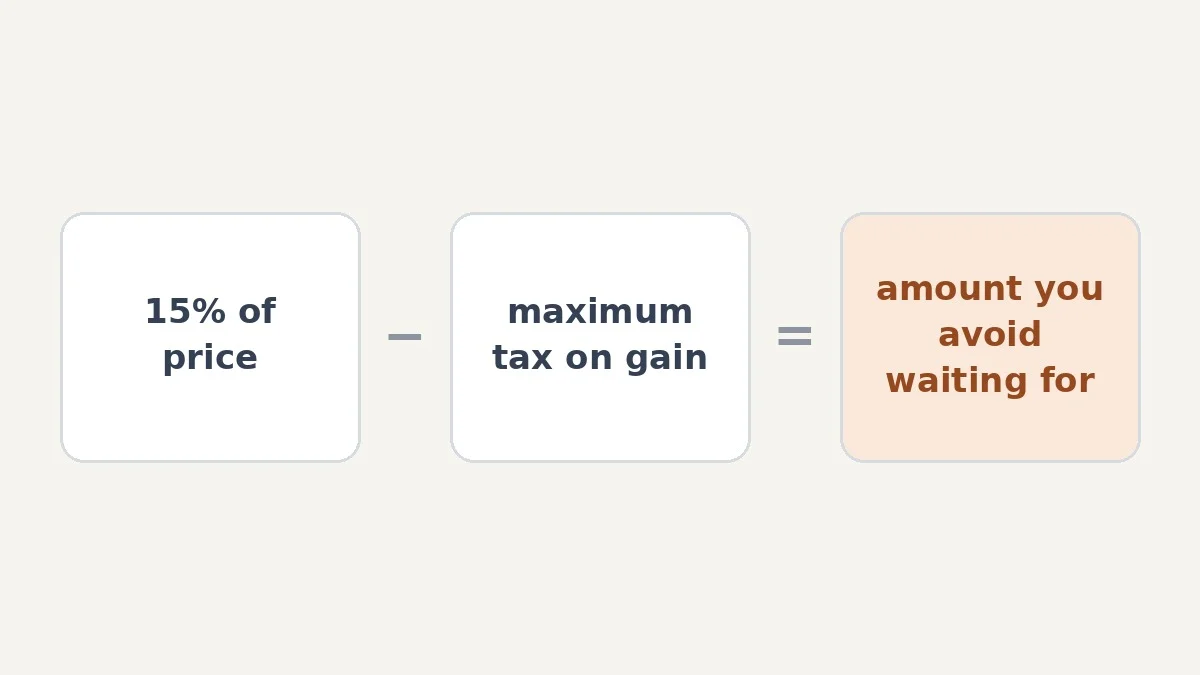
The real calculation uses the rates, recapture and treaty provisions the instructions list. The point is the gap: here US$30,000 that would otherwise wait for a 1040-NR refund.
What happens after the IRS decides?
The buyer still withholds at closing, then pays over the amount the IRS sets within 20 days after the certificate or denial is mailed, per Publication 515. A copy of the certificate is attached to Form 8288 when withholding is still required. A certificate issued after the transfer "may authorize an early or a normal refund", per the form's instructions. You then report the sale on your 1040-NR for the year. Publication 515 also warns that if the principal purpose of applying is to delay paying over the tax, interest and penalties run from the 21st day after the transfer.
What mistakes get applications rejected or delayed?
- Missing TINs for any party.
- No date of transfer. The application is not substantially complete without one.
- Thin basis evidence. Without depreciation schedules you need a statement of how the property was used and why depreciation was not allowed.
- Filing after closing when you wanted the money held rather than paid over.
- Lost purchase records. Keep them from day one; our bookkeeping guide and year-end checklist show what to file away, and our audit-readiness guide covers the Canadian side.
Frequently asked questions
Who can file Form 8288-B?
Either the transferee or the transferor, or another authorized person, per the instructions.
How long does the IRS take?
The instructions say the IRS "will normally act on an application within 90 days of receipt of all information necessary".
Does a certificate replace the 1040-NR?
No. It only sets the withholding. You still report the gain and claim the withholding on Form 1040-NR.
Can I apply if I have no ITIN yet?
Yes. Attach the 8288-B to a completed Form W-7 and send both to the address in the W-7 instructions.
Get your sale paperwork together
Free guides and checklists for Canadian landlords
Free • No signup required