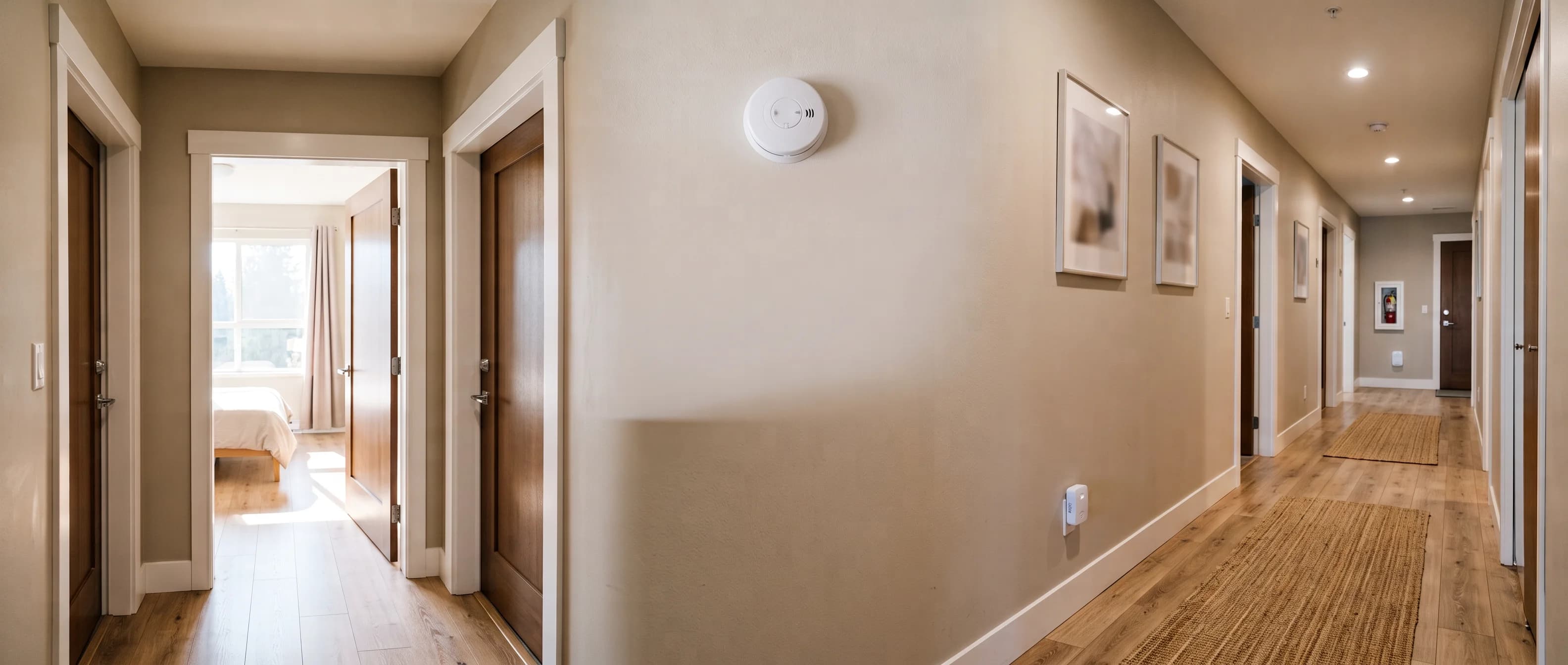
OTTAWA, Nov. 12, 2026: Health Canada's November 5 recall of the Leakbee Carbon Monoxide Detector, model YC302, covers a detector that carries no Canadian certification mark and may not detect carbon monoxide (CO) accurately. If a rental unit has one, the landlord should put up a certified CO alarm right away, and a tenant who finds one should tell the landlord.
What did Health Canada recall?
Health Canada recalled the Leakbee Carbon Monoxide Detector, a white plastic unit with the model number YC302 on a sticker on its back. According to the recall notice, the product has no Canadian certification mark and may detect CO inaccurately, which poses a potential CO poisoning hazard.
The importer, Yizhoukeji, reported that 856 units were sold in Canada between January and May 2026. The detector was made in China by Shenzhen Yeezou Technology Co. As of October 16, 2026, the company had received one report of an inaccurate CO reading in Canada and no reports of injury.
What should you do if you have one?
Stop using the recalled detector immediately and contact Yizhoukeji for a refund, Health Canada says. The company can be reached by email at [email protected]. The Canada Consumer Product Safety Act prohibits recalled products from being redistributed, sold or even given away in Canada, so do not pass the detector on to another unit, tenant or buyer.
Health Canada also asks people to report any health or safety incident involving the product through its Consumer Product Incident Report Form.
What it means for landlords
A landlord who installed a YC302 should put up a certified CO alarm before taking the old one down, so the unit is never left without CO protection. Where the law requires a CO alarm, a recalled, uncertified detector is a poor way to show the unit complies. Check every unit you manage, including suites where a previous owner or a tenant may have added a detector:
- Look at the back of each CO detector for a sticker showing model YC302.
- Replace any match with an alarm that carries the seal of an approved certification agency, such as the Canadian Standards Association (CSA).
- Test the new alarm, write down the date and the unit, and give the tenant the maintenance instructions.
The provincial duties differ. In Ontario, the province's CO safety page says landlords must install and maintain CO alarms in rental units, test them every year, when a battery is replaced, when the electrical circuit is changed and when a new tenant moves in, and give tenants the maintenance instructions. Our guide to Ontario carbon monoxide alarms covers where they must go.
In Saskatchewan, Henry's Law requires a CO alarm in every residential suite, including apartments, condominiums and houses with secondary suites, as of November 1, 2026, whenever the building was built, according to the province's CO alarm page. See our Henry's Law guide.
In BC, the Province says every home with a fuel-burning appliance or heater, an attached garage or a fireplace should have a CO alarm, and advises choosing one with the seal of an approved certification agency. Our article on smoke and CO alarms in BC rentals explains who installs and tests them. For Alberta, see smoke alarm rules for Alberta rentals.
What it means for tenants
A tenant who finds a YC302 in their unit should tell the landlord in writing and ask for a certified replacement. In Ontario, tenants must tell the landlord about any issue with a CO alarm, and it is against the law for anyone to remove the batteries or tamper with one. If you bought the detector yourself, stop using it, ask Yizhoukeji for a refund and put up a certified alarm in its place. More help is in the Canadian Tenant Resource Center.
What to do now
- Check every CO detector in the unit or building for the model number YC302.
- Install a certified CO alarm first, then take the recalled one out of service.
- Email Yizhoukeji at [email protected] for a refund; do not resell or give the detector away.
- Test the replacement and record the date; landlords should also give tenants the maintenance instructions.
- If any CO alarm sounds, get everyone out and call 911 from outside the building.
Landlords can find more on repairs and safety duties in the Canadian Landlord Resource Center.
Keep every unit's safety paperwork in order
Free landlord and tenant forms for notices, inspections and repairs, ready when you need them.
Free • No signup required