On BC rental smoke alarm landlord responsibility, the rule is clear: smoke alarms are mandatory in every dwelling unit under the BC Fire Code, and the landlord must install them, test them before a tenant moves in and keep them working. The tenant must not disable them and must report a fault. Carbon monoxide alarms are recommended in BC, not mandatory.
At a glance
- Smoke alarms: mandatory in all dwelling units under the BC Fire Code.
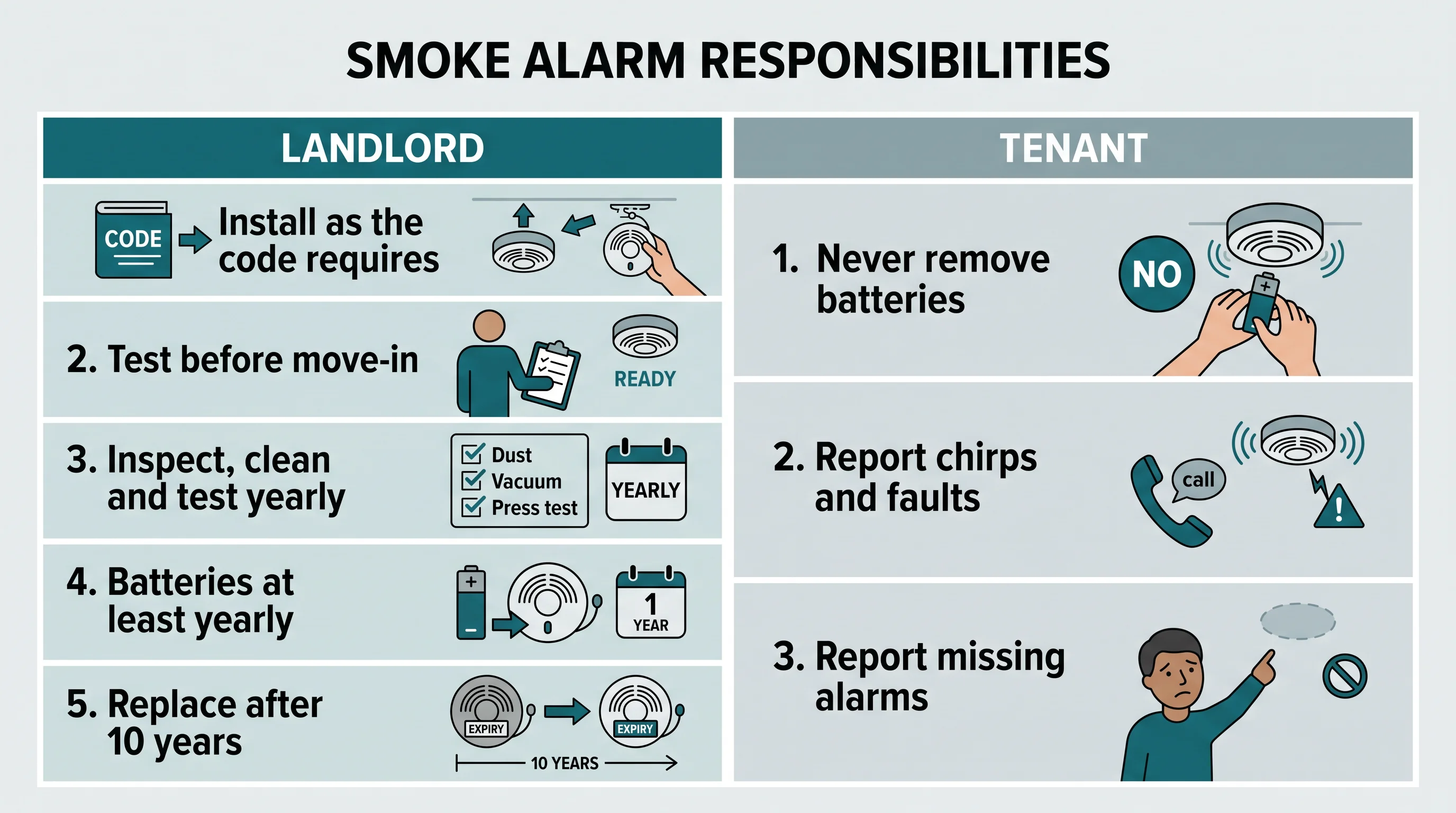
- Landlord: installs as required for the building's age, tests before move-in, inspects, cleans and tests yearly, replaces batteries at least yearly.
- Tenant: never removes batteries or disables an alarm; tells the landlord when one needs batteries or repair.
- Replacement: the Province says alarms should be replaced after ten years.
- Carbon monoxide: not mandatory in BC, but recommended where there is a fuel-burning appliance, fireplace or attached garage.
BC Rental Smoke and CO Alarm Checklist
Who installs, tests and maintains smoke and carbon monoxide alarms in a BC rental, from move-in to replacement.
Get Free PDF →Are smoke alarms required in BC rentals?
Yes. The Province's fire safety codes page, updated March 25, 2026, says smoke alarms are mandatory in all dwelling units under the British Columbia Fire Code. What kind depends on when the unit was built:
| When the unit was built | Smoke alarm required |
|---|---|
| After the 1979 building and fire code changes | Permanently wired to the electrical system and interconnected |
| Before 1979, or no electrical power | A smoke alarm is still required, and may be battery operated |
When alarms are replaced, the Province says the new installation must not reduce the level of protection, so interconnected alarms are replaced with the same type or better. Extra alarms added to a home may be battery operated. It also says to check local bylaws for further requirements.
Do cities add their own rules?
Some do. The City of Victoria's Smoke Alarm Bylaw No. 92-18, for example, requires the owner to install and maintain at least one smoke alarm in every dwelling unit, have it tested at least once every twelve months and, for battery alarms, install new batteries at least once every twelve months. Our guide to a BC landlord's repair duty covers how local standards fit with the Residential Tenancy Act.
What does the landlord have to do?
Install, test and maintain. Section 32 of the Residential Tenancy Act requires a landlord to meet the health, safety and housing standards required by law, which include the Fire Code. RTB Policy Guideline 1, section M, spells out what that means for alarms. Where smoke detectors exist or are required by law, the landlord must install them and keep them in good working condition, including:
- an annual inspection of the system
- annual cleaning and testing of the alarm
- replacing batteries at least once a year and as the manufacturer instructs
The Province's page adds that landlords and apartment managers must install alarms as required for the year of construction, test them before a tenant moves in, and keep them working, and that alarms should be inspected whenever the tenancy changes. It also says all smoke alarms should be replaced after ten years.
What does the tenant have to do?
Keep the alarms working and speak up. Guideline 1 says the tenant must not stop a smoke alarm working by taking out the batteries and leaving them out, or by putting in dead or wrong-size batteries, and must tell the landlord when an alarm needs new batteries or seems to need repair or replacement.
The Province says tenants should tell their landlord immediately if they do not have the required number of working alarms, and in the meantime should consider installing their own battery alarm so they are not left unprotected. Where a bedroom has no alarm, it suggests the tenant talk to the landlord about adding a battery one.
| Task | Who |
|---|---|
| Install the alarms the code requires | Landlord |
| Test before move-in | Landlord |
| Annual inspection, cleaning and testing | Landlord |
| Batteries at least yearly | Landlord |
| Leave batteries in, never disable | Tenant |
| Report a chirp, fault or missing alarm | Tenant |
Is a broken smoke alarm an emergency repair?
Treat it as urgent. Section 33 of the Act defines emergency repairs as urgent and necessary for health or safety, and lists examples such as damaged locks and the electrical systems. Whether or not a failed alarm fits that list, a landlord who hears that an alarm is not working should fix it at once. Tenants whose landlord will not act can use the steps in how BC tenants get repairs done.
Are carbon monoxide alarms required?
No. The Province says that while carbon monoxide alarms are not mandatory in BC, they are recommended if a home has a fuel-burning appliance, a fireplace or an attached garage. Its carbon monoxide safety page, updated September 2, 2026, gives placement advice:
- on every level of the home and outside each sleeping area
- at least 15 feet from fuel-burning appliances
- not near windows, vents or bathrooms, and not at the peak of a vaulted ceiling
- if there is only one, in the main bedroom or the hallway outside the sleeping area
It also suggests that people in apartments talk with their landlord about installing a CO alarm or install one themselves. Newer buildings may have been built with CO alarms under the building code in force at the time, so check what yours has before assuming none is required.
Common mistakes
- No test at move-in. The Province expects alarms tested before the tenant moves in.
- Leaving batteries to the tenant. Guideline 1 puts the yearly battery change on the landlord.
- Replacing a wired alarm with a battery one. Replacement must not reduce protection.
- Removing the battery to stop a chirp. A tenant must report it instead.
- Keeping alarms past ten years. Replace them.
How Tenon10 helps
Tenon10 runs move-in and move-out inspection reports, where you can record that every alarm was tested. It also creates the BC tenancy agreement, tracks deposits and their return dates, and sends rent reminders. See the BC condition inspection report, field by field.
Frequently asked questions
Who pays for smoke alarm batteries in a BC rental?
The landlord. RTB Policy Guideline 1 says batteries are replaced at least annually as part of the landlord's maintenance.
Can a tenant install their own alarm?
Yes. The Province suggests a tenant who lacks enough working alarms install a battery one while the landlord fixes the problem.
Do I need a CO alarm in my rental?
BC does not make CO alarms mandatory, but the Province recommends one wherever there is a fuel-burning appliance, fireplace or attached garage.
How often should alarms be replaced?
The Province says smoke alarms should be replaced after ten years. Replace CO alarms as the manufacturer instructs.
My alarm keeps going off when I cook. Can I take the battery out?
No. Guideline 1 says a tenant must not disable an alarm. Tell the landlord, who may move it or fit a model with a hush button.
Alarms are one of the few rental safety items where the rule is the same in almost every unit: the landlord installs and maintains, the tenant leaves them working and reports problems.
BC Rental Smoke and CO Alarm Checklist
Who installs, tests and maintains smoke and carbon monoxide alarms in a BC rental, from move-in to replacement.
Get Free PDF →Record every alarm at move-in
A move-in inspection report shows what worked on day one.
Free • No signup required