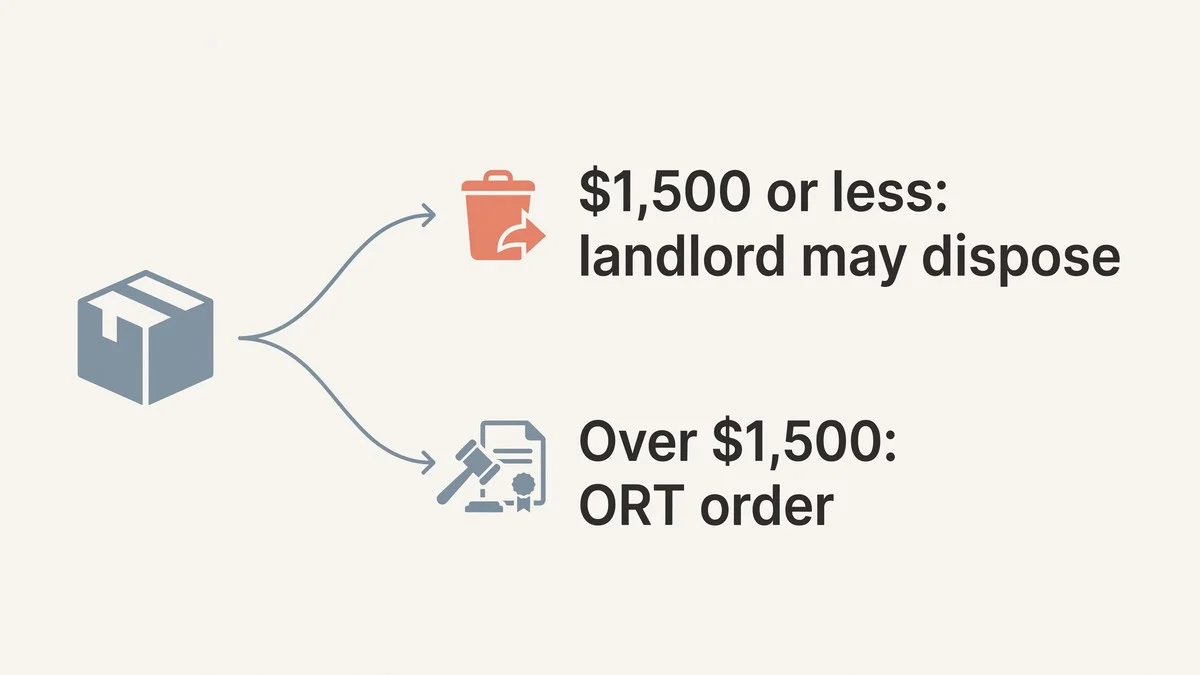
For abandoned property in Saskatchewan rentals, the line is $1,500. Once the tenancy has ended or the tenant has moved out or abandoned the unit, a landlord may remove and sell or dispose of belongings the landlord reasonably estimates are worth $1,500 or less, after reasonable efforts to find the tenant (The Residential Tenancies Act, 2006, s.85(4)–(6)). Above $1,500, the landlord needs a Property Disposition Order from the Office of Residential Tenancies (ORT) (s.85(1)–(3)).
At a glance: belongings left behind in Saskatchewan
- When: only after the tenancy ends or the tenant vacates or abandons the unit (s.85(1)(a), (4)(a)).
- $1,500 or less: the landlord may act without an order after reasonable efforts (s.85(4)–(6)).
- Over $1,500: apply to the ORT for a Property Disposition Order ($50 fee).
- Sale money: deduct only amounts owed under an ORT order; the rest goes to the director for the tenant (s.85(7)).
- Unclaimed after six months: forwarded to the province (s.85(8)).
What do you need before you touch anything?
A Saskatchewan landlord needs to be sure the tenancy is over, because during a tenancy a landlord must not seize a tenant's property or interfere with the tenant's access to it (s.12(1)). Have these ready:
- Proof the tenancy ended: the tenant's notice, a written agreement to end, keys returned, or clear signs the unit was abandoned.
- Every contact detail you hold: phone, email, forwarding address, emergency contact on the application.
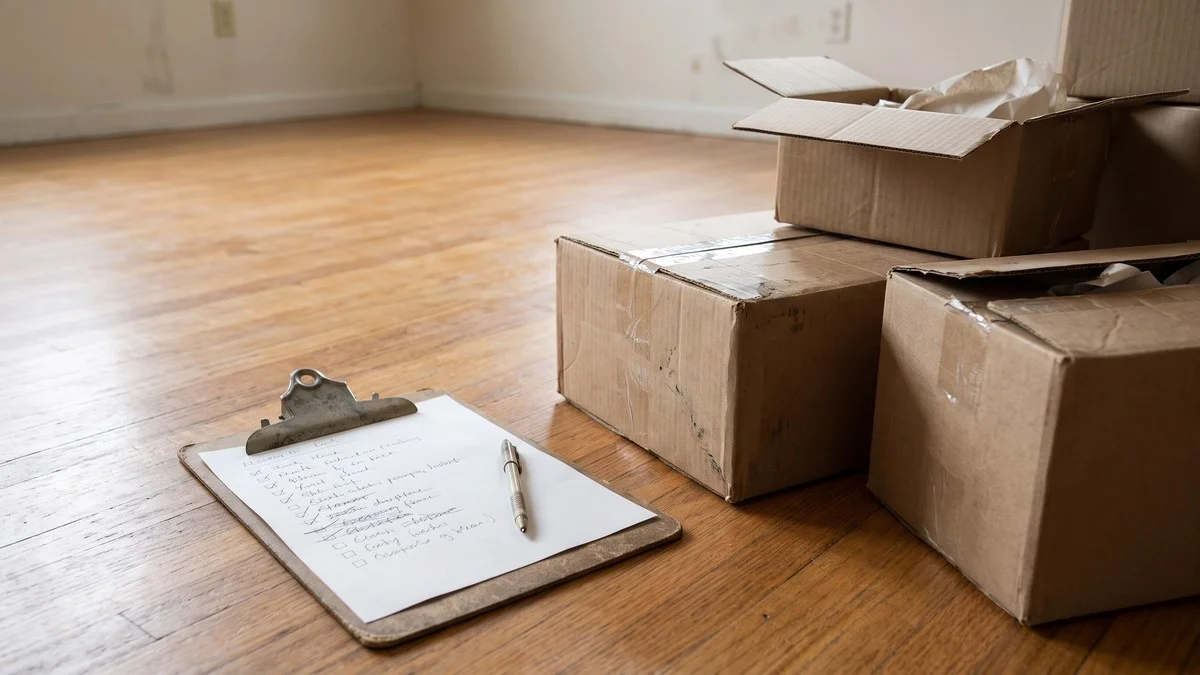
- Dated photos or video of every item left, and a written list with a realistic value for each.
- Serial or VIN numbers for any vehicle, trailer or boat.
If the tenant has not left and will not leave, this is the wrong process: see how a writ of possession is enforced.
How do you deal with belongings worth $1,500 or less?
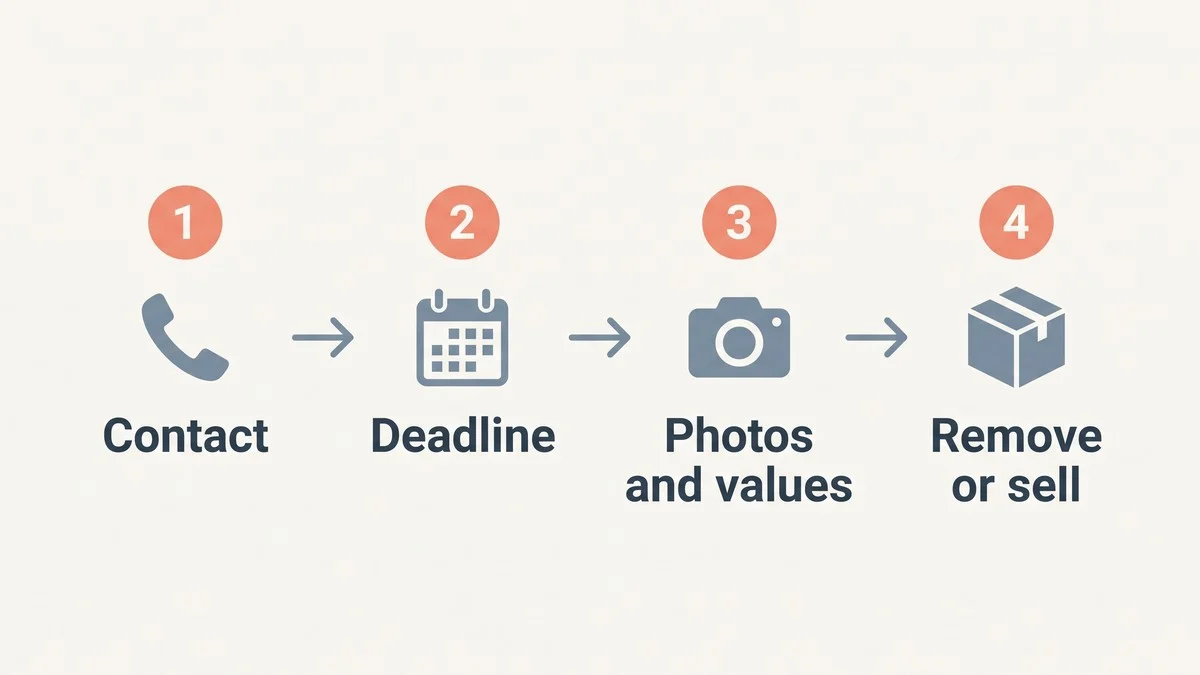
- Try to reach the tenant. Before acting, the landlord must make reasonable efforts to find the tenant (s.85(6)(a)). Write to every address and email you have and keep copies.
- Give them a chance to collect. The landlord must be reasonably satisfied that the tenant cannot be located or, if found, has not made reasonable arrangements for the property (s.85(6)(b)). A written deadline helps prove that.
- Value it honestly. The $1,500 is the landlord's reasonable estimate of what was left (s.85(4)(b)), so keep the photos and list that support it.
- Remove, sell or dispose. Then the landlord may remove the property and sell or otherwise dispose of it (s.85(5)).
- Account for any money. From sale proceeds the landlord may deduct only an amount owing under an order or decision of a hearing officer or the director; the rest is paid to the director to the tenant's credit (s.85(7)).
What if the belongings are worth more than $1,500?
In Saskatchewan, property over $1,500 needs a Property Disposition Order. The landlord applies through the ORT online portal under landlord applications, and the ORT says the application should include proof of every attempt to contact the tenant, an itemized list with a dollar value for each item, photos, and VINs for serial-numbered goods. The $50 fee applies.
These applications are not normally scheduled for a hearing: once accepted and paid, a hearing officer reviews and decides them without the tenant present (ORT Rules of Procedure, Part 2; s.85(2)). The hearing officer must be satisfied about the same two points, the landlord's reasonable efforts and the tenant's absence or failure to arrange removal (s.85(3)).
What goes wrong most often?
Acting too early is the classic mistake. The ORT warns that a landlord may be held legally responsible for disposing of a tenant's items unlawfully, and the Standard Conditions say a landlord is liable for property improperly removed, sold or disposed of (Schedule 1, s.27(4)). A landlord who follows section 85 is protected from those claims (s.85(9)).
Frequently asked questions
How long do I have to store a former tenant's things?
The Act sets no fixed storage period. What it requires is reasonable efforts to locate the tenant and reasonable satisfaction that the tenant cannot be found or has not made arrangements (s.85(6)).
Can I keep the items instead of selling them?
The Act lets a landlord remove and sell or otherwise dispose of them, and requires any sale proceeds above amounts owed under an order to go to the director (s.85(5), (7)). Keeping valuable items for yourself is not a step the Act describes.
What happens to money paid to the director?
If the tenant does not claim it within six months, the director forwards it to the Minister of Finance (s.85(8)).
Can I enter to check whether the unit is abandoned?
Yes. A landlord may enter without notice if the tenant reasonably appears to have abandoned the unit (s.45(1)(e)); see Saskatchewan's entry rules.
Patience and paperwork protect Saskatchewan landlords here. The Saskatchewan landlord guide covers the rest of the move-out process.
More move-out guides for landlords
Deposits, inspections and possession, in plain language.
Free • No signup required