Yes, but only in narrow cases. In Ontario, a landlord can end a tenancy over noise or smells only when they substantially interfere with the reasonable enjoyment of the landlord or other tenants (Residential Tenancies Act s.64(1)). The landlord serves an N5 notice, the tenant gets seven days to stop, and only the Landlord and Tenant Board (LTB) can order an eviction.
Everyday living makes noise and smells. Cooking, footsteps, a crying baby or a dinner party are part of apartment life, and the Act does not treat them as grounds to evict. This guide explains where the line is, how the N5 process works step by step, how a second notice changes things, and the shortcuts that backfire.
What counts as substantial interference in Ontario?

Substantial interference in Ontario means conduct by the tenant, another occupant, or someone the tenant let in that seriously affects the reasonable enjoyment of the residential complex by the landlord or another tenant, or another lawful right of theirs (RTA s.64(1)). The word that matters is substantially: a minor or occasional annoyance is not enough.
The Act does not list examples, so the LTB weighs the facts of each case: how loud or strong, how often, at what time of day, how long it has gone on, and how much it affects other people. Conduct that is more likely to qualify includes:
- Loud music, parties or shouting late at night, repeated over weeks after complaints.
- Smoke or strong odours that drift into other units or common areas and keep coming back.
- Odours from garbage, unsanitary conditions or pests that affect neighbours.
- Conduct that also breaks a lawful term of the lease, such as a no-smoking clause, and affects others.
Conduct that usually does not qualify includes normal cooking smells, ordinary footsteps, children playing at reasonable hours, and one-off events. For a deeper look at how the phrase has been read, see the substantial interference standard explained.
How does the N5 process work for noise or smell complaints in Ontario?

The N5 process in Ontario starts with written notice and gives the tenant a chance to fix the problem before any application. Under RTA s.64(2), the notice must:
- give a termination date at least 20 days after it is served;
- set out the grounds, meaning the specific incidents with dates and times; and
- require the tenant to stop the conduct within seven days.
If the tenant stops within those seven days, the N5 is void (s.64(3)). If the conduct continues, the landlord can apply to the LTB on an L2 application. The application cannot be filed more than 30 days after the termination date in the notice (s.69(2)). At the hearing the landlord has to prove the conduct and its effect, and the tenant can respond.
Vague grounds are a common reason an N5 fails. "Tenant is noisy" tells the tenant nothing to fix; "loud music from Unit 4 on Oct. 3 from 11:40 p.m. to 2:15 a.m., reported by Units 3 and 5" does. Our complete N5 guide covers how to fill in the form.
What happens if the noise or smell starts again after the first N5?
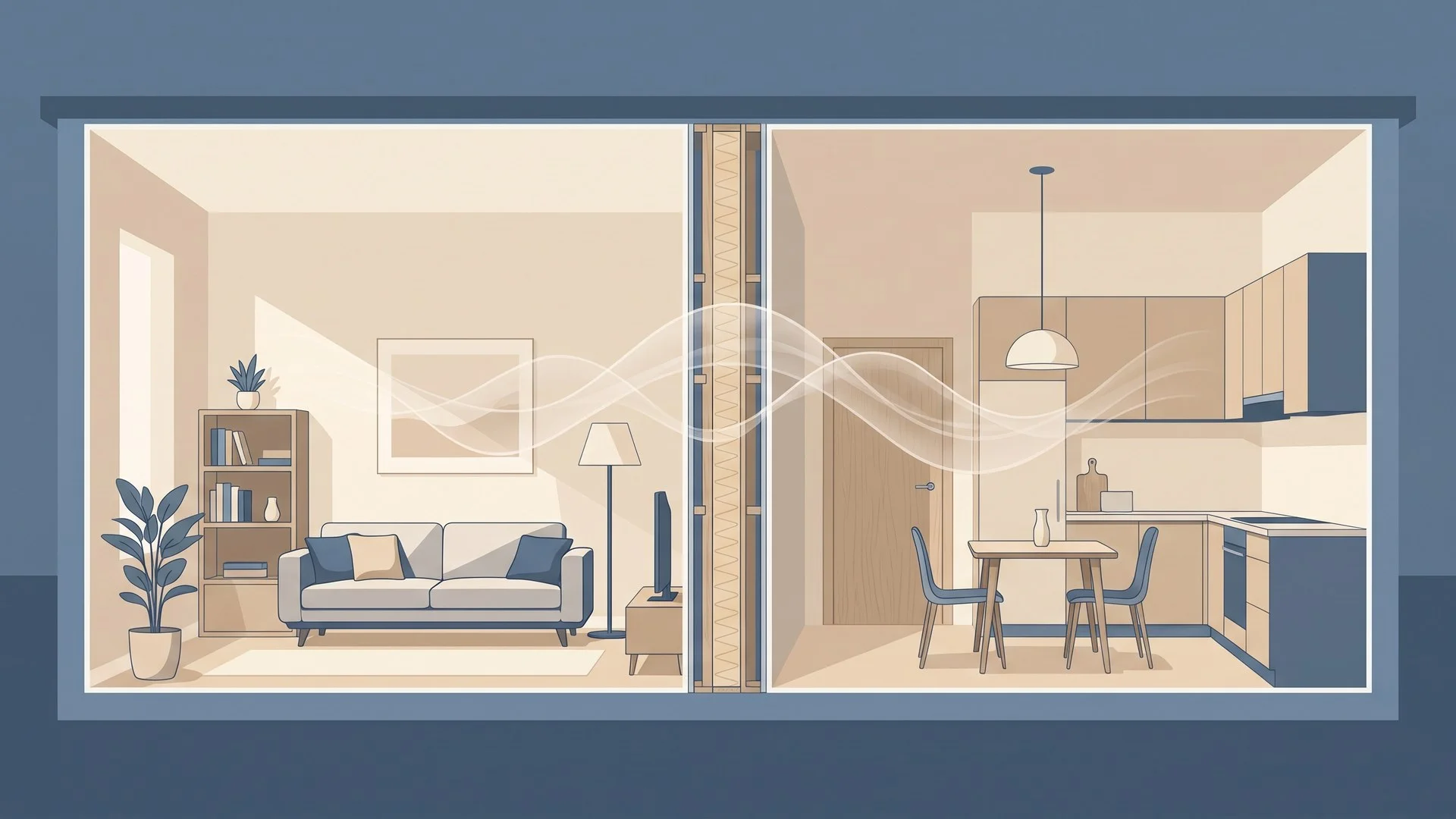
In Ontario, if the conduct starts again more than seven days but less than six months after the first notice, the landlord can serve a second notice under RTA s.68(1). That notice needs at least 14 days (s.68(2)), and unlike the first N5 it does not give the tenant a seven-day chance to make it void.
The second notice is the stronger tool, but it depends on the first. If the first N5 was defective, for example because the grounds were vague, the second one inherits the problem.
Is the rule different if the landlord lives in the building?
Yes. If the landlord lives in a building with no more than three residential units and the tenant's conduct substantially interferes with the landlord's reasonable enjoyment, the notice can give a termination date as short as 10 days, and the tenant has no seven-day chance to make it void (RTA s.65(1) and (3)). The notice must still set out the grounds (s.65(2)), and only the LTB can order the eviction.
Notice periods for noise and smell complaints at a glance
| Situation | Section | Minimum notice | Can the tenant void it? |
|---|---|---|---|
| First N5: substantial interference | RTA s.64 | 20 days | Yes, by stopping within 7 days |
| Second notice within 6 months | RTA s.68 | 14 days | No |
| Landlord lives in a building of 3 units or fewer | RTA s.65 | 10 days | No |
| N12: landlord or family moving in (not about conduct) | RTA s.48 | 60 days, end of period or term | Not applicable |
Can an Ontario landlord evict a tenant for smoking?
Smoking in a unit is not, by itself, a ground to end a tenancy in Ontario. It becomes one when the smoke substantially interferes with the landlord or other tenants, which is an N5 matter under s.64. A no-smoking term in the lease helps show the conduct was not expected or permitted, but the landlord still has to prove the effect on others at the hearing.
If the smoking has damaged the unit, the Act has separate grounds for damage, and the notice and proof requirements are different. Either way, the landlord has to show who caused the problem. A detector or air-quality monitor can flag a change, but it cannot say whether the source was smoke, cooking or something else.
Can a landlord use an N12 instead of an N5?
No. An N12 in Ontario is only for a landlord who in good faith needs the unit for at least one year for themselves, a spouse, a child or parent of either, or a caregiver (RTA s.48(1)). It is not a way around a conduct problem, and it carries real risk if it is used as one.
- The person moving in must swear an affidavit that they need the unit in good faith for at least a year (s.72(1)(a)).
- The landlord owes one month's rent or another acceptable unit (s.48.1(1)), unless the notice was given on or after Sept. 21, 2026, gives at least 120 days and ends on the last day of a period or term (s.48.1(2)). See how Bill 60 affects Ontario landlords.
- The LTB must refuse an eviction if the reason for the application is that the tenant tried to enforce their legal rights (s.83(3)(c)).
- If nobody moves in within a reasonable time, the former tenant can apply within a year, and the Board can order up to 12 months' rent in general compensation, moving costs, the increased rent for a year, and a fine (s.57).
What can a tenant do if the noise comes from a neighbour or the landlord?
A tenant in Ontario who is bothered by another tenant should complain to the landlord in writing, because the landlord is the one who can serve an N5. If the landlord does nothing and the interference is substantial, the tenant can apply to the LTB on a T2 application. Landlords are also bound: RTA s.22 says a landlord must not substantially interfere with a tenant's reasonable enjoyment of the unit or the complex.
Action steps for landlords
- Talk to the tenant first and confirm the conversation in writing.
- Keep a dated incident log and collect written complaints from affected tenants.
- Serve an N5 with specific grounds and the correct dates (20 days, 7 days to stop).
- Track the seven-day window and the six-month window for a second notice.
- If the conduct continues, file an L2 within 30 days of the termination date and bring your evidence to the hearing.
More Ontario guidance is in the Ontario Landlord Resource Center, and tenants can start at the Ontario Tenant Resource Center.
Frequently asked questions
Can I be evicted for cooking smells in Ontario?
Ordinary cooking smells are part of normal apartment life and are very unlikely to amount to substantial interference under RTA s.64. A landlord would have to prove the smell seriously affected others, and the LTB, not the landlord, decides.
How many noise complaints does it take to evict a tenant in Ontario?
The Act sets no number. What counts is whether the conduct substantially interferes with others, shown by evidence such as dated incidents and statements from affected tenants. Most cases go through a first N5, a repeat incident, and a second notice under s.68.
Do I have to move out by the date on an N5?
No. A notice is not an eviction order. If you stop the conduct within seven days, a first N5 is void. If you stay, the landlord must apply to the LTB, and only an LTB order enforced by the Sheriff can end your tenancy.
Can a landlord evict because a smoke or air-quality sensor went off?
Not on a sensor reading alone. The landlord must use a ground in the Act and prove the conduct and its effect at the hearing. A reading can support other evidence, but it does not show who caused it.
What if the landlord is the one making noise?
Under RTA s.22, a landlord must not substantially interfere with a tenant's reasonable enjoyment. A tenant can apply on a T2 for remedies such as a rent abatement.
Serve an N5 that holds up at the LTB
Fill in the N5 with the right dates and clear grounds, ready to print and serve.
Free • No signup required
Sources
- Residential Tenancies Act, 2006, S.O. 2006, c. 17 (ss. 22, 37, 48, 48.1, 57, 64, 65, 68, 69, 72, 83), consolidation from Sept. 21, 2026