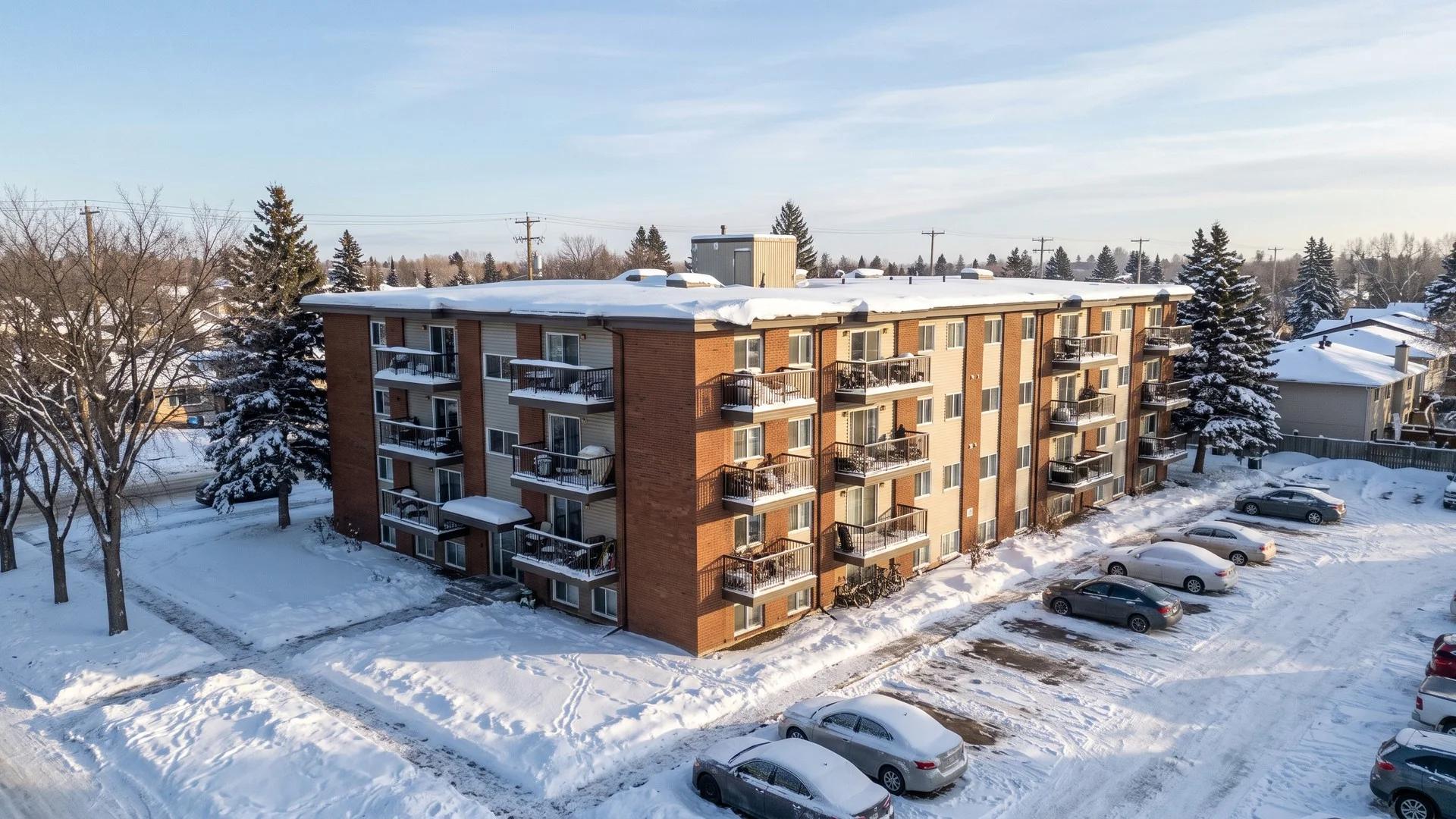
Illegal lease clauses in Alberta are terms that try to take away rights the Residential Tenancies Act gives tenants. Any waiver or release by a tenant of those rights is void (Residential Tenancies Act, s.3(1)), and every written lease must say in larger print that if the lease and the Act conflict, the Act prevails (s.3(2)).
That means signing a lease does not lock you into a term that breaks the Residential Tenancies Act (RTA). This guide lists the clauses that most often clash with the Act, explains what happens to them, and sets out what an Alberta tenant can do. For the rest of the paperwork rules, see what must be in writing in an Alberta lease, and for more renter topics visit the Alberta tenants hub.
Alberta Lease Clauses: Tenant Checklist
A one-page checklist for Alberta tenants to check a lease for clauses the Residential Tenancies Act overrides, and what to do about them.
Get Free PDF →Can an Alberta lease take away rights under the Residential Tenancies Act?
No. In Alberta, any waiver or release by a tenant of the rights, benefits or protections under the Residential Tenancies Act is void (s.3(1)). A clause that says "the tenant gives up the right to..." or "the tenant agrees the Act does not apply" has no legal effect, even if you initialled it.
The Act also requires every written residential tenancy agreement to contain this statement, in print larger than the other print in the agreement (s.3(2)):
The tenancy created by this agreement is governed by the Residential Tenancies Act and if there is a conflict between this agreement and the Act, the Act prevails.
On top of that, some promises are written into every Alberta tenancy whether or not the lease mentions them. The landlord's covenants in s.16 (the premises available at the start, no significant disturbance of your possession or peaceful enjoyment, and minimum public health housing standards) and the tenant's covenants in s.21 (pay rent when due, no significant interference, no illegal acts, no endangering, no significant damage, reasonable cleanliness, and leaving at the end) form part of every residential tenancy agreement.
Which Alberta lease clauses most often conflict with the Act?

The clauses below are the ones that most often collide with a specific rule in the Act or its regulations. Where a clause conflicts, the Act's rule is the one that applies.
| Lease clause that says | What the law says | Source |
|---|---|---|
| Security deposit of more than one month's rent, or a top-up later | A landlord shall not require a deposit greater than one month's rent, or require an increase in the deposit | RTA s.43 |
| Deposit kept in the landlord's own account | Money deposits go into an interest-bearing trust account at a bank, treasury branch, credit union or trust corporation in Alberta within 2 banking days | RTA s.44(1) |
| Rent can go up at any time | Periodic tenancies: not until 365 days after the start or the last increase, despite any agreement or waiver | Ministerial Regulation s.3(1) |
| Rent can rise during a one-year lease | No increase during a fixed term of one year or more, despite any agreement or waiver | Ministerial Regulation s.3(3) |
| Landlord may enter at any time | Consent, an emergency or abandonment, or 24 hours' written notice for listed reasons, 8 a.m. to 8 p.m. | RTA s.23 |
| Landlord may change the locks without telling you | A landlord may change locks only if a key is made available to the tenant as soon as the change is made | RTA s.24(1)-(2) |
| A fee to approve a sublet or assignment | No fee for consent; consent cannot be unreasonably refused; no answer in 14 days is deemed consent | RTA s.22(2), (4), (6) |
| Landlord can end a monthly tenancy for any reason | A landlord's notice to end a periodic tenancy has no effect unless it is for a prescribed reason or the s.11 or s.12 reasons | RTA s.6(1) |
| Rent penalty if you complain to the province or a health inspector | No ending a tenancy or retaliatory action, including a financial penalty, only because of a complaint, application or evidence | RTA s.25 |
What about rent increase clauses in an Alberta lease?

An Alberta rent increase clause cannot shorten the legal waiting period or notice. For a periodic tenancy, the Residential Tenancies Ministerial Regulation says, "despite any agreement, declaration, waiver or statement to the contrary", that rent cannot go up until at least 365 days have passed since the start of the tenancy or the last increase, whichever is later (s.3(1)). During a fixed-term tenancy of one year or more, rent cannot go up at all (s.3(3)).
Written notice is also required: at least 3 tenancy months for a monthly tenancy, 12 tenancy weeks for a weekly tenancy and 90 days for any other periodic tenancy (RTA s.14(1)). If your lease promises a longer notice period, the landlord must give that longer period (s.14(3)). A notice that does not comply is void (s.14(6)), and a tenant who paid increased rent under a non-complying notice may recover the amount of the increase in an action in debt (s.14(7)). More detail is in Alberta rent increase rules.
What about deposit and fee clauses?
A deposit clause can set out how the deposit is handled, but only where it does not conflict with the Act. Money in the trust account is subject to the Act and the regulations and to the lease's deposit terms that are not in conflict with them (s.44(4)). So a clause demanding two months' rent as a deposit fails because of s.43(1), and a clause saying the landlord may ask for more deposit later fails because of s.43(2). The deposit rules, interest and return deadlines are covered in Alberta security deposits.
The Act does not list every possible charge. For charges such as late fees, read the lease and the Act's specific rules together; our article on late rent fees and NSF charges in Alberta looks at that question.
Does one illegal clause cancel the whole lease?
The Act voids the waiver, and its required statement says the Act prevails over a conflicting term (s.3). It does not say the whole lease is cancelled. In practice, treat the conflicting clause as having no effect and keep following the rest of the lease, including paying rent when due, which is a covenant in every Alberta tenancy (s.21(a)).
What can an Alberta tenant do about an illegal clause?
An Alberta tenant can point to the Act, keep written records, and apply for a remedy if the landlord acts on the clause. If a landlord breaches the tenancy agreement or contravenes the Act, a tenant may apply to the court for damages, an abatement of rent, compensation for performing the landlord's obligations, or termination where the breach is significant enough (s.37(1)). A person with that right may apply to the Residential Tenancy Dispute Resolution Service (RTDRS) instead of the court (s.54.2). See RTDRS or court to choose.
Several of the rules in the table are also offences. Contravening s.23 (entry), s.24 (locks), s.25 (retaliation), s.43 (deposit amount) or s.44(1) (trust account) can bring a fine of up to $5,000 (s.60(1)).
Action steps
- Read your lease next to the table above and mark any clause that matches.
- Check that you received a signed copy: a landlord must serve it within 21 days after you return the signed lease, and a tenant may withhold rent until served (s.17).
- Write to the landlord, name the clause and the section of the Act, and keep a copy.
- If the landlord acts on the clause, record dates, amounts and messages.
- Apply to the RTDRS or the court under s.37 and s.54.2 if you cannot resolve it.
Frequently asked questions
I signed the lease. Am I stuck with every term?
No. A waiver of your rights under the Alberta Residential Tenancies Act is void even if you signed it (s.3(1)). Terms that do not conflict with the Act still bind both sides.
Can my lease say the landlord can enter whenever they want?
No. Entry rules come from s.23: consent, an emergency or abandonment, or 24 hours' signed written notice for a listed reason. Our guide to notice to enter for repairs walks through a common case.
Can my lease charge a fee for approving a subtenant?
No. A landlord shall not charge a fee or other consideration for consenting to an assignment or sublease (s.22(6)). See subletting in Alberta.
Can a lease let the landlord end my month-to-month tenancy for no reason?
No. A landlord's notice to end a periodic tenancy has no effect unless it is for a prescribed reason or the reasons in s.11 or s.12 (s.6(1)). The reasons are listed in allowed reasons to end a monthly tenancy.
My lease is missing the "Act prevails" statement. Is it invalid?
The Act requires the statement (s.3(2)) but does not say the lease is invalid without it. Your rights under the Act apply either way, because a waiver of them is void (s.3(1)).
Alberta Lease Clauses: Tenant Checklist
A one-page checklist for Alberta tenants to check a lease for clauses the Residential Tenancies Act overrides, and what to do about them.
Get Free PDF →Key takeaways
- A waiver of an Alberta tenant's rights is void, and the Act prevails over a conflicting lease term (s.3).
- Deposits are capped at one month's rent and must be held in trust (s.43-44).
- Rent waits 365 days between increases and cannot rise during a fixed term of one year or more, whatever the lease says (Reg s.3).
- Entry, locks, sublet fees and retaliation all have fixed rules (s.22-25).
- Keep paying rent and use the RTDRS or court for remedies (s.21, s.37, s.54.2).
Check your lease against the Act
Free tenant and landlord forms to put concerns in writing.
Free • No signup required