Alberta rent assistance comes in two forms, both paid directly to tenants. The Rent Assistance Benefit is long-term, based on income and local market rent, and renewable every year. The Temporary Rent Assistance Benefit (TRAB) is for working households, runs for up to two years, and is paid at fixed 2026 rates that drop in the second year. You apply through a local housing provider.
Alberta's Residential Tenancies Act limits how often a landlord can raise the rent but not by how much, so it is worth knowing exactly what help the province offers renters in the private market, who qualifies, and how much the money actually is. This guide explains Alberta rent assistance as the Government of Alberta describes it, with the published 2026 TRAB rates for the seven cities where TRAB is offered. For the rest of your rights as a renter, start with the Alberta Tenant Resource Center.
Alberta Rent Assistance: Renter Checklist
A one-page checklist for Alberta renters: who qualifies for the Rent Assistance Benefit and TRAB, the 2026 TRAB range, and the three steps to apply.
Get Free PDF →What is Alberta's Rent Supplement Program?

The Rent Supplement Program gives a subsidy that makes rental housing more affordable for individuals and families. The Governments of Canada and Alberta fund it jointly under the Canada-Alberta Housing Benefit, part of the National Housing Strategy. It has two benefits:
- Rent Assistance Benefit (RAB): a long-term subsidy for Albertans with low income.
- Temporary Rent Assistance Benefit (TRAB): a short-term subsidy for working households with low income or people between jobs.
Both are paid directly to the tenant, not to the landlord. You stay in your own rental, sign your own lease and pay your own rent; the benefit helps you cover it. A third stream, the Private Landlord Rent Supplement, is now closed. The province says current recipients will move to the Rent Assistance Benefit as the funding agreements for those units expire.
Who is eligible for rent assistance in Alberta?
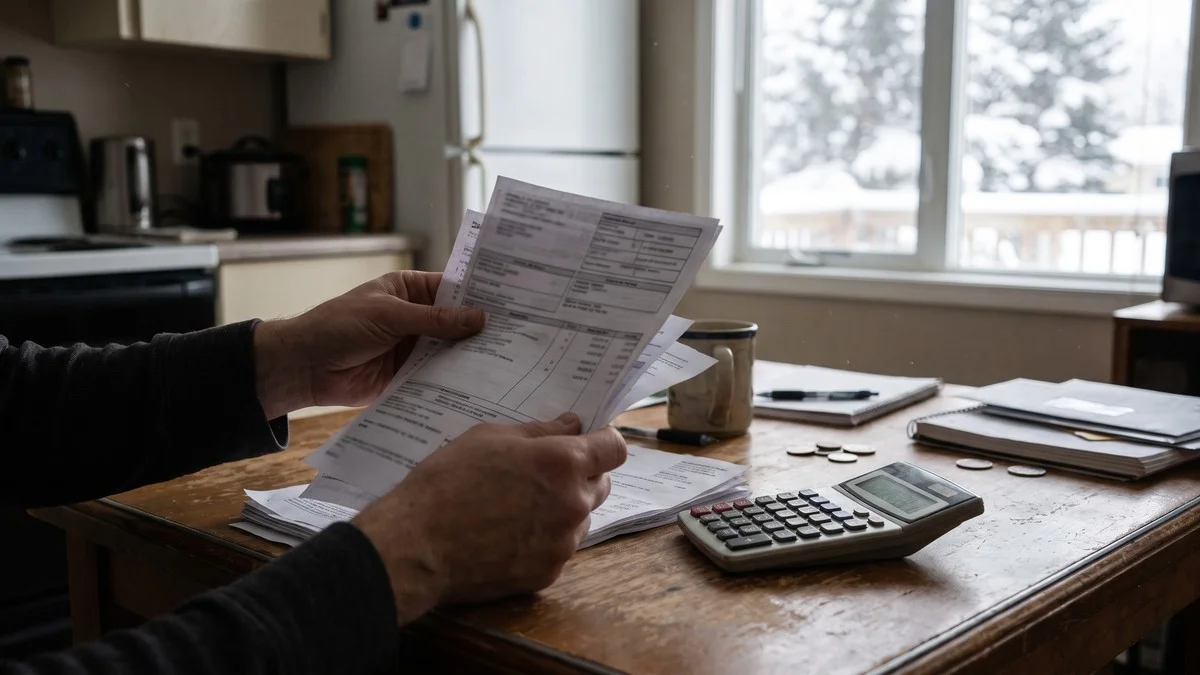
To qualify for the province's affordable housing programs, including both rent benefits, an applicant must:
- have an income below the local income limit for their community. The limits are set by the local market and published in the province's income thresholds document.
- be a Canadian citizen or permanent resident, a refugee, an applicant for refugee or immigrant status, or a landed immigrant whose private sponsorship has broken down. Evacuees from Ukraine with a Canada-Ukraine Authorization for Emergency Travel may also apply.
TRAB adds two more conditions, set out in the next sections.
How does the Rent Assistance Benefit work?
The Rent Assistance Benefit is the long-term option. The province lists these features:
- paid directly to tenants
- available through most housing management bodies across Alberta
- the amount is calculated from household income and local market rent
- households are prioritized based on need
- may be renewed every year, with no limit on renewals while you remain eligible
Need is judged on several factors, including income, assets, the number of dependants and your current housing condition. Because applicants are ranked by need rather than by when they applied, a household in a crowded or unsafe home may be offered the benefit before one that applied earlier. The province does not publish a fixed RAB amount; the housing provider calculates it for your household.
How does the Temporary Rent Assistance Benefit work?
TRAB is aimed at working people whose rent is a stretch while they get on their feet. On top of the basic eligibility rules, a household qualifies only if it:
- is employed, or has been employed in the last 24 months, and
- is not receiving social assistance, which the province defines to include Income Support, Learner Income Support, Assured Income for the Severely Handicapped (AISH), the Alberta Seniors Benefit, the Guaranteed Income Supplement and Old Age Security.
Its features are different from the long-term benefit:
- paid directly to tenants
- offered in Calgary, Edmonton, Fort McMurray, Grande Prairie, Lethbridge, Medicine Hat and Red Deer, and most surrounding communities
- the amount depends on household size and location and is reduced in the second year
- a two-year limit, with eligibility reassessed after the first year
- first come, first served
- households can reapply for rent assistance at the end of the two years
How much is TRAB in 2026?
The Government of Alberta publishes TRAB rates each year by city and unit size. These are the 2026 rates (Assisted Living and Social Services, July 2026). Year 2 is the reduced amount paid after the first-year reassessment.
| City | Bachelor | 1 bedroom | 2 bedroom | 3 bedroom | 4+ bedroom |
|---|---|---|---|---|---|
| Calgary, year 1 | $259 | $293 | $347 | $394 | $443 |
| Calgary, year 2 | $207 | $234 | $278 | $315 | $354 |
| Edmonton, year 1 | $207 | $243 | $297 | $342 | $378 |
| Edmonton, year 2 | $166 | $194 | $238 | $274 | $302 |
| Red Deer, year 1 | $198 | $212 | $243 | $320 | $371 |
| Red Deer, year 2 | $158 | $170 | $194 | $256 | $297 |
| Lethbridge, year 1 | $225 | $261 | $322 | $331 | $416 |
| Lethbridge, year 2 | $180 | $209 | $258 | $265 | $333 |
| Fort McMurray, year 1 | $194 | $227 | $270 | $315 | $365 |
| Fort McMurray, year 2 | $155 | $182 | $216 | $252 | $292 |
| Grande Prairie, year 1 | $209 | $234 | $275 | $297 | $403 |
| Grande Prairie, year 2 | $167 | $187 | $220 | $238 | $322 |
| Medicine Hat, year 1 | $194 | $223 | $234 | $299 | $299 |
| Medicine Hat, year 2 | $155 | $178 | $187 | $239 | $239 |
The rate sheet does not state how often the amount is paid. Ask the housing provider how and when the benefit will reach you, and plan your budget for the lower year 2 figure from the start. If you live in a community near one of these cities, the provider will tell you which rate applies.
Rent Assistance Benefit or TRAB: which fits you?
| Rent Assistance Benefit | Temporary Rent Assistance Benefit | |
|---|---|---|
| Who it is for | Albertans with low income | Working households with low income, or people between jobs |
| Work requirement | None stated | Employed now or in the last 24 months |
| Other benefits | No bar stated | Not available with Income Support, Learner Income Support, AISH, the Alberta Seniors Benefit, GIS or OAS |
| Amount | Based on household income and local market rent | Fixed rate by city and unit size, lower in year 2 |
| How long | Renewable every year, no limit while eligible | Two years, reassessed after year 1; can reapply after |
| Who gets it first | Prioritized by need | First come, first served |
| Where | Most housing management bodies across Alberta | Seven cities and most surrounding communities |
You do not pick a benefit on a government form. The housing provider you contact will tell you which program it runs and which one fits your situation.
How do you apply for rent assistance in Alberta?
The province sets out three steps:
- Answer a few questions in the Government of Alberta's Find Housing tool to see which housing options meet your needs.
- Select a housing provider. Look through the options the tool shows and choose a local provider that offers a program suited to you.
- Get an application. Contact that provider for a rent assistance application. Provider contact details appear at the end of the Find Housing tool.
Have proof of your income, your immigration or citizenship status, your household members and your current rent ready before you call; you will need them to show you meet the income limit and the other rules above.
Who do you call with questions?
The Alberta Supports Contact Centre answers questions about rent assistance and affordable housing, Monday to Friday, 8:15 am to 4:30 pm, at 1-877-644-9992 (toll-free) or 780-644-9992 (Edmonton).
Frequently asked questions
Does my landlord have to agree to rent assistance?
The province says both benefits are paid directly to tenants, so the money comes to you and you pay your rent as usual.
Can I get TRAB if I receive AISH?
No. TRAB is not available to households receiving AISH, Income Support, Learner Income Support, the Alberta Seniors Benefit, the Guaranteed Income Supplement or Old Age Security. The long-term Rent Assistance Benefit has no such bar listed.
What happens after two years of TRAB?
The benefit ends at the two-year limit, but you can reapply for rent assistance at that point.
Is TRAB available outside the big cities?
TRAB is offered in Calgary, Edmonton, Fort McMurray, Grande Prairie, Lethbridge, Medicine Hat and Red Deer and most surrounding communities. The Rent Assistance Benefit is available through most housing management bodies across the province.
Can I still apply for the Private Landlord Rent Supplement?
No. It is closed. Current recipients will move to the Rent Assistance Benefit as their unit agreements expire.
Alberta Rent Assistance: Renter Checklist
A one-page checklist for Alberta renters: who qualifies for the Rent Assistance Benefit and TRAB, the 2026 TRAB range, and the three steps to apply.
Get Free PDF →Key takeaways
- Alberta has two rent benefits, the long-term Rent Assistance Benefit and the two-year Temporary Rent Assistance Benefit, both paid to tenants.
- Both require income below the local limit and qualifying citizenship or immigration status.
- TRAB also requires work in the last 24 months and no Income Support, AISH or seniors' benefits.
- 2026 TRAB rates run from $155 to $443 depending on city, unit size and year.
- Apply through a local housing provider found with the Find Housing tool.
Rent assistance helps with the cost; your tenancy rights stay the same whoever pays. Read the Alberta Tenant Guide for the rules from move-in to move-out, and the city guides for Calgary and Edmonton for local rules. If your rent is going up, check how much notice your landlord must give.
Looking for a rental in Alberta?
Browse rentals listed directly by landlords and property managers.
Free • No signup required