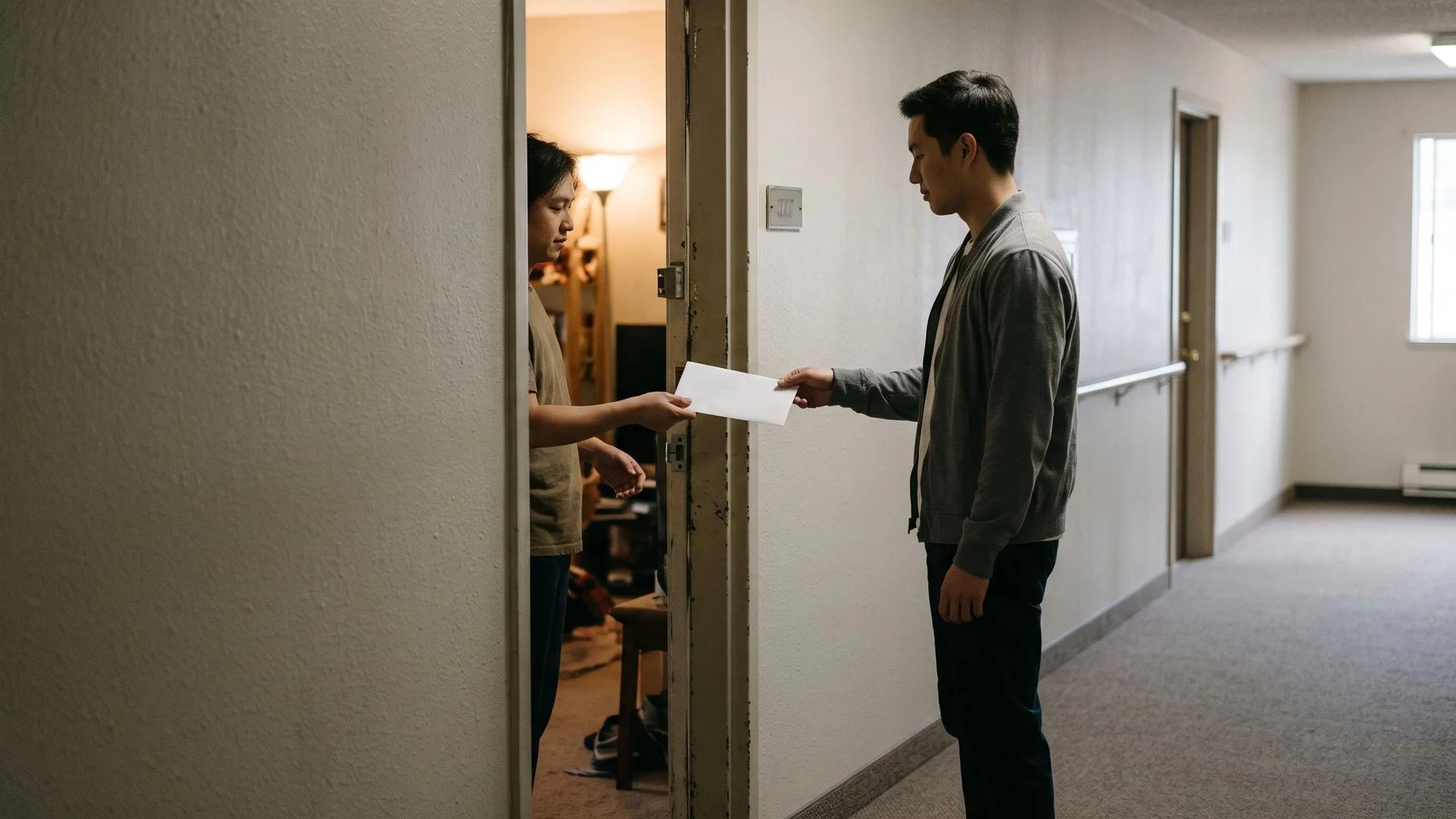
A substantial breach in Alberta is a tenant breaking one of the covenants in section 21 of the Residential Tenancies Act, or a series of breaches that add up. The landlord can serve a 14-day notice (Form AR211-F3) or apply to the RTDRS or court. A tenant can object in writing to a notice that is not about rent.
For unpaid rent, see Alberta's 14-day notice for unpaid rent.
What counts as a substantial breach by a tenant?
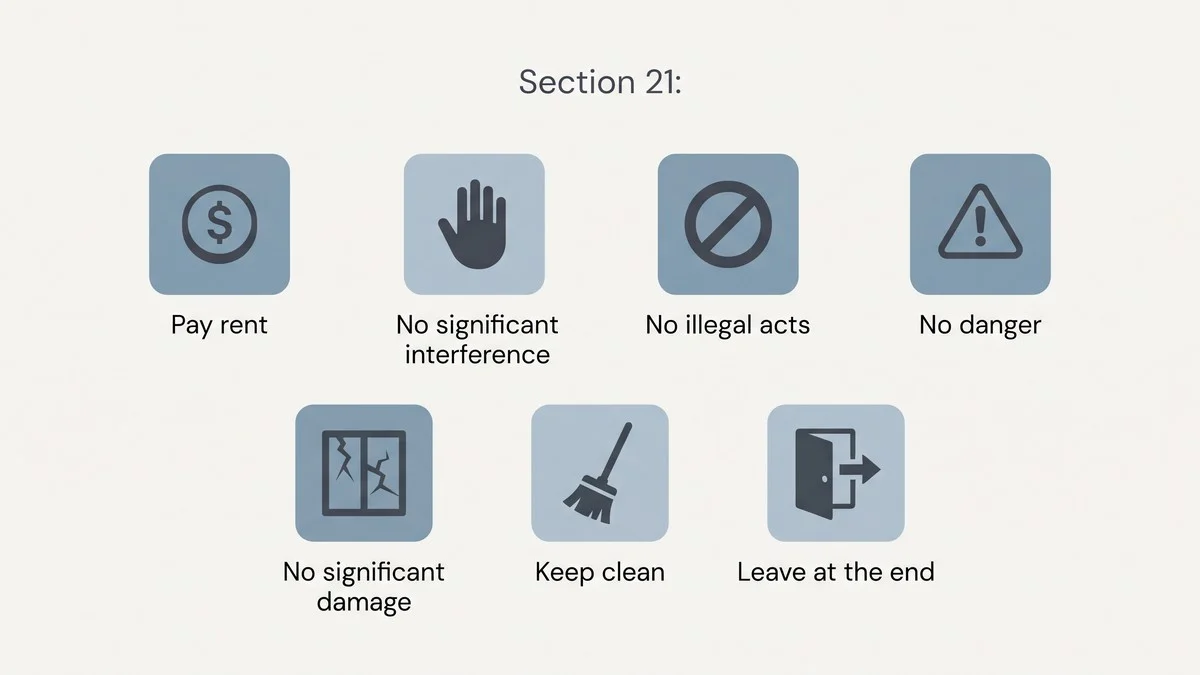
Section 21: paying rent when due; no significant interference with the landlord or other tenants; no illegal acts or business; not endangering persons or property; no significant damage; keeping the premises reasonably clean; leaving when the tenancy ends. Lesser breaches count if their cumulative effect is substantial (s.1(1)(p)).
Each covenant reaches beyond the unit itself to the common areas and the rest of the property (s.21(b)–(e)). The table shows the kind of evidence that tends to prove each one.
| Covenant (s.21) | Example | Evidence that helps |
|---|---|---|
| (b) No significant interference | Loud music late at night disturbing other tenants (Government of Alberta example) | Dated complaints from neighbours, written warnings, recordings with times |
| (c) No illegal acts or business | An illegal business run from the unit | Police file numbers, bylaw or inspection reports |
| (d) Not endangering persons or property | Blocking fire exits, unsafe wiring added by the tenant | Fire inspection notes, photos, contractor reports |
| (e) No significant damage | Holes in walls, broken fixtures | Move-in inspection report against current photos, repair quotes |
| (f) Reasonably clean | Garbage build-up attracting pests | Dated photos taken at a lawful entry, pest control reports |
What must the landlord's 14-day notice say?
Under RTA s.29: in writing, signed, with the reasons, the termination date, and separately the rent due and any rent falling due in the notice period. Give 14 clear days: the day given and the end day do not count. See ending a tenancy in Alberta.
The rent figures are required even when the breach has nothing to do with rent (s.29(2)(c)), and the Government of Alberta adds that every notice must give the address of the premises. Write the reasons as specific events with dates. "Ongoing issues" gives the tenant nothing to answer and an adjudicator nothing to weigh.
Steps for a landlord serving a substantial breach notice
- Check the breach against s.21. Name the covenant, or show a series of breaches whose combined effect is substantial.
- Gather the evidence before serving: the incident log, complaints, photos and any warning letters.
- Complete Form AR211-F3 with the premises address, the dated reasons, the rent lines and a termination date at least 14 clear days away.
- Sign it yourself or through your agent (s.29(2)(b)).
- Serve it by one of the methods in s.57 and record how, when and by whom.
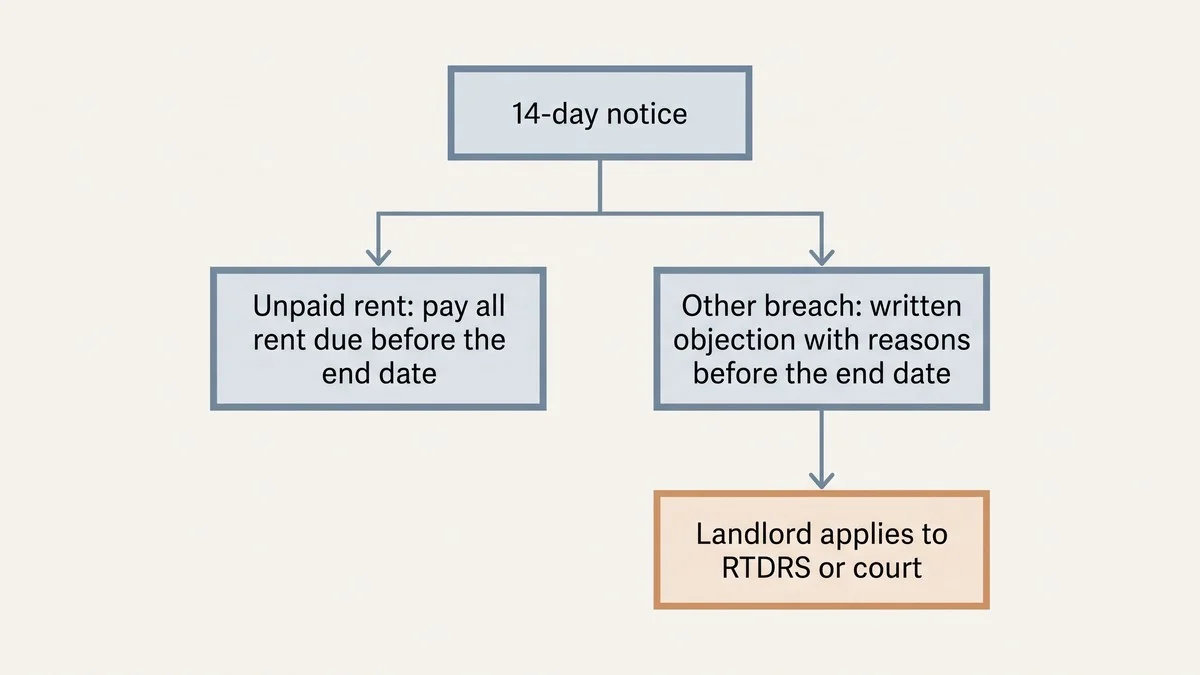
- Watch for a written objection until the termination date. If one arrives, or the tenant stays, apply to the RTDRS or court for an order.
A worked example of the 14 clear days
A landlord hands the notice to the tenant in person on Monday, November 2, 2026. Neither the day of service nor the termination day counts, so the 14 clear days are November 3 to November 16, and the earliest termination date to write on the notice is Tuesday, November 17, 2026. Choosing a later date costs little and leaves room for an argument about when service happened.
How do you serve the notice in Alberta?
Personally or by registered mail (s.57(1)). For registered mail the tenant's address is the rental premises (s.57(2)(a)). If the tenant is away or evading service, the landlord may serve an adult who appears to live with the tenant, or post the notice in a conspicuous place on the premises (s.57(3)). Email or another electronic method is a last resort: it is allowed only when those methods have failed and the tenant has given an electronic address for service, and the notice must be sent in a format that can be kept for later reference (s.57(5)).
Can a tenant object?

Yes, unless the breach is unpaid rent. A written objection with reasons, served before the termination date, makes the notice ineffective. The landlord must then apply to the RTDRS or court; the tenant may stay until an order issues. See your options after a 14-day notice.
A useful objection is short and specific. It names the notice and its date, takes each reason in turn and says why it is wrong or not substantial (for example, "The noise complaint of October 10 was a one-hour birthday gathering that ended at 10 p.m."), and is signed and dated. Serve it the same way the Act requires for any notice, and keep proof of when the landlord received it, because it only works if it reaches the landlord before the termination date (s.29(4)(b)).
Notice or application: which route should a landlord take?
- 14-day notice: quick and cheap when the tenant is likely to accept it, but a written objection stops it, and the landlord then has to apply anyway.
- Application to the RTDRS or court without a notice: the Act lets a landlord ask a court to end the tenancy for a substantial breach directly (s.26(1)(c)), and the Government of Alberta says the RTDRS is also available. This avoids the objection step when a dispute is certain. Where to file: RTDRS or Court?, and how a hearing runs: RTDRS explained.
- 24-hour notice: for assault, threats of assault or significant damage, a separate and faster process applies under s.30; see Alberta's 24-hour eviction notice.
Can a tenant end the tenancy for the landlord's breach?
Only narrowly (s.28): the landlord breached minimum health standards, a public health order was issued, and the landlord has not complied. The tenant's notice (AR211-F6) is void if, within 7 days, the landlord objects in writing having complied or obtained a stay.
Common mistakes with a substantial breach notice
- Counting 14 calendar days from the day of service instead of 14 clear days.
- Leaving out the rent lines because the breach is not about rent.
- Emailing the notice when personal service or registered mail was possible.
- Reasons too vague to answer, or a single minor incident presented as substantial.
- Treating day 15 as move-out day after the tenant has objected. Only an RTDRS or court order ends the tenancy then.
Frequently asked questions
Is one noisy night a substantial breach?
The Act requires significant interference; a documented pattern is easier to show.
Must the tenant leave on day 14 after objecting?
No. Only an RTDRS or court order ends the tenancy then.
Can a landlord skip the notice?
Yes, by applying directly to the RTDRS or court.
Can a tenant object to an unpaid-rent notice?
No. Paying all rent due before the termination date is what voids it.
Can the landlord email the 14-day notice?
Only if personal service, registered mail, service on an adult resident and posting have not worked, and the tenant has given an email address for service (s.57(5)).
Serving a substantial breach notice?
Fill out the AR211-F3 Landlord's 14-Day Notice online and download the PDF. Free, no account required.
Free • No signup required