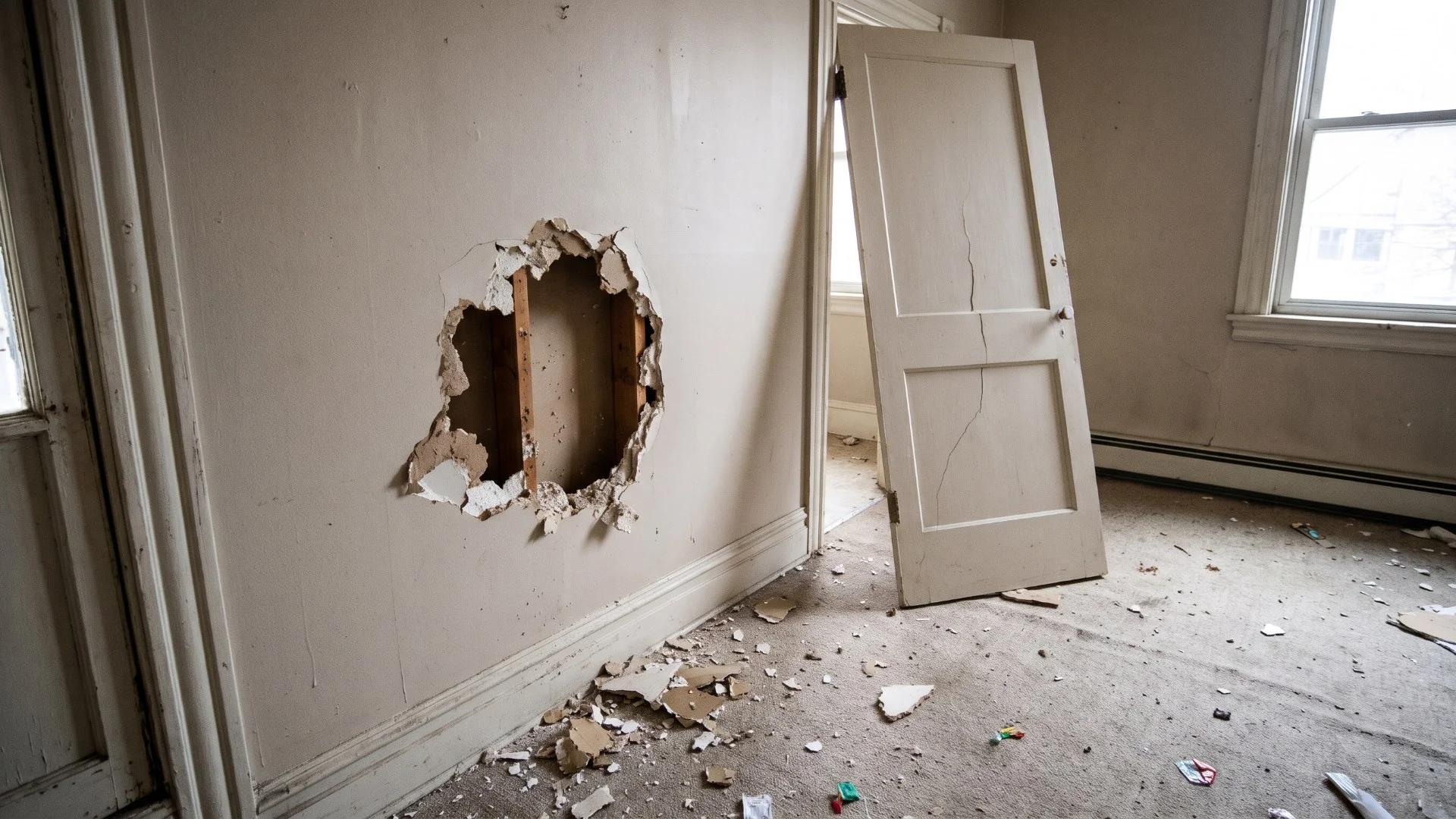
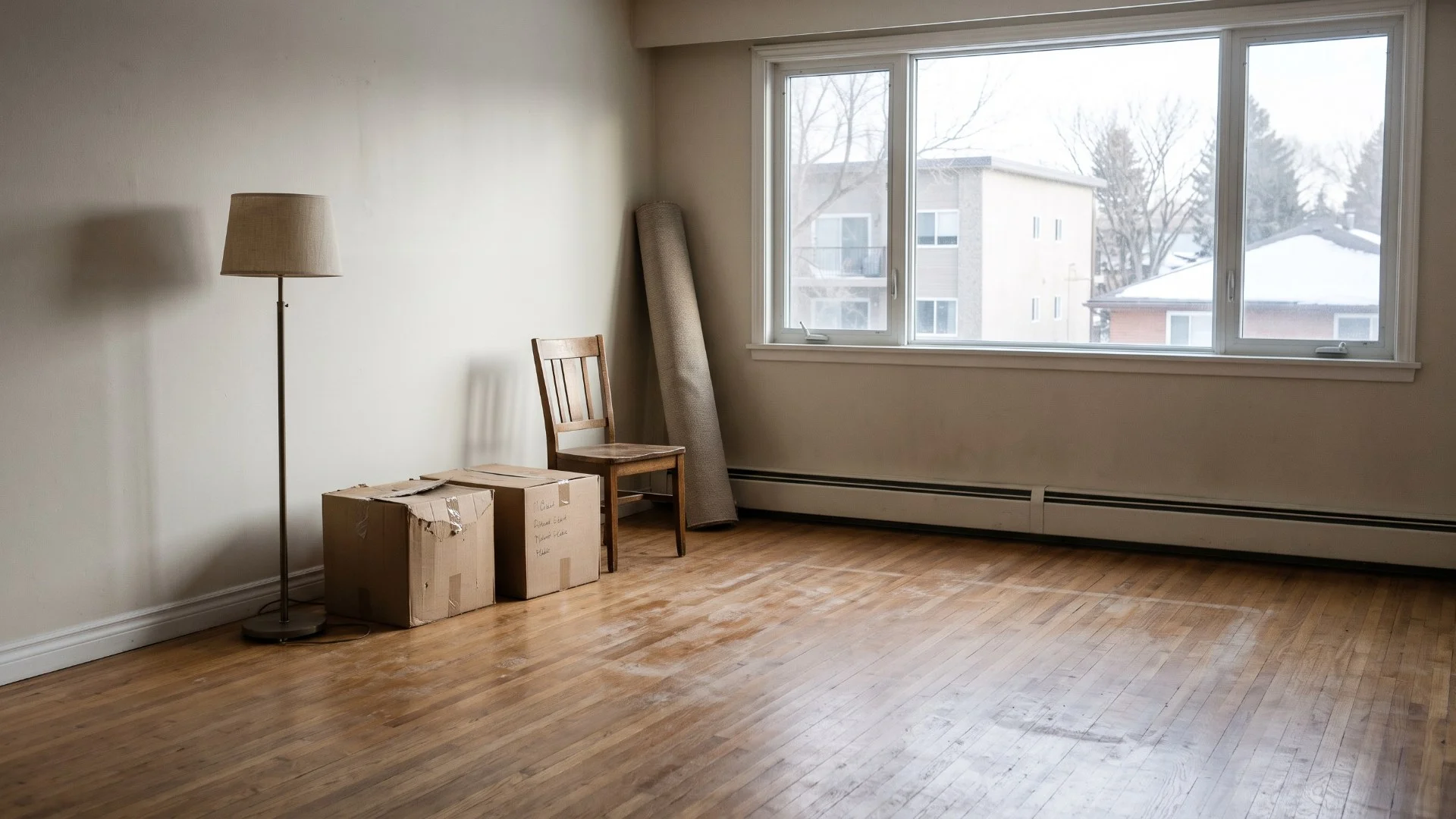
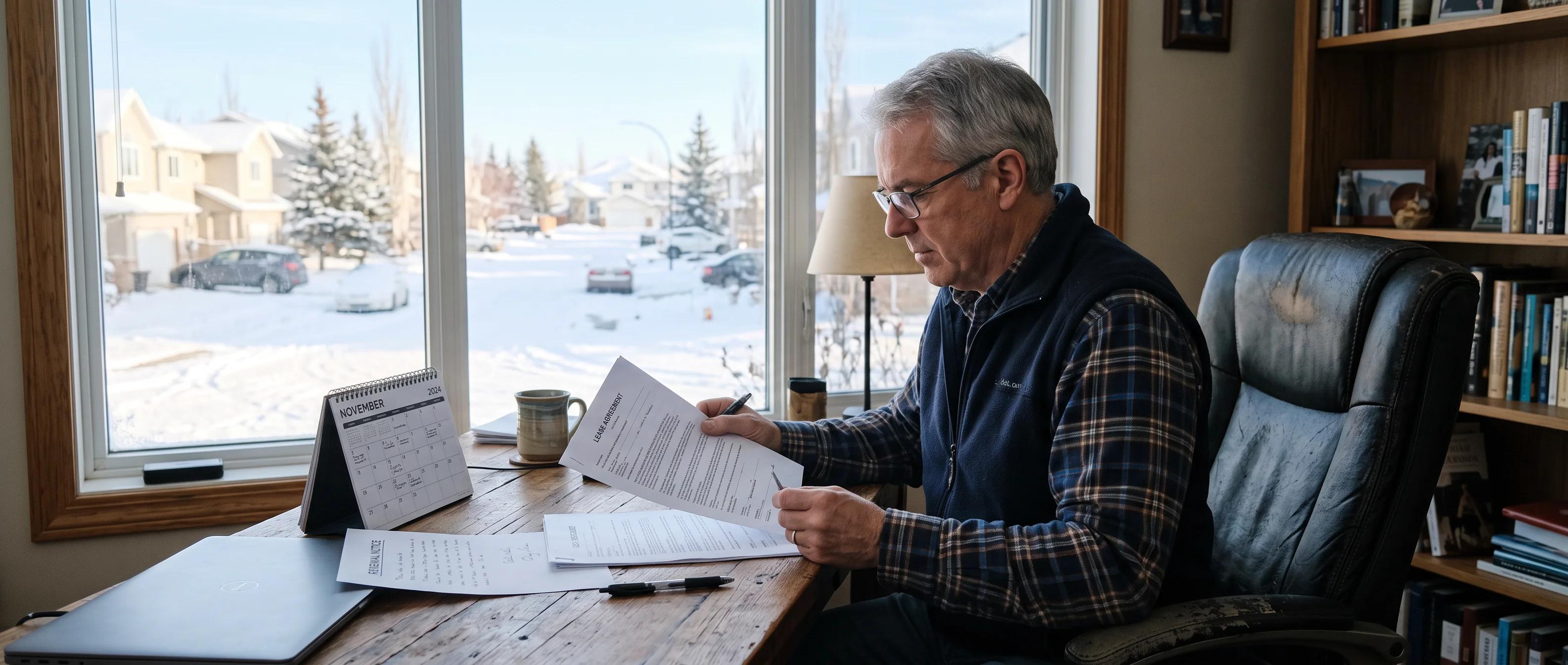
In Alberta, a tenant who stays after the tenancy has expired or been terminated is an "overholding tenant." The landlord cannot change the locks or remove them; it must get an order for recovery of possession from the RTDRS or a court, and only a civil enforcement agency can then evict (Residential Tenancies Act, ss.1(1)(h), 26, 34.1).
This FAQ walks Alberta landlords through the legal route when a tenant won't leave, and tells tenants what to expect. Ending the tenancy correctly comes first; see ending a tenancy in Alberta.
What is an overholding tenant in Alberta?

An overholding tenant is a person who was a tenant and does not vacate after the tenancy has expired or been terminated (s.1(1)(h)). Unless the parties agree otherwise, a tenancy that ends does so at 12 noon on the last day (s.20(1)).
Not every tenant who stays past a fixed term is overholding. The Government of Alberta's RTA Handbook explains that if a fixed-term tenant stays with the landlord's implied consent, the tenancy continues as a periodic tenancy, monthly if the term was a month or more.
Can an Alberta landlord change the locks or remove the tenant's things?
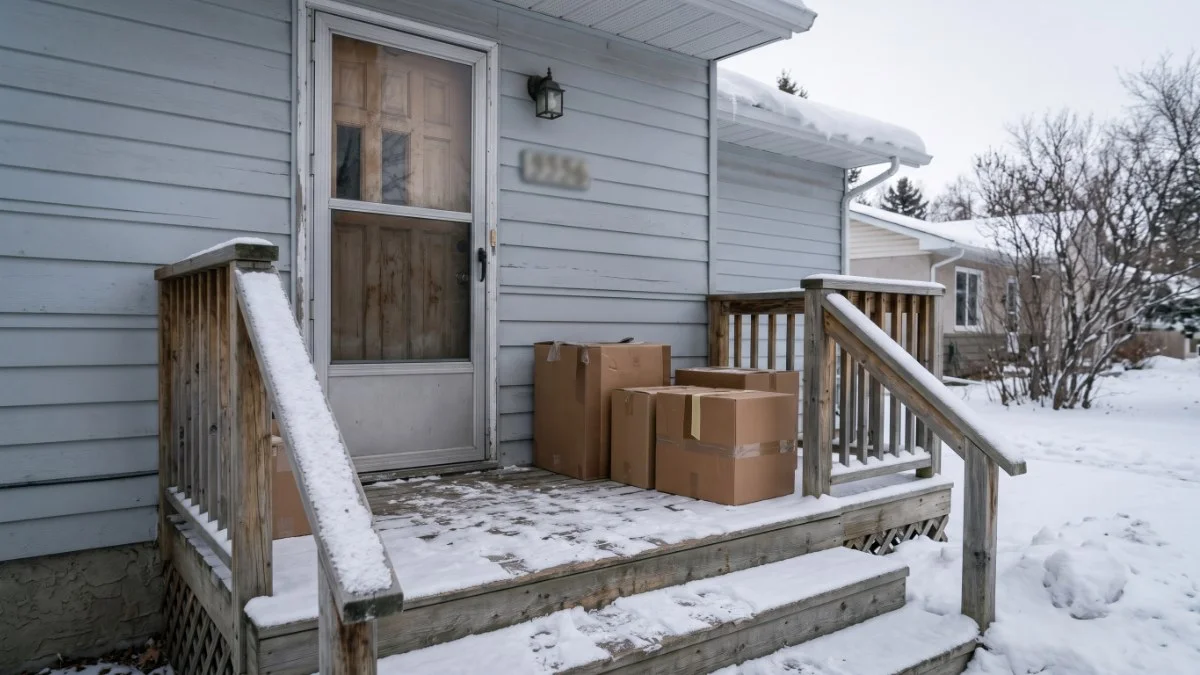
No. The RTA Handbook says a landlord is never allowed to physically remove a tenant or their belongings without a civil enforcement agency, and that the locks cannot be changed until the tenant is physically evicted. Landlord duties on entry and locks still apply to an overholding tenant until then (ss.23, 24).
How does a landlord get an order for possession?
The landlord applies to the Residential Tenancy Dispute Resolution Service (RTDRS) or a court for recovery of possession and, if wanted, compensation for the tenant's use and occupation (s.26(1)(b)). The supporting affidavit sets out the expiry date or how and when the tenancy was terminated, and the reasons the tenant has not left, to the extent known (s.26(2)(d)).
| Step | What happens | Source |
|---|---|---|
| 1. Apply | RTDRS or court, with an affidavit | s.26(1)(b), (2) |
| 2. Order | Directs the tenant to give up possession by a date or within a time after service | s.34(a) |
| 3. File and serve | RTDRS order filed at the Court of King's Bench, then a filed copy served on the tenant | alberta.ca RTDRS |
| 4. Affidavit of service | Filed in the Court of King's Bench | s.34.1(b)(ii) |
| 5. Eviction | Civil enforcement agency, only under the order | s.34.1 |
The order must state that a civil enforcement agency has authority, after service, to evict any occupant (s.34(b)). Alberta's RTDRS page says the applicant must contact a civil enforcement agency to enforce possession if the tenant does not leave. Details of applying are in RTDRS explained.
What is a conditional order?
An RTDRS Tenancy Dispute Officer can make an order conditional, with payment terms the tenant must meet to stay. If an order for possession is stayed while payments are made, it cannot be enforced, unless the court orders otherwise, until a notice of default is served on the tenant (s.35).
Frequently asked questions
Can the landlord charge for the time the tenant overstays?
Yes. A landlord can claim compensation for use and occupation (s.26(1)(b)(ii)), stating the rent under the prior agreement and the amount claimed (s.26(2)(c)). It can also recover general damages from the failure to vacate (s.32(a)).
What if a new tenant was due to move in?
The landlord may recover special damages for its liability to the new tenant, if the overholding tenant could reasonably have foreseen them (s.32(b)).
How long is an RTDRS order good for?
With some exceptions, RTDRS orders are valid for 10 years, according to Alberta's RTDRS hearings and orders page.
Can a tenant appeal?
A party who believes the Tenancy Dispute Officer made an error of law or jurisdiction may appeal to the Court of King's Bench within 30 days of the date the order is filed. Disagreeing with the decision is not enough.
Start with a clean notice
Free landlord and tenant forms, with the Alberta rules explained.
Free • No signup required