An ORT appeal in Saskatchewan is not a second hearing on the facts. Under The Residential Tenancies Act, 2006, any person aggrieved by a hearing officer's decision may appeal it to the Court of King's Bench on a question of law or of jurisdiction, within 30 days after the date the decision is signed and dated (s.72(1)). For evictions based on unpaid rent, unpaid utilities or repeated late rent, a tenant also needs a certificate of payment of rent before the court will hear the appeal (s.72(1.3)).
At a glance: appealing an ORT order
- Court: King's Bench, at the judicial centre nearest the unit (s.72(1.2)).
- Grounds: law or jurisdiction only (s.72(1)).
- Deadline: 30 days from signing; up to two years if you never got the decision (s.72(1.1)).
- Rent-based writs: one month's rent deposited with the ORT first (Regulations s.10.1).
- Effect: filing the notice of appeal stays the order, including the writ (s.78(1)).
Step 1: Decide whether an appeal fits
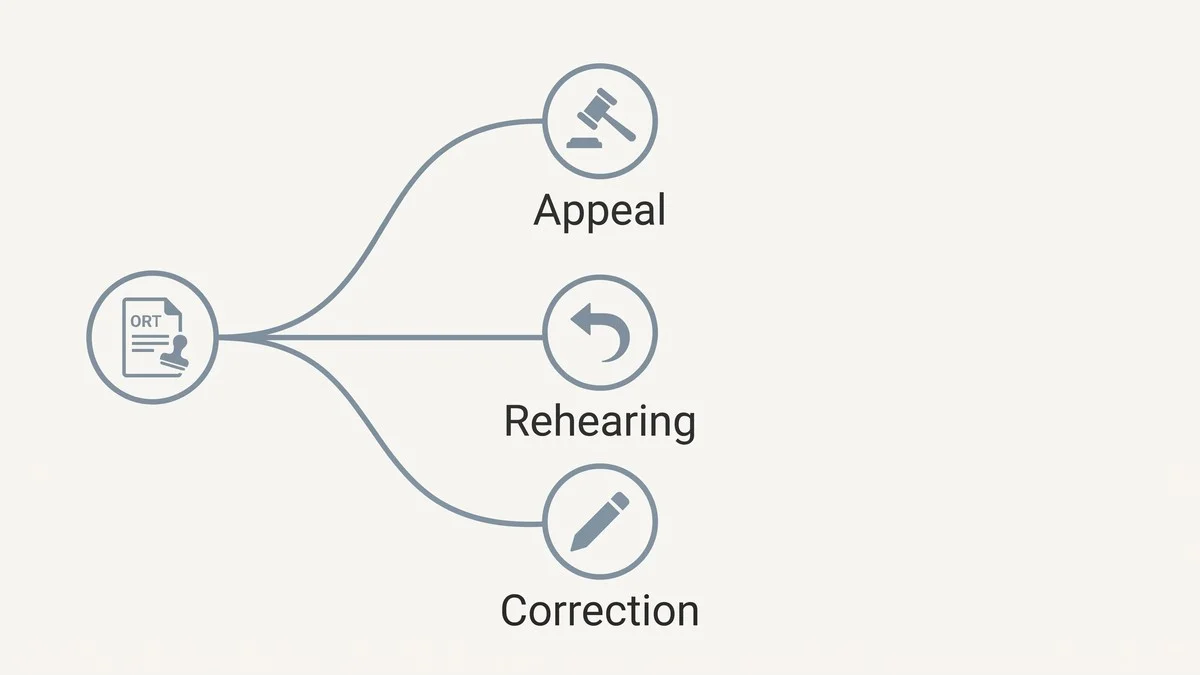
Ask what went wrong. The Act allows an appeal only on a question of law or of jurisdiction, such as a hearing officer misreading a section of the Act or deciding something outside their powers. Read conservatively, a disagreement with which witness was believed is not enough. Two ORT options may fit better:
- Rehearing: if the order was made without hearing from you, or you did not receive notice of the hearing, a hearing officer may rehear it (s.73(5)). Ask by email with the file number, your reason and proof. In a possession case, a rehearing request does not stop the landlord enforcing the writ (ORT Rules of Procedure, Part 7).
- Correction or clarification: for a typing, arithmetic or similar obvious error, file the request form within 15 days of the decision, with the $50 fee or a fee waiver application (ORT Rules of Procedure, Part 7).
Step 2: Get the certificate of payment of rent, if your order needs it

If the order includes a writ of possession following a notice for unpaid rent (s.57(1)), unpaid utilities (s.57(5)) or repeated late payment (s.58(1)(b)), the appeal can only go ahead with a certificate of payment of rent (s.72(1.3)). Apply through the ORT portal and deposit one month's rent, in the amount set out in the order (Regulations s.10.1(1)). The ORT holds the money in trust until the appeal ends or the director directs otherwise.
Step 3: File and serve the notice of appeal

File the notice of appeal at the King's Bench judicial centre nearest the rental unit, with the certificate if required. Serve it on the other party and on the ORT director (s.72(3)); the ORT accepts service in person in Regina or Saskatoon, by registered mail or electronically. Filing stays proceedings under the order, including the writ, until the appeal is decided, unless the court orders otherwise (s.78(1)). A hearing officer may also extend the writ's expiry until 30 days after the appeal is decided (Regulations s.8.3(3)(a)).
Step 4: After King's Bench
A further appeal to the Court of Appeal needs that court's leave and must be brought within 30 days of the King's Bench decision (s.72(2)).
Background reading: how the sheriff enforces a writ, what to do after an immediate notice, and how ORT hearings work.
Facing an eviction order?
Plain-language guides on notices, hearings and your rights as a tenant.
Free • No signup required