No. Saskatchewan has no rent control today: The Residential Tenancies Act, 2006 sets no limit on how much rent can rise, only how much notice a landlord must give and how often rent can go up (s.54). Bill 608, The Rent Control Act, 2025, would add a yearly guideline, but it is a private member's bill at first reading, not law.
At a glance
- Rent control in force: none. The Act limits notice and timing, not the amount (ss.53-54).
- Notice today: 12 months' written notice; first increase no earlier than 18 months into the tenancy; then 12 months apart (s.54).
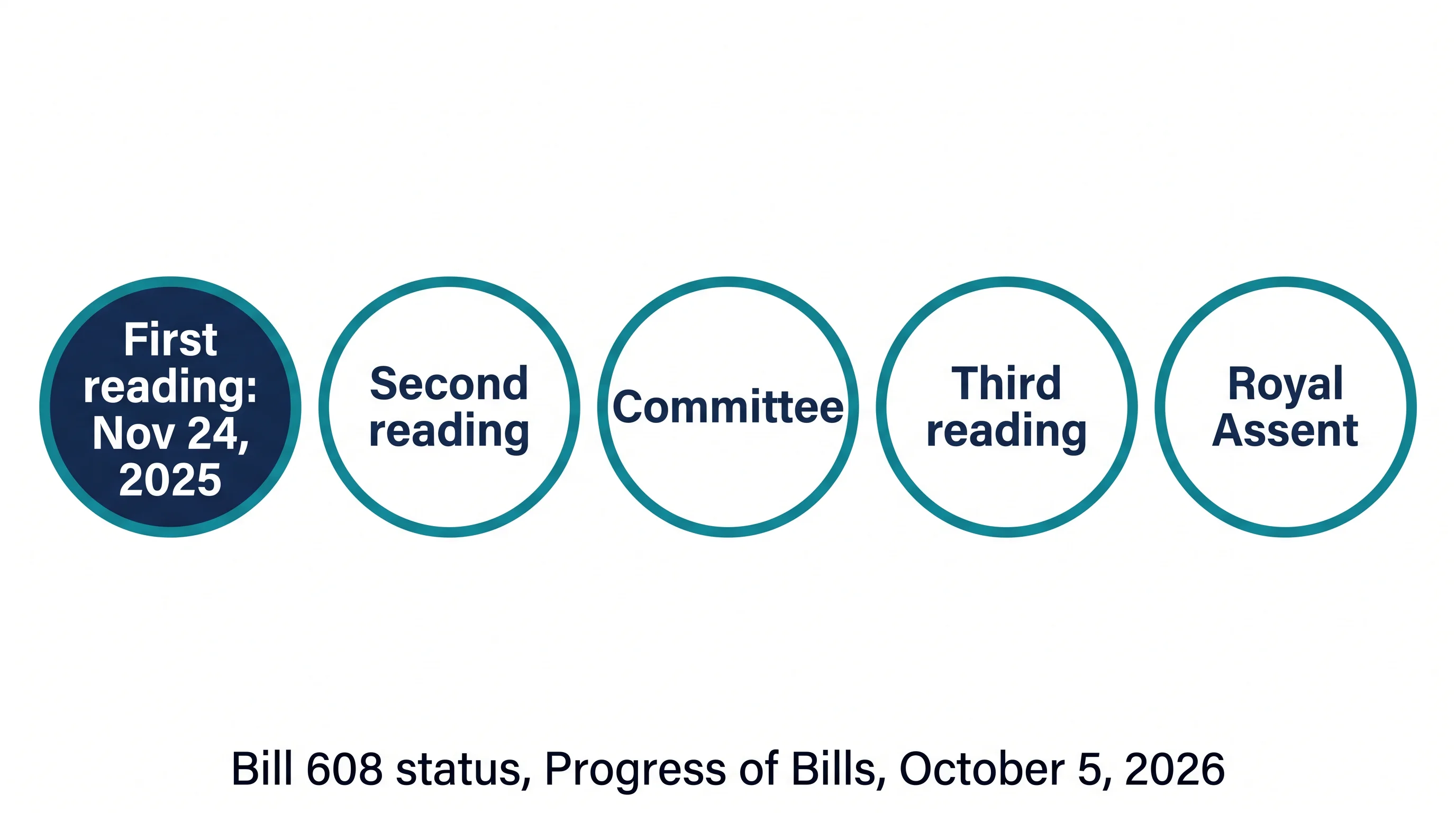
- Bill 608: The Rent Control Act, 2025, a private member's bill, read a first time on November 24, 2025.
- Its status: the Legislative Assembly's Progress of Bills (October 5, 2026) records no second reading.
- What it proposes: a yearly guideline tied to Saskatchewan's Consumer Price Index, with exemptions and a vacancy rule.
"Does Saskatchewan have rent control?" is one of the most common renting questions in the province, and the answer has not changed: it does not. This page explains what the law controls now, what Bill 608 would change if it ever passed, and what landlords and tenants should do in the meantime. The current rules come from The Residential Tenancies Act, 2006 (the Act) and the Office of Residential Tenancies (ORT, formerly the Rentalsman). The description of Bill 608 comes only from the bill's text and the Legislative Assembly of Saskatchewan's Progress of Bills, both checked on October 26, 2026.
Saskatchewan Rent Control Fact Sheet
Get Free PDF →Does Saskatchewan have rent control?
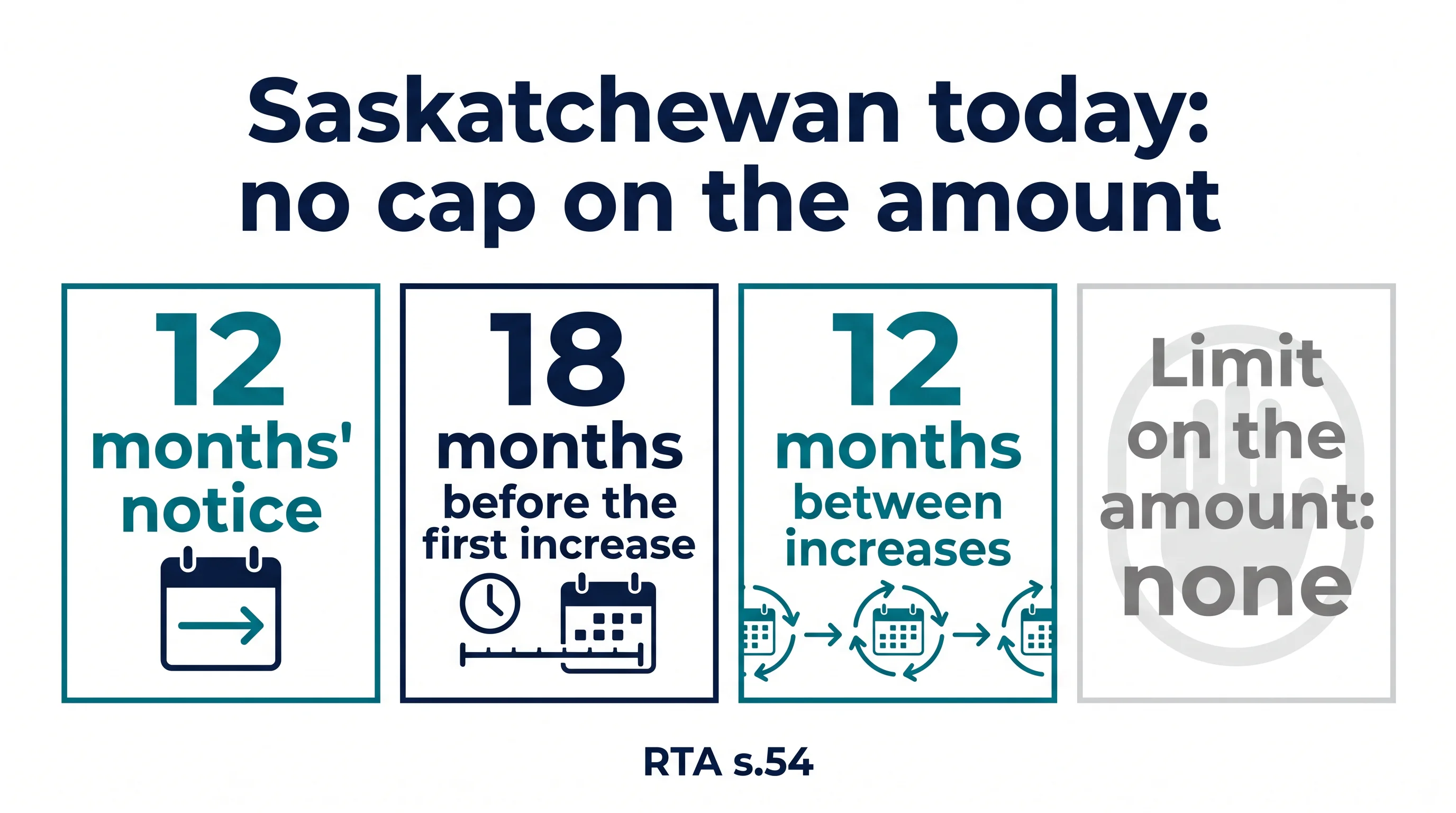
No. Saskatchewan does not cap rent increases. Part IV of the Act says a landlord must not increase rent except in accordance with that Part (s.53), and that Part sets notice periods and waiting times but no percentage or dollar limit.
What the Act does control is timing. In a periodic tenancy, a landlord gives at least 12 months' written notice, the first increase cannot start until 18 months after the tenancy began, and later increases must be at least 12 months apart (s.54(1)(a), (2)(a)). Members in good standing of two prescribed landlord associations give 6 months' notice instead (s.54(1)(b), (2)(b); Regulations s.8.1). Our Alberta rent increase guide shows the closest comparison: no cap there either, but much shorter notice.
What is Bill 608, The Rent Control Act, 2025?
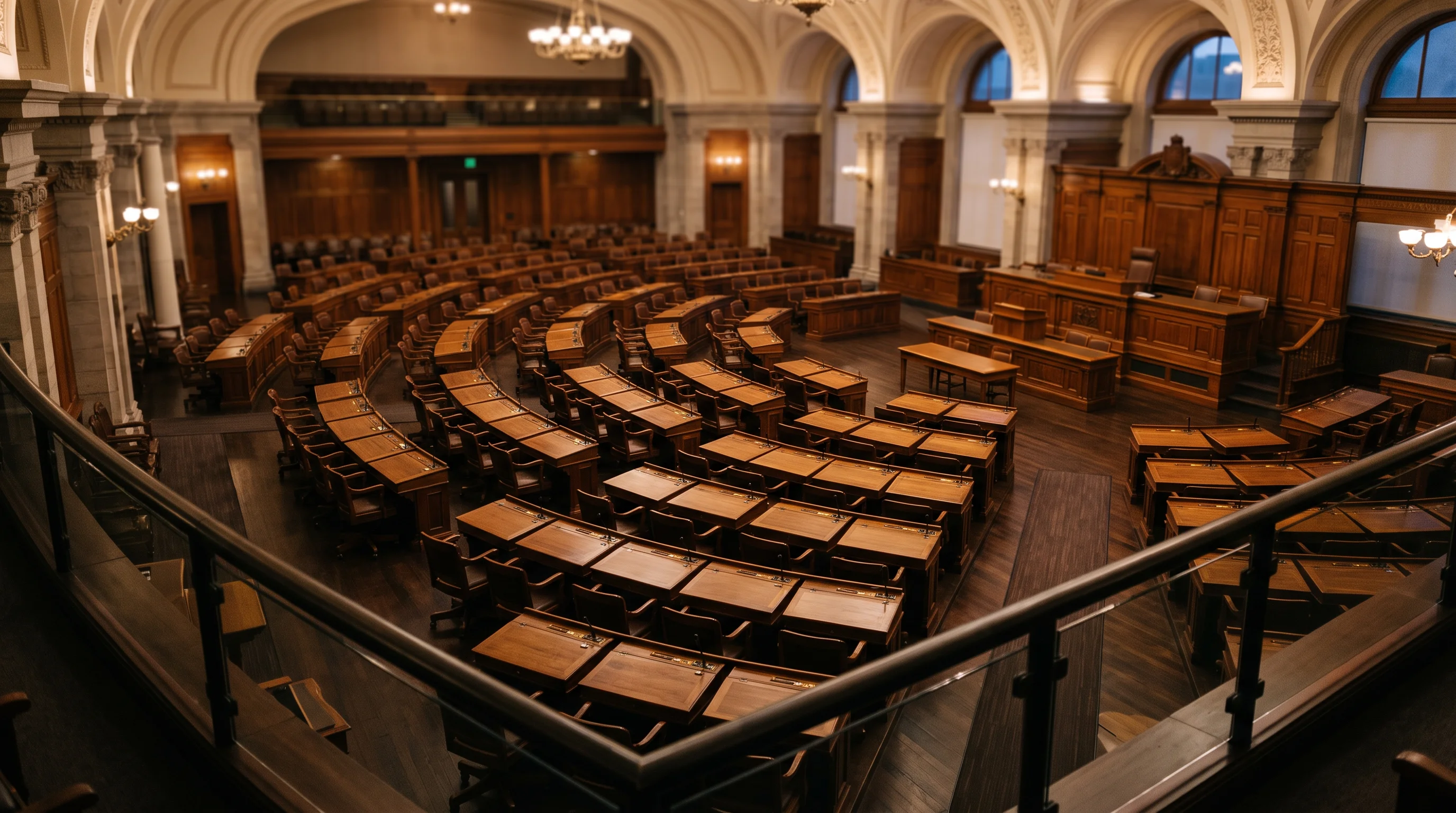
Bill 608 is a private member's bill to amend Saskatchewan's Residential Tenancies Act "to provide for Rent Control." It was introduced by April ChiefCalf in the Second Session of the Thirtieth Legislature and read a first time on November 24, 2025, according to the Assembly's Progress of Bills.
A bill becomes law only after it passes second and third reading and receives Royal Assent. Bill 608 says it would come into force on Assent (s.6 of the bill). As of the Progress of Bills dated October 5, 2026, which was still the Assembly's current copy on October 26, 2026, no second reading, committee stage, third reading or assent is recorded for it.
What would Bill 608 change if it passed?
Bill 608 would add three sections to the Act after s.54. It would not remove the existing 12-month notice and 18-month wait; it would add a limit on the amount on top of them.
| Topic | The Act today | Bill 608 as written |
|---|---|---|
| Limit on the amount | None | No increase above a yearly guideline during a tenancy (proposed s.54.1(1)) |
| How the limit is set | Not applicable | Year-over-year change in Saskatchewan's Consumer Price Index, averaged over the 12 months ending March 31 of the previous year, rounded to one decimal (proposed s.54.1(2)) |
| Where it is published | Not applicable | The Saskatchewan Gazette, by August 31 of the year before (proposed s.54.1(2)) |
| Increases above the limit | Not applicable | Only by agreement, for a capital expenditure or a new or additional service (proposed s.54.2(1)) |
| Rent on a vacant unit | Set freely | In a complex of 4 or more units, up to the average rent of similar units in the complex (proposed s.54.3) |
| Notice and timing | 12 months' notice; 18 months, then 12 months apart (s.54) | Unchanged; the bill adds sections after s.54 |
The guideline would also apply to an assignee or subtenant under s.50 (proposed s.54.1(1)). The bill includes transitional wording for the year it would come into force (proposed s.54.1(3)-(4)).
Which rentals would Bill 608 exempt?
Bill 608 lists units the guideline would not cover (proposed s.54.2(2)):
- units in a hotel, motel, inn, tourist home, hostel or similar accommodation;
- a caretaker's unit while occupied by a caretaker, janitor, manager or superintendent employed by the landlord, and an employee unit while occupied by an employee;
- a room in a boarding house;
- a unit in a new building, for 5 years after the first occupancy permit is issued or a unit is first occupied, whichever is earlier (or, with no permit required, 5 years after first occupancy);
- a unit in a new building designated for rehabilitation or subsidized or social housing, for 5 years after first occupancy.
For comparison, Ontario sets a yearly guideline for most units and BC an annual limit; see our Ontario N1 guide and BC's 2027 rent increase limit. Bill 608's design is its own and should be read from its text, not from another province's rules.
Frequently asked questions
Is there a maximum rent increase in Saskatchewan in 2026?
No. Saskatchewan sets no maximum percentage or dollar amount for 2026 or any other year. The Act controls the notice (12 months, or 6 for association members) and the timing of increases (s.54).
Has Bill 608 passed?
No. The Legislative Assembly's Progress of Bills dated October 5, 2026 shows Bill 608 read a first time on November 24, 2025, with no later stage recorded. It has no effect on any tenancy.
If Bill 608 passed, would my landlord still need to give 12 months' notice?
Yes, as the bill is written. It inserts new sections after s.54 and does not amend s.54, so the notice and timing rules would stay and the guideline would be an extra limit on the amount.
Can a Saskatchewan landlord raise rent by any amount right now?
Yes, in a periodic tenancy, provided the notice and timing rules in s.54 are followed. During a fixed term, rent can rise only if the amount and timing were agreed when the term was signed (s.53.1). A landlord also cannot add or raise a charge for a service that was free without the tenant's agreement or an ORT order (s.43).
Where can I check the bill's status myself?
The Legislative Assembly of Saskatchewan publishes a Progress of Bills chart for the current session, listing each private member's bill with its reading dates. The bill's text is published by the Assembly as well.
For now, Saskatchewan's rule is simple to state: any amount, but only with long notice and long gaps. Landlord and tenant guides for every province are in the Canadian Landlord Resource Center and the Canadian Tenant Resource Center.
Saskatchewan Rent Control Fact Sheet
Get Free PDF →Get your rental paperwork right
Browse free landlord and tenant resources.
Free • No signup required