REGINA, Oct. 28, 2026: Under the eviction process in Saskatchewan, a landlord can regain a rental unit only when the tenant moves out or abandons it, or when the Office of Residential Tenancies (ORT) grants an order of possession and a writ of possession is directed to the sheriff (The Residential Tenancies Act, 2006, s.65). A recent Regina eviction dispute reported by local media has put that process back in the news.
Here is each step, with the section of the Act behind it. This explainer takes no view on any individual case.
How does eviction work in Saskatchewan, step by step?
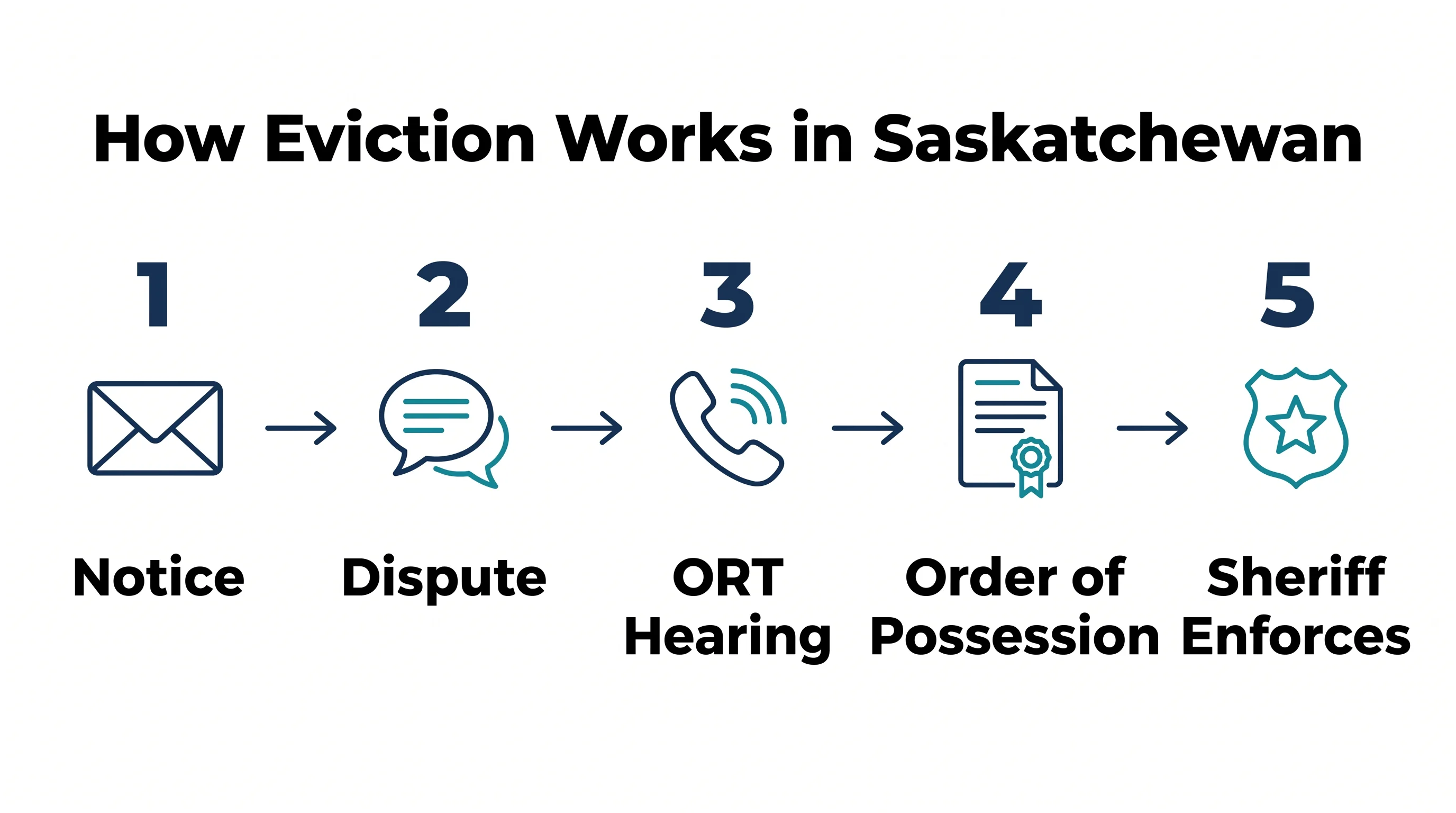
A Saskatchewan eviction runs in five steps: a written notice on the approved form, a chance for the tenant to dispute it, an application to the ORT, a hearing and order, and enforcement by the sheriff.
| Step | What the law says | Source |
|---|---|---|
| 1. Notice | In writing, dated, giving the unit's address, the end date and the grounds, on the approved form | s.63 |
| 2. Dispute | For cause, end-of-employment and landlord's-use notices, the tenant has 15 days after receiving the notice to dispute it in writing | ss.58(5), 59(5), 60(9) |
| 3. Application | The landlord applies to the ORT for possession; the application fee is $50 and non-refundable | ss.57(4), 67, 70(2.01); Regs s.13(1)(a) |
| 4. Hearing and order | A hearing officer hears both sides and may order possession and a writ of possession directed to the sheriff | s.70(6)(d), (13) |
| 5. Enforcement | The sheriff places the landlord in possession; the writ expires after 30 days unless the hearing officer sets another date | s.70(13); Regs s.10(2) |
A tenant who does not dispute a cause notice in time is deemed to accept the end date and must leave by then (s.58(6)). Where the tenant does dispute, the landlord must show it is entitled to end the tenancy (s.67(2)). The ORT says its hearings take place by phone, and its decisions can be appealed to the Court of King's Bench within 30 days.
Which notices can a Saskatchewan landlord give?
A Saskatchewan landlord's notice period depends on the ground, from immediate for unpaid rent to two months for some landlord's-use notices. The main ones:
| Ground | Minimum notice | Section |
|---|---|---|
| Rent unpaid 15 days or more after it is due | Immediate, on service | s.57(1) |
| Cause, such as repeated late rent, significant disturbance or extraordinary damage | At least one month after receipt, ending the day before a rent day | s.58(1), (3) |
| End of a caretaker's, manager's or superintendent's employment | At least one month, same end-date rule | s.59(3) |
| Landlord or close family member moving in; demolition, renovation or conversion | At least two months, periodic tenancies only | s.60(2)–(3) |
| Purchaser moving in; housing-program purposes | At least one month, periodic tenancies only | s.60(3.1) |
Where a cause can be fixed, the landlord must first give a reasonable time to remedy it (s.58(2)). A notice with an end date that is too early is not void; the Act moves it to the earliest date that complies (s.64). In serious cases, such as a real risk to safety or the property where waiting a month would be unreasonable, a landlord may apply for possession without a notice (s.68).
How must an eviction notice be served in Saskatchewan?
A Saskatchewan notice to a current tenant must be served in person, or posted on the front door of the unit and also sent by ordinary mail or electronically (s.82(2)(a)). Mail is deemed served on the third business day after mailing, and an electronic copy on the next business day (s.82(4)–(5)). A hearing officer may accept imperfect service if the notice came to the person's attention (s.82.1).
Is eviction different in social or subsidized housing in Saskatchewan?
Yes, in part. The Standard Conditions say the Act contains special provisions for public housing authorities and housing programs, including different rules for ending the tenancy (Regs Schedule 1, s.26). For example, such a landlord may give a cause notice where the tenant breaches a term the landlord reasonably requires (s.58(1)(l)), and a periodic tenancy may end on one month's notice where the tenant is no longer eligible for the program (s.60(7.1)). The same notice, hearing and sheriff steps still apply.
Advocates quoted in the Regina report called for a winter eviction moratorium among affordable and social housing providers. Neither the Act nor its regulations contain a seasonal pause on evictions.
What it means for landlords
A Saskatchewan landlord who wants a tenant out must follow the notice and ORT process to the end. Changing the locks or keeping a tenant's belongings without an order is not allowed: a landlord must not seize a tenant's property or block access to it (s.12(1)), and a hearing officer may award punitive damages for a lockout without justification (s.66(4)). Accepting rent after a notice does not cancel it unless you agree in writing (s.60.1).
What it means for tenants
A Saskatchewan tenant who receives a notice should check its ground, date and dispute deadline. At a possession hearing, a tenant may ask for relief, for example where the notice followed a good-faith complaint about health or safety standards or an effort to enforce rights under the Act (s.70(11)). The province says that if anyone other than a sheriff tries to remove a tenant, the tenant should call the police. An appeal on a question of law or jurisdiction stays the writ once filed with the Court of King's Bench (ss.72(1), 78(1)); for a rent-based writ, the tenant must first deposit one month's rent with the ORT for a certificate of payment of rent (s.72(1.3); Regs s.10.1).
What to do now
- Read the notice against the Act. Check the form, the grounds and the end date (ss.63–64).
- Diarise the 15-day dispute window for cause and landlord's-use notices.
- Use the official channels. Notices and applications are made through the ORT's online portal; see the province's Ending a Tenancy and dispute and hearing pages.
- Contact the ORT at 888-215-2222, or through its official page.
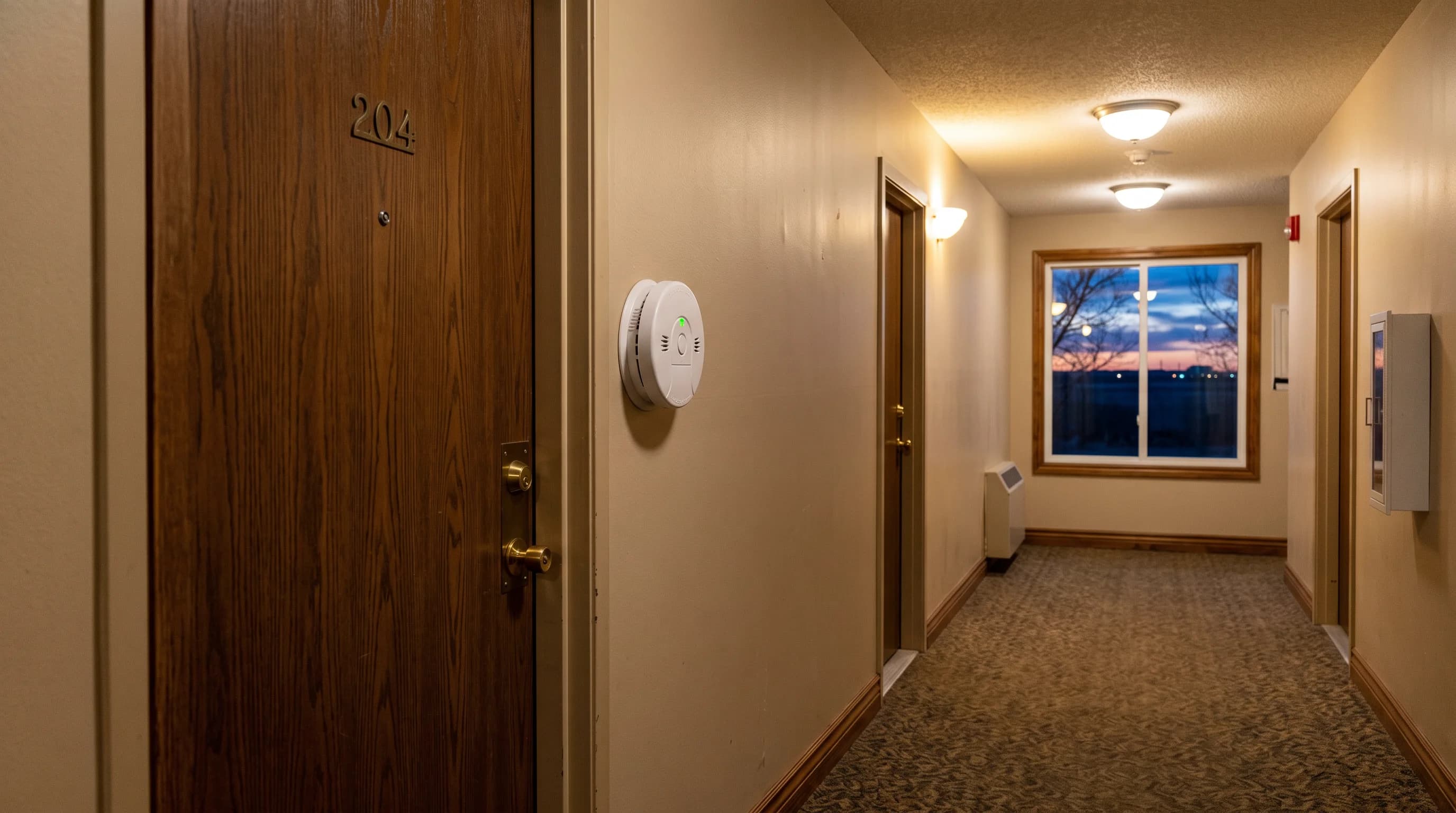
For how other provinces handle the same steps, see Ontario's LTB process from notice to enforcement and Alberta's 14-day notice for unpaid rent. Saskatchewan rental owners should also note Henry's Law on carbon monoxide alarms, due Nov. 1. More guides are in the Canadian Landlord Resource Center and the Canadian Tenant Resource Center.
Find free landlord and tenant forms
Forms and guides for landlords and tenants across Canada.
Free • No signup required