To raise manufactured home site (pad) rent in BC, give at least three full months' notice on the RTB's approved form, no sooner than 12 months after the last increase. For 2027 the cap is 2.2% plus a proportional amount for higher park taxes and utility fees: use RTB-45 for 2.2% only and RTB-11a when adding the proportional amount.
What you'll need
- The date the tenant's current rent took effect (the 12-month clock runs from it, MHPTA s.35(1)).
- The park's property tax notices and municipal fee invoices for the last two 12-month periods.
- The park's electricity, natural gas, water, telephone and cable bills from regulated suppliers for the same periods.
- The number of sites in the park, and how many sites this tenant rents.
- The form: RTB-45 (standard increase only) or RTB-11a (with the proportional amount).
Steps to serve a BC pad rent increase
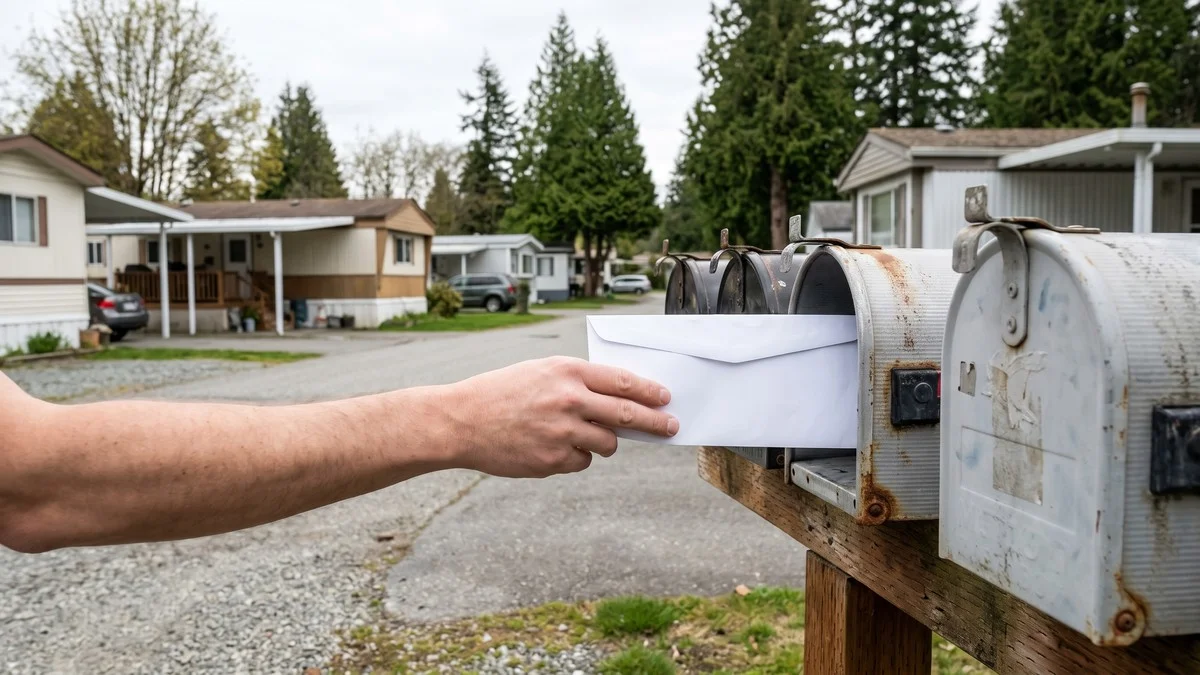
- Check the 12-month gap. The increase can't take effect until 12 months after rent was first payable or after the last lawful increase, even if the park or the home changed hands.
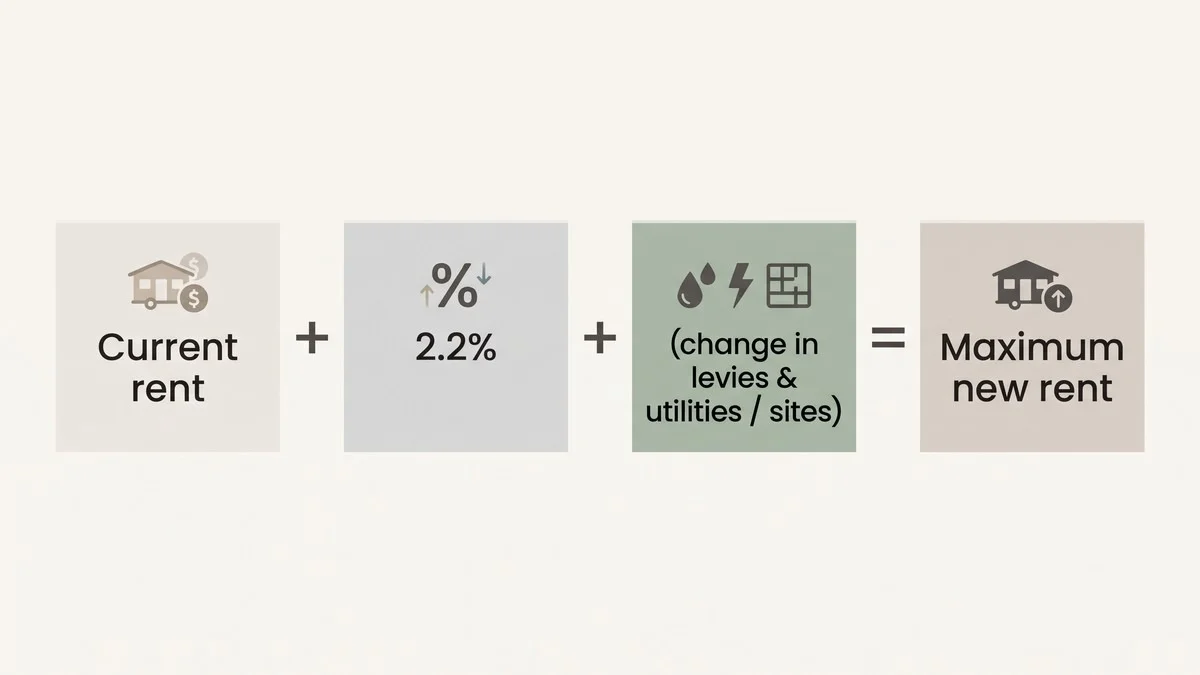
- Work out the proportional amount. Under Regulation s.32, it is the change in local government levies plus the change in utility fees, comparing the 12 months ending the month before notice with the 12 months before that, divided by the number of sites. Only common-property costs count; fuel for generating power does not.
- Add it up. Example: a 100-site park whose levies and utilities rose $12,000 adds $120 a site a year. On $700 monthly rent ($8,400 a year), 2.2% is $184.80, so the maximum is $8,704.80 a year, or $725.40 a month.
- Count three whole rental months. Rent due on the 1st and notice handed over any day in March: the increase starts July 1. Mailed notice is deemed received on the fifth day, so mail it by March 26.
- Attach or post the paperwork. RTB-11a requires access to the tax notices, levy invoices and utility bills; they can be posted in a common area, but a tenant who asks must get copies.
Troubleshooting
- Notice served too late: it isn't void; it takes effect on the earliest date that complies (s.35(4)).
- Tenant paid too much: they may deduct the excess from rent or otherwise recover it (s.36(5)). Paying more than allowed is not agreement to it unless both sides signed a written agreement.
- Costs rose far beyond the cap: a park owner can apply for an additional increase on RTB-52 for significant repairs, an extraordinary jump in operating expenses or unforeseeable financing costs (Regulation s.33). It must be one application for every site at an equal percentage; the fee is $300 plus $10 per affected site, to a maximum of $600, and it can't be filed online. Our article on raising rent for capital work covers the apartment side of that process.
Frequently asked questions
What is the 2027 pad rent increase limit in BC?
2.2% plus the proportional amount, for increases taking effect in 2027. It was 2.3% in 2026. See the 2027 BC rent increase limit for how the base figure is set.
Can a pad tenant dispute a rent increase?
Not one that complies with Part 4 of the MHPTA (s.36(2)). A tenant can dispute an increase above the legal amount or one served without proper notice; the steps are in disputing a BC rent increase.
Does RTB-7 work for a manufactured home site?
No. RTB-7 is for tenancies under the Residential Tenancy Act. A site tenancy uses RTB-45 or RTB-11a, unless one landlord rents both the home and the site, in which case the Residential Tenancy Act applies.
Which costs count toward the proportional amount?
Property value taxes and municipal fees under Community Charter s.194, plus electricity, gas, water, telephone and cable supplied by regulated utilities or CRTC-licensed carriers.
More on BC rent increases
Limits, notices and disputes, in one series.
Free • No signup required