When you move out of a Saskatchewan rental, leave it reasonably clean and undamaged apart from normal wear and tear, and hand back every key (The Residential Tenancies Act, 2006, s.51). Give a forwarding address: your landlord then has seven business days to return your damage deposit or serve a claim (s.32).
At a glance
- Notice (monthly tenancy): in writing, at least one month, ending the day before a rent day (s.56(1)).
- Condition: reasonably clean and undamaged, except reasonable wear and tear (s.51(a)).
- Keys: return all keys and fobs you have (s.51(b)).
- Checklist: the ORT's Condition of Premises Checklist is optional but strong evidence.
- Deposit: returned, or a claim served, within 7 business days (s.32(1)).
- Dispute: apply to the ORT within 60 days after the tenancy ends; $50 fee (s.33(2)).
This is a tenant's guide to moving out in Saskatchewan with your damage deposit intact. It walks through giving notice, the move-out inspection, cleaning, keys and belongings, and what to do if your landlord keeps part of the deposit. The rules come from The Residential Tenancies Act, 2006 (the Act), its Regulations and the Office of Residential Tenancies (ORT, formerly the Rentalsman).
Saskatchewan Move-Out Checklist
Get Free PDF →How much notice do I give before moving out in Saskatchewan?
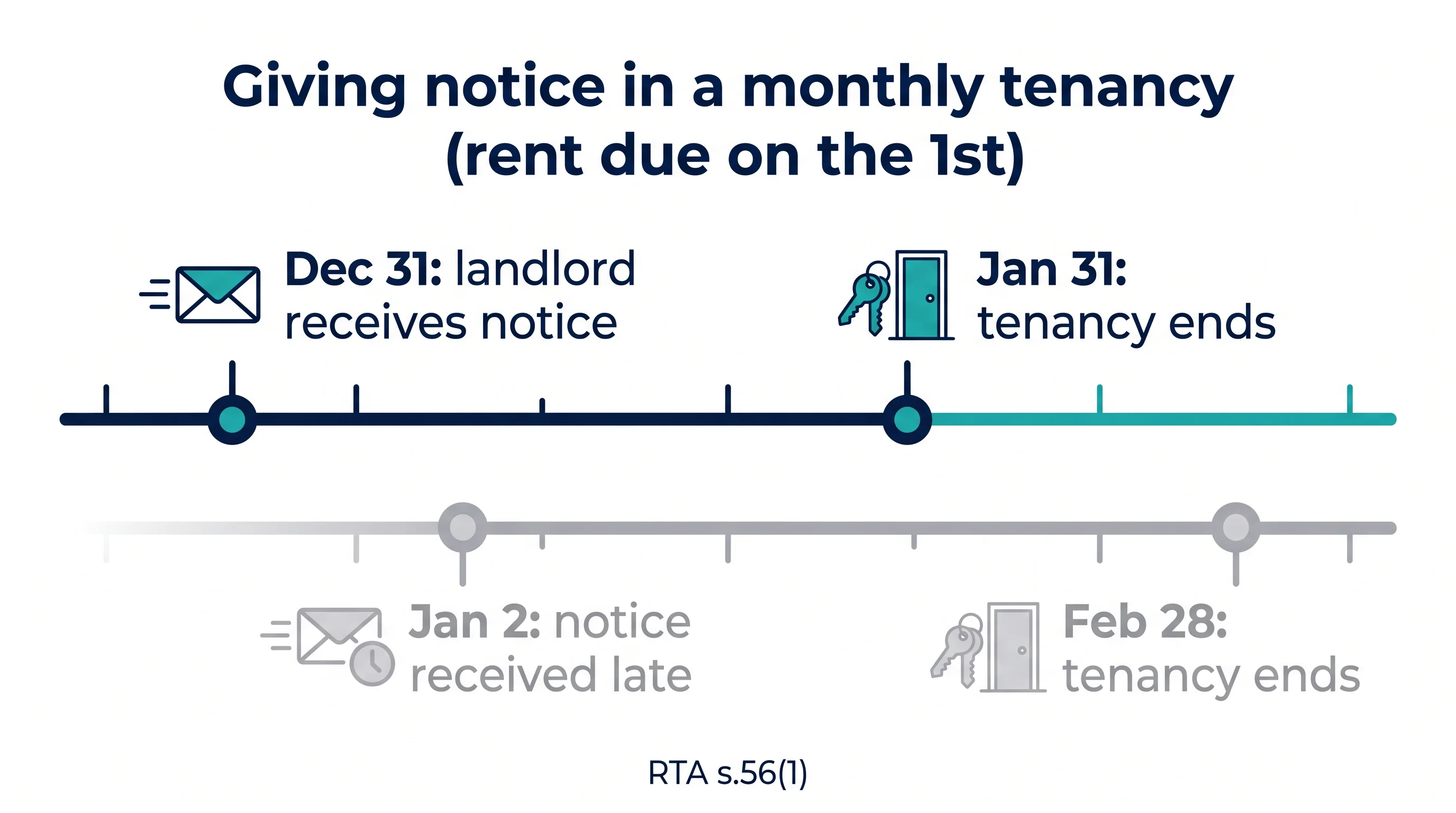
In a Saskatchewan month-to-month tenancy, your written notice must take effect at least one month after your landlord receives it, on the day before a rent day (s.56(1)). In a week-to-week tenancy it is one week, again ending the day before rent is due. A fixed-term lease simply ends on its end date (s.55(2)).
Every notice to end a tenancy must be in writing, dated, show who is giving it, give the unit's address and state the effective date (s.63). The ORT's approved Notice to Landlord to Terminate a Periodic Tenancy has all of that. If your date is too early, it is treated as the earliest valid date rather than thrown out (s.64).
Example: rent is due on the 1st. To leave at the end of January, your landlord must receive your notice by December 31; the tenancy then ends on January 31. Notice that arrives on January 2 moves your end date to February 28 (or 29).
Is a move-out inspection required in Saskatchewan?
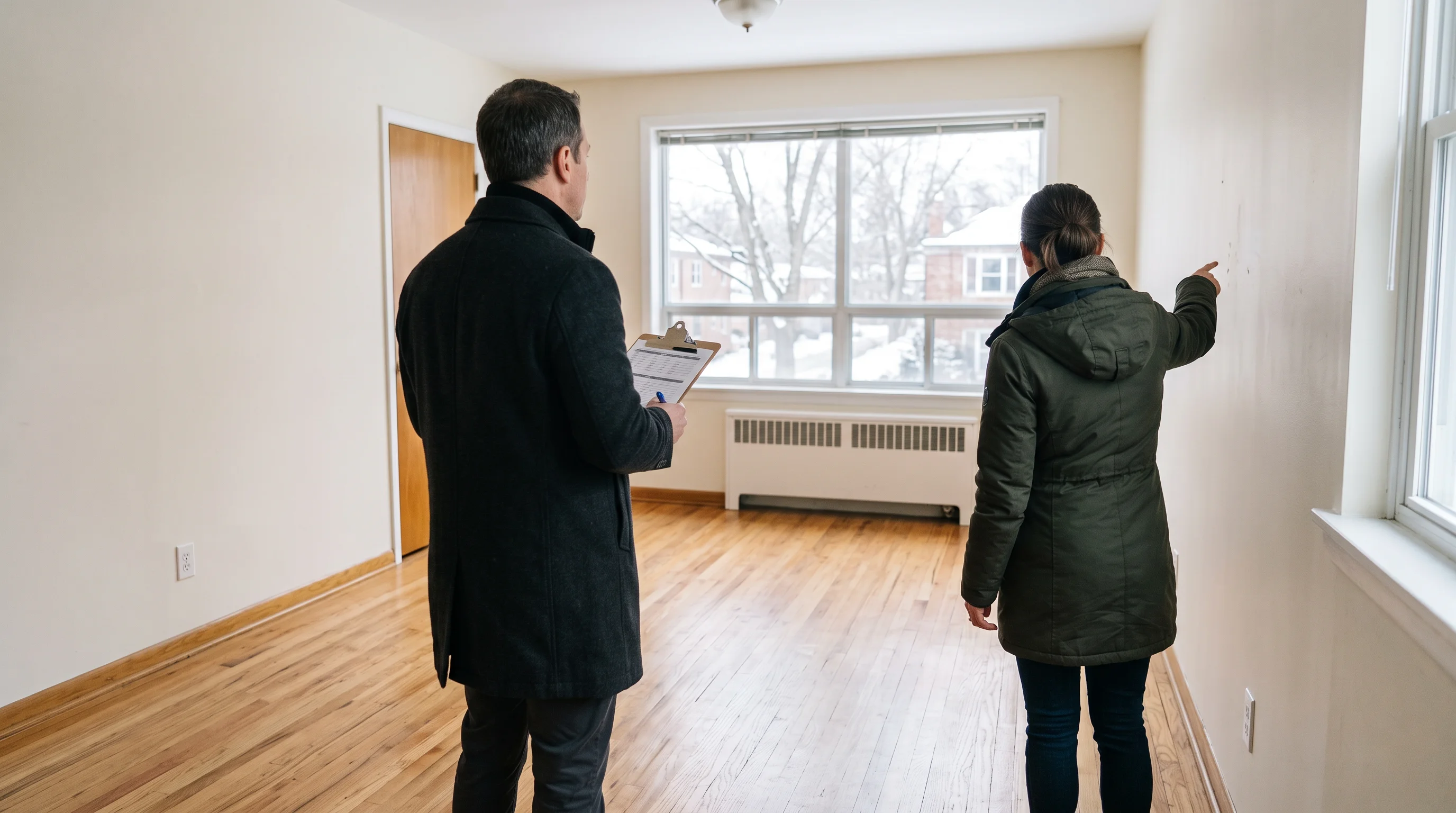
No Saskatchewan statute makes a move-in or move-out inspection mandatory. The Act and Regulations do not require one, unlike some other provinces. The ORT does publish a free Condition of Premises Checklist, a move-in and move-out record meant to be completed by the landlord and tenant together at the start and end of the tenancy.
Use it anyway. The ORT's own Notice of Landlord's Claim for Security Deposit asks the landlord whether a move-out inspection was done with the tenant, and if not, why. In a dispute, a hearing officer decides on the evidence, and a checklist both of you signed on the way in and out is the clearest evidence there is.
- Walk through every room with your landlord on your last day, using the same checklist you used at move-in.
- Take dated photos and video of each room, appliance and fixture, including inside the fridge, oven and cupboards.
- Note anything that was already damaged at move-in; reasonable wear and tear is not your cost (s.49(7)).
- Ask for a copy of the signed checklist before you leave.
Alberta is different: there, inspection reports are mandatory for deposit deductions. See our guide to Alberta's inspection report rules if you have rented there.
How clean does a Saskatchewan rental have to be when I leave?
A Saskatchewan tenant must leave the unit "reasonably clean and undamaged, except for reasonable wear and tear" (s.51(a)). That is not the same as spotless or freshly renovated. During the tenancy you also have to keep reasonable health, cleanliness and sanitary standards (s.49(5)) and repair damage you or your guests caused (s.49(6)).
A lease cannot make you pay a fixed cleaning fee automatically. The ORT says landlords cannot automatically charge for cleaning in a tenancy agreement; instead, a landlord may claim cleaning costs or damage against the deposit within seven business days, or by a separate monetary application. A clause saying the landlord keeps part of the deposit no matter what is not allowed (s.26(1)(c)).
| Usually your cost | Usually the landlord's cost |
|---|---|
| Food, grease and dirt left in the kitchen and bathroom | Faded paint and light scuffs from ordinary living |
| Holes, broken fixtures or damage you or guests caused (s.49(6)) | Worn carpet in walkways, aged fixtures (wear and tear, s.49(7)) |
| Garbage and belongings left behind | Repairs to appliances, heating and plumbing from wear and tear (s.49(4)) |
What do I do with keys and anything I leave behind?
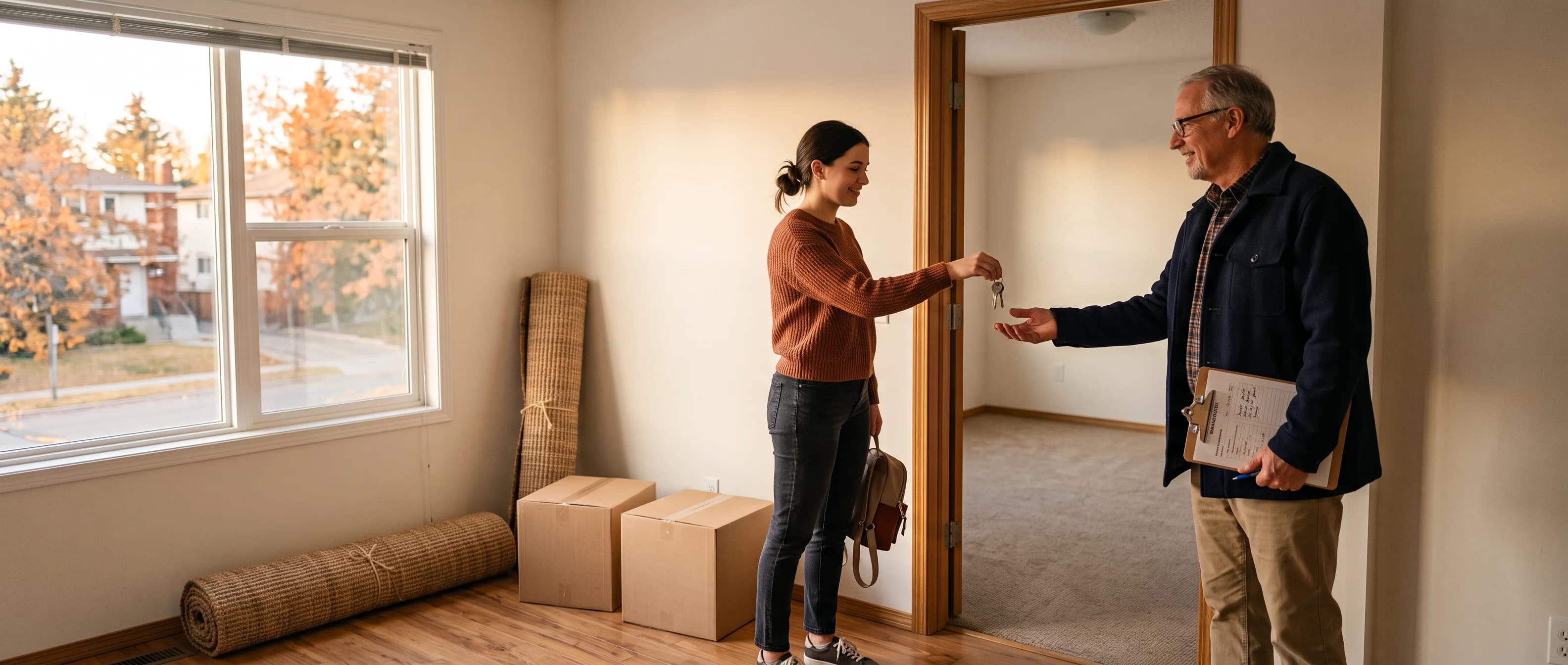
Return every key, fob and other means of access you have, for the unit and the building (s.51(b)). Hand them over in person if you can and get a note of the date, or tell your landlord in writing exactly how and when you returned them.
Take all your belongings. If you leave property worth $1,500 or less, in the landlord's reasonable estimate, the landlord can remove and sell or dispose of it after making reasonable efforts to find you (s.85(4)-(6)). For property worth more, the landlord applies to the ORT for a Property Disposition Order (s.85(1)-(3)). Any money from a sale, after amounts owed under an ORT order, is paid to the director for you, and you have six months to claim it (s.85(7)-(8)).
How do I get my damage deposit back in Saskatchewan?
A Saskatchewan landlord has seven business days after they know, or should reasonably have known, that you moved out to either return the full deposit with any interest, or return the part they are not claiming and serve the approved Notice of Landlord's Claim for Security Deposit (s.32(1)). Business days do not include Saturdays, Sundays or holidays (s.2(a.1)).
The claim must be served at your forwarding address, which can be an email address (s.32(1.1), (2)(a)). If you give no forwarding address, the landlord does not have to serve it at all (s.32(2)(b)). Interest is 0% if the tenancy ended within five years of the agreement (Regs s.5(1.1)).
If you agree with a deduction, you can say so in writing; that ends the process once the landlord pays back the rest (s.32(4)). The full rules, including trust accounts and interest, are in our Saskatchewan security deposit guide. For comparison, BC's process is in Getting Your Deposit Back in BC.
What if my landlord keeps my deposit?
If you disagree with a claim, or the landlord returned nothing and served no claim, apply to the ORT through its online portal within 60 days after the tenancy ends (s.33(1)-(2)). The fee is $50, and The Fee Waiver Act applies. The approved claim form tells tenants to include proof of the deposit they paid.
After you apply, the ORT directs the landlord to pay the disputed amount into the ORT within 10 business days of its notice (s.33(5)). If the landlord does not, the director can order the money paid to you without a hearing (s.33(8)). If a hearing officer finds the landlord never served a proper claim within the seven business days, they must order the deposit returned unless exceptional circumstances make that grossly inequitable (s.34(1), (3)), and can award you $50 to $200 in costs (s.34(4); Regs s.13.1).
Frequently asked questions
How long does a landlord have to return a damage deposit in Saskatchewan?
Seven business days after the landlord knows, or should reasonably have known, that you vacated (s.32(1)). In that time they either return it all or return the unclaimed part and serve a claim on the approved form.
Do I have to do a move-out inspection in Saskatchewan?
No law requires one. The ORT's Condition of Premises Checklist is optional, but a signed checklist and dated photos are the best evidence if your deposit is disputed.
Can my landlord charge me for professional carpet cleaning?
Not automatically through a lease clause; the ORT says landlords cannot automatically charge for cleaning in a tenancy agreement. A landlord who thinks the unit was left dirty must claim it against the deposit in time, and you can dispute the claim at the ORT.
What counts as reasonable wear and tear?
The Act does not define it, but it separates wear and tear from damage you or your guests cause (s.49(6)-(7)). Ordinary ageing from normal use is wear and tear; holes, breakage and neglect are damage.
What if I never gave a forwarding address?
The landlord does not have to serve a claim notice (s.32(2)(b)). Give one in writing as soon as you can, and keep your 60-day deadline to apply to the ORT in mind (s.33(2)).
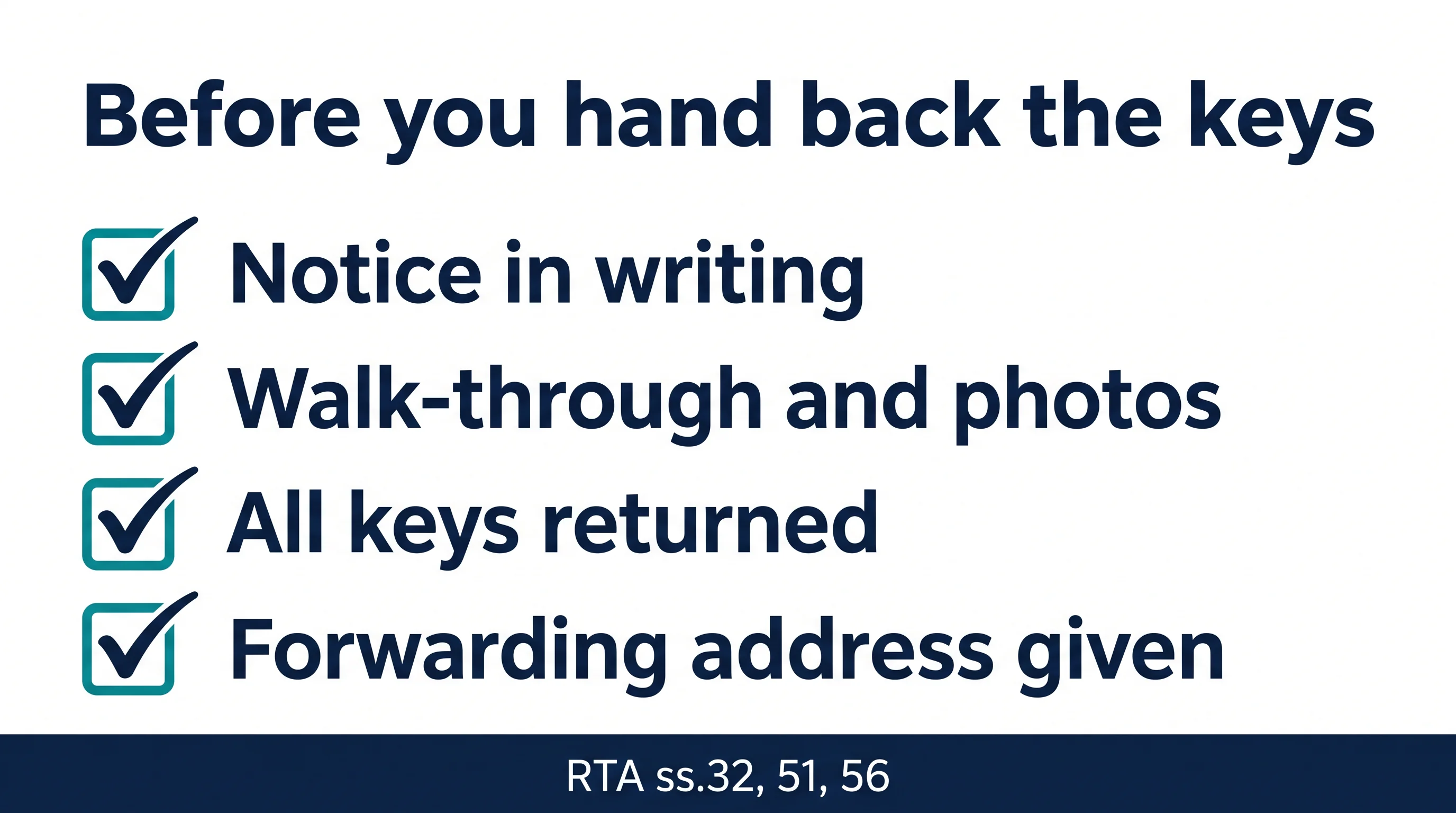
A clean handover in Saskatchewan comes down to four things: notice in writing, a walk-through with photos, keys returned, and a forwarding address. Do those, and the seven-business-day rule works in your favour. More renter guides are in the Canadian Tenant Resource Center, and landlord guides in the Canadian Landlord Resource Center.
Saskatchewan Move-Out Checklist
Get Free PDF →Get your rental paperwork right
Browse free landlord and tenant resources.
Free • No signup required