Your security deposit is often the largest sum you hand a landlord apart from rent. Half a month on a $2,000 apartment is $1,000, and with a pet deposit it can be $2,000. Getting it back should be routine. Too often it is not, and many tenants lose part of it simply because they missed a step.
British Columbia's rules favour tenants who keep good records and meet a few simple requirements. Most of the work happens at the start and end of your tenancy, not in a hearing room.
This guide walks you through each step, from move-in day to the day the money lands in your account, and what to do if it does not.
BC Tenant Deposit Return Checklist
A step-by-step tenant checklist for getting a BC security or pet damage deposit back, from the move-in inspection to a direct request.
Get Free PDF →The rules that protect your deposit
- Caps. A security deposit can be no more than half of the first month's rent. A pet damage deposit is also capped at half, no matter how many pets. Together they cannot exceed one month's rent.
- Trust. Your landlord holds the deposit in trust and must be ready to return it with any interest. The 2026 interest rate is 0%; earlier years had higher rates.
- Inspections. You and your landlord must inspect the unit together at move-in and move-out and record it on a condition inspection report, such as Form RTB-27.
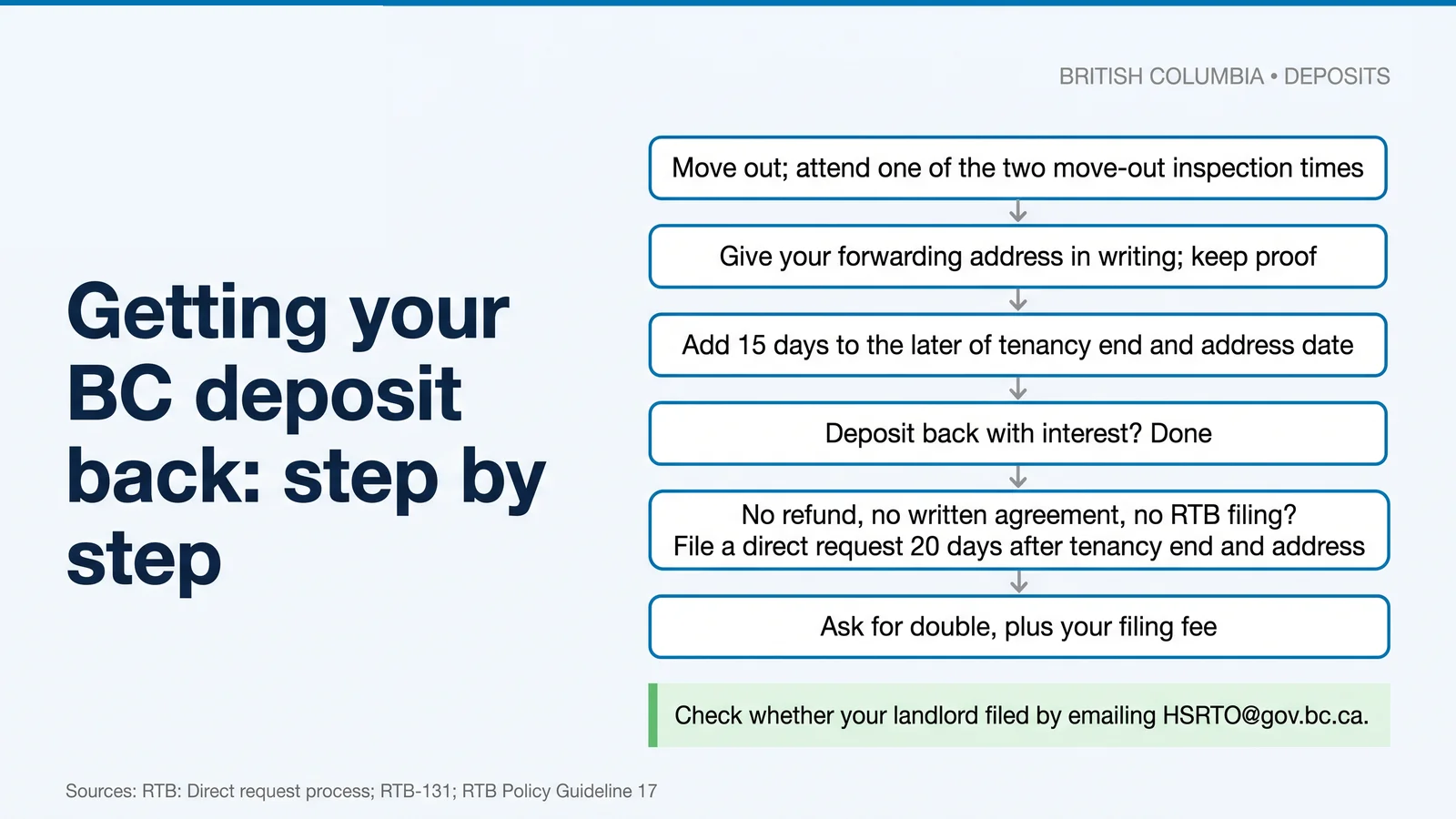
- Return deadline. Your landlord has 15 days after the later of the tenancy ending and receiving your forwarding address in writing to return the deposit, get your written agreement to keep part, or apply to the RTB.
- Penalty. If the landlord does none of these, they may have to pay you double the deposit.
- No automatic keeping. A clause saying the landlord keeps all or part of the deposit at the end is not valid. They need your written agreement or an RTB order.
Step by step: getting your deposit back
Step 1: Keep proof you paid
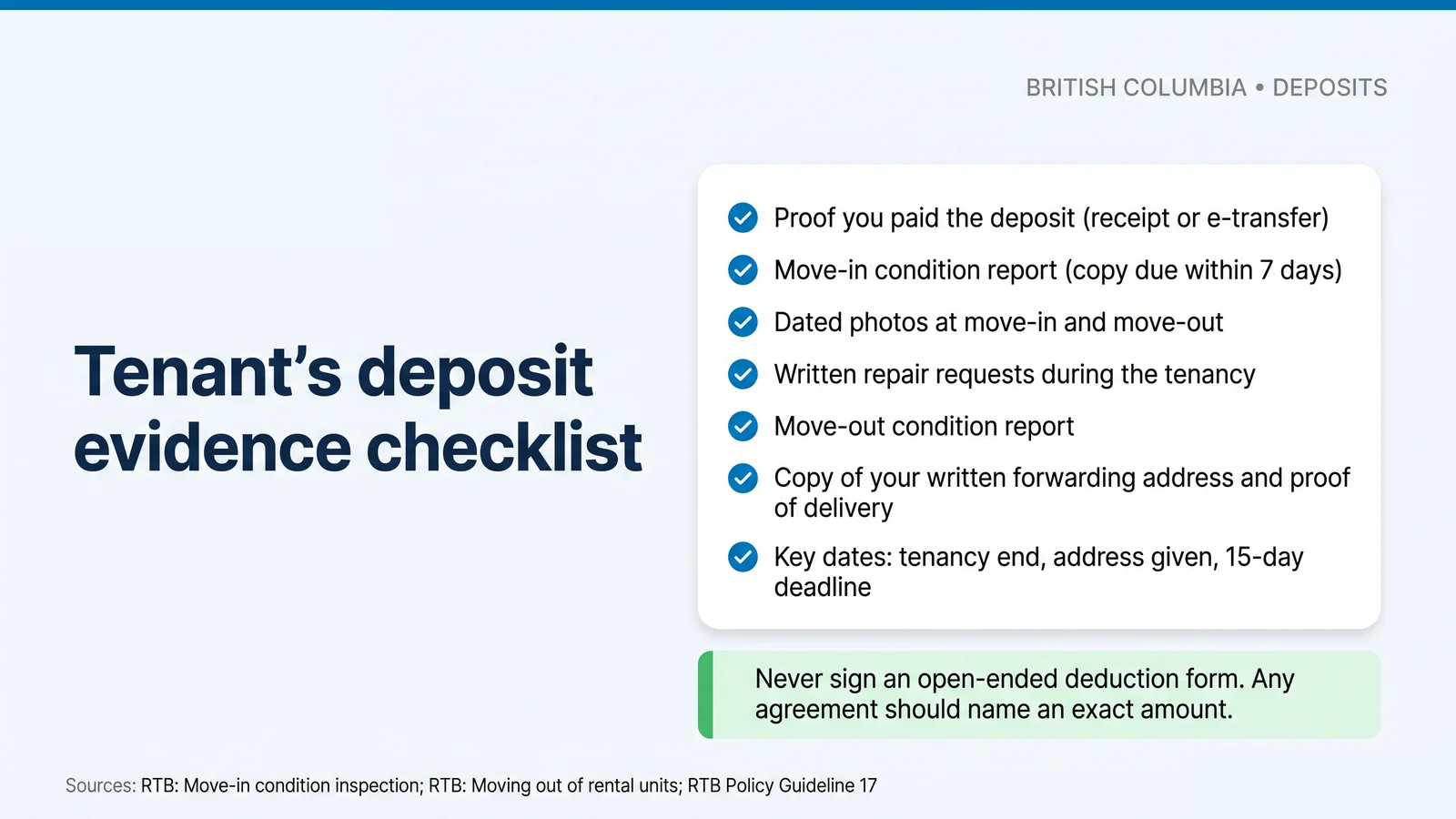
Save the e-transfer confirmation, or get a receipt if you paid by cash or cheque. Check the amount against the caps. If you paid too much, you can withhold the excess from your next rent payment after telling your landlord in writing.
Step 2: Do the move-in inspection
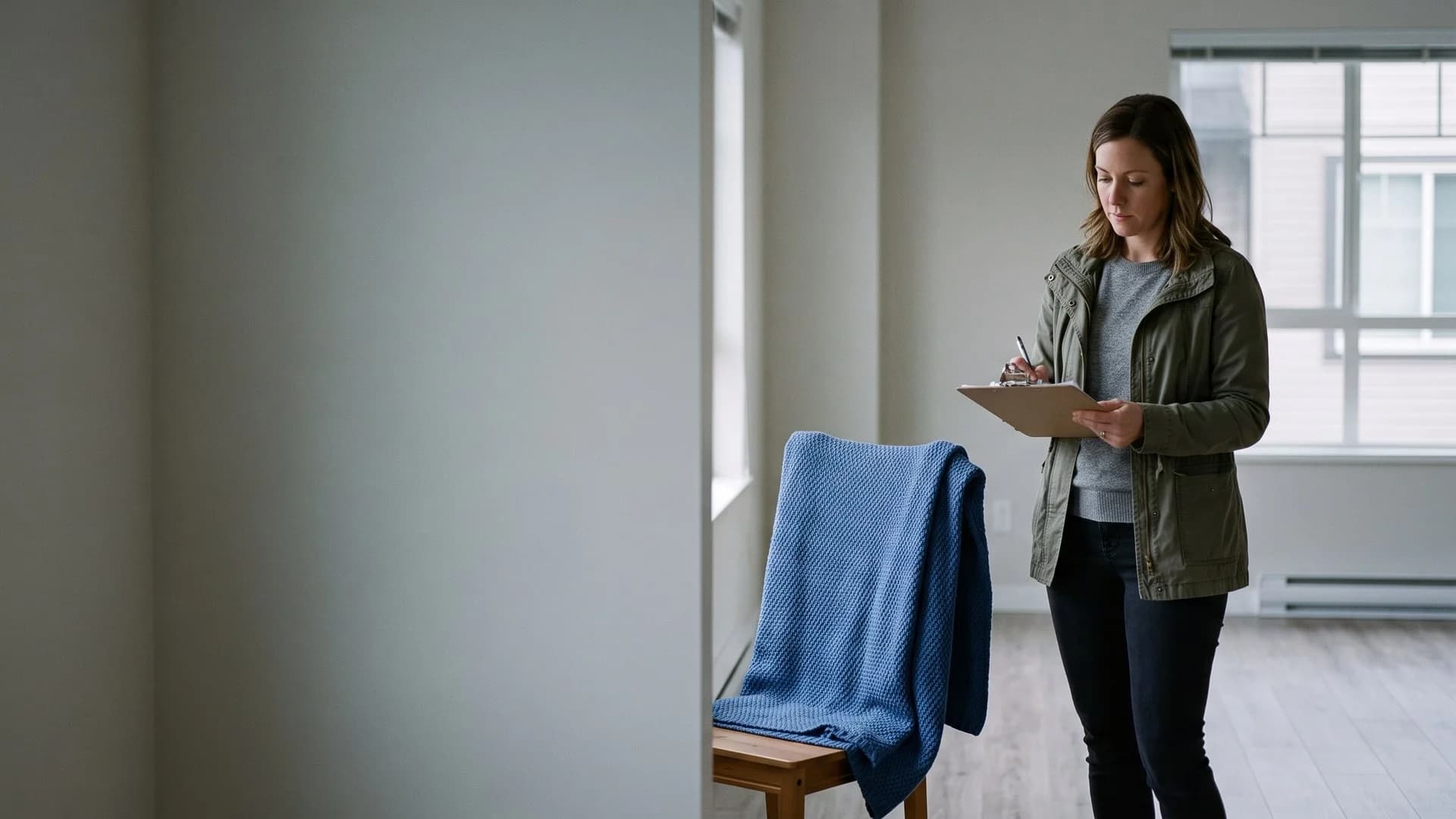
Walk through the unit with your landlord, ideally on the day you get the keys. Note every scuff, stain and chip on the report. Take dated photos. Your landlord must give you a copy of the report within 7 days. If one does not arrive, ask for it in writing.
This step protects you both ways. If your landlord does not offer you two chances to inspect, does not complete the report or does not give you a copy, they lose the right to claim against your deposit for damage. If you skip both chances they offer, you lose your right to get the deposit back.
Step 3: Report problems during the tenancy
If something breaks, report it in writing. A dated repair request shows the issue was not damage you caused. You are not responsible for reasonable wear and tear.
Step 4: Clean before you go
You are expected to leave the unit reasonably clean. If it is not, cleaning costs can be charged to you. Photograph each room after cleaning.
Step 5: Attend the move-out inspection
Your landlord should propose two times. Go to one. Compare the unit with the move-in report and note disagreements on the form before you sign.
Step 6: Give your forwarding address in writing
This is the step tenants miss most. The 15-day clock does not start until your landlord has your forwarding address in writing. Give it by a method the rules allow and keep proof. You have up to one year after the tenancy ends, but sooner is better.
Step 7: Count 15 days
Take the later of your tenancy end date and the date the landlord received your address, then add 15 days.
| Tenancy ended | Address received | Landlord's deadline | Earliest direct request |
|---|---|---|---|
| October 31, 2026 | October 31, 2026 | November 15, 2026 | November 20, 2026 |
| January 31, 2027 | February 2, 2027 | February 17, 2027 | February 22, 2027 |
November 15, 2026 is a Sunday. Section 25 of BC's Interpretation Act may give the landlord until Monday, November 16, so do not treat a refund or a landlord's application made on the 16th as late. The earliest direct request date in the table is unchanged.
Step 8: If the landlord asks to keep some
You do not have to agree. If you think a charge is fair, you can agree in writing to that amount only. If you do not agree, the landlord must apply to the RTB within the 15 days to keep it.
Common mistakes tenants make
- Skipping the move-in inspection or not keeping a copy of the report.
- Missing both move-out inspection times.
- Giving a forwarding address only by phone.
- Treating the deposit as rent without the landlord's written permission.
- Agreeing to deductions on the spot to "get it over with".
- Losing payment proof.
What to do next if the deposit does not come back
- Check the dates. Has the 15-day deadline passed with no refund, no agreement and no RTB filing?
- Check whether the landlord filed. The RTB says you can email [email protected] to ask.
- Apply for a direct request. You can file 20 days after the tenancy ended and you gave your address. The direct request process is decided on written documents. The filing fee is $100, and a fee waiver is available.
- Ask for double. If the landlord did nothing in time, you are eligible for double the deposit, plus your filing fee if you succeed. Interest is added on the original amount and not doubled.
- Serve and enforce. Serve the landlord with your direct request package within 3 days of it being made available to you. If you win and the landlord does not pay, the order can be enforced through the courts.
How Tenon10 helps
Tenon10 includes a fillable RTB-27 Condition Inspection Report with a room-by-room grid, and generates the tenant's notice to end tenancy. Our forms page lists free BC resources.
Landlords who use Tenon10 get deposit tracking that follows the 15-day return clock and flags the double-penalty risk, which helps deposits go back on time. More tenant guides are on our tenant hub.
FAQ
Can my landlord charge me for normal wear and tear?
No. Deposits cannot cover reasonable wear and tear.
Can my landlord charge a fee to return my deposit?
No. Returning a deposit cannot cost you anything.
What if the building was sold while I lived there?
The new landlord must return your deposit.
Do I get interest on my deposit?
Interest is calculated on the full deposit for the time it was held. The rate for 2026 is 0%, but earlier years had a rate. The RTB has a deposit interest calculator.
What if I miss both inspections?
If your landlord offered two opportunities and you took part in neither, you lose your right to the deposit's return.
BC Tenant Deposit Return Checklist
A step-by-step tenant checklist for getting a BC security or pet damage deposit back, from the move-in inspection to a direct request.
Get Free PDF →Start with a solid inspection report
Tenon10 includes a fillable RTB-27 Condition Inspection Report and the BC tenant's notice to end tenancy, with free resources on our forms page.
Built for Canadian landlords and property managers.
Related BC guides
- BC Security and Pet Damage Deposits: The Complete Landlord Guide
- The Half-Month Cap: How Much Deposit a BC Landlord Can Collect
- The 15-Day Rule: Returning a Deposit at the End of a BC Tenancy
- When a BC Landlord Must Pay Back Double the Deposit
Sources: RTB: Tenancy deposits and fees; RTB: Move-in condition inspection; RTB: Moving out of rental units; RTB: Direct request process; RTB Policy Guideline 17. This article is a summary of British Columbia rules as of October 2026, not legal advice. Check the Residential Tenancy Branch for your situation.