No: post-dated cheques in Ontario cannot be required by a landlord or by a tenancy agreement, and neither can pre-authorized debits, automatic credit card charges or any other automatic payment of rent (Residential Tenancies Act, 2006, s.108). A tenant may still choose to pay that way. The word that matters is "require".
Automatic payments are convenient for both sides, and many tenants prefer them. The rule only stops a landlord from making them a condition of renting or of staying. This guide shows landlords how to offer payment options lawfully and tells tenants what they can decline.
Ontario Post-Dated Cheques: Landlord Checklist
A one-page checklist for Ontario landlords on rent payment methods: what s.108 bans, how to offer automatic payment as an option, and the $20 NSF admin charge.
Get Free PDF →What you'll need

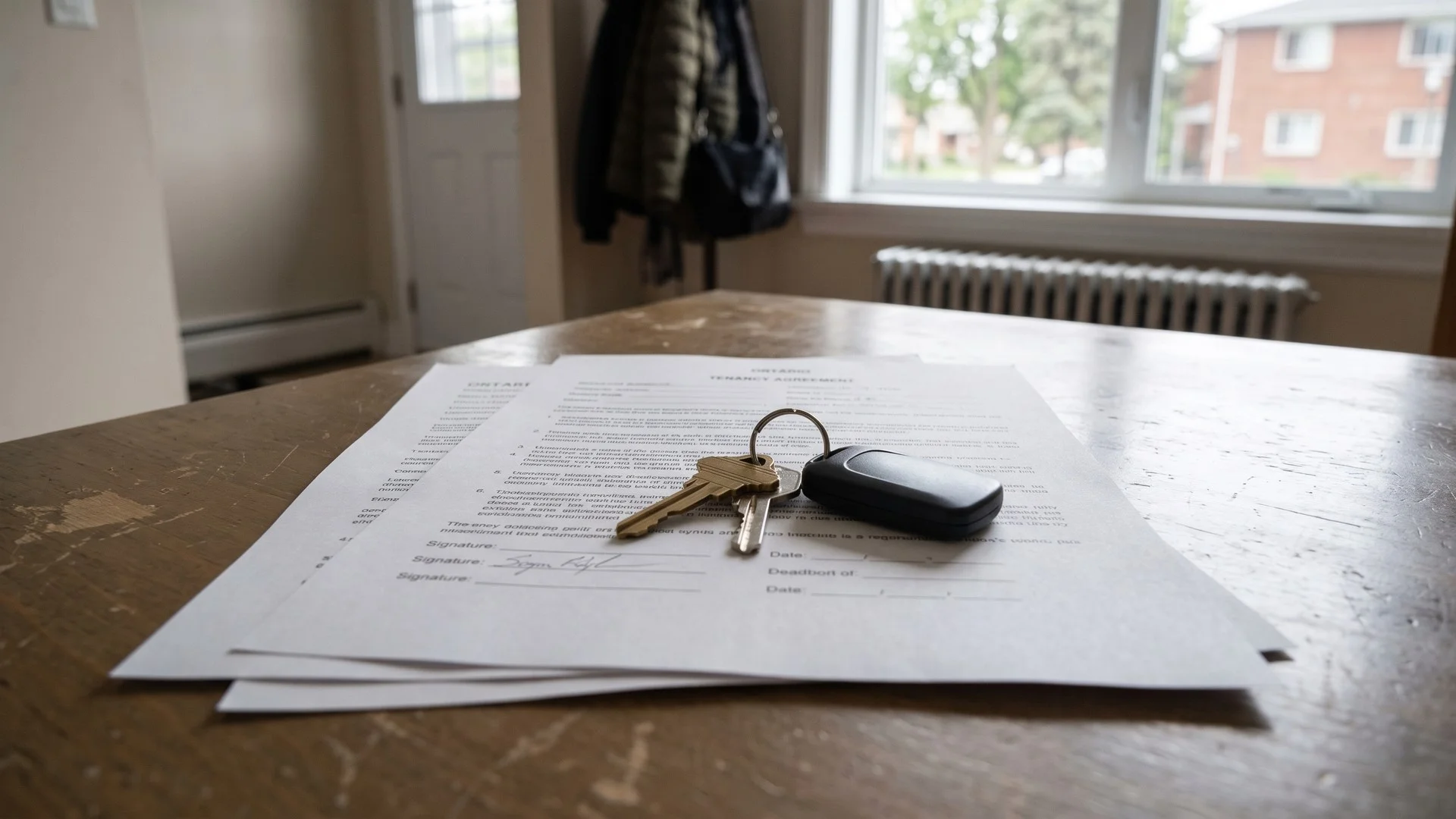
- Your tenancy agreement, to check the rent payment clause. On the Ontario Standard Lease this is in the rent section.
- A list of the payment methods you will accept: for example cheque, e-transfer, bank transfer, or an optional pre-authorized debit.
- A written consent form for any automatic method the tenant chooses.
What does section 108 of Ontario's Residential Tenancies Act actually prohibit?

Section 108 of Ontario's Residential Tenancies Act says neither a landlord nor a tenancy agreement shall require a tenant or prospective tenant to provide post-dated cheques or other negotiable instruments for rent, or to permit automatic debiting of a bank account, automatic charging of a credit card or any other form of automatic payment for rent.
The rule covers prospective tenants as well as current ones, so it applies at the application stage. A lease clause that makes post-dated cheques mandatory is inconsistent with the Act, and a provision in a tenancy agreement that is inconsistent with the Act is void (RTA s.4(1)).
| Practice | Allowed in Ontario? |
|---|---|
| Requiring 12 post-dated cheques as a condition of the lease | No (s.108(a)) |
| Requiring a pre-authorized debit or automatic card charge | No (s.108(b)) |
| Offering automatic payment as one option the tenant may pick | Yes, if the tenant chooses it |
| Accepting post-dated cheques a tenant offers | Yes |
| Charging an administration fee for a bounced cheque | Yes, up to $20, plus the bank's NSF charges (O. Reg. 516/06, s.17) |
How should an Ontario landlord set up rent payments lawfully?
An Ontario landlord sets up rent payments lawfully by listing several acceptable methods, letting the tenant pick, and getting written consent for any automatic option. Follow these steps.
- Write the rent clause as a choice. State where and how rent may be paid, and list more than one method.
- Offer automatic payment as optional. Say plainly that the tenant may use it but does not have to.
- Get a separate signed authorization for a pre-authorized debit, so the tenant's choice is recorded.
- Let the tenant switch. Because the landlord cannot require automatic payment, a tenant who wants to stop and pay another accepted way should be able to.
- Do not reject an applicant for declining post-dated cheques or an automatic debit; the section protects prospective tenants too.
What can an Ontario landlord charge when a cheque bounces?
When a rent cheque bounces in Ontario, the landlord may collect the NSF charges the bank charged the landlord plus an administration charge of not more than $20 for the NSF cheque (O. Reg. 516/06, s.17, paragraphs 4 and 5). Other fees for late or failed payment fall under the general ban on fees and penalties in RTA s.134(1)(a).
Tips
- Remove old clauses. If an older lease says post-dated cheques are required, do not rely on it.
- Keep a payment record and give receipts on request, which the Act requires free of charge (RTA s.109).
- Late rent has its own process. See the 7-day N4 and Ontario's persistent late payment test.
Troubleshooting
The tenant cancels the automatic debit. That is their right; rent is still due on the due date by another accepted method. If it is not paid, the non-payment rules apply as usual, starting with the N4 notice.
An applicant offers post-dated cheques on their own. You may accept them. Note in writing that the tenant offered them.
You manage many units. Our piece on rent collection at scale covers the systems side, and the Ontario Landlord Resource Center collects the rest.
Frequently asked questions
Can a landlord in Ontario insist on e-transfer only?
Section 108 targets post-dated cheques, negotiable instruments and automatic payments. A one-off e-transfer the tenant sends each month is not an automatic payment, but offering more than one method avoids disputes.
Is a lease clause requiring post-dated cheques valid?
No. A tenancy agreement may not require them (RTA s.108), and a provision inconsistent with the Act is void (RTA s.4(1)). The rest of the lease still stands.
How much is the NSF fee in Ontario?
An administration charge of up to $20, plus the NSF charges the landlord's bank actually charged (O. Reg. 516/06, s.17).
Can a landlord refuse a tenant who won't give post-dated cheques?
Section 108 applies to prospective tenants, so a landlord may not require them as a condition of renting.
Ontario Post-Dated Cheques: Landlord Checklist
A one-page checklist for Ontario landlords on rent payment methods: what s.108 bans, how to offer automatic payment as an option, and the $20 NSF admin charge.
Get Free PDF →Get your lease right from the start
Fill in the Ontario Standard Lease and other official forms free.
Free • No signup required