An N13 notice landing in your mailbox can feel like an eviction order — but it isn't one, not yet. In Ontario, an N13 is the start of a process with strict rules on both sides, and knowing those rules is the difference between a clean, compliant project and a dismissed application — or a tenant who moves out when they didn't have to.
The N13 is one of the province's most misunderstood forms. Landlords get the grounds, compensation, or timing wrong and lose months. Tenants assume they have to be gone by the date on the page, when often they don't. And it's constantly confused with the N12. This is a plain-language walkthrough of the whole thing: the three grounds an N13 covers, the 120-day notice rules, exactly how much compensation is owed (it varies more than most people think), the right to return, how it differs from the N12, and what happens at the hearing. If you want the bigger picture on renovation-based evictions, see our complete guide to renoviction Ontario rules — this article is the form-level companion to it.
This is general information, not legal advice. Rules and figures change — confirm the details with the LTB or a licensed paralegal, lawyer, or community legal clinic before acting.
Got an N13? The Tenant's Action Checklist for Ontario
A free step-by-step checklist to read the notice, claim the exact compensation you're owed, and protect your right to return.
Get Free PDF →What the N13 Is, and Its Three Grounds
Form N13 — its full name is the "Notice to End your Tenancy Because the Landlord Wants to Demolish the Rental Unit, Repair it or Convert it to Another Use" — comes from section 50 of the Residential Tenancies Act (RTA). It's the formal first step a landlord takes, not the eviction itself.
It can only be used on three grounds:
- Demolish the rental unit or the building.
- Convert it to non-residential use (or another use).
- Repairs or renovations so extensive that they require both a building permit and vacant possession of the unit.
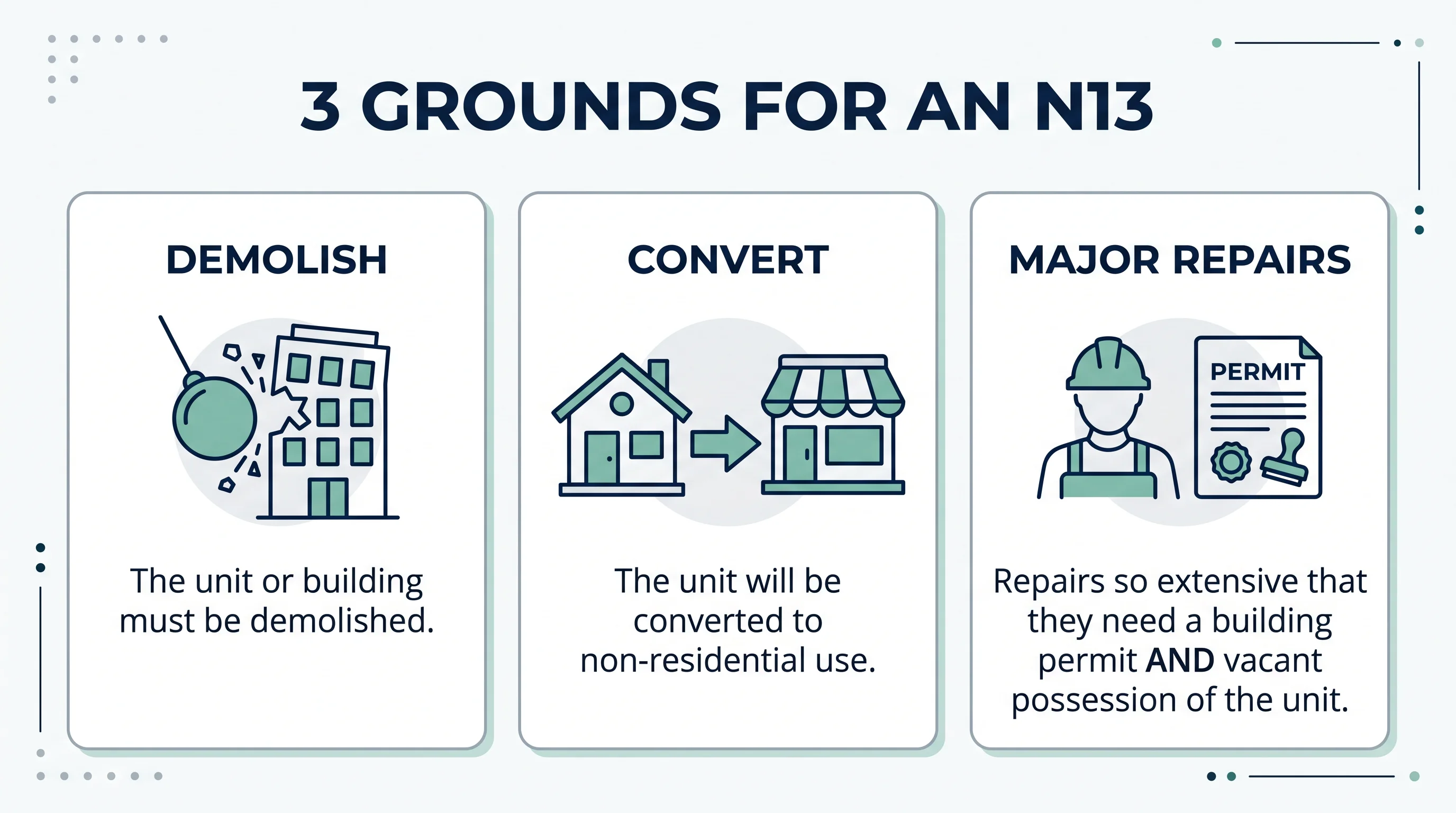
That third ground is where most disputes live, so it's worth being precise. It is not "any renovation." The work has to genuinely need a building permit and an empty unit. New flooring, a kitchen refresh, or painting you can do with the tenant in place doesn't qualify — that's the gatekeeper test, and it matters to both sides.
Here's the single most important point for any tenant: a notice is not an eviction. An N13 by itself doesn't end your tenancy. You only have to leave if the Landlord and Tenant Board (LTB) issues an eviction order after a hearing on the landlord's L2 application. The renoviction picture in Ontario has put real pressure on this — Hamilton alone reportedly saw N13 notices rise 983% between 2017 and 2022 — which is exactly why the form's rules are worth understanding before anyone acts.
Notice Period and Compensation: The Numbers That Vary
The notice period is fixed: at least 120 days, and the termination date has to fall on the last day of a rental period or fixed term. If rent is due on the first of the month, the termination date lands at a month-end. A tenant who'd rather leave sooner can end the tenancy early by giving 10 days' written notice on an N9 notice Ontario.
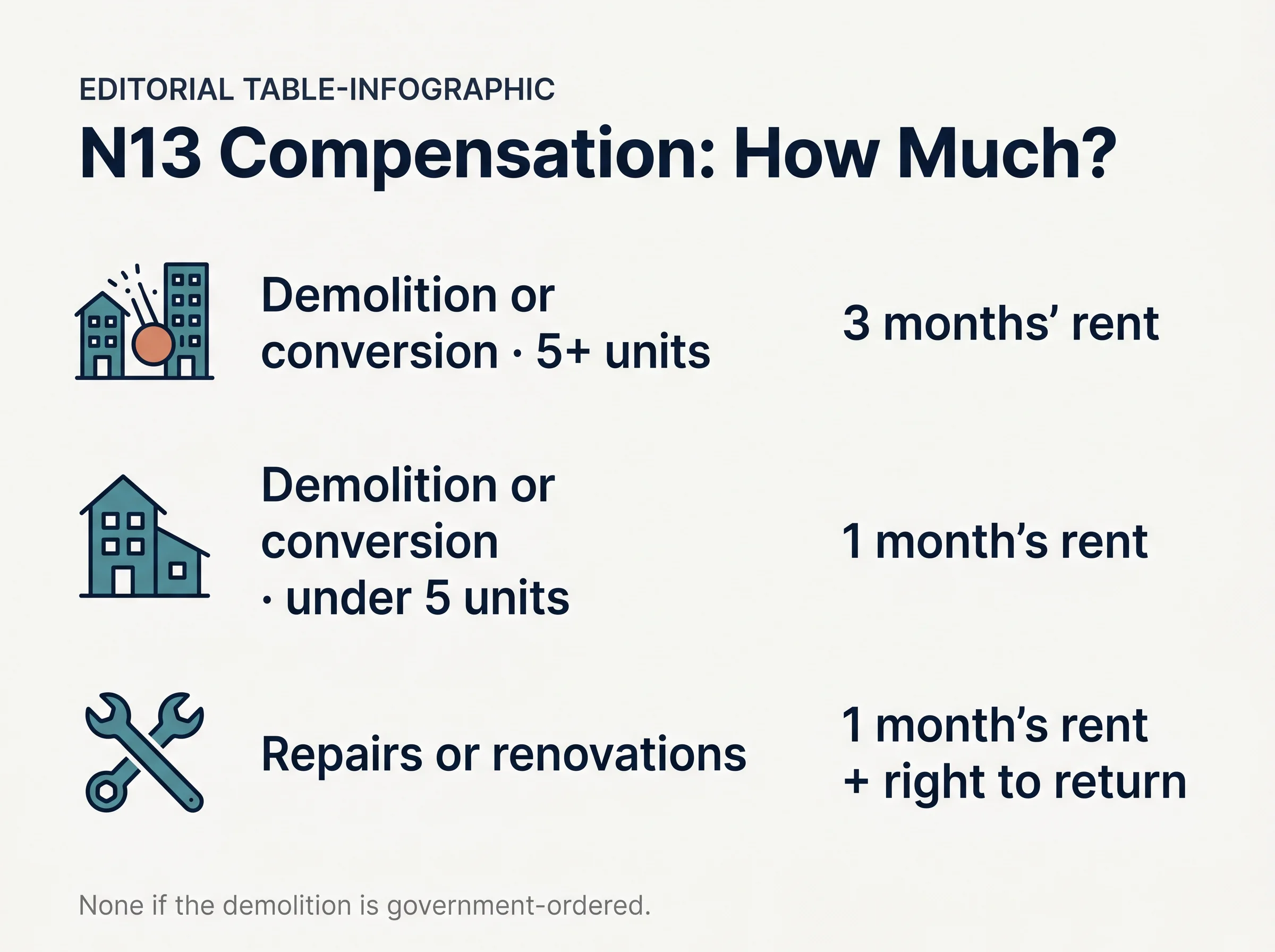
Compensation is where most guides go vague — and where the N13 is more precise than people expect. The amount depends on the reason and the size of the building:
- Demolition or conversion, building with five or more units: three months' rent (or another acceptable unit).
- Demolition or conversion, building with fewer than five units: one month's rent (or another acceptable unit).
- Repairs or renovations: one month's rent (or another acceptable unit), plus the right to return covered in the next section.
- None if the demolition was ordered under another Act — for example, a government order.
(Mobile-home and land-lease sites have their own rule: a minimum of one year's notice plus compensation equal to one year's rent or $3,000, whichever is less.) To put real numbers on it, a published LTB case involved the demolition of a five-plus-unit complex where the tenant paid $610 a month — the compensation owed was three months', or $1,830.
N13 vs N12, and the Right to Return
The confusion worth clearing up once and for all: the N13 versus the N12. The simplest way to remember it is that an N13 is about the property, and an N12 is about a person. An N13 means the landlord needs the unit vacant to demolish, convert, or extensively repair it. An n12 notice ontario means the landlord needs the unit for a person to move in — themselves, a purchaser, or a family member ("own use"). They carry different notice periods (the N13's is 120 days; the N12's own-use notice is shorter), but both are "no-fault" notices, both demand good faith, and both can trigger a T5 bad-faith application.
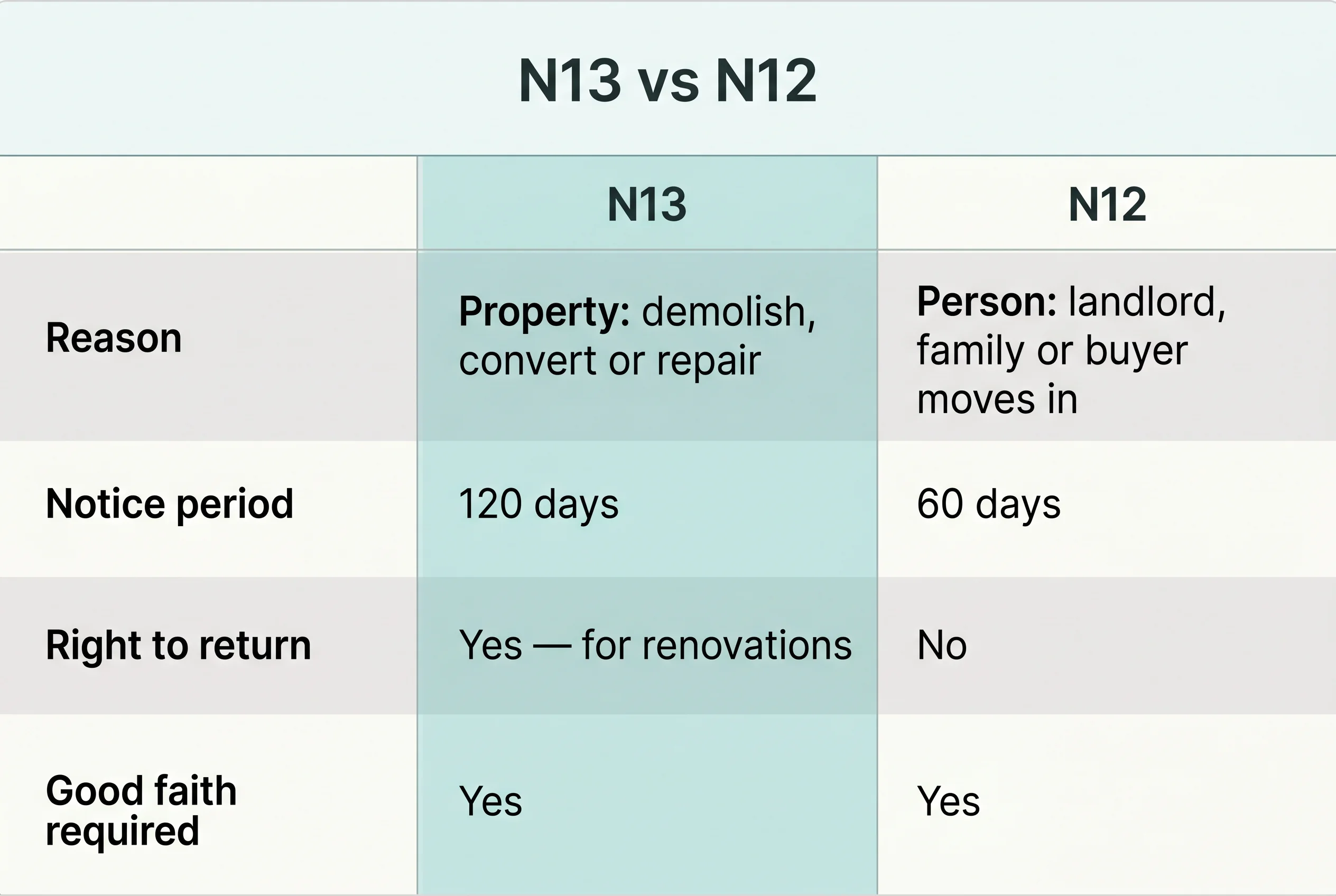
The other big protection is the right of first refusal under RTA section 53 — and it has a crucial limit. It applies to repairs and renovations only. A tenant who receives a renovation N13 can move back in at their original rent once the work is done — but only if they gave the landlord written notice of their intent to return before vacating, and kept their address updated in writing. It does not apply to demolition or conversion, because there's no unit to return to.
So the two paths look quite different: a renovation N13 means one month's compensation plus the chance to come back at your old rent, while a demolition N13 means larger compensation but no return. One 2026 wrinkle, just so it isn't conflated: under a Bill 60 change in force since September 21, 2026, an N12 served on or after that date for the landlord's own use, with at least 120 days' notice, owes no compensation (a purchaser's N12 still does). That's the N12 path — the N13 compensation rules above are unchanged.
Serving or Responding to an N13 (and the 2026 Rules)
For landlords and property managers, getting it right is mostly about discipline. Use the current form unaltered — there's a well-known LTB case where a landlord edited the N13 to claim no permit was needed, and the Board found the notice invalid because the repair ground requires work needing a permit and vacant possession. State the ground clearly, set a valid 120-day termination date, and pay the correct compensation before that date. Secure your building permits (or take all reasonable steps toward them), and in licensed cities get the municipal renovation licence. Disclose any N12 or N13 notices you've given other tenants in the past two years, and if the tenant doesn't leave, file the L2 no later than 30 days after the termination date — miss that window and the application is dismissed.
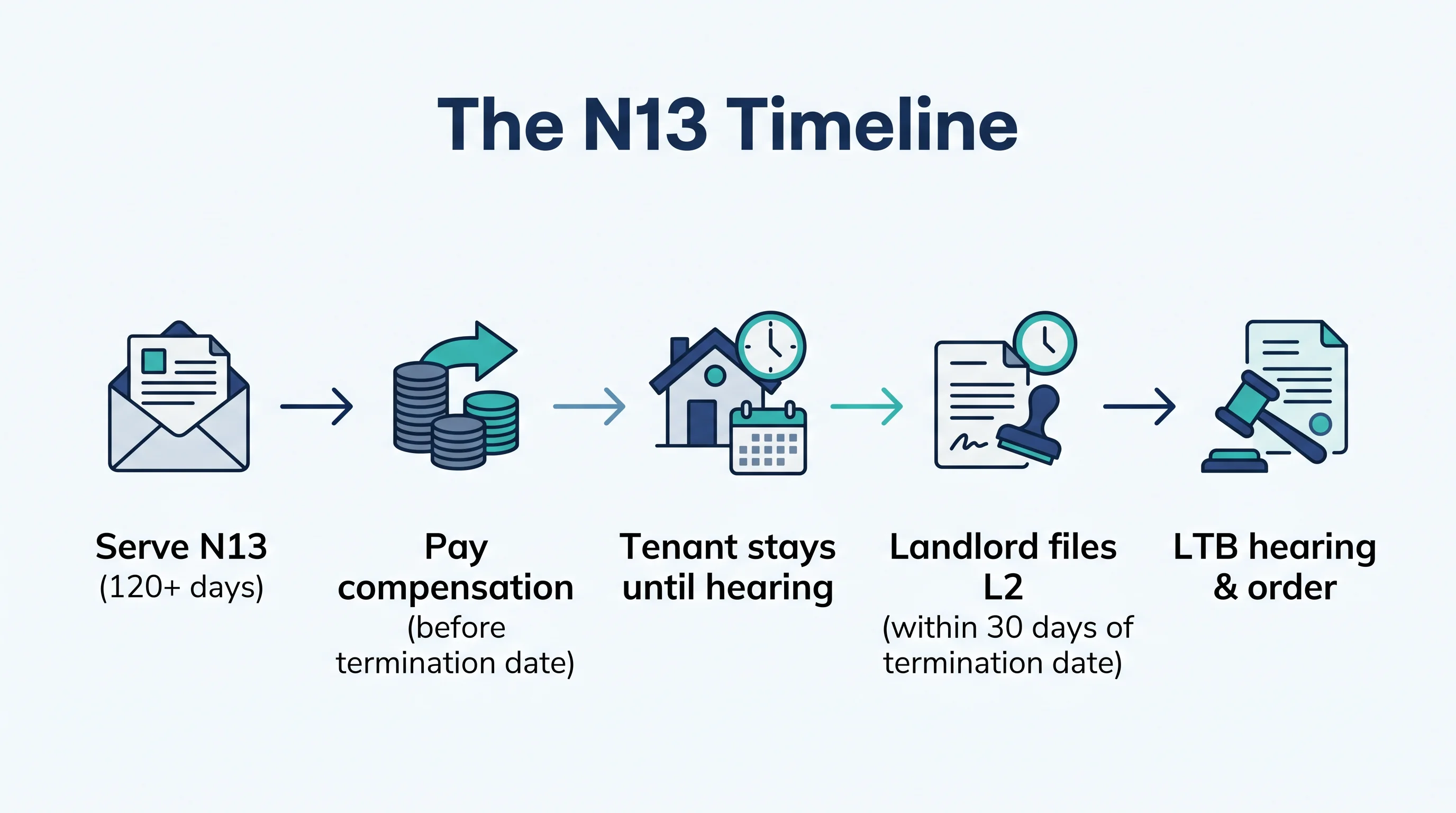
For tenants, the response is the mirror image. Don't move out on the notice date. Check the form: the right ground, 120-plus days, a period-end termination date, and compensation stated. Verify the building permit and, in licensed cities, look up the public licence registry. If it's a renovation and you want to come back, give written notice of your intent to return. And attend the hearing — that's where you can dispute whether the work really needs the unit empty, or raise bad faith. The LTB weighs genuine intent, permits, and prior notices; contested no-fault applications are currently scheduled roughly five to seven months out, so there's usually time to prepare. If the notice looks defective or in bad faith, a T5 and a call to a community legal clinic are your tools.
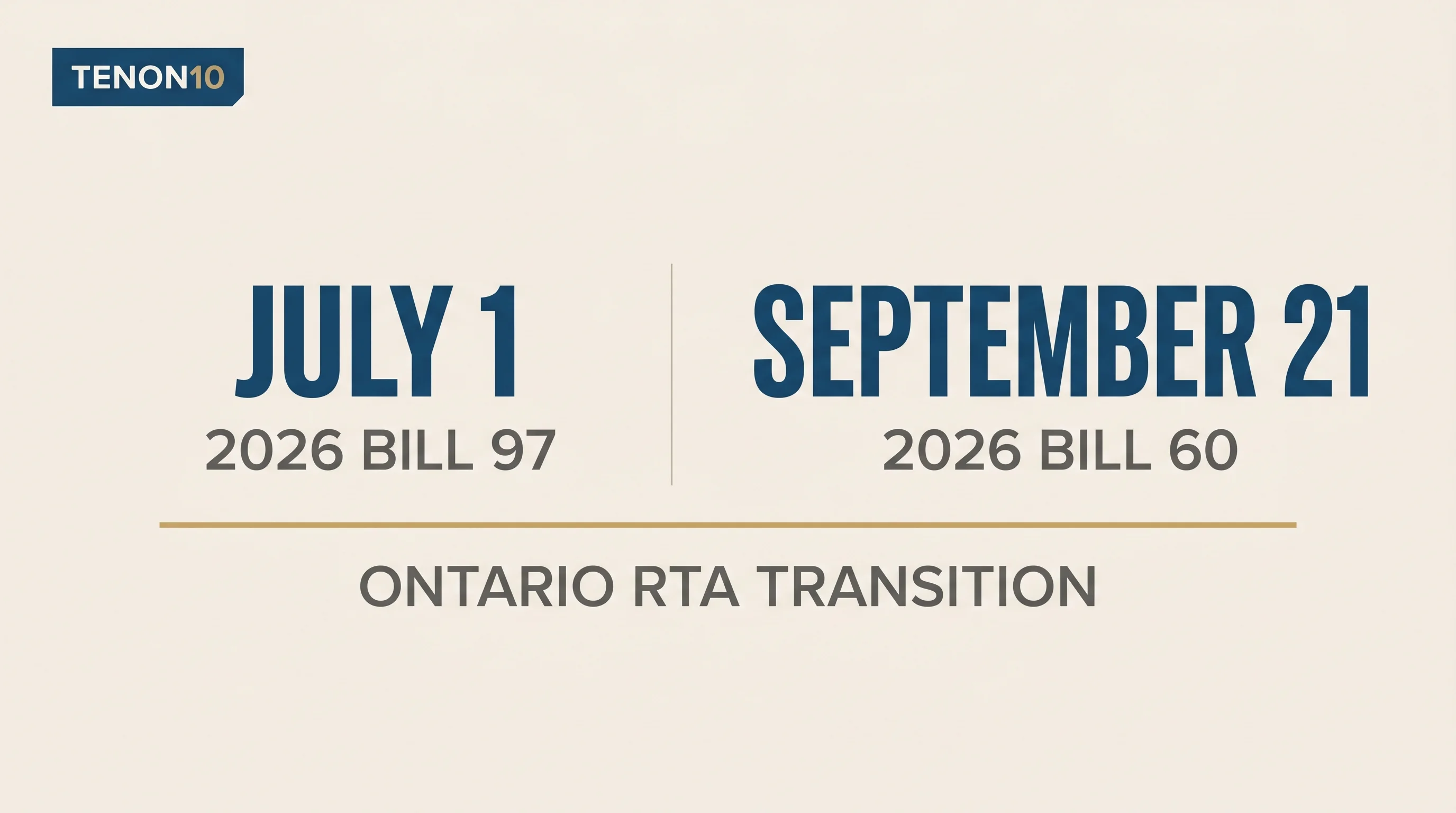
The 2026 rulebook sits in two layers. Provincially, Bill 97's "qualified person report" requirement is enacted but not yet in force province-wide, while Bill 60 adds more written-documentation discipline for N13 files — tracking completion dates, changes, and re-occupancy in writing. Municipally, renovation licences are already in force in Toronto, Hamilton, and London, and they're city-specific. Our guide to the ontario rental law changes 2026 covers both bills in detail.
Key Takeaways
The right move depends on which side of the N13 you're on.
If you're a landlord or property manager:
- Confirm your ground fits section 50 (demolish, convert, or repairs needing a permit and vacant possession).
- Use the current N13 unaltered, with a 120-day termination date on a period end.
- Pay the right compensation — three months (demolition/conversion, 5+ units) or one month (under five units, or repairs) — in cleared funds before the termination date.
- Secure permits; in Toronto, Hamilton, or London get the renovation licence; disclose prior N12/N13 notices.
- File the L2 within 30 days of the termination date, and keep a written timeline.
If you're a tenant:
- Don't move out on the notice date — you stay until an LTB order.
- Check the form: correct ground, 120-plus days, period-end date, compensation stated.
- Verify the permit and the public licence registry in licensed cities.
- For a renovation, give written notice of intent to return before leaving to keep your old rent.
- Attend the hearing; if it's defective or bad-faith, consider a T5 and call a legal clinic.
The quick win, on both sides, is to check the form's grounds, dates, and compensation today. The long game is clean documentation: permits and written timelines for landlords, and a saved copy of every notice and message for tenants. For the official details, see the LTB's N13 form, Interpretation Guideline 12, and the Renovictions pillar guide.
Got an N13? The Tenant's Action Checklist for Ontario
A free step-by-step checklist to read the notice, claim the exact compensation you're owed, and protect your right to return.
Get Free PDF →Conclusion
An N13 ends a tenancy only for genuine demolition, conversion, or permit-and-vacancy renovations — with at least 120 days' notice, compensation that varies by building size and reason (three months, one month, or none), and, for renovations, a right to return at the old rent. It isn't the same as an N12, and a notice is never an eviction on its own.
That cuts both ways, which is the point. Landlords who follow the grounds, timing, and compensation can move a real project forward with confidence. Tenants who know the rules can't be pushed out early or short-changed. Whichever side you're on, identify your ground or check your notice, confirm the dates and compensation, read the Renovictions pillar for the full picture, and get advice before acting.
Reminder: this is general information, not legal advice. For your situation, consult a licensed paralegal, lawyer, or community legal clinic.
N13 done right, on both sides
Tenon10 keeps your notice dates, permits, compensation records, and right-of-return correspondence straight — and points tenants to the right forms and guides.
Free to start • Built for Ontario landlords and tenants
Frequently Asked Questions
How much notice does an N13 require?
At least 120 days, and the termination date must fall on the last day of a rental period or fixed term. You can leave earlier with 10 days' written notice (an N9) if you choose.
How much compensation do I get with an N13?
For demolition or conversion, three months' rent in a building with five or more units, or one month's rent in a smaller building; for repairs or renovations, one month's rent. No compensation is owed if the demolition was government-ordered.
What's the difference between an N13 and an N12?
An N13 is for the property — demolition, conversion, or major repairs. An N12 is for a person — the landlord, a buyer, or a family member moving in. They have different notice periods and rules.
Do I have to move out on the date in the N13?
No. An N13 is a notice, not an eviction. You only have to leave if the Landlord and Tenant Board issues an order after a hearing, and you can challenge a defective or bad-faith notice.
Can I move back after an N13 renovation?
Yes — for repairs or renovations you have a right of first refusal to return at your original rent, but only if you give the landlord written notice of your intent to return before you move out. It doesn't apply to demolition or conversion.
Related Resources
- N13 — Notice to End your Tenancy for Demolition, Repairs or Conversion
- Ontario Renovictions: A Complete Guide for Landlords and Tenants
- Ontario N12 Notices: A Complete Guide to Own-Use Tenancy Endings
- T5 — Landlord Gave a Notice of Termination in Bad Faith
- Ontario Rental Law Changes 2026: Bill 60 and Bill 97