A rent increase during a fixed-term lease in Saskatchewan is allowed only if the landlord and tenant agreed, when the lease was signed, on both the amount and the date it takes effect (RTA s.53.1(1)). With no such term, the rent stays the same until the fixed term ends.
This FAQ is for renters on a fixed-term lease and is based on the official consolidation of The Residential Tenancies Act, 2006 (RTA). More renter topics are in the Saskatchewan tenant resource center.
Saskatchewan Fixed-Term Rent Increase: Renter Checklist
A one-page checklist for Saskatchewan renters on a fixed-term lease: whether a mid-term rent increase is allowed, amendments, the end of the term and the ORT.
Get Free PDF →What does the Saskatchewan RTA say about fixed-term rent increases?
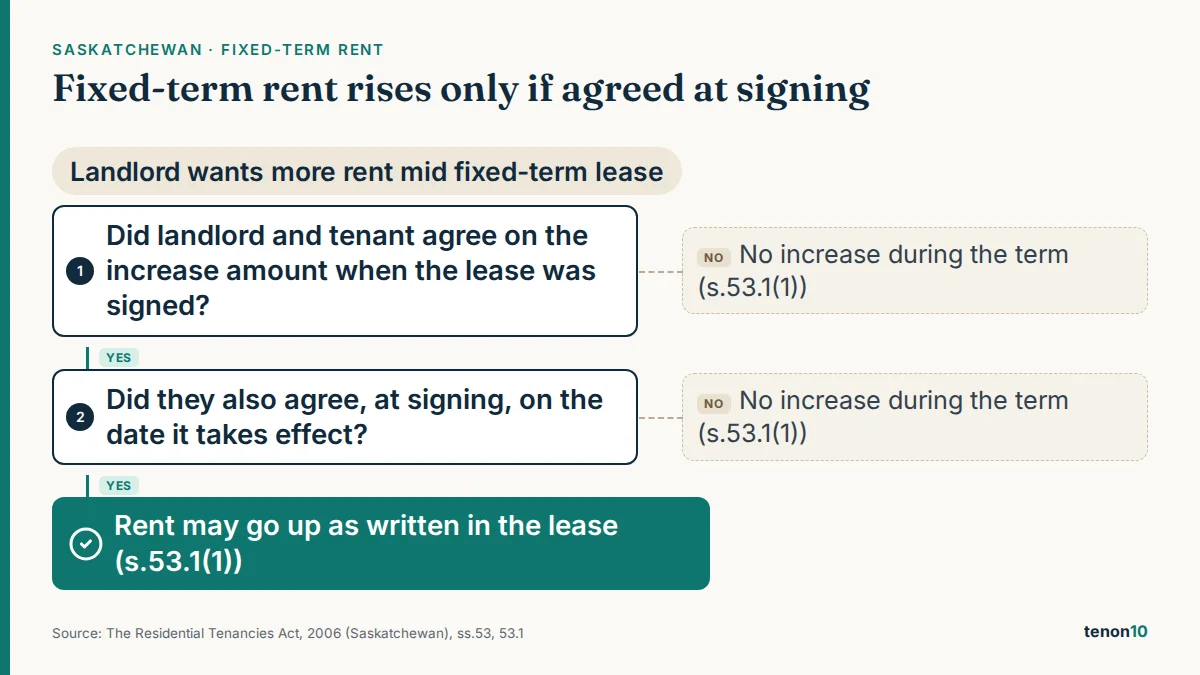
Saskatchewan's RTA s.53 says a landlord must not increase rent except in accordance with Part IV. Section 53.1(1) then says a landlord under a fixed-term tenancy must not increase the rent unless the amount of the increase and the time it comes into effect were agreed between the landlord and the tenant at the time the fixed-term tenancy was entered into. Under s.53.1(2), the agreed amount can be a dollar figure or a percentage.
| Situation | Can rent go up during the term? | Section |
|---|---|---|
| Lease states the increase amount and date | Yes, as written | s.53.1(1) |
| Lease is silent on increases | No | s.53.1(1) |
| Landlord asks for more mid-term | No, unless the agreed term exists | s.53, s.53.1 |
Can a Saskatchewan landlord add an increase by amending the lease mid-term?
Saskatchewan's RTA s.22(2) lets the parties amend a term only if both agree, and it is made subject to s.53.1. The 12-month notice route in s.54 is for periodic tenancies. The general notice and timing rules are in Saskatchewan rent increase rules.
What happens to the rent when a Saskatchewan fixed term ends?
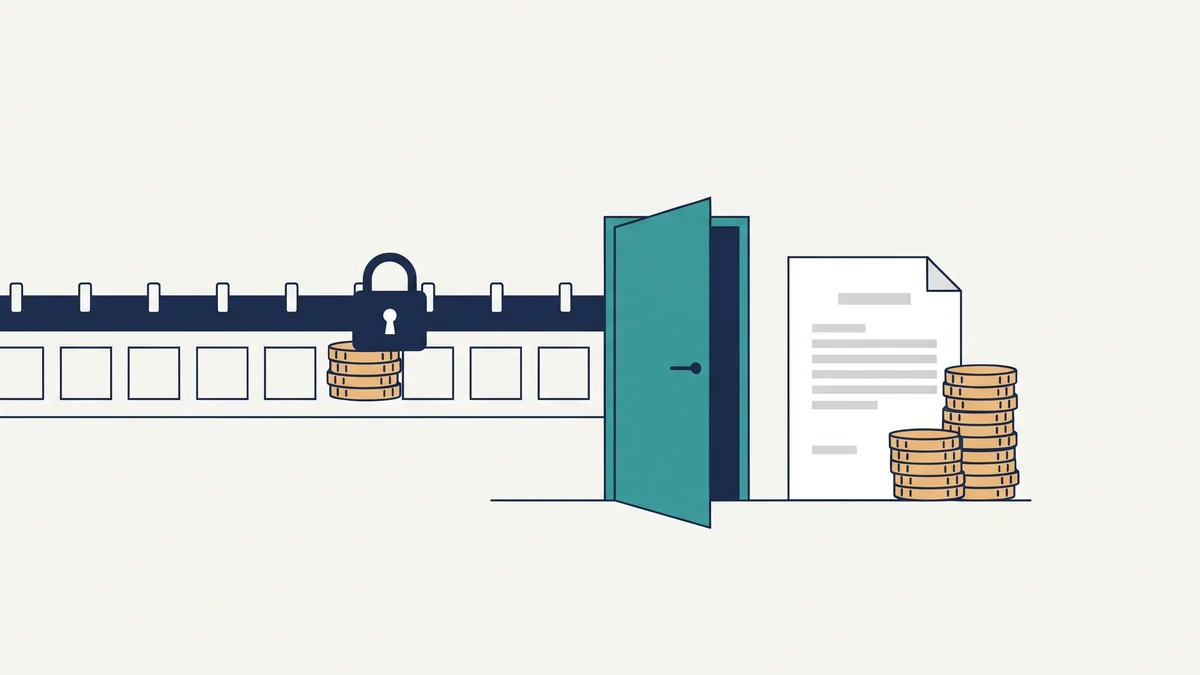
Under Saskatchewan's RTA s.55(2), subject to the regulations, a fixed-term tenancy ends on the date the agreement specifies unless the landlord and tenant have entered into a new tenancy agreement. A new agreement can set a new rent. How the end of a term is handled is explained in the Two Month Notice of Intention (Form 15).
Frequently asked questions
Is a charge for an extra occupant a rent increase?
Not if the lease already sets the amount by which rent varies with the number of occupants. Section 52 excludes that from the meaning of "rent increase" in Part IV.
My lease says rent "may be reviewed" during the term. Is that enough?
Section 53.1(1) needs the amount of the increase and the time it takes effect to have been agreed when the lease was entered into. A clause that names neither does not meet that test.
What can I do if my landlord raises rent mid-term anyway?
Apply to the Office of Residential Tenancies (s.70(1)). A hearing officer can make an order determining the validity of a notice of rent increase under s.53.1 or s.54 (s.70(6)(f)) and can order the payment of damages (s.70(6)(c)).
Is Alberta the same?
No. Alberta has its own rule, covered in raising rent during a fixed-term lease in Alberta.
Saskatchewan Fixed-Term Rent Increase: Renter Checklist
A one-page checklist for Saskatchewan renters on a fixed-term lease: whether a mid-term rent increase is allowed, amendments, the end of the term and the ORT.
Get Free PDF →Key takeaways
- A mid-term increase needs an amount and a date agreed at signing (s.53.1).
- Without that term, the rent is fixed for the whole term.
- Disputes about a rent increase notice go to the ORT (s.70(6)(f)).
Additional resources
- The Residential Tenancies Act, 2006, sections 22, 52 to 55 and 70
- Canadian tenant resource center
Got a rent increase notice?
Free forms and notices for Saskatchewan renters.
Free • No signup required