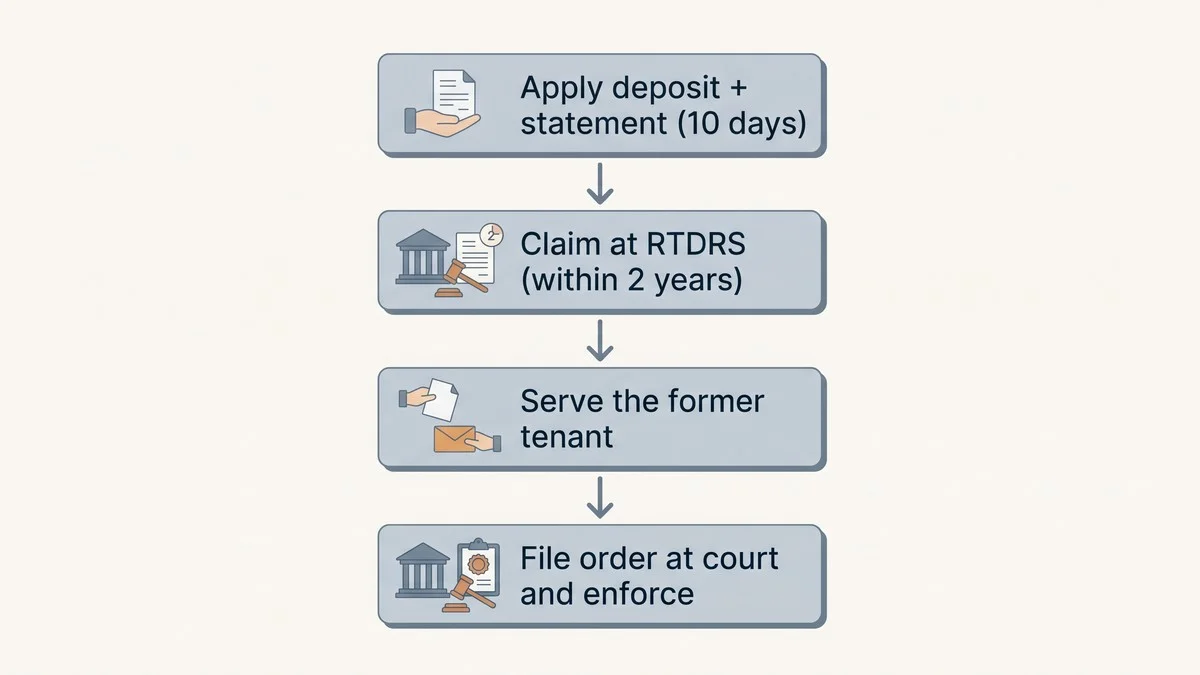
To collect unpaid rent after a tenant leaves in Alberta, first apply the security deposit as the lease allows and send the statement of account within 10 days, then claim the rest at the Residential Tenancy Dispute Resolution Service (RTDRS), which accepts claims within 2 years of discovery, or in court. A filed RTDRS order is enforced like a court judgment.
The order of steps matters because the deposit deadline runs from move-out, while the RTDRS deadline runs from discovery of the claim. If the tenant is still in the unit, the route is different: see Alberta's 14-day notice for unpaid rent.
Step 1: What exactly does the former tenant owe?
An Alberta landlord can claim arrears of rent and damages resulting from a breach of the tenancy agreement (RTA s.26(1)(a), (d)). Write the amount out month by month: the rent that fell due, what was paid, and the balance. If the tenant moved out early without a proper notice, the Act treats that as repudiation, and the landlord's claim for lost rent is limited by the duty to make reasonable efforts to re-rent (s.27(4), (5)).
| Claim | What to show | Source |
|---|---|---|
| Unpaid rent | Lease, rent ledger, receipts | RTA s.26(1)(a) |
| Unpaid utilities the tenant owes under the lease | Lease term, bills | RTDRS how to apply |
| Rent lost after an early move-out | Advertising and showing records, the new tenant's start date | RTA s.27(3)-(6) |
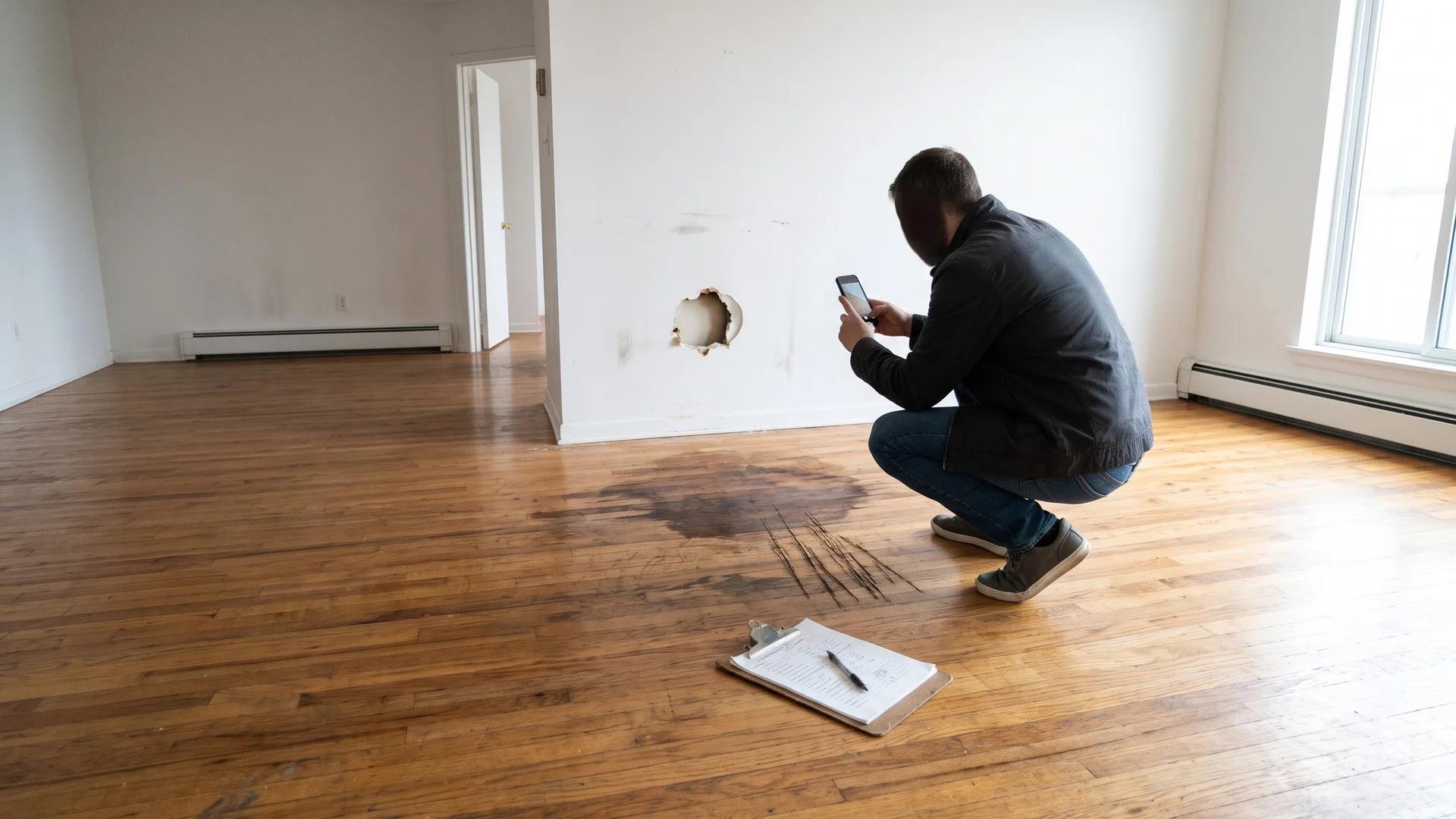
| Damage beyond normal wear and tear | Move-in and move-out inspection reports, photos, invoices | RTA s.19, s.46(5) |
Step 2: How do you apply the security deposit?

Within 10 days after the tenant gives up possession, an Alberta landlord must return the deposit, or return the balance with a statement of account showing what was used; if the exact amount is not yet known, the landlord sends an estimated statement and settles the final one within 30 days (RTA s.46(2)). Deductions must follow the conditions the tenant agreed to. The province adds that damage and cleaning cannot be deducted unless the inspection report rules were met, though those costs can still be claimed separately (alberta.ca, Ending a tenancy).
The 10-day statement is also your first written demand. More detail is in security deposit deductions in Alberta.
Step 3: RTDRS or court?

Most claims for unpaid rent after move-out fit the RTDRS: landlords can apply for unpaid rent and utilities and for damages, claims are capped at $100,000, and the application must be made within 2 years of when the claim is discovered (RTDRS, how to apply). The filing fee is $75 for claims of $7,500 or less and $150 above that, and a fee waiver form exists for financial hardship. You may not bring the same matter in a civil claims court as well. RTDRS or court compares the two.
Step 4: How do you serve a tenant who has moved out?
For an RTDRS application, a landlord may serve the package personally at any location, by email if the two of you have previously communicated or agreed to communicate by email and you can prove delivery, or by registered mail to the rental premises address (RTDRS). Once the tenant has left, the rental address may not reach them, so personal service at a new address or email with a reply or read receipt is often the practical route. The package must be served at least 3 clear days before the hearing, and the Tenancy Dispute Officer decides whether service was proper.
Step 5: What evidence should you bring to the hearing?
The RTDRS expects the applicant to prove the claim to the Tenancy Dispute Officer. Bring the lease, the rent ledger, any notices served, the inspection reports, the deposit statement of account, and messages in which the tenant acknowledges the debt. See RTDRS explained for how hearings run.
Step 6: How do you collect once you have an order?
An RTDRS order must be filed at the Court of King's Bench to be enforced as a judgment of that court, either by the RTDRS or by the applicant, and the applicant then serves a filed copy on the respondent (RTDRS hearings and orders). If the former tenant still does not pay, the RTDRS points landlords to Alberta Courts' guidance on getting and enforcing a judgment and to a civil enforcement agency.
Frequently asked questions
How long does an Alberta landlord have to claim unpaid rent at the RTDRS?
The RTDRS accepts applications made within 2 years of the date a potential claim is discovered.
Can I keep the whole deposit for unpaid rent?
You can deduct in line with the conditions the tenant agreed to, but you must still deliver a statement of account within 10 days of the tenant giving up possession (RTA s.46(2)).
Does a tenant who left without notice owe rent to the end of the lease?
Not automatically. The landlord can recover damages for the lost benefit of the tenancy, but must make reasonable efforts to re-rent, and a new tenancy ends the old one when it starts (RTA s.27(4)-(6)).
What does it cost to file?
$75 for a claim of $7,500 or less and $150 for a claim over $7,500, per the RTDRS. Fees are not refunded if you withdraw.
Can I add late fees to the claim?
Only what the agreement and the law allow; see late rent fees and NSF charges in Alberta.
Your move-out report is your evidence
Fill out an Alberta move-in or move-out inspection report online and download the PDF.
Free • No signup required