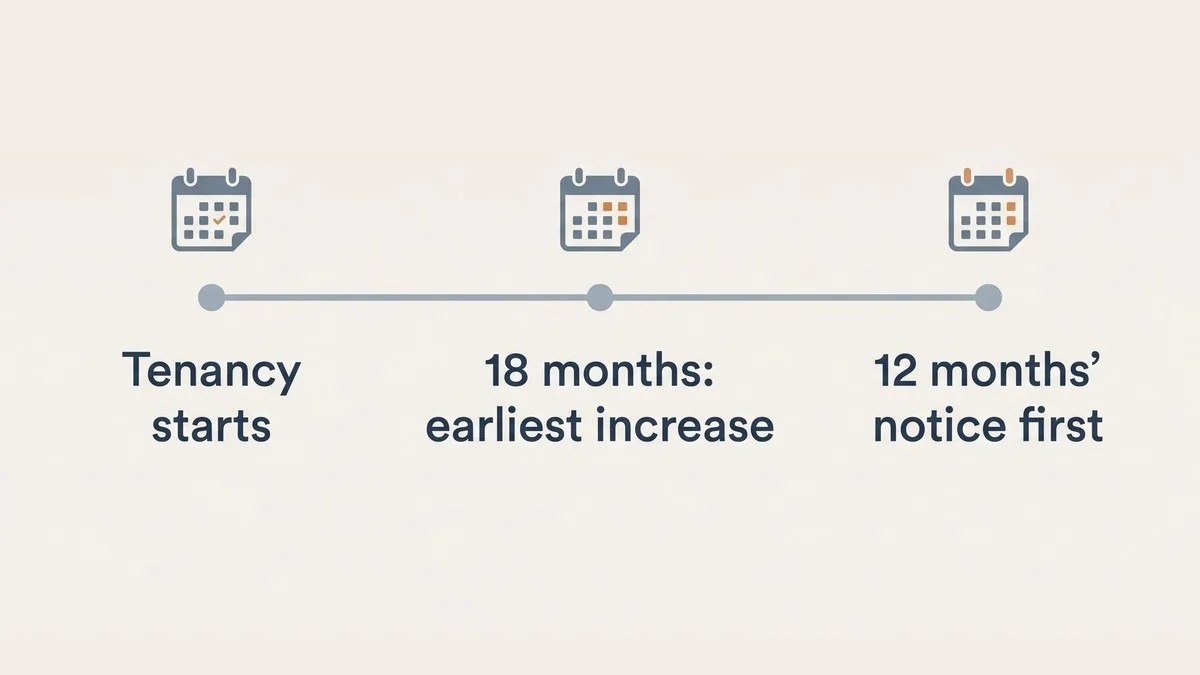
The Saskatchewan rent increase form for a month-to-month or other periodic tenancy is the Office of Residential Tenancies (ORT) Notice of Rent Increase, formerly Form 5. You can fill in the Notice of Rent Increase online. It must be given at least 12 months before the new rent starts, and the new rent cannot start until 18 months after the tenancy began and 12 months after the last increase (The Residential Tenancies Act, 2006, s.54).
At a glance: the Saskatchewan Notice of Rent Increase
- Who uses it: landlords in a periodic tenancy (s.54).
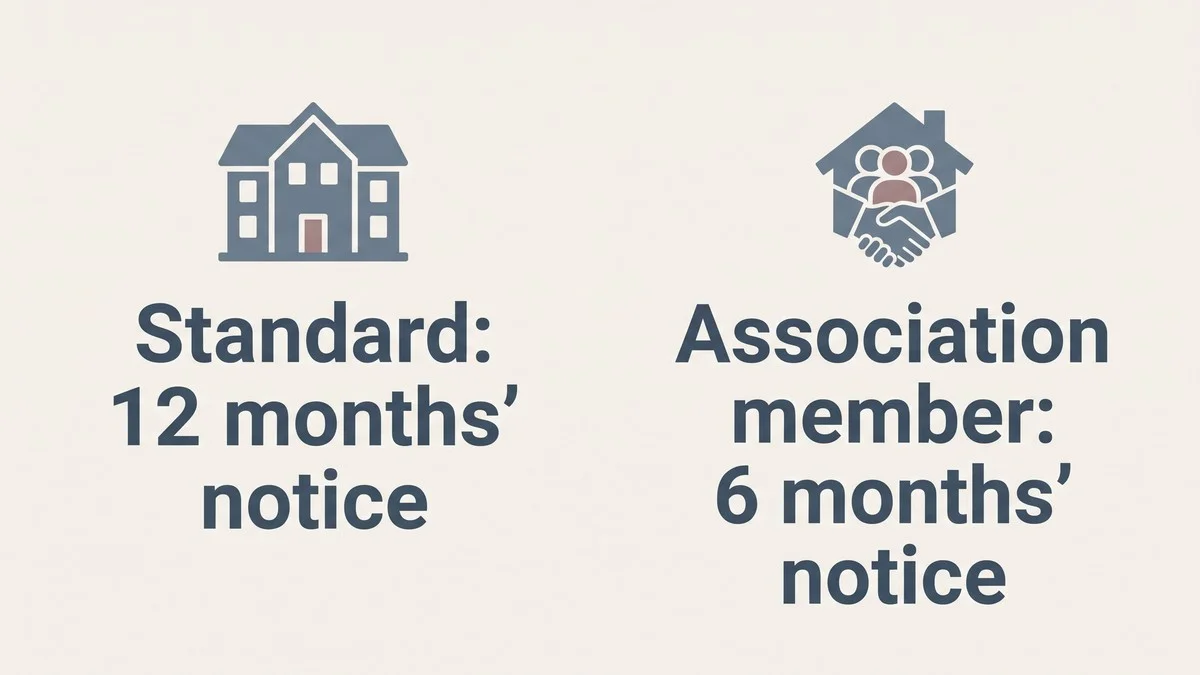
- Notice: at least 12 months before the effective date, or 6 months for members in good standing of a prescribed landlord association (s.54(1)).
- Earliest effective date: the later of 18 months after the tenancy started and 12 months after the previous increase (s.54(2)(a)).
- Amount: the Act sets no percentage cap.
- A wrong date: the notice takes effect on the earliest date that complies (s.54(4)).
What do you need before filling in the Saskatchewan rent increase form?
Before you start the Notice of Rent Increase, gather the facts that decide whether your date is valid. In Saskatchewan the timing rules, not the amount, are where most notices go wrong.
- The full legal names of every tenant and the address of the rental unit.
- The date the tenancy started (the date fixed for the start of the term).
- The date of the last rent increase, if there was one.
- The current rent and the new rent for the same rental period.
- Whether you are a member in good standing of the Saskatchewan Landlord Association Inc. or the Network of Non-Profit Housing Providers of Saskatchewan Incorporated, the two prescribed associations (Regulations s.8.1(1)).
The form is for periodic tenancies only. In a fixed-term lease, rent can rise during the term only if the amount and timing were agreed when the lease was signed (s.53.1), and renewal terms go on the Term Lease – Two Month Notice of Intention.
How do you work out the effective date?

In Saskatchewan the effective date must pass two tests: it must be at least 12 months after the tenant receives the notice, and it must be no earlier than the later of 18 months after the tenancy began and 12 months after the previous increase (s.54(1)(a), (2)(a)).
| Situation | Standard landlord | Prescribed association member |
|---|---|---|
| Notice period | 12 months | 6 months |
| No increase until | 18 months after the tenancy starts | 12 months after the tenancy starts |
| Gap after the last increase | 12 months | 6 months |
| Online form | Notice of Rent Increase (old Form 5) | Notice of Rent Increase for Prescribed Landlord Association Members (old Form 5a) |
Worked example: a month-to-month tenancy started on March 1, 2025, with no increase since. The 18-month point is September 1, 2026. A notice served in person on November 10, 2026 cannot take effect before November 10, 2027, so the landlord might choose December 1, 2027 to line the new rent up with a rental month. The full rules, with more examples, are in our guide to Saskatchewan's 12-month notice and 18-month wait.
How do you fill in and serve the notice?
- Name the parties and the unit. Use every tenant's legal name and the full rental address.
- State the current rent and the new rent. Use the same period for both, for example per month.
- Enter the effective date you worked out above, with a margin for service.
- Date and sign it, and keep a copy exactly as served.
- Serve it on a current tenant in person, or by posting it on the front door of the unit and also sending it by ordinary mail or electronically (s.82(2)(a)).
What if the notice has a mistake?
A Saskatchewan rent increase notice with a date that is too early is not void: it takes effect on the earliest date that does comply with s.54 (s.54(4)). If a landlord actually collects increased rent too early, a hearing officer can make any just and equitable order and award the tenant compensation (s.54(5)), and either side can ask the ORT to decide whether a notice is valid (s.70(6)(f)).
A charge for something that used to be free, such as parking, is not done with this form; it needs the tenant's agreement or an ORT order (s.43(2)). Tenants checking a notice they received can start with whether Saskatchewan has rent control.
Frequently asked questions
Is there a maximum rent increase in Saskatchewan?
No. The Residential Tenancies Act, 2006 limits how often and with how much notice rent can rise, not by how much. A tenant who does not accept the new rent can give notice to end a periodic tenancy.
Can I raise the rent more than once a year?
A standard landlord cannot: increases must be at least 12 months apart (s.54(2)(a)(ii)). A member in good standing of a prescribed association may raise it every six months with six months' notice (s.54(1)(b), (2)(b)).
What happens if my association membership lapses after I serve the six-month notice?
The 12-month rules then apply, the notice takes effect 12 months after its date, and you must tell the tenant the new effective date in writing (Regulations s.8.1(2)).
Does adding a roommate count as a rent increase?
Not if the lease already sets out how rent varies with the number of occupants; that increase is excluded from the rent increase rules (s.52, s.19(1)(g)(iv)).
The Notice of Rent Increase works when the date is right and the service is provable. For the wider picture, see the Saskatchewan landlord guide and the Canadian Landlord Resource Center.
Prepare your Notice of Rent Increase
Fill out the Saskatchewan Notice of Rent Increase online and download the PDF.
Free • No signup required