A Canadian resident must file Form T1135, the Foreign Income Verification Statement, for a US rental property when the total cost of all their specified foreign property was more than C$100,000 at any time in the year; a rental counts, a property used primarily for personal use does not, and the form is due with your income tax return.
This how-to follows the CRA's questions and answers about Form T1135 and the form's own instructions (T1135 E (23)). T1135 is information reporting only; the rent itself is taxed on your T776, as the series pillar, Canadians Who Own a US Rental: The Complete Tax Guide, explains.
Does a US rental property count for T1135?
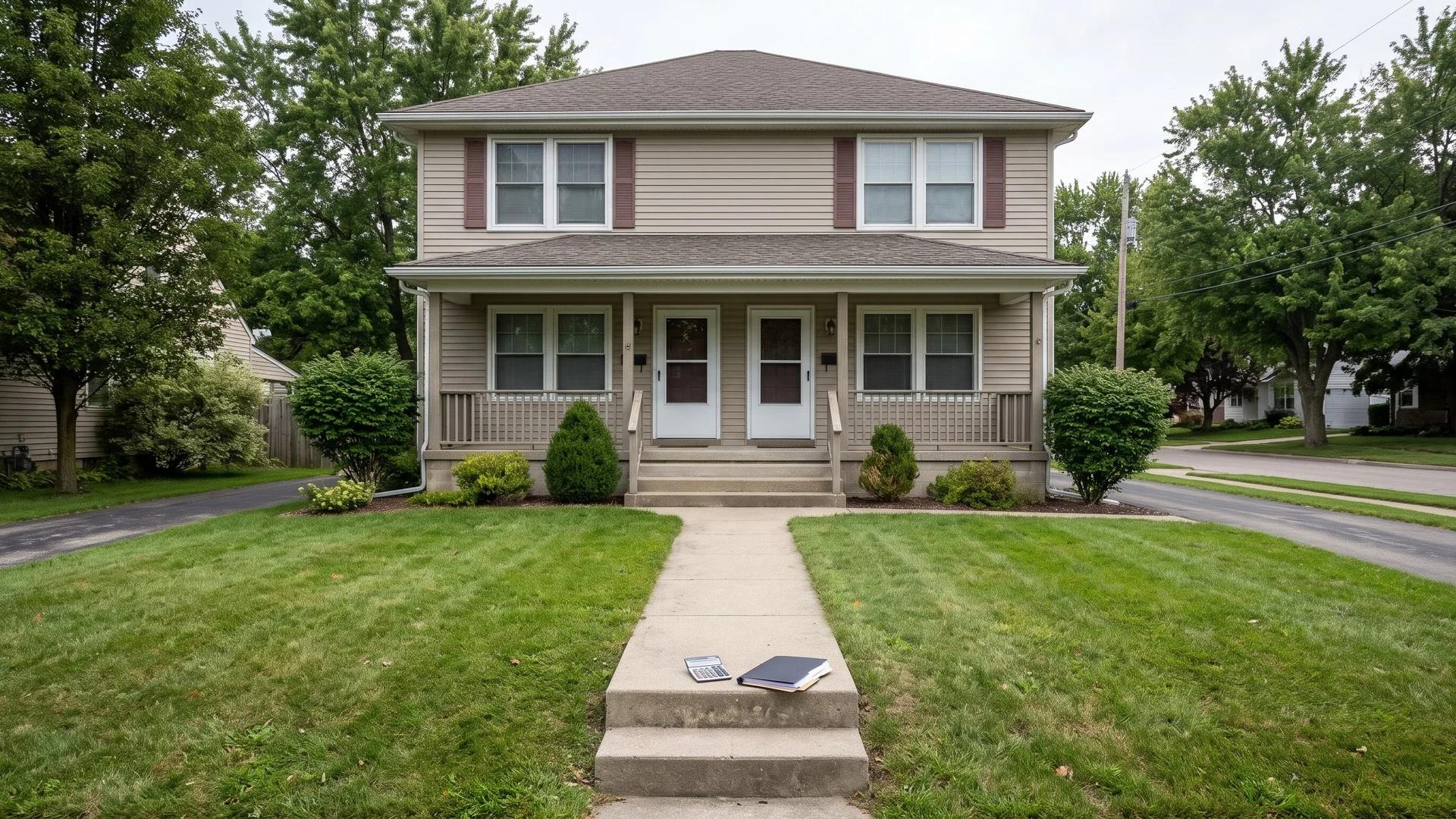
Yes, unless it is used primarily for personal use. The form's instructions say to report "all real property located outside of Canada other than real property used in an active business or used primarily for personal use", and that "Rental property outside Canada should be included in this category." The CRA treats "primarily" as more than 50% personal use, and its example is a condo rented for eight months with a reasonable expectation of profit and used personally for four: it must be reported. A property rented with no profit motive, only to recover costs, is treated as personal-use.
How is the C$100,000 test measured?
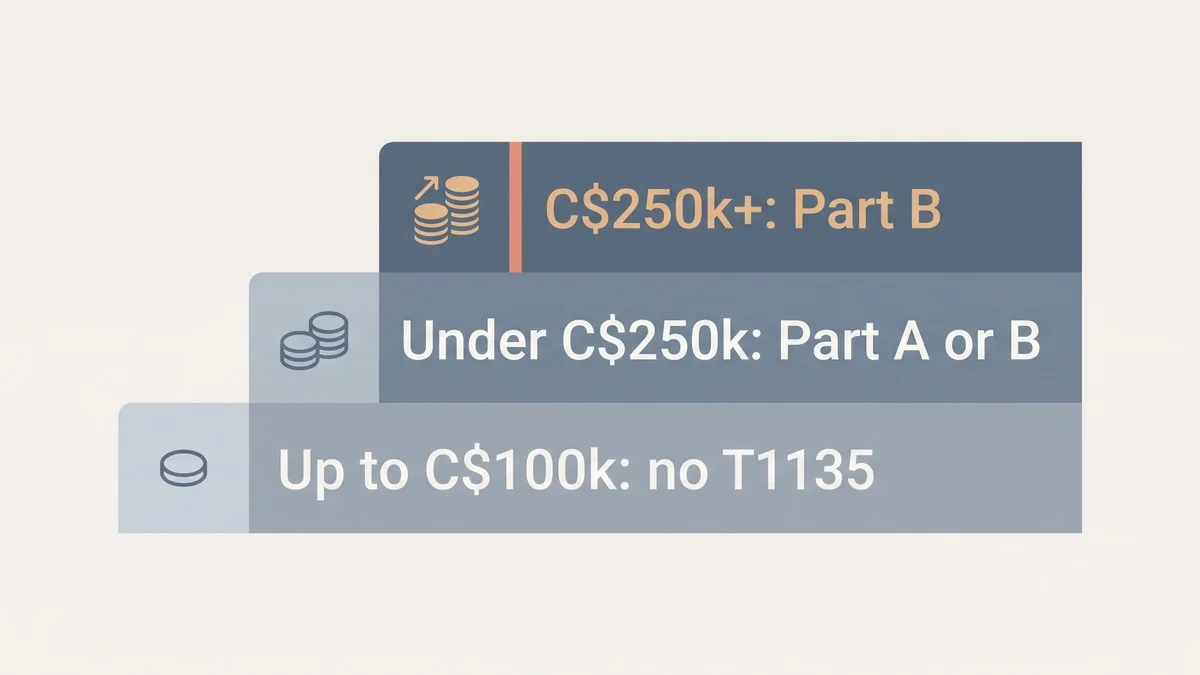
On cost, not market value, and across all your specified foreign property combined. The CRA says cost amount generally means adjusted cost base, and the test is whether the total "exceeds $100,000 at any time during the year". A US brokerage account or US bank funds count toward the same total, each in its own category.
| Total cost of specified foreign property at any time in the year | What to file |
|---|---|
| C$100,000 or less | No T1135 |
| Over C$100,000 but under C$250,000 throughout the year | Part A (simplified) or Part B |
| C$250,000 or more at any time | Part B (detailed) |
What do you need before filling in T1135?
- The property's cost in US dollars and the date you bought it.
- The exchange rate for that date. The instructions say to use "the exchange rate in effect at the time of the transaction (i.e. the time the income was received or the property was purchased)", and that an average rate for the year is acceptable for income received throughout the year.
- Gross rent for the year, and any gain or loss if you sold.
How do you report a US rental on T1135, step by step?
- Add up the cost of all your specified foreign property in Canadian dollars to see which part applies.
- Part A: tick "Real property outside Canada (other than personal use and real estate used in an active business)" and enter the country codes for your top three countries by maximum cost.
- Part B, category 5: for each property, enter the description, the country code (the country where the property is located), the maximum cost amount during the year, the cost amount at year end, gross income, and gain (loss) on disposition. Enter "0" in a nil field rather than leaving it blank, and round to the nearest dollar.
- File it with your return, by the same due date. The CRA says individuals can file T1135 electronically, through EFILE or NETFILE, for 2017 and later years.
Worked example (illustrative figures only)
A Canadian bought a US condo for US$250,000 on a day the Bank of Canada rate was, say, 1.30: cost C$325,000. It is rented all year for US$24,000, converted at the 2025 annual average of 1.3978 from the Bank of Canada: C$33,547.
| Category 5 column | Entry |
|---|---|
| Country code | USA |
| Maximum cost amount during the year | 325,000 |
| Cost amount at year end | 325,000 |
| Gross income | 33,547 |
| Gain (loss) on disposition | 0 |
The cost is C$250,000 or more, so Part B is required.
What happens if you file T1135 late?
The CRA's table of penalties for information returns sets C$25 a day for up to 100 days, with a minimum of C$100 and a maximum of C$2,500, and larger penalties for knowingly failing to file or gross negligence. The CRA also says the period to reassess your return is extended by three years when T1135 is late or wrong or income from specified foreign property is unreported. Relief can be requested on Form RC4288.
What are the common T1135 mistakes?
- Using market value instead of cost.
- Converting cost at today's rate instead of the purchase-date rate.
- Assuming a snowbird condo is exempt when it is rented more than it is used.
- Thinking T1135 replaces the T776. The $100,000 threshold does not change whether the rent is taxable; it goes on your T776 either way.
- Missing it in the year you sell. The property was held during the year, so the maximum cost still counts.
Our year-end tax checklist and CRA audit guide help keep the records together.
Frequently asked questions
Do I file T1135 in my first year as a Canadian resident?
No. The form's instructions say an individual does not have to file for the year in which they first become a resident of Canada.
When is T1135 due?
On or before the due date of your income tax return, even if no return is otherwise required, per the CRA.
Is a US vacation home I never rent reportable?
A property used primarily for personal use is not specified foreign property, so it is left out of the total.
Which country code do I use?
For real property, the instructions say to use the country where the property is located.
Stay on top of your rental filings
Free tax guides and checklists for Canadian landlords
Free • No signup required