In an Alberta rental, the lease decides who pays utilities: the tenant directly to a retailer, the tenant to the landlord, or the landlord alone. Once utilities are included in the rent, the landlord cannot start charging for them mid-tenancy without the tenant's agreement, and the owner must keep electricity, water and heat supplied unless the lease makes them the tenant's sole responsibility.
Alberta's Residential Tenancies Act does not set out who pays utilities, so the answers come from the lease, the province's tenancy guidance, the Minimum Housing and Health Standards and the Utilities Consumer Advocate (UCA). The FAQ below takes them one question at a time.
Who pays utilities in an Alberta rental?
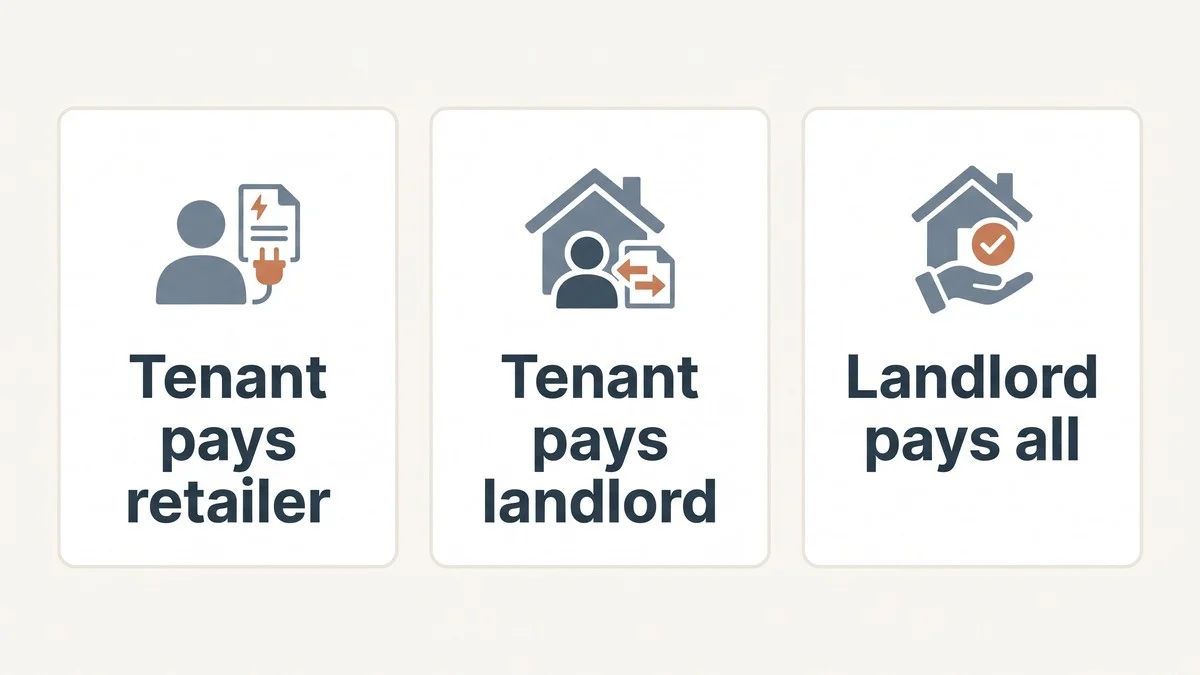
Whoever the lease says pays. The UCA's tips for tenants list three common arrangements, and Alberta's Starting a tenancy page says the lease should state whether utilities are provided and at whose expense.
| Arrangement | Who holds the account | What to write in the lease |
|---|---|---|
| Tenant pays the retailer or sub-meter company directly | Tenant (or the sub-meter company) | Which utilities, and that no utility cost is in the rent |
| Tenant pays the landlord for some or all utilities | Landlord | The amount or the formula, and which utilities |
| Landlord pays everything | Landlord | That utilities are included in the rent |
Ask about common areas too. Alberta's guidance says practices on common-area utility costs vary between landlords, so tenants should ask before signing. See what an Alberta lease must contain.
Can an Alberta landlord start charging for utilities during a tenancy?
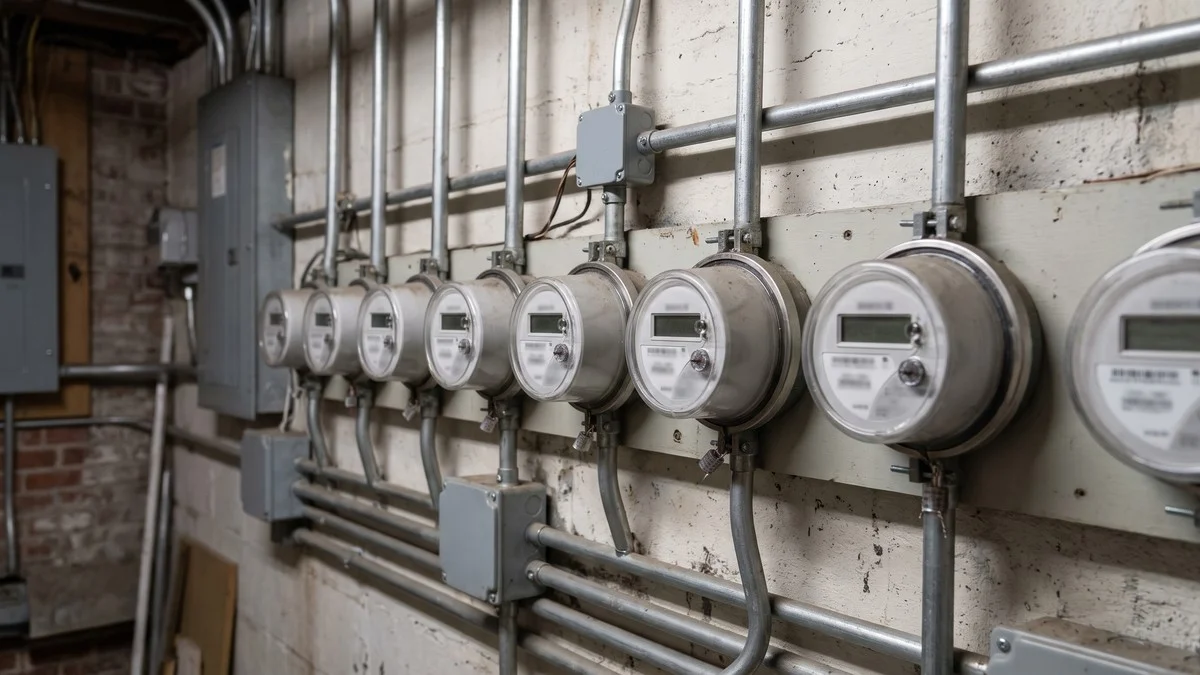
No, not if the lease includes utilities in the rent. The Government of Alberta's RTA Handbook says a landlord cannot require a tenant to pay utilities after the tenancy has started if the agreement says utilities are included, or if it is silent but the landlord has always paid them out of the rent. The two can agree to change that, and the landlord can raise the rent under the Act's rent increase rules to cover higher utility costs.
Any increase in the total a tenant pays the landlord counts as a rent increase under the RTA, the province's Starting a tenancy page says. That means the notice and once-a-year limits apply: see Alberta rent increase rules.
What about sub-meters?
A landlord can install sub-meters, but cannot begin charging separately for utilities unless the tenant consents or a fixed-term tenancy expires, according to Alberta's During a tenancy page. A month-to-month tenant must consent because it changes the agreement; a fixed-term tenant can be offered sub-metered terms in a new lease when the term ends.
Tenants on a sub-meter cannot choose their energy retailer, and they have a right to know the billing formula, which should be in the sub-meter contract. For a billing dispute, the province suggests the contract and the landlord first, then the UCA on 310-4822, then the RTDRS or court.
Can an Alberta landlord cut off a tenant's utilities?
Where the landlord supplies them, no. The Minimum Housing and Health Standards say every owner must ensure a continuous supply of electricity, water and heat unless the rental agreement makes those services the occupant's sole responsibility (s.8(d)). The RTA makes meeting those standards part of every lease (s.16(c)), and heat must reach at least 22 °C (s.8(a)). See no heat or hot water in an Alberta rental for what tenants can do.
What if the utilities are in the tenant's name and go unpaid?
The account holder is responsible for all charges, and the UCA warns that unpaid bills can lead to disconnection. Alberta's Winter Rules stop full electricity disconnection between October 15 and April 15 (a load limiter may be installed instead) and natural gas disconnection between November 1 and April 14. They do not cover water. A landlord owed utilities under the lease can claim unpaid rent and utilities at the RTDRS, the RTDRS application page says.
Frequently asked questions
Can a utility deposit be taken on top of the security deposit?
A retailer or distributor may ask the account holder for its own deposit, the UCA says, and that is between the customer and the company. Payments to third parties such as utility providers are not rent, Alberta's Starting a tenancy page notes.
When should a tenant close the utility account?
The UCA suggests giving the retailer the same end date as the lease and calling about a week ahead for a default-rate retailer; some competitive retailers need up to 30 days.
Can a landlord deduct unpaid utilities from the deposit?
Alberta lists utilities among the costs a landlord may deduct, with a statement of account, when they are owed under the agreement. See security deposit deductions in Alberta.
Who do I call about a sub-meter bill?
The landlord or sub-meter company first, then the Utilities Consumer Advocate (310-4822 in Alberta), which can explain how sub-meter bills are calculated.
Put the utility terms in the lease
The Alberta residential tenancy agreement form has a section for utilities, appliances and parking, and who pays for each. Fill it out online and download the PDF.
Free • No signup required