An RTDRS hearing in Alberta is a telephone call run by a Tenancy Dispute Officer. The officer calls each party, hears the applicant's claim and the respondent's answer, may question both, and usually gives reasons and a written order at the end. Keep 90 minutes free after the start time.
How does an RTDRS hearing work in Alberta?
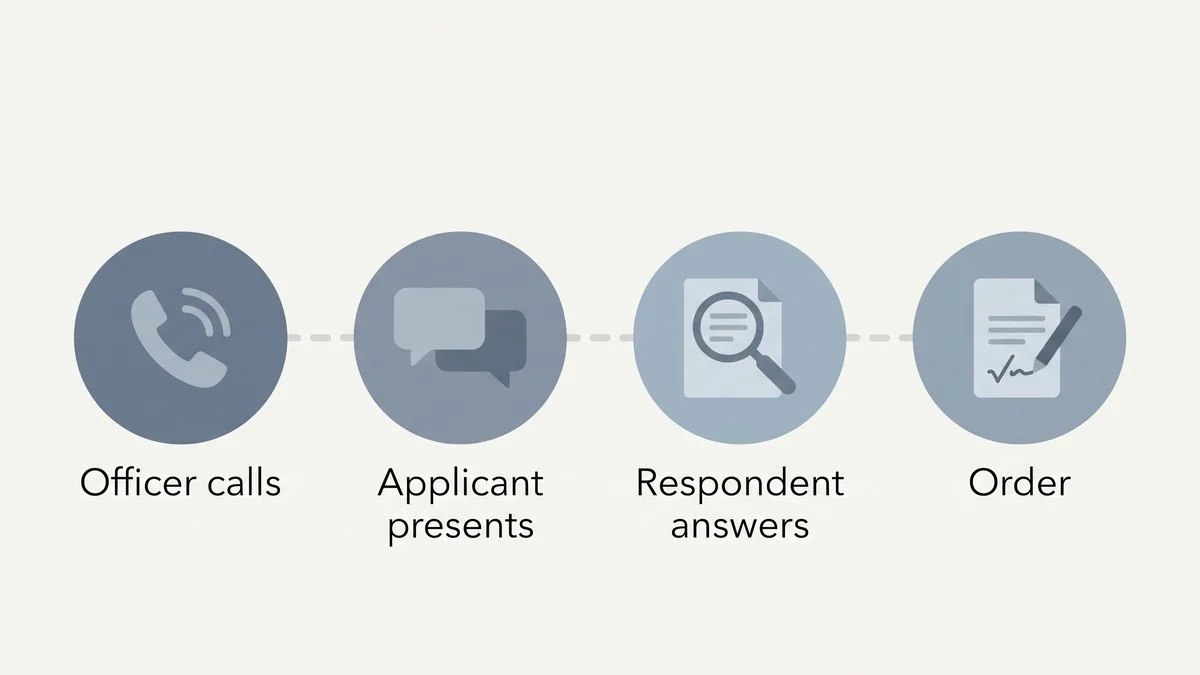
The officer calls the numbers on file, possibly from an "Unknown" number (RTDRS hearings and orders). The officer is not bound by court rules of evidence and decides what is admissible and how much weight it gets (RTDRS Regulation, AR 98/2006, s.14). Each party gets a chance to respond to what the other side presents (s.13(2)(b)).
The officer follows the process in the RTDRS Telephone Hearing tip sheet but may adapt it to the case. Everyone is expected to be courteous and respectful; a person who is disruptive, disrespectful or threatening may be required to leave the hearing. If the line drops, the officer will say what to do, which is usually to hang up and wait for a call back.
Hearings are by telephone. A party who wants an in-person hearing at the Edmonton or Calgary office must have the other party's consent and ask the officer during the telephone hearing; if the officer agrees, the hearing is adjourned to a new date.
How to prepare in the week before
- Check your phone number on the application. To change it, call 403-297-8550 and leave your case number, full name and number.
- Turn off call blocking and spam filters so a call from "Unknown" or "RTDRS" gets through.
- Arrange any representative. To add or change one, leave a voice message at 403-297-8550 at least 24 hours before the hearing with the case number, who you represent and the representative's contact details, or send the Add/Change a Hearing Representative form for changes more than 2 days ahead.
- Confirm witnesses and their phone numbers.
- Re-read your evidence and the other side's, and put the pages in order so you can find each one quickly.
- Block the time: be available at the start time and for 90 minutes after it.
What evidence counts at an RTDRS hearing?
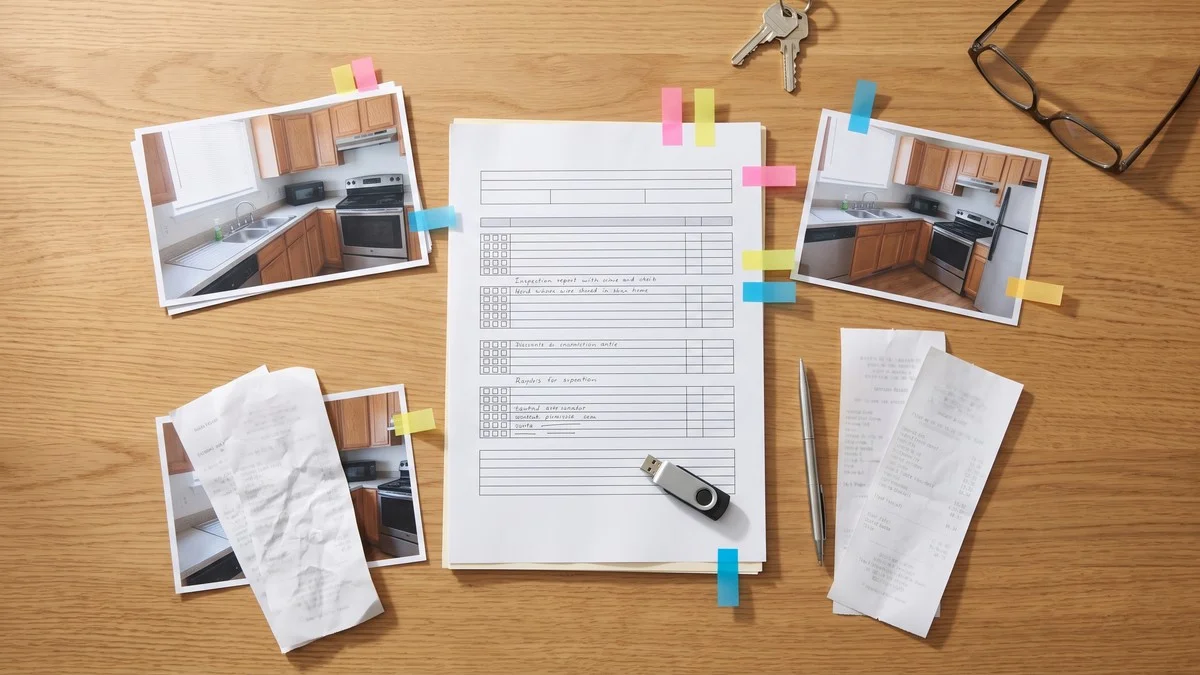
Documents such as inspection reports, photos, recordings and witness testimony all count if served on the other party and the RTDRS at least 24 hours before the hearing. Late evidence may be refused, or the hearing adjourned so everyone can review it (RTDRS: How to apply).
In a deposit or damage claim, for example, the move-in and move-out inspection reports, dated photos and repair invoices usually carry the most weight. How deposits must be handled is in Alberta security deposits.
Can the hearing be moved?
A hearing can be adjourned (rescheduled) if the application package was not served on the respondent, or if all parties consent. The applicant must tell the RTDRS in writing, by fax or email, before the hearing time.
- Both parties agree: the applicant has 10 business days from the original hearing date to set a new date with the RTDRS, or the file is closed. If both agree on the new time, it need not be re-served.
- One party cannot attend and the other does not consent: the hearing starts on time. The person who cannot attend should send someone, or join by phone, to ask for the adjournment.
- Fairness: the officer may adjourn on their own, for example if the application package was not properly served.
What orders can the officer make?
| Order | When it is used |
|---|---|
| Possession and/or judgment | A landlord applies to end the tenancy, get possession, or get judgment for unpaid rent or utilities. It may be conditional on the tenant paying on set terms. |
| Judgment | Either side claims money, such as a deposit, unpaid rent, damages, compensation for an over-holding tenant, or a rent abatement |
| Consent | The parties settle before or during the hearing |
| Withdrawal | The applicant withdraws during the hearing |
| Referral to court | The case is too long or complex, or outside the officer's jurisdiction (for example human rights or constitutional issues) |
| Dismissed | The applicant does not prove the claim, or does not attend |
With some exceptions, RTDRS orders are valid for 10 years. If a matter belongs in court instead, see RTDRS or court.
What happens after the officer decides?

Most decisions are given orally with a written order. A complex case may be reserved, with the order due within 30 days of the hearing ending (s.18(3)). An order takes effect only once filed with the Court of King's Bench and served (s.22(2)); the overall process is in RTDRS explained.
Either the RTDRS files the order with the court or the applicant does, and the applicant then serves a filed copy on the respondent. If a respondent breaks a conditional order, the applicant may serve a Notice of Default. Enforcing possession, or collecting an unpaid judgment, goes through a Civil Enforcement Agency and the Court of King's Bench.
If the order has a clerical error (a typing, grammar or arithmetic mistake, or an omission) or you are unsure what it means, send the RTDRS Request Form for an amendment or clarification, ideally before the order is filed. RTDRS staff cannot change or cancel an officer's decision.
Common mistakes
- A wrong phone number on file, or a phone that blocks unknown callers.
- Evidence served late, less than 24 hours before the hearing.
- Assuming an adjournment without the other side's consent or the officer's decision.
- Not filing and serving the order, so it never takes effect.
- Treating disagreement as grounds for appeal. The RTDRS says simply disagreeing is not a valid reason.
Frequently asked questions
Can I get a recording of the hearing?
The RTDRS offers an Audio Recording Request Form on its forms page to ask for a copy of the hearing recording.
What if I miss the call?
The hearing may go ahead and an order may be made without you. You may ask the officer to set it aside within 20 days if you missed it through accident, mistake or insufficient notice (s.19.1).
Can I appeal?
Only on a question of law or jurisdiction, to the Court of King's Bench, within 30 days after the order is filed (s.23).
Can someone speak for me?
Yes, a representative may attend for you, but the RTDRS notes the best evidence comes from people with first-hand knowledge of what happened.
How much does it cost?
Alberta's RTDRS application page lists a $75 filing fee for a claim of $7,500 or less; see RTDRS filing fees.
Keep the unit's condition on record
Note the condition at move-in and move-out on the free Alberta inspection report.
Free • No signup required