Rental discrimination in Alberta is barred by the Alberta Human Rights Act: a landlord cannot refuse to rent an advertised self-contained unit, or set different terms, because of race, religious beliefs, colour, gender, gender identity, gender expression, physical or mental disability, age, ancestry, place of origin, marital status, source of income, family status or sexual orientation (s.5(1)). Adult-only exceptions are narrow.
This FAQ is for Alberta landlords writing an ad or screening applicants, and for renters who think they were turned away unfairly. For the rest of the rental rules, see the Alberta landlord guide and the Alberta tenant guide.
What does the Alberta Human Rights Act protect in a rental?
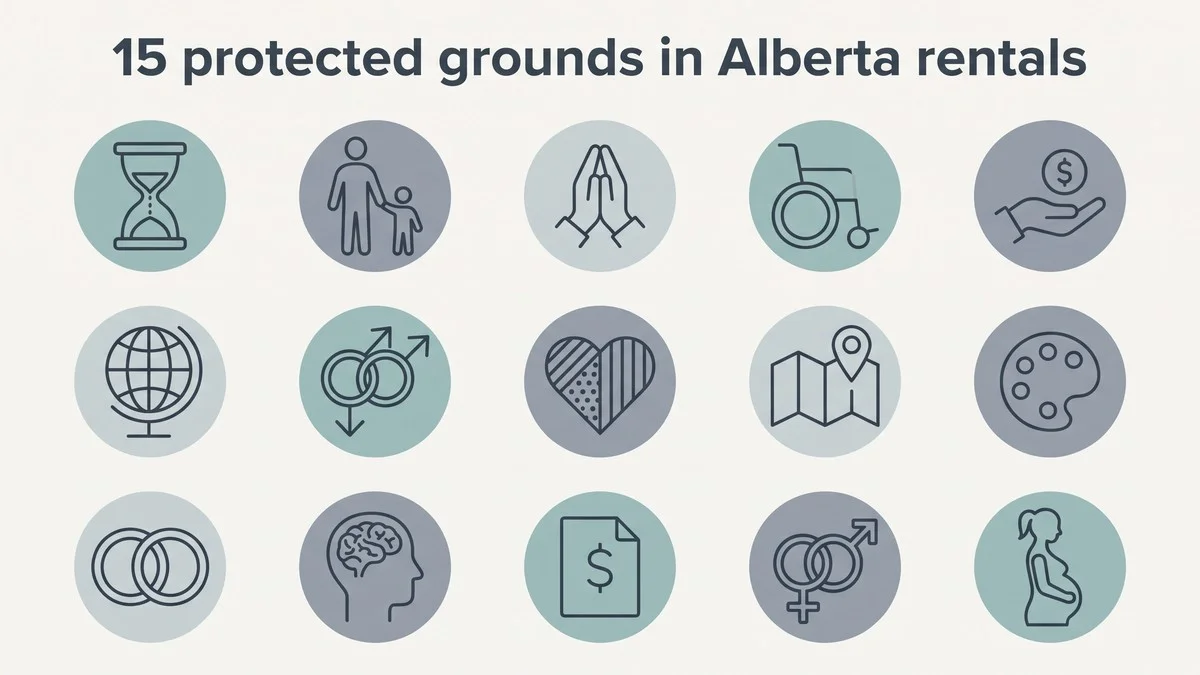
The Alberta Human Rights Act protects 15 grounds at two points: deciding who gets an advertised unit, and any term or condition of the tenancy once it starts (s.5(1)). Several grounds have a specific meaning in the Act.
| Ground | What it means in the Act | Section |
|---|---|---|
| Age | 18 years of age or older | s.44(1)(a) |
| Family status | Being related to another person by blood, marriage or adoption | s.44(1)(f) |
| Marital status | Married, single, widowed, divorced, separated or living with a person in a conjugal relationship outside marriage | s.44(1)(g) |
| Source of income | Lawful source of income | s.44(1)(n) |
| Physical disability | Includes reliance on a guide dog, service dog or wheelchair | s.44(1)(l) |
Ads count too. No one may publish or display a notice or statement that indicates discrimination or an intention to discriminate on a protected ground (s.3(1)).
Can an Alberta landlord refuse tenants on AISH or income support?

No. Source of income is a protected ground for Alberta tenancies (s.5(1)), and the Alberta Human Rights Commission gives refusing to rent to someone who receives income supports, rental subsidies, AISH or other disability benefits as an example of discrimination. The Commission says asking for rental history and references is usually allowed. It flags rent-to-income ratios and questions about family status, marital status, religion or ancestry as screening that can be discriminatory.
Can an Alberta landlord refuse families with children or run an adults-only building?
Generally no, because family status is protected (s.5(1)). The Act's exceptions for age and family status are narrow:
- 55-plus housing: premises where every unit is reserved for someone aged 55 or older, or for a household with at least one person that age (s.5(3)).
- Older age limits: a minimum age for occupancy of a condominium unit, co-op housing unit or mobile home site that existed before January 1, 2018 (s.4.2(1), s.5(2)). The Commission says these must convert to all-ages or seniors-only housing by January 1, 2033.
The Commission also gives raising rent to push out a tenant who is pregnant or has small children as an example of discrimination during a tenancy.
What is a landlord's duty to accommodate in Alberta?
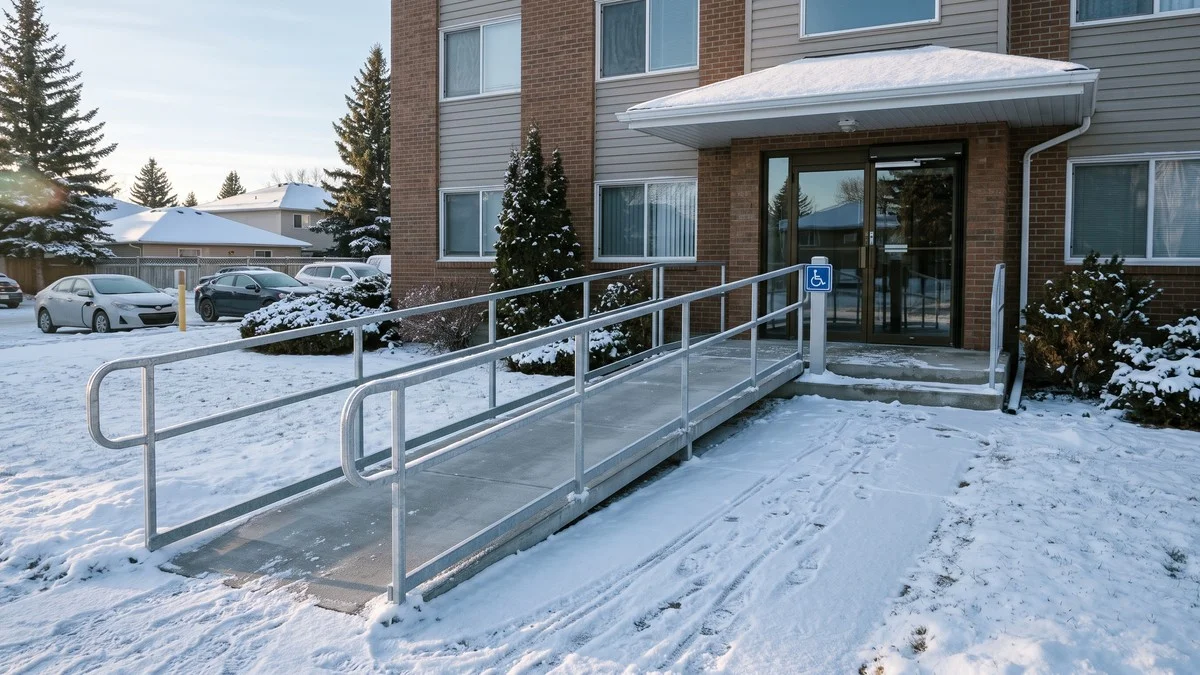
An Alberta landlord must take reasonable steps to accommodate a tenant's protected needs up to the point of undue hardship, which the Commission describes as substantial, such as an intolerable financial cost or serious disruption to the business. Its examples include ramps or automatic door openers, a ground-floor unit, and exceptions to a no-pets rule for guide and service dogs.
The dog rule is also written into two other Alberta statutes, the Service Dogs Act (s.3(2)) and the Blind Persons' Rights Act (s.5(2)): refusing a self-contained unit, or offering worse terms, to someone because of a qualified service dog or guide dog is an offence under each, with a fine of up to $3,000. Read more in what an Alberta lease must contain.
How does a renter make a human rights complaint in Alberta?
A renter makes a complaint to the Alberta Human Rights Commission, in a form the Commission accepts, within one year after the alleged discrimination (s.20). A landlord's defence is to show that the conduct was reasonable and justifiable in the circumstances (s.11). Tenancy disputes about rent, repairs or deposits go elsewhere; see RTDRS or court.
Frequently asked questions
Does the Act cover renting a room in my own home?
The tenancy section is worded for commercial units and self-contained dwelling units that are advertised or offered for rent (s.5(1)). Whether a shared room in an owner's home falls within it depends on the facts, so check with the Commission before relying on it either way.
Can I ask an applicant for references and rental history?
Yes. The Commission says rental history and references are usually allowed. Apply the same questions to every applicant and avoid questions about protected grounds.
Do I have to accept an emotional support animal?
Possibly. The Commission says support animals other than guide and service dogs may need to be accommodated, depending on the situation and on reliable medical information confirming the disability and the need.
How long does a renter have to complain?
One year from the alleged contravention (s.20(2)(b)).
Screen every applicant the same way
Use the same written lease and inspection report for every tenant you accept. Alberta's are free here.
Free • No signup required