A Calgary short term rental licence is required for any home, suite or room rented through a short-term rental platform for up to 180 consecutive days. Since April 1, 2025, the City of Calgary issues it in one of two categories, Primary Residence or Non-Primary Residence, and every new licence needs a passed fire inspection first.
This guide covers what each category means, what the City asks for at application, and the operating rules that carry $1,000 fines. It is a city licence, separate from the provincial tenancy rules in our Calgary landlord and tenant guide. Hosting in Edmonton instead? See the Edmonton short-term rental licence guide.
What counts as a short-term rental in Calgary?
In Calgary, a short-term rental is the business of providing temporary accommodation for compensation in all or part of a dwelling unit, for periods of up to 180 consecutive days, advertised or listed with a Short-Term Rental Company. The City widened the definition to 180 days on April 1, 2025 to bring medium-term stays under the same safety rules (City of Calgary, rules and regulations).
The booking platforms now need their own licence too. The Business Licence Bylaw (32M98) added a Short-Term Rental Company category with an annual $3,000 licence fee.
Primary Residence or Non-Primary Residence: which licence do you need?
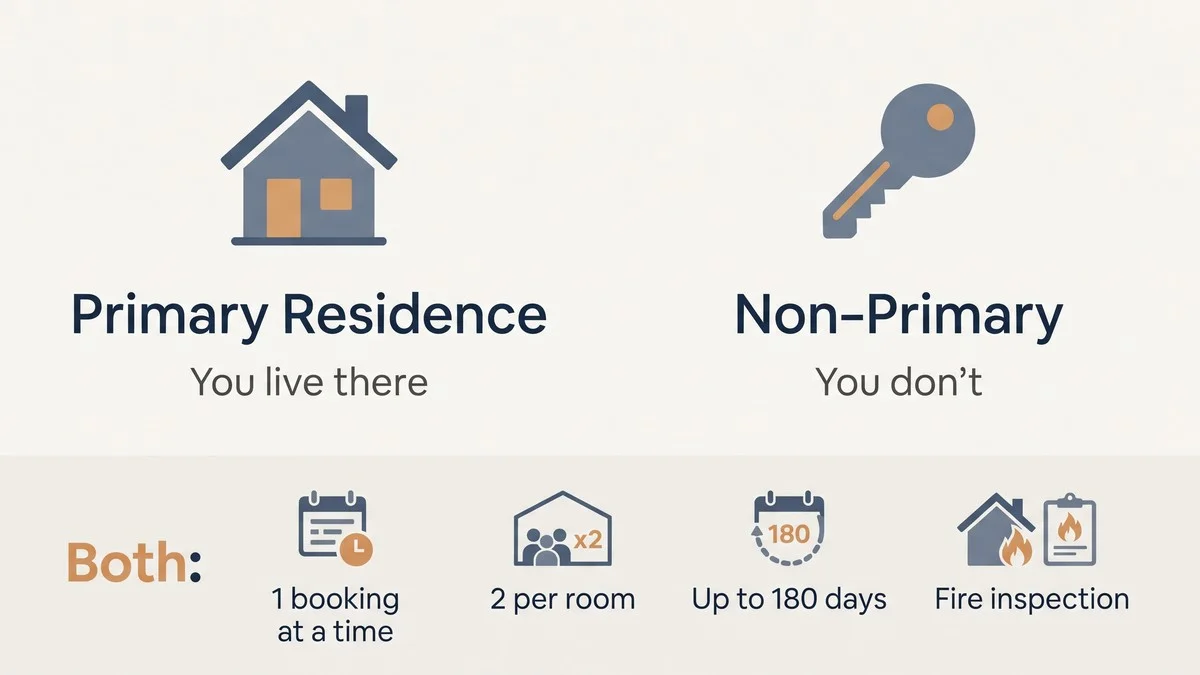
Calgary decides the category by whether you live in the home, not by how many rooms you rent. Both categories share the same operating limits.
| Primary Residence | Non-Primary Residence | |
|---|---|---|
| Who applies | The owner, or someone with owner authorization, whose main dwelling it is | The owner, or someone with owner authorization, who does not live there |
| Proof | Proof of residence showing the address | Proof of ownership or owner consent |
| Bookings at once | One | One |
| People per room | 2 | 2 |
| Longest stay | Up to 180 consecutive days | Up to 180 consecutive days |
| Fire inspection | Required | Required |
Source: City of Calgary, business licence changes. A licence renewed on or after April 1, 2025 had to be reclassified into one of the two categories.
Can Calgary stop issuing Non-Primary Residence licences?

Yes, Council approved a temporary pause on new Non-Primary Residence licences that applies only if Calgary's purpose-built rental vacancy rate, as published by Canada Mortgage and Housing Corporation, falls below 2.5%. The City did not apply it in 2025 because the rate it cited was 5.5%. A pause would not affect Primary Residence applications or existing licences.
Two other limits are firm. Homes designated as affordable housing cannot get a short-term rental licence, and condo owners must follow their condominium bylaws: the City no longer asks for board consent, so a dispute over whether the bylaws allow short stays is between you and your board.
What does Calgary ask for when you apply?
Calgary's application requirements list the documents below; apply online at apply.calgary.ca with a myID Citizen account, or in person at the Planning Services Centre.
- Identity or ownership. Photo ID for a primary residence, a letter of authorization from the owner if you do not own the home, and proof of ownership if you do not consent to the City's land title search.
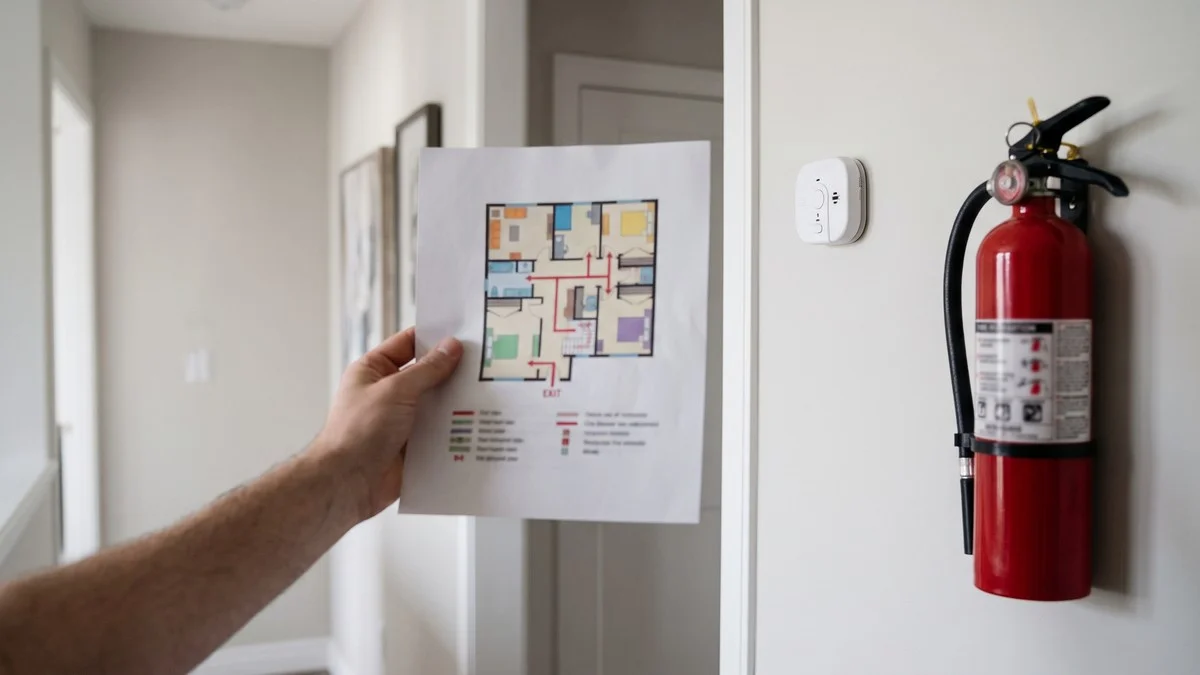
- Fire Safety Plan. A clear floor plan of every accessible floor showing exits, escape windows, smoke alarms, carbon monoxide detectors and fire extinguishers, primary and secondary exit paths from each bedroom, and a meeting place.
- Insurance. Liability coverage that references short-term rental or home sharing, held by the applicant, from an insurer registered in Alberta, with at least $2 million in liability.
- A registered suite. If the rental is a secondary suite, register it with the City first (see our Calgary secondary suite registry guide).
- Fees. Licence and fire inspection fees are paid at application and are non-refundable. Amounts are in the City's business licence fee schedule.
Sources: application requirements, rules and regulations.
How does the Calgary fire inspection work?
Every new Calgary short-term rental licence, Primary or Non-Primary, needs a passed fire inspection before it is issued. Once your file manager approves the Fire Safety Plan, the Calgary Fire Department contacts you to book it. Renewals fall under the department's risk-based model, so a licensed home may or may not be inspected each year.
The City names the usual reasons for delays and failed inspections: permits not finished before the inspection, missing smoke or carbon monoxide alarms, bedroom windows that do not meet emergency-exit requirements, and unapproved secondary suites. Our smoke alarm rules for Alberta rentals cover the provincial side.
What operating rules apply once you are licensed?
A licensed Calgary host must follow six operating rules in the Business Licence Bylaw, and the City lists a $1,000 fine on conviction for breaking them.
- No renting a room without at least one egress window (apartment-style buildings follow the fire code instead).
- No more than two people per room.
- No overlapping bookings: one reservation at a time, though one guest may book several rooms.
- The licence number in every advertisement.
- A 24-hour emergency contact's name, phone number and email posted in a conspicuous place.
- An electronic guest record in English of each paid guest's full name, email and length of stay, shown to the Chief Licence Inspector on demand.
Complaints about a short-term rental go to 311.
Frequently asked questions
Do I need a licence to rent one room in my own home in Calgary?
Yes, if the stays are booked through a short-term rental platform. The City's definition covers a portion of a dwelling unit, and a room in your primary residence falls under the Primary Residence licence.
Is a three-month furnished stay a short-term rental in Calgary?
It can be. Since April 1, 2025 the definition covers stays of up to 180 consecutive days listed with a short-term rental company, so a three-month booking through a platform needs a licence.
How early can I renew my Calgary short-term rental licence?
Up to 30 days before the renewal date, through apply.calgary.ca with the same myID you used to apply.
Does my condo board have to approve?
The City no longer requires board consent, but you must comply with your condominium's bylaws, and any disagreement about them is yours to resolve with the board.
What happens if I operate without following the rules?
The City aims for voluntary compliance first, but offences such as overlapping bookings or leaving the licence number off an ad carry a $1,000 fine on conviction.
Thinking of switching to a long-term tenant?
A long-term tenant who lives in the home is governed by Alberta's Residential Tenancies Act, not the short-term rental licence. That brings its own rules, including a security deposit capped at one month's rent and mandatory move-in and move-out inspection reports; the Alberta landlord guide walks through each one.
Moving from short stays to a long-term lease?
Fill out an Alberta residential tenancy agreement online and download the PDF.
Free • No signup required