If you're a tenant who's fallen behind on rent — or a landlord staring at an arrears file — the most useful thing at the Landlord and Tenant Board usually isn't an eviction. It's a repayment agreement: a deal to pay off the arrears and keep the tenancy. As of July 1, 2026, a rent repayment agreement in Ontario has to be on the Board's official form.
It sounds like dry paperwork, but the change matters. The new standard form spells out, in plain language, what happens if the plan is broken — including a clause that can let a landlord seek eviction without serving a new notice. Sign without understanding it, and a lifeline can turn into a fast exit.
This guide explains what changed under section 206, how a repayment agreement actually works (an LTB order without a hearing), the section 78 catch every tenant should understand before signing, the safeguards on both sides, and — for landlords and property managers — how to use the form well. It's general information, not legal advice; for a specific situation, confirm at ontario.ca or with the LTB.
Rent Repayment Agreement Survival Guide
How to keep the tenancy, understand the section 78 catch, and get the deadlines right — for tenants and landlords, on one page.
Get Free PDF →What Changed on July 1, and Why It Matters
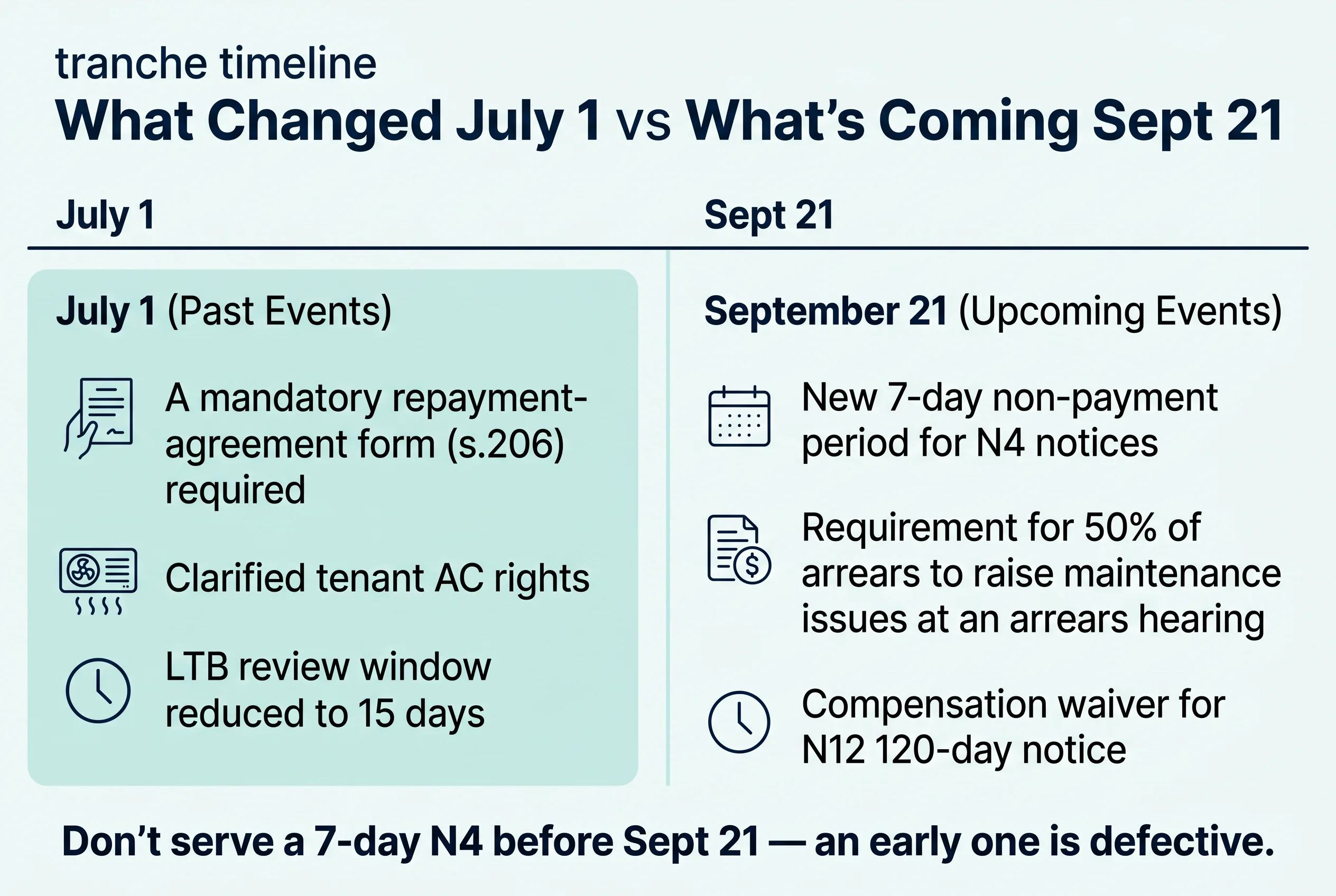
As of July 1, 2026, section 206(1) of the Residential Tenancies Act — a change brought in by Bill 97 — requires that a rent-arrears repayment agreement used to resolve an LTB application be on the form approved by the Board. In other words, a mandatory standard form.
Before this, the parties could paper a repayment deal however they liked, and the LTB would issue a consent order on those terms. Now the agreement itself has to be on the Board's form. That's genuinely good for both sides: the standard form gives a plain-language explanation of what happens if the plan is broken, includes tenant-rights information (and the suggestion to get legal advice before signing), and cuts the drafting burden for landlords — fewer bespoke, ambiguous agreements to argue about later.
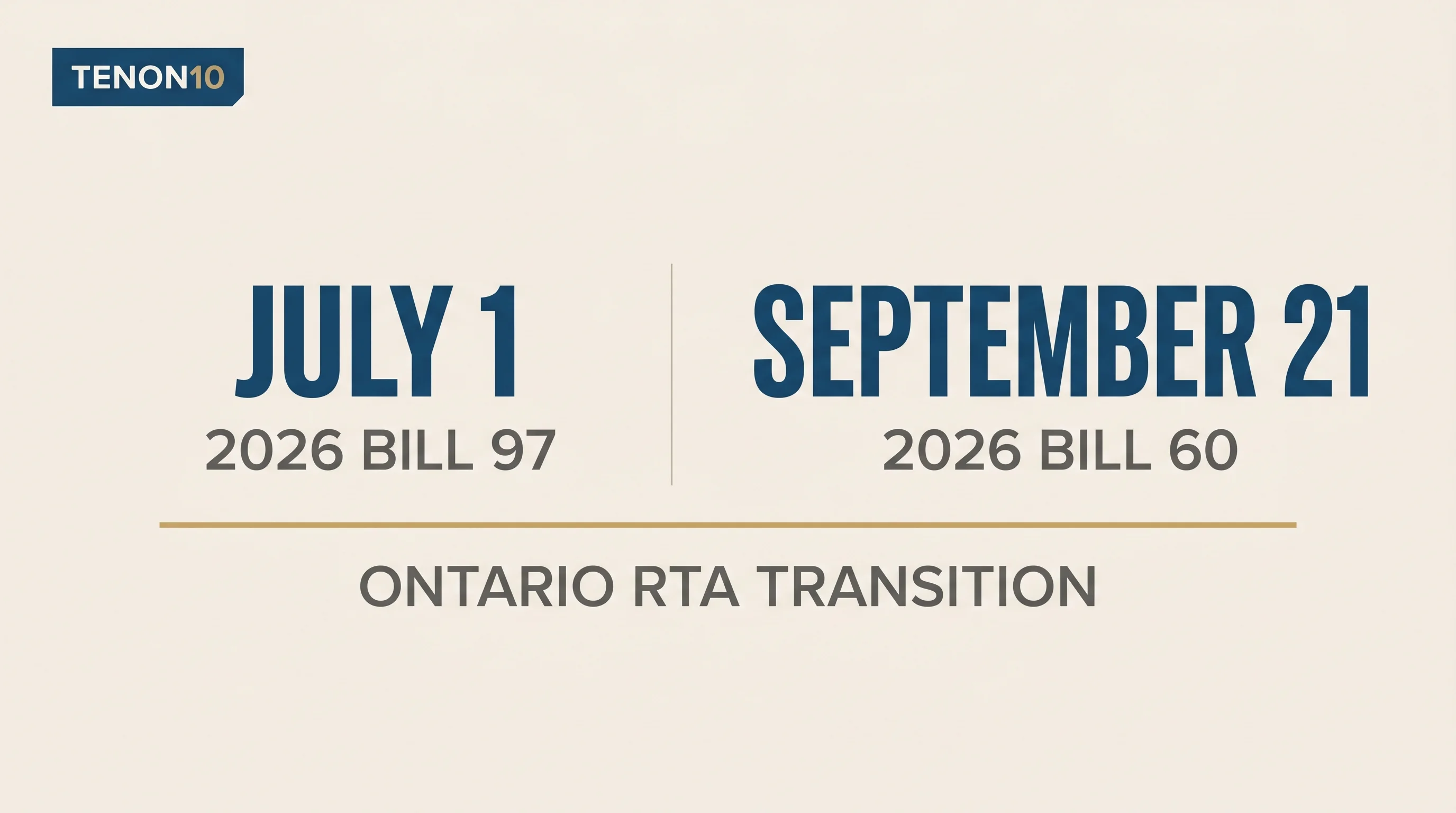
One accuracy point worth pinning down, because a lot of coverage blurs it: this July 1 change is the repayment-agreement form. The widely-discussed shorter seven-day N4 notice period is a separate Bill 60 change scheduled for September 21, 2026 — not the same day. Getting those dates straight matters if you're about to serve a notice.
As for the form itself: as of now, the LTB hasn't released a brand-new document — it's expected to be the existing "Payment Agreement" form already on the LTB site. Confirm the current version before you use it.
How a Repayment Agreement Actually Works
Here's the mechanism. A landlord has filed an LTB application for rent arrears — usually an L1 after serving an N4 — and instead of fighting it out at a hearing, the parties agree on a plan to clear the arrears. The LTB can then turn that agreement into a consent order on the agreed terms without holding a hearing. It's faster and cheaper for everyone, and the tenancy continues.
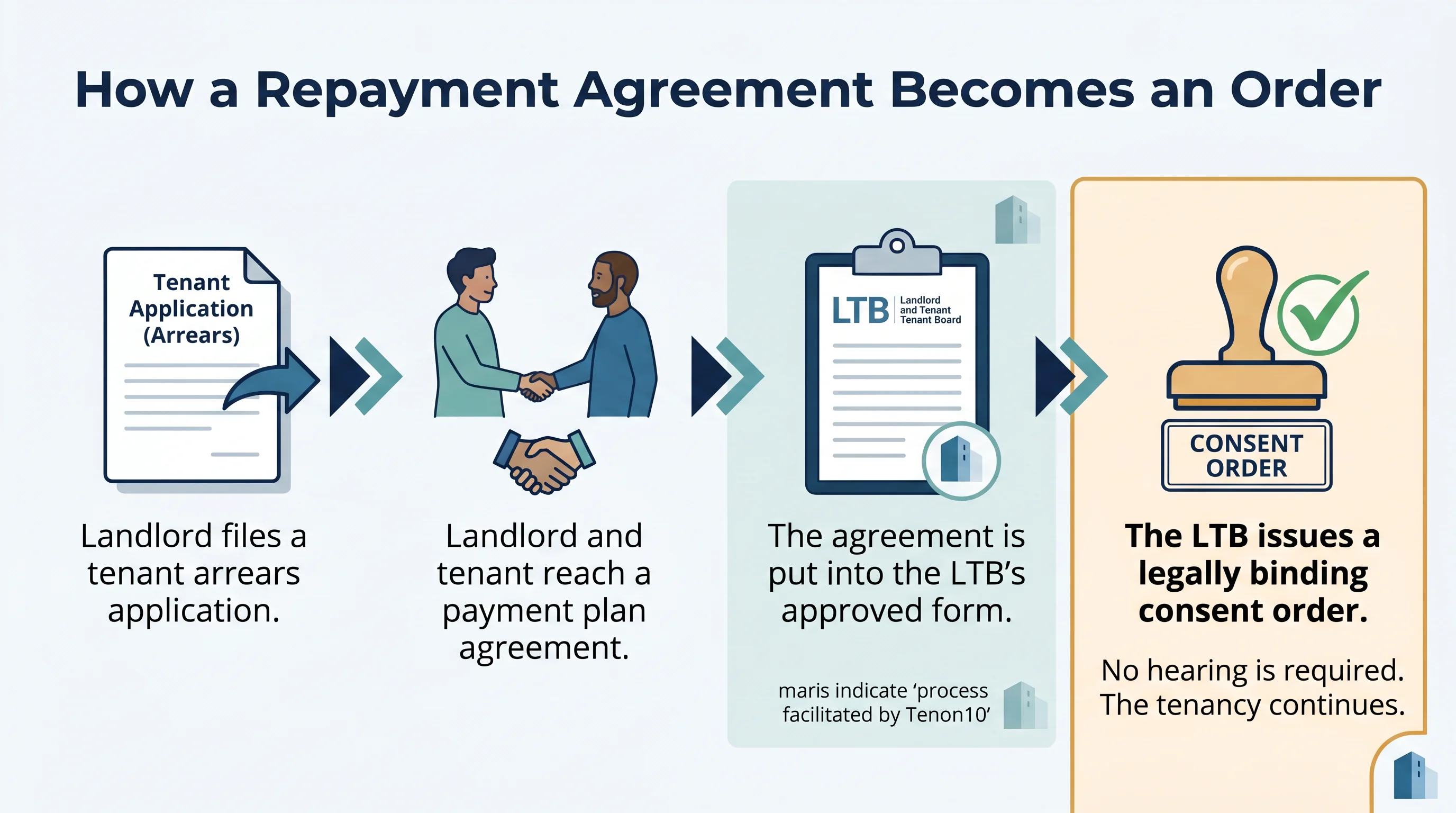
That "no hearing" part is where the real value sits right now. Filing an application sooner doesn't mean a hearing happens sooner — LTB hearings still run months out. A repayment agreement resolves the arrears without waiting in that queue at all.
Two boundaries to be precise about. This is for rent-arrears agreements, not agreements about termination or eviction. And the payment order itself cannot contain an eviction order — it's a plan to pay, not a removal.
Underpinning all of it is a clean ledger. The agreement should rest on a clear, rent-only arrears figure — not rent mixed with parking, utilities, or NSF fees. Messy numbers are exactly where these deals, and the applications behind them, fall apart. (Our bookkeeping guide covers the ledger discipline that makes this painless.)
The Section 78 Catch (and Your Protections)
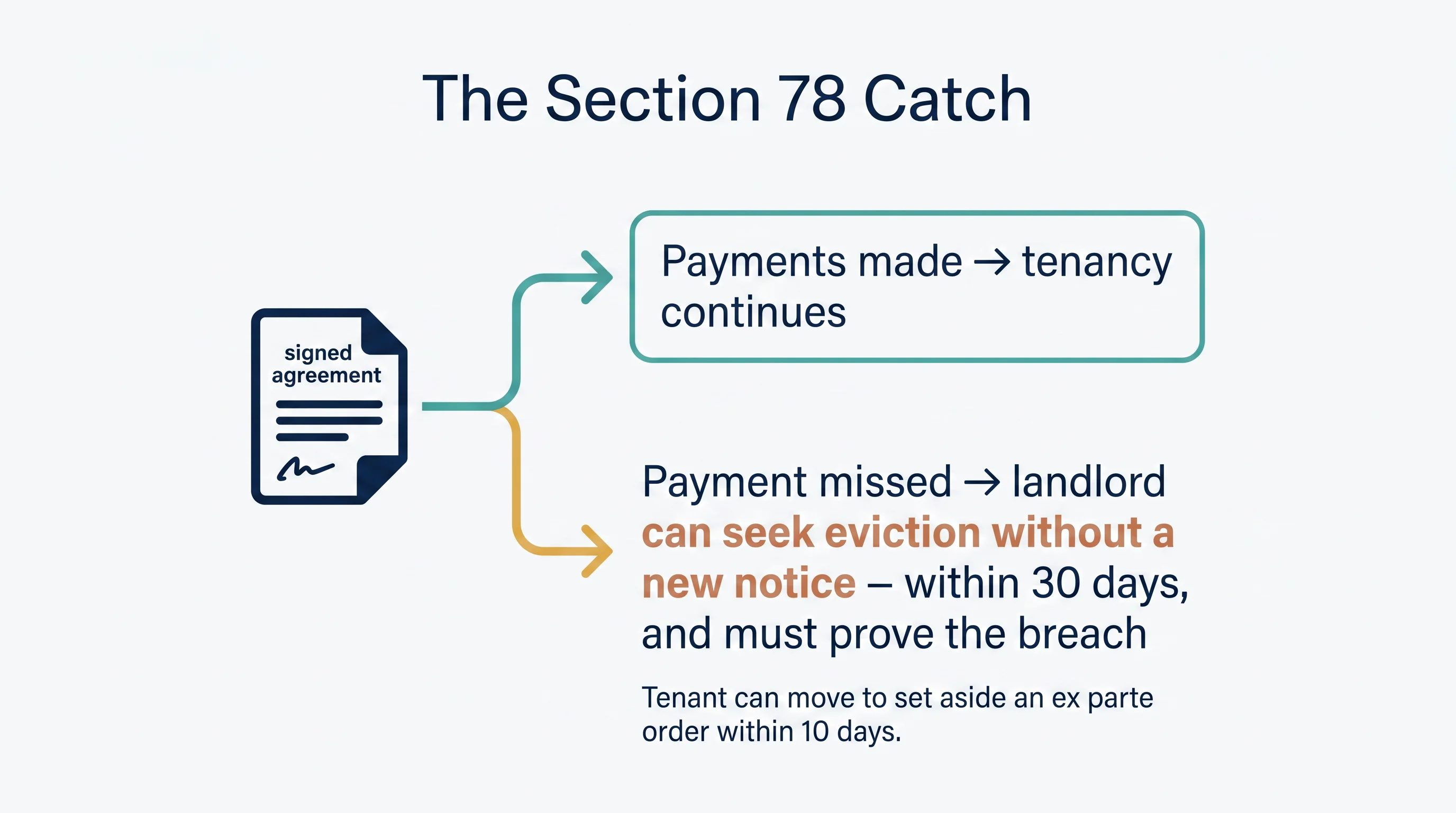
This is the part every tenant should understand before signing anything. The payment order can include a section 78 clause. If the tenant breaks the plan, the landlord can go back to the LTB for an eviction order — ex parte (without a hearing) and without serving a new N4. That's a real consequence, and it's why an agreement should never be signed casually.
But the clause cuts both ways, and the protections are just as important as the catch:
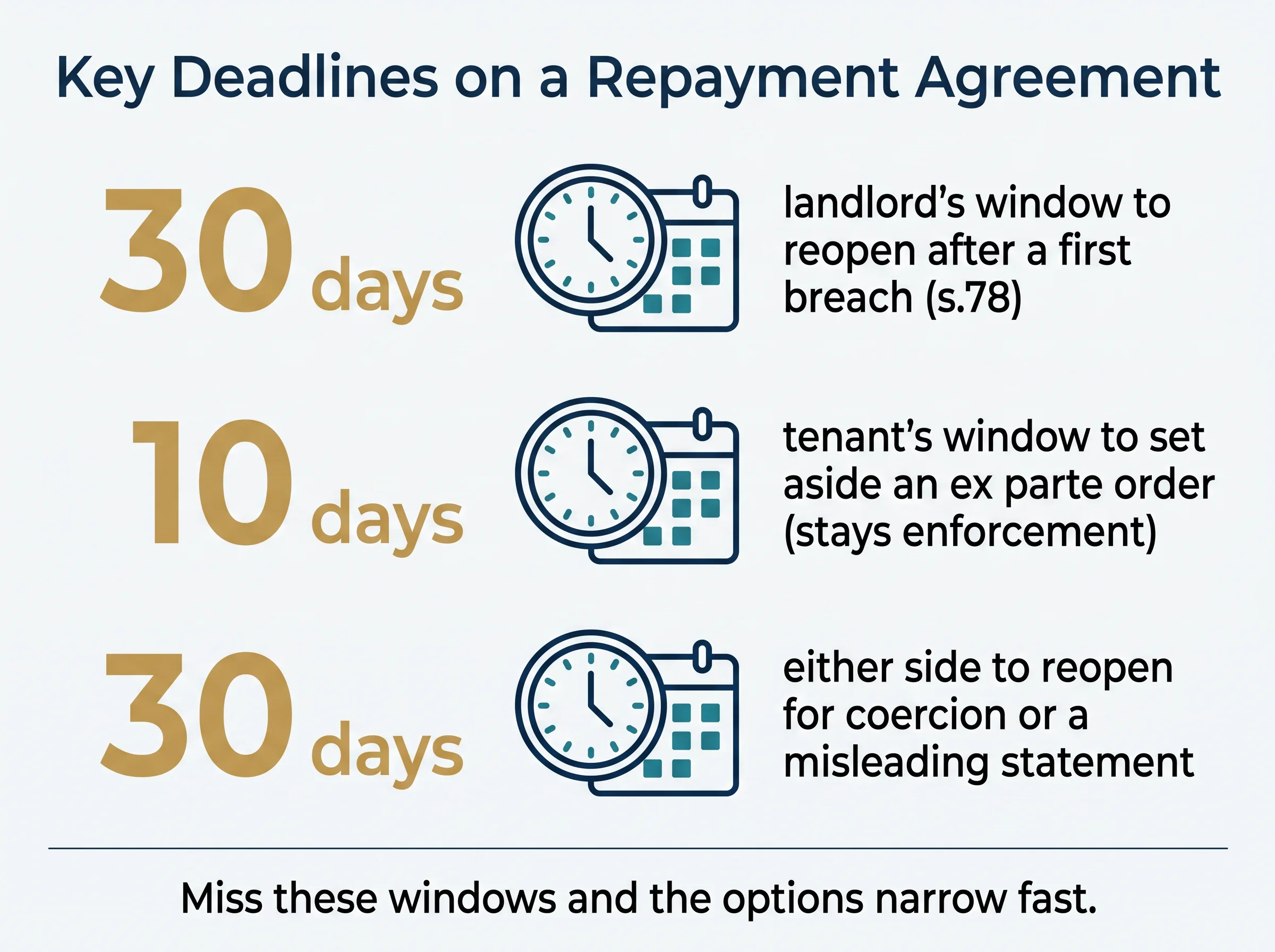
- The landlord's window is 30 days. The request to reopen on breach must be filed within 30 days of the tenant's first breach — they can't sit on it and spring it a year later.
- They still have to prove it. At the reopening, the LTB won't proceed until the landlord proves the tenant actually failed to comply.
- The tenant can set it aside within 10 days. A Motion to Set Aside an ex parte order filed within 10 days automatically pauses (stays) enforcement until it's decided.
- Coercion is a way out. If either party signed because of a false or misleading statement or was coerced, and it materially affected the deal, they can ask the LTB to reopen within 30 days of the order (and must prove it).
The Landlord & Property Manager Playbook
If you own or manage rentals, a repayment agreement is one of the most efficient tools you have — provided you use it properly.
Start with the approved form. Work from the LTB's Payment Agreement form (confirm the current version), because a bespoke side-letter no longer does the job of resolving an application. Then build the agreement on a clean, rent-only ledger — separate utilities, parking, and NSF charges out. Under the LTB's strict-compliance approach since Bill 60, messy numbers get applications dismissed after a long wait, and a shaky ledger undermines any agreement resting on it.
Consider including a section 78 clause for enforceability — but remember the 30-day reopen-on-breach window and that you'll need to prove the breach. File the signed form through the Tribunals Ontario Portal and keep it, with the ledger, in your file.
And mind the calendar. The arrears timeline is tightening — the seven-day N4 and the 50%-of-arrears rule arrive September 21, 2026 — but don't serve a seven-day N4 before then; an early one is a defective notice. For the full picture of the staged changes, see our Bill 60 and Bill 97 guide, and the companion piece on the other July 1 change, tenant air-conditioning rights.
Rent Repayment Agreement Survival Guide
The section 78 catch, the 30/10/30-day deadlines, and the July-vs-September dates — everything both sides need on one page.
Get Free PDF →Key Takeaways
For tenants:
- A repayment agreement can keep your home — but it's a binding LTB order, so treat it seriously.
- Make sure the monthly amount is genuinely affordable; a plan you can't sustain triggers the section 78 clause.
- Understand section 78: miss a payment and the landlord can seek eviction without a new notice — but within 30 days, and only on proof of breach.
- Signed under pressure or on false information? You can ask to reopen within 30 days. Get free help before signing.
For landlords and property managers:
- Use the LTB's approved form and base it on a clean, rent-only ledger.
- Set a realistic instalment, and consider a section 78 clause — noting the 30-day reopen window.
- File through the Tribunals Ontario Portal; don't serve a seven-day N4 before September 21, 2026.
Quick win for tenants: don't sign on the spot — take the form away and check the numbers. Long-term move for landlords: build a clean-ledger and payment-plan workflow so every arrears file is agreement-ready.
Conclusion
As of July 1, 2026, a rent-arrears repayment agreement at the LTB has to be on the Board's official form — and that's genuinely good news. It's a plain-language, standardized way to turn "you owe arrears" into "here's how we keep the tenancy," resolved by an order without a hearing. The catch to understand is the section 78 clause: miss a payment and the landlord can return for eviction without a fresh notice — though within a 30-day window, only on proof of breach, and with the tenant's own set-aside and coercion safeguards on the other side.
Used well, it keeps people housed and landlords paid, which is the whole point of the tool. The key on both sides is the same: a realistic number and a clean ledger. This is general information, not legal advice — confirm the current details and your situation at ontario.ca or with the Landlord and Tenant Board.
Keep the ledger, the plan, and the form in one place
From a clean rent ledger to a tracked payment plan and the signed agreement, Tenon10 keeps an arrears file organized — so a repayment agreement is easy to build and easy to prove.
Free • No signup required • Built for Ontario
Frequently Asked Questions
What is a rent repayment agreement in Ontario?
It's a deal between a landlord and tenant to pay off rent arrears and keep the tenancy, used to resolve an LTB application. As of July 1, 2026, it must be on the Board's approved form, and the LTB can turn it into an order without holding a hearing.
Do I have to use the LTB's form now?
Yes — to resolve an LTB arrears application, the repayment agreement must be on the form approved by the Board. The standard form also explains, in plain language, what happens if the plan is broken.
What happens if I miss a payment on a repayment agreement?
If the order includes a section 78 clause, the landlord can ask the LTB for an eviction order without serving a new notice — but they must file within 30 days of the first breach and prove you didn't comply. You can move to set aside an ex parte order within 10 days, which pauses enforcement.
Can I get out of a repayment agreement I was pressured into?
You can ask the LTB to reopen it within 30 days of the order if you signed because of coercion or a false or misleading statement — you'll need to prove it.
Did the seven-day N4 rule start July 1, 2026 too?
No. The July 1 change is the mandatory repayment-agreement form. The shorter seven-day N4 notice period is a separate Bill 60 change scheduled for September 21, 2026.