

In most provinces, a move-out inspection is when the landlord walks through, notes the damage, and deducts it from your security deposit. In Ontario, that's not how it works at all — because Ontario doesn't allow damage deposits. So here's the question that trips up landlords and tenants alike: if there's no deposit to deduct from, why does the move-in move-out inspection in Ontario matter more, not less?
The answer reframes the whole exercise. Ontario doesn't legally require a move-in or move-out inspection, and there's no deposit to draw against. That leads a lot of landlords to skip documentation — and a lot of tenants to assume they're on the hook to leave the place spotless. Both misunderstand how it actually works.
This guide explains why the inspection report is really your evidence at the Landlord and Tenant Board (LTB), the crucial line between normal wear and tear and "undue damage," how to document a unit properly at both ends of a tenancy, and how a damage claim actually plays out. It's general information, not legal advice; for a specific situation, confirm at ontario.ca or with the LTB.
Move-In / Move-Out Inspection Checklist
What to document room by room, the wear-and-tear line, and a sign-off both parties can complete — on one printable page.
Get Free PDF →Why Inspections Matter Differently in Ontario
Start with what Ontario doesn't do. Unlike British Columbia and Alberta, which legally mandate condition inspection reports, Ontario has no such requirement — a move-in or move-out inspection here is best practice, not law.
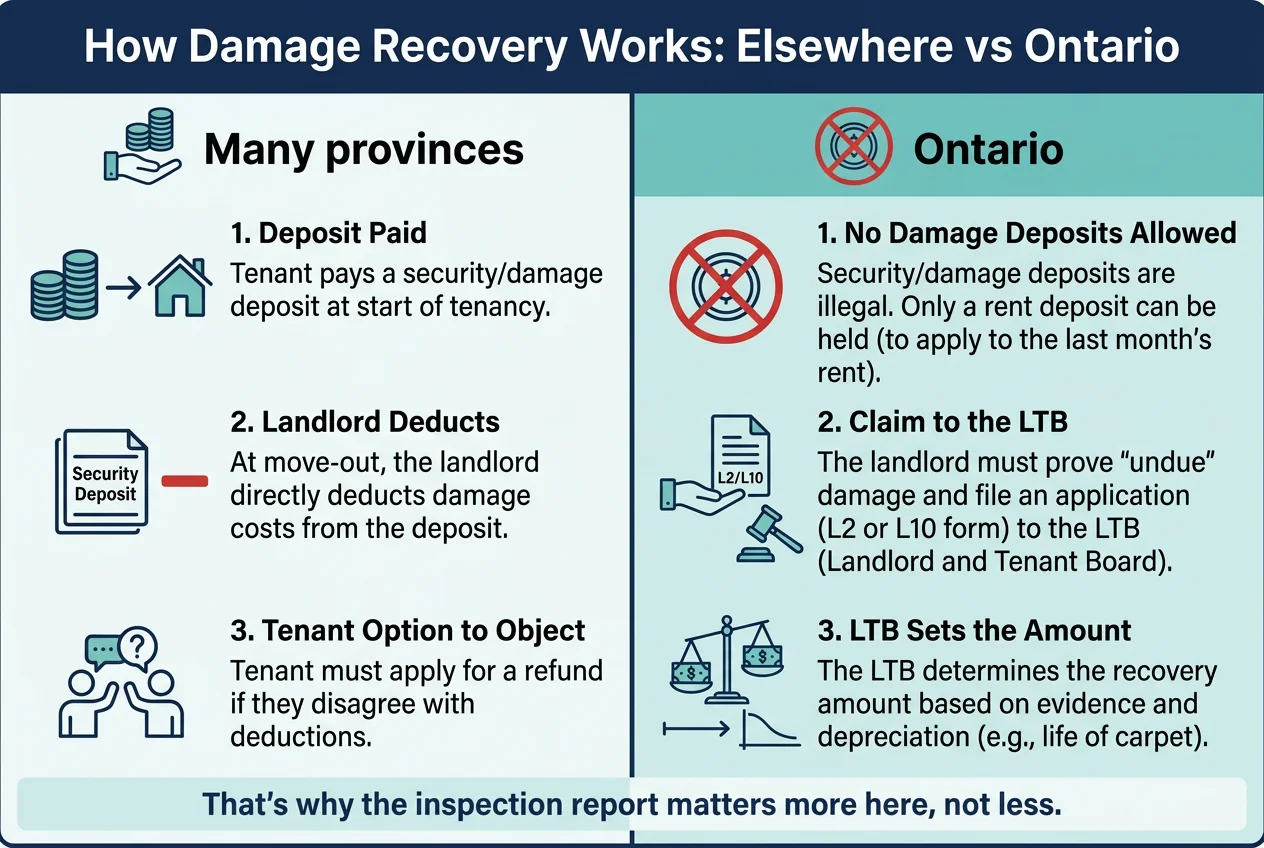
And crucially, Ontario bans damage deposits. The only deposits a landlord can legally collect are a last month's rent (LMR) deposit — which is exactly what it sounds like, money applied to the final month's rent — and a refundable key deposit no larger than the cost of replacing the key. Security deposits, pet deposits, cleaning deposits: all illegal. That means the LMR deposit cannot be quietly kept to cover repairs or cleaning at the end of a tenancy.
So if a landlord can't deduct damage from a deposit, how do they recover it? They have to apply to the Landlord and Tenant Board (or Small Claims Court, once the tenant has moved out) and prove the damage. And that is exactly why the inspection report matters so much here: it isn't a deduction tool, it's the evidence that decides the claim. Skipping it hurts the landlord most — and for a tenant, that same report is how you show a "damage" charge is really pre-existing or just ordinary wear.
For the full rules on what a landlord can and can't collect, see our guide to the last month's rent deposit.
Wear and Tear vs "Undue Damage"
Everything turns on one distinction. Under the Residential Tenancies Act, a tenant is responsible only for undue damage — harm caused by their own (or their guests') wilful or negligent conduct. They are not responsible for normal wear and tear.
That leads to a myth worth killing directly: you do not have to return the unit in move-in condition. The law only requires you to repair, or pay for, undue damage — not to erase the ordinary marks of having lived somewhere.
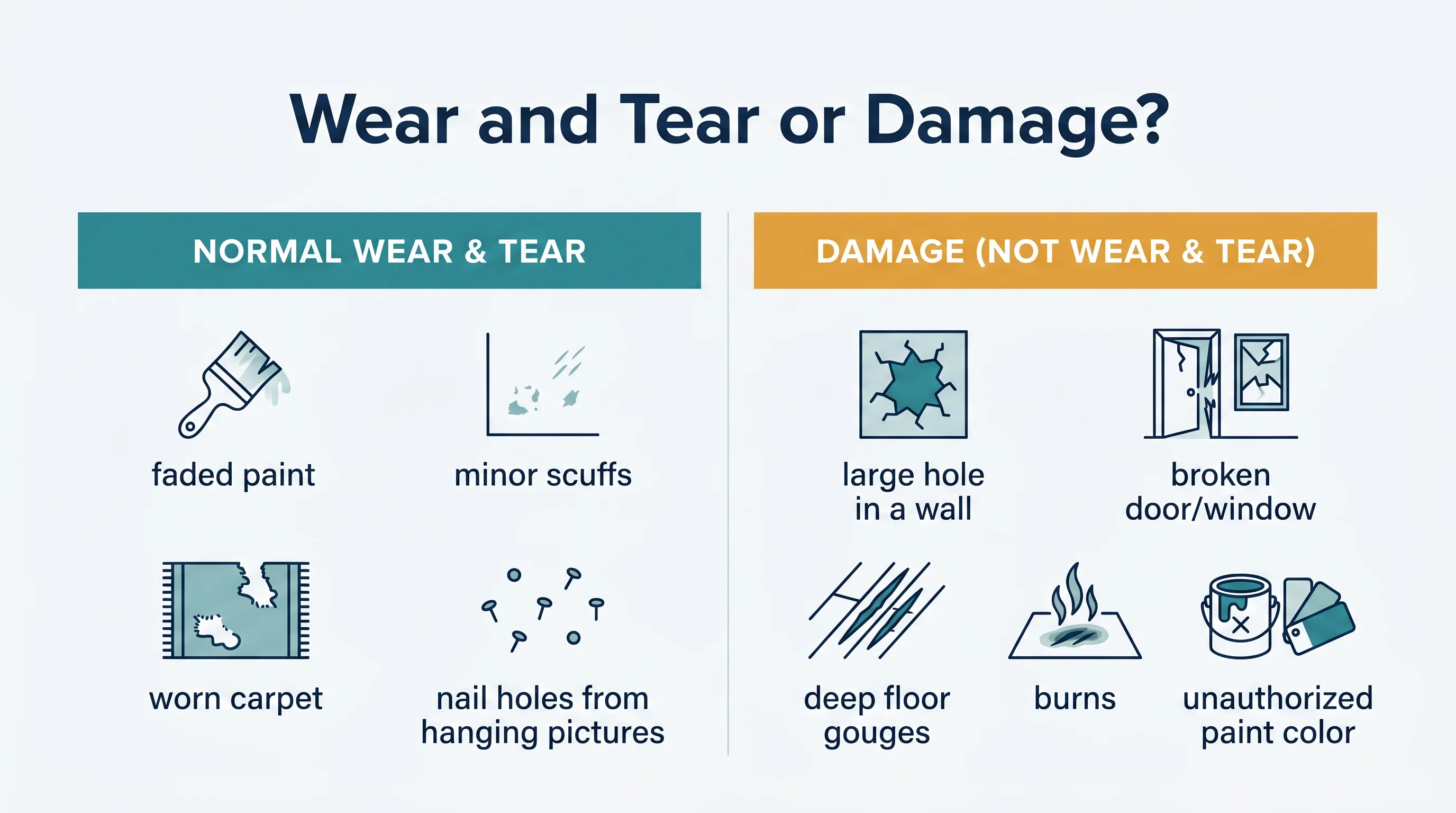
So where's the line? Normal wear and tear is the natural aging of a unit from ordinary use — faded paint, minor scuffs, worn carpet, nail holes from hanging pictures, light furniture marks. Undue damage is beyond that — large holes punched in walls, doors or windows broken through misuse, deep gouges from dragging furniture, burns, an unauthorized paint colour, destruction well past ordinary living.
The LTB draws the line case by case, weighing three things: the item's age and condition when the tenant moved in, how long the tenancy lasted, and the "useful life" schedule in Ontario Regulation 516/06 (which pegs carpet and interior paint at roughly ten years and hardwood at about twenty). A scuffed wall after eight years simply isn't the same as a scuffed wall after two months. Pets add a wrinkle — they're permitted under the RTA and some marks come with them — but destruction beyond normal use can still be undue damage.
How to Document at Move-In and Move-Out
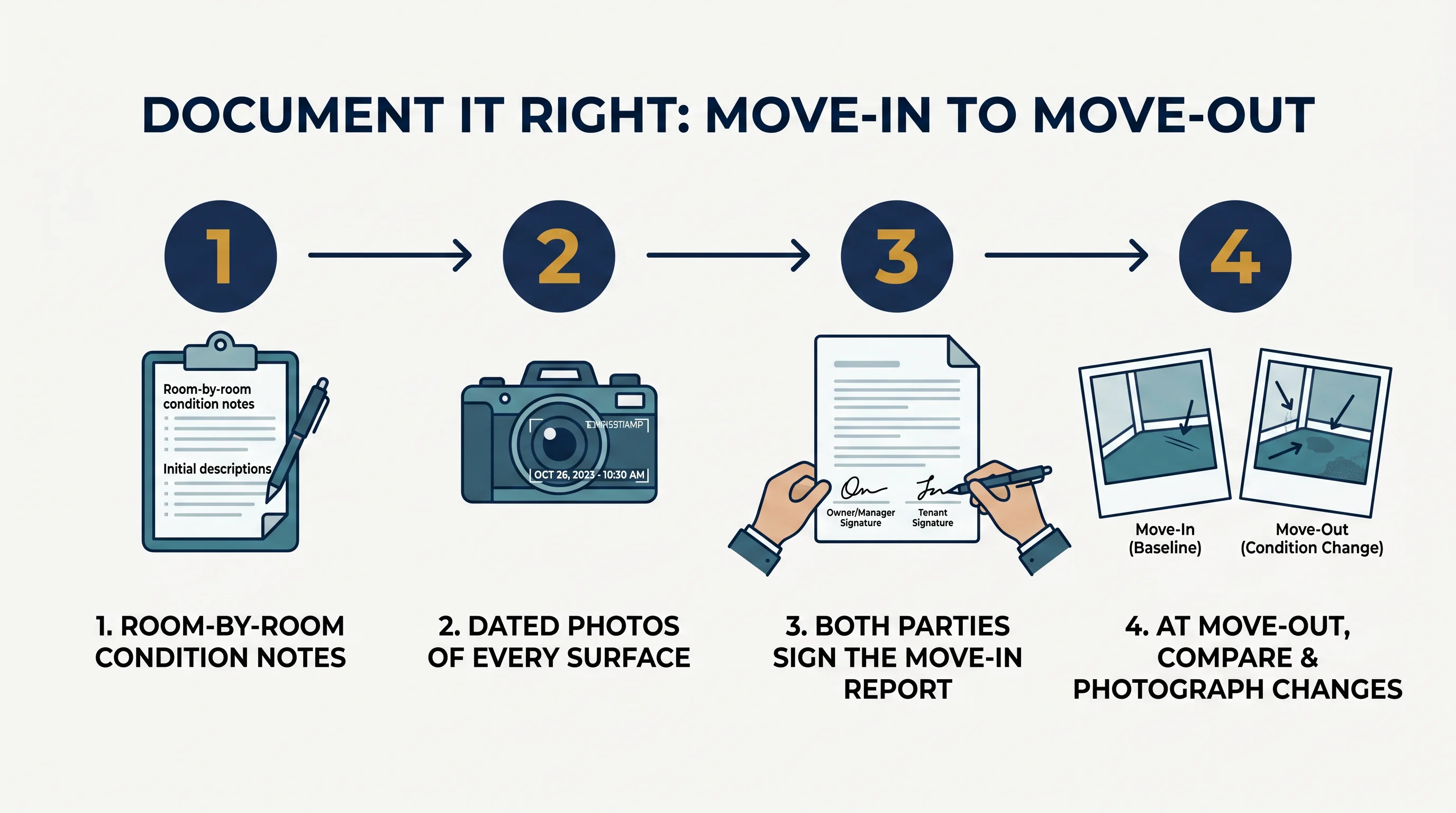
Good documentation is just a disciplined habit at two moments. At move-in, build the "before" picture: go room by room — walls, floors, ceilings, doors, windows, fixtures, appliances — and write descriptive condition notes rather than simple yes/no ticks. Take dated, time-stamped photos or a short video of every surface, and pay special attention to pre-existing flaws. Then both parties sign and date the report, and each keeps a copy. A signed "before" is what gives the whole thing weight.
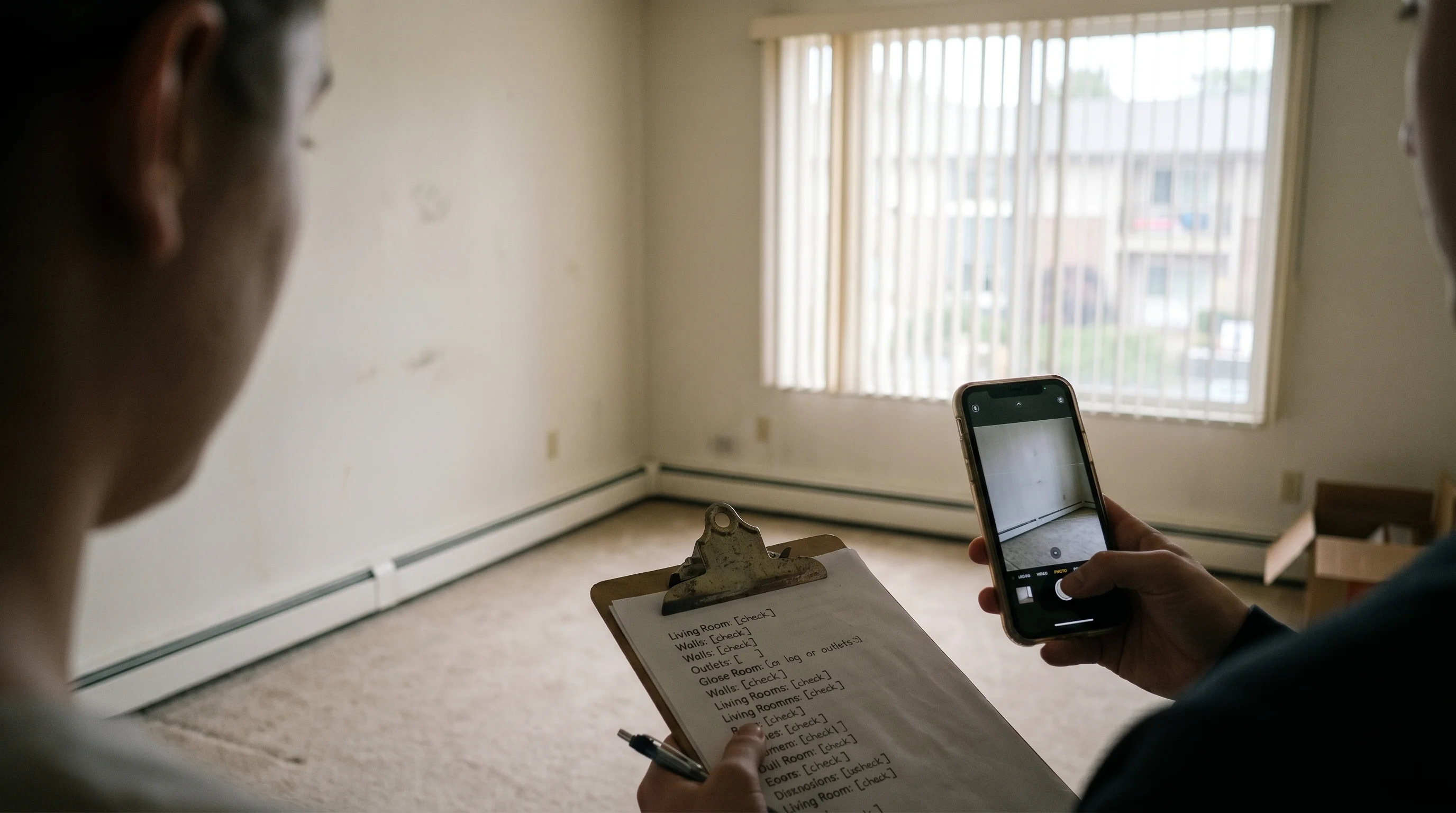
If your landlord doesn't do a report, don't rely on them — photograph and video everything yourself at move-in, dated, and email the copies to the landlord. That single step timestamps a record both sides hold.
At move-out, run the same process in reverse: compare the unit against the signed move-in report, area by area, and photograph only what has changed — ideally next to the move-in shot of the same spot. Document the return of all keys, fobs, and remotes. If the landlord wants to inspect before the tenant has fully moved out, that's an entry into an occupied unit, so it needs 24-hour written notice, with entry between 8 a.m. and 8 p.m. — not just showing up.
How a Damage Claim Actually Works
Say there's genuine damage and the tenant won't pay. The landlord still can't simply set a number and bill it — the LTB decides the amount. The "charge" is an LTB-ordered reimbursement, not a figure the landlord picks.
The route depends on timing. While the tenant is still in the unit, the landlord files an L2; once the tenant has moved out, the form is the L10 (Application to Collect Money a Former Tenant Owes), filed within one year of move-out through the Tribunals Ontario Portal. Small Claims Court is an alternative once the tenant is gone (its limit rose to $50,000 on October 1, 2025). Either way, the landlord needs proof the tenant caused the damage — dated photos, the signed move-in and move-out reports — plus at least two detailed repair quotes or invoices from qualified professionals.
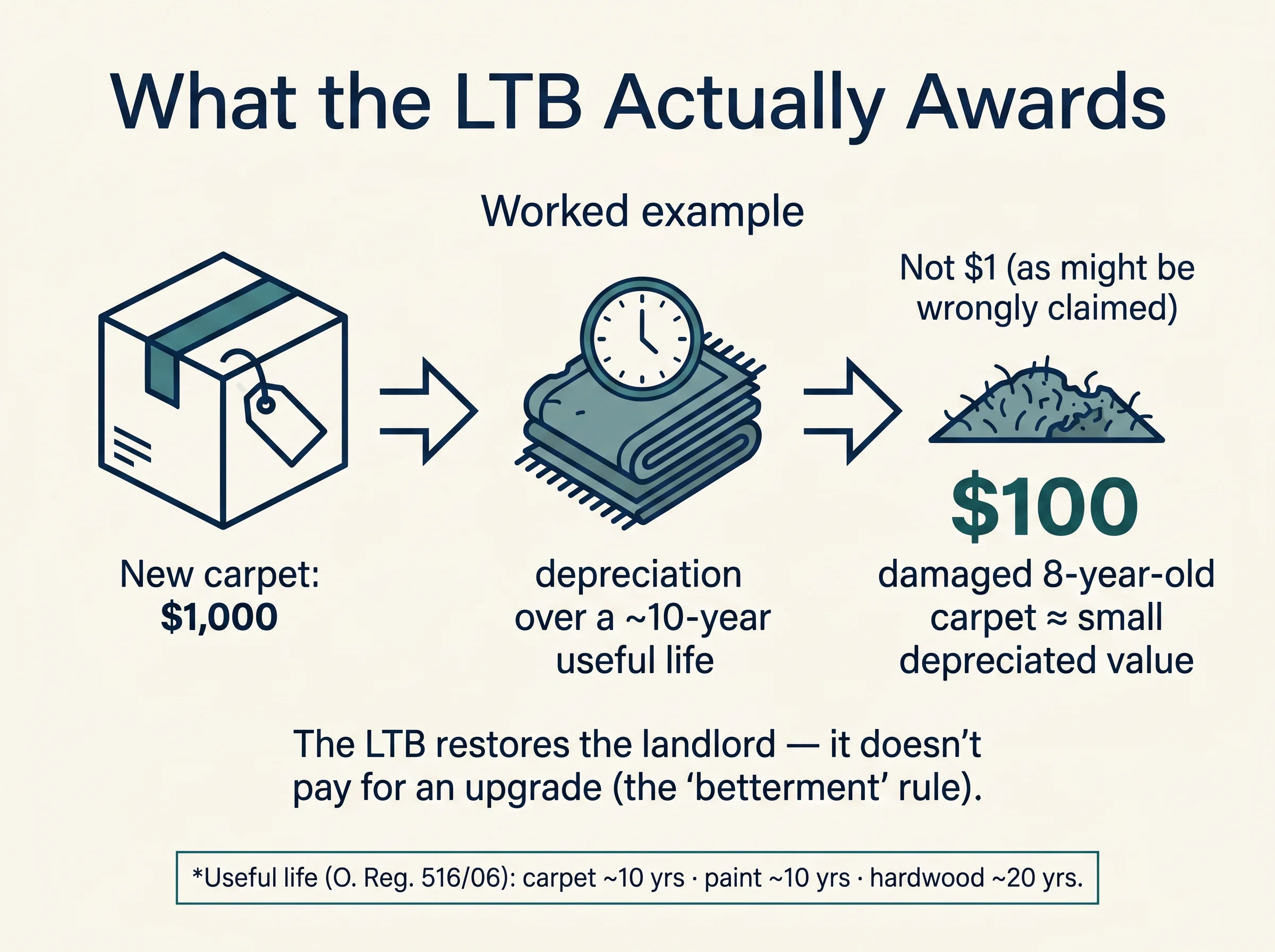
Then comes the part that surprises landlords: depreciation. The LTB won't award the cost of a brand-new replacement for something that was already aging. It applies a depreciation factor over the item's useful life, so a damaged ten-year-old carpet is worth close to nothing, not the price of a new one. This is the "betterment" principle — compensation is meant to restore the landlord to where they were, not leave them better off. And if the landlord's own failure to maintain the unit caused or worsened the damage, the LTB can reduce or deny the claim entirely.
On the tenant side, the protection mirrors this: wear and tear can't be charged, and the burden is on the landlord to prove damage is undue. If a landlord wrongly withholds a deposit — or collected an illegal one in the first place — the tenant can file a T1 application with the LTB within one year to recover it.
Move-In / Move-Out Inspection Checklist
The room-by-room record, the wear-and-tear line, and a sign-off block for both parties — everything you need at both ends of a tenancy.
Get Free PDF →Key Takeaways
For landlords and property managers:
- Do a signed, photo-documented room-by-room move-in report, and give the tenant a copy.
- Serve 24-hour written notice for any inspection before the tenant has vacated.
- At move-out, compare against the move-in report and photograph what changed.
- To claim damage, file an L2 or L10 (within a year) with two quotes — and expect depreciation.
- Never deduct from the LMR deposit or demand a damage deposit; both are unlawful.
For tenants:
- Photograph and video every room at move-in and move-out, dated, and email copies to the landlord.
- Note pre-existing damage in writing before you settle in.
- Remember you owe only undue damage, not wear and tear — don't agree to pay for aging.
- If a deposit is wrongly withheld, file a T1 within one year.
The quick win for either side is the same: take dated photos today, before anything changes. The long-term move for a landlord is to make a signed move-in report standard on every tenancy.
Conclusion
In Ontario, the move-in and move-out inspection isn't about a deposit — there isn't a damage deposit to deduct from. It's about evidence. A signed, photo-documented report is what lets a landlord recover for genuine, undue damage at the LTB, and what lets a tenant prove a charge is really just wear and tear. The law holds a tenant responsible only for undue damage, and the LTB shrinks any award by depreciation — so it's the paperwork, not a deposit, that decides these disputes.
None of this is adversarial. A good report protects both sides and heads off most disagreements before they start. Whichever side you're on, the habit is the same: document the condition, with dates, at both ends. This is general information, not legal advice — confirm the current details and your situation at ontario.ca or with the Landlord and Tenant Board.
Keep the report and the photos in one place
From the signed move-in report to dated photos and the tenancy paper trail, Tenon10 keeps your documentation organized — ready if a damage claim ever comes up.
Free • No signup required • Built for Ontario
Frequently Asked Questions
Is a move-in or move-out inspection required in Ontario?
No. Unlike some provinces, Ontario doesn't legally require an inspection or a condition report. But it's strongly recommended, because the report is the main evidence in any damage dispute at the Landlord and Tenant Board.
Can my landlord take money from my deposit for damage in Ontario?
No. Ontario doesn't allow damage or security deposits — only a last month's rent deposit (used for your final month's rent) and a refundable key deposit. A landlord can't deduct repairs from either; they have to claim through the LTB.
What counts as normal wear and tear?
The natural aging of a unit from ordinary living — faded paint, minor scuffs, worn carpet, nail holes from hanging pictures. Tenants aren't responsible for wear and tear, only for "undue damage" from wilful or negligent conduct.
Do I have to leave the apartment exactly as I found it?
No. Ontario law doesn't require you to return the unit in move-in condition — only to repair or pay for undue damage beyond normal wear and tear.
How does a landlord charge a tenant for damage in Ontario?
Not directly. The landlord applies to the LTB (an L10 within one year of move-out, or an L2 during the tenancy) with photos and two repair quotes; the LTB decides the amount and reduces it for depreciation based on the item's useful life.


