It's a heat-wave week in Ontario — and as of July 1, 2026, the rules on who gets to cool their apartment just changed. Under a new section of the Residential Tenancies Act, tenant air conditioner rights in Ontario are now explicit: you can install a window or portable air conditioner even when your landlord doesn't provide one.
For years, leases quietly banned AC or demanded permission, and tenants weren't sure where they stood. The new section 36.1 settles it — but with conditions on both sides, and a charge for electricity that works unlike any other rent increase in Ontario.
This guide explains, in plain language, whether your landlord can say no (mostly not), what a tenant has to do first, how the seasonal electricity charge actually works, and — for landlords and property managers — how to stay onside instead of relying on a lease clause that may no longer hold. It's general information, not legal advice; for a specific situation, confirm at ontario.ca or with the Landlord and Tenant Board.
Ontario AC Rules Cheat-Sheet
The new July 2026 rules on one page — what tenants can install, and what landlords can charge. Both sides covered.
Get Free PDF →The New Right: Can Your Landlord Say No?
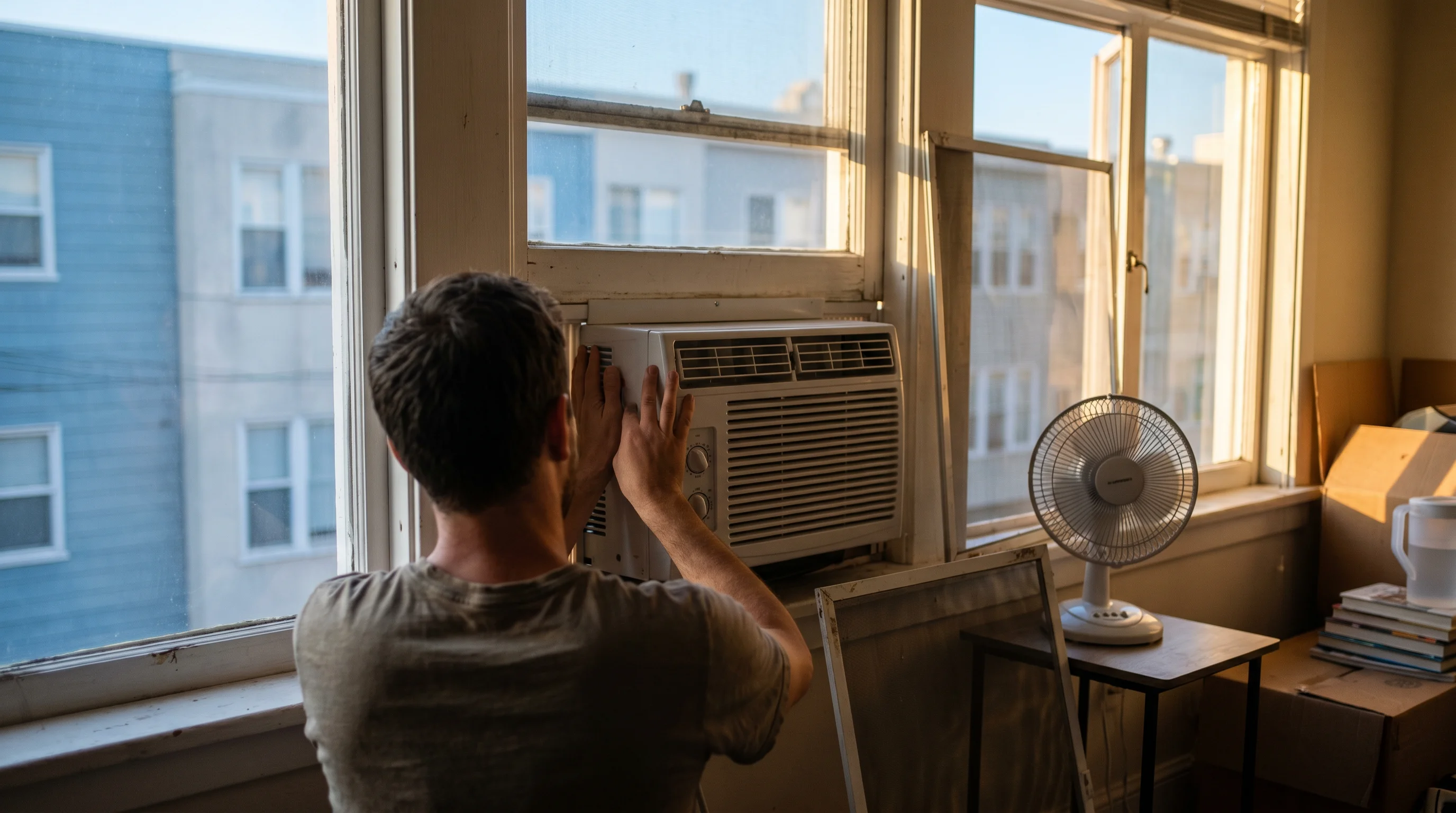
As of July 1, 2026, section 36.1 of the RTA — one of the changes brought in by Bill 97 — gives a tenant an explicit right to install and use a window or portable air conditioner in a unit where the landlord doesn't already supply cooling. Before this, many leases simply banned AC or required permission, and the Act was silent on the question. Now it positively permits it.
One thing to be clear about: this is a right to install your own unit, not a duty on the landlord to provide cooling. You buy it, you install it, you maintain it.
So can a landlord refuse? Mostly not. The Act says a landlord may prohibit installation only "in prescribed circumstances" — and as of today, those circumstances haven't been defined in any regulation. That's a significant gap: it means a blanket "no air conditioners" clause in a lease likely can't be relied on to stop a safe, lawful install. Landlords should not assume an old lease ban still holds.
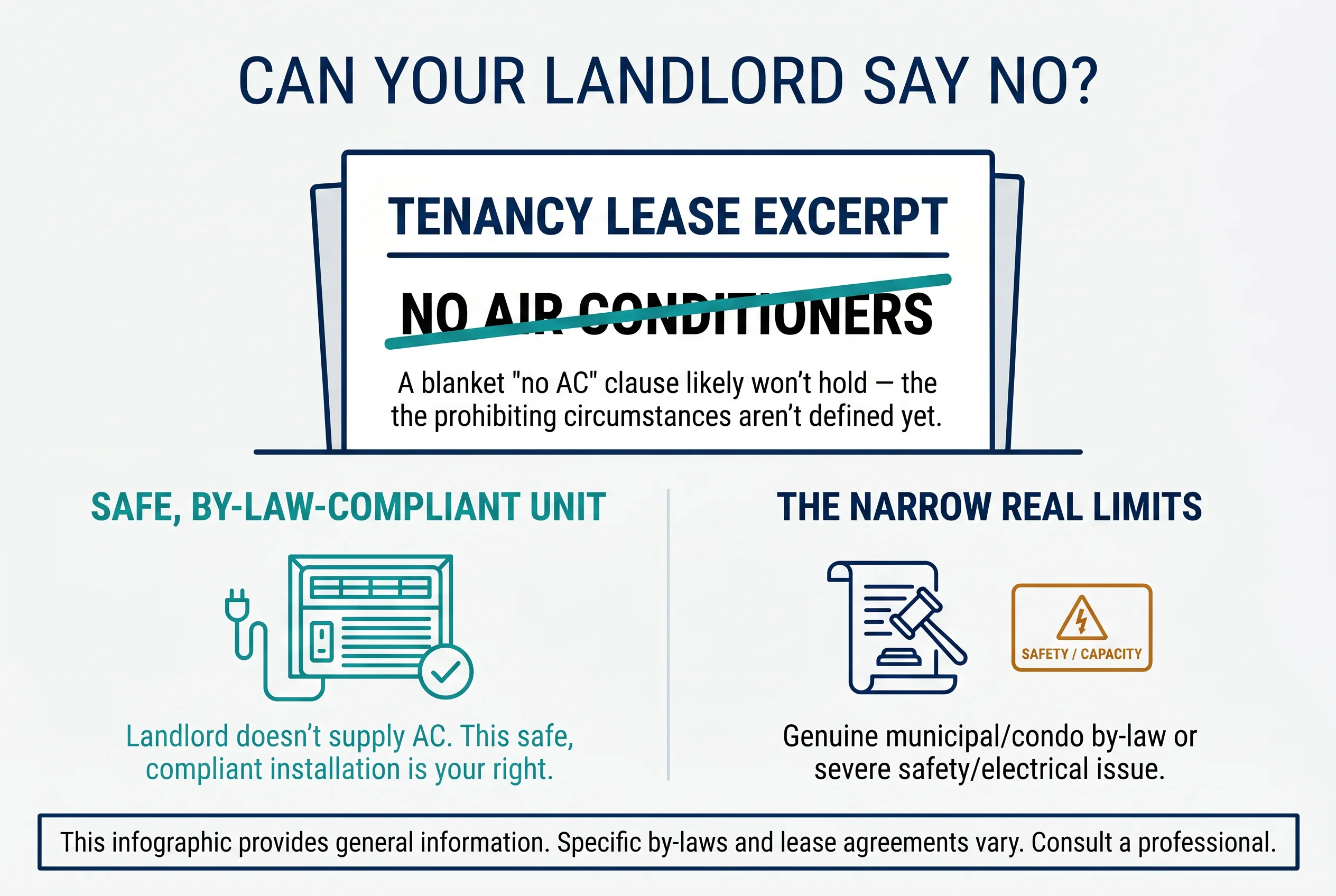
What does still limit installation are genuine, specific things: municipal property-standards or condo by-laws that restrict window units, and real safety or electrical-capacity problems — for example, an older building whose wiring can't handle the added load. These are real limits, not a general workaround to ban AC.
There's also a human-rights dimension worth flagging. Cooling is not (yet) a designated "vital service" under the RTA, so the strict no-shut-off protections that apply to heat and water don't automatically apply to AC. But a tenant who needs air conditioning for a disability or health condition can request accommodation under the Ontario Human Rights Code — a doctor's letter helps — and the landlord has a duty to accommodate to the point of undue hardship. For the wider picture of what landlords can and can't do, see our guide to 5 things your landlord can't do in Ontario.
What a Tenant Has to Do First
The right comes with conditions, and the first one is the one people are most likely to skip: you must give your landlord written notice before you install. This isn't a courtesy — it's a condition of the right itself.
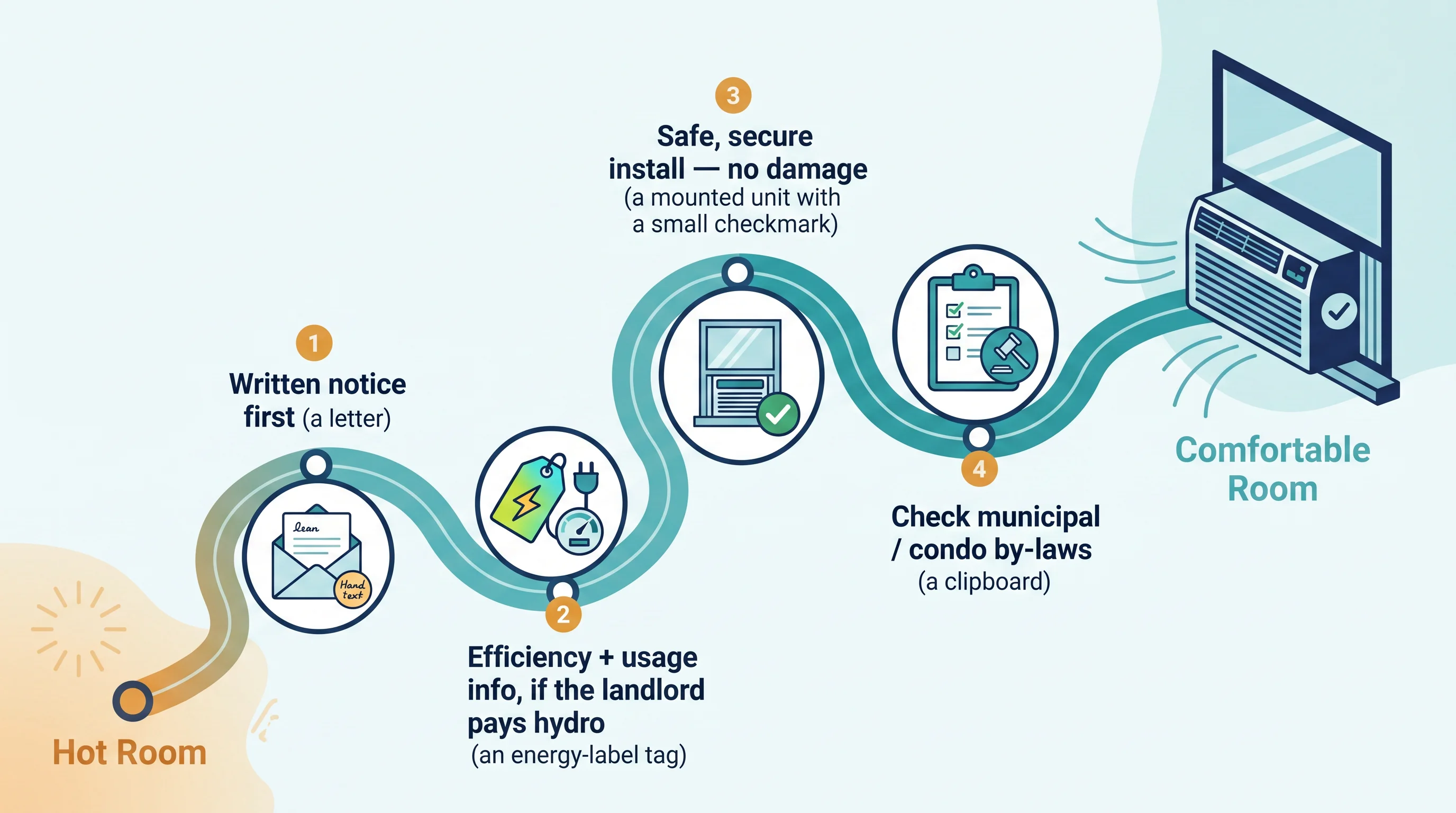
Here's what the law asks of you before the unit goes in:
- Written notice first. Tell your landlord, in writing, that you intend to install.
- Efficiency and usage info — if your landlord pays for your electricity. In that case your notice should include what you know about the unit's energy efficiency and how much you expect to run it (this feeds the lawful charge, explained below).
- Safe, secure, no damage. Install it properly — a portable unit avoids most window-mount issues; a window unit must be secure and mustn't damage the building.
- Check the by-laws. Municipal property-standards and, in condos, building by-laws can restrict window units. Confirm before you buy.
One helpful exception: if your AC was already installed before July 1, 2026, you didn't need to give written notice or provide efficiency information — those two conditions don't apply retroactively to units that were already in place.
The Electricity Charge That Breaks Every Rent Rule
This is the part that surprises almost everyone. When a landlord can add a charge for your AC — and how that charge behaves — doesn't follow the normal rent rules at all.
First, who can even charge: only a landlord who pays for your electricity (hydro included in the rent). If you're on your own hydro meter, there's no AC charge — you already pay for the power you use. And when a charge does apply, it's capped at the actual or reasonably estimated electricity cost of running the AC. It's a cost-recovery charge, not a fee for "allowing" the unit.
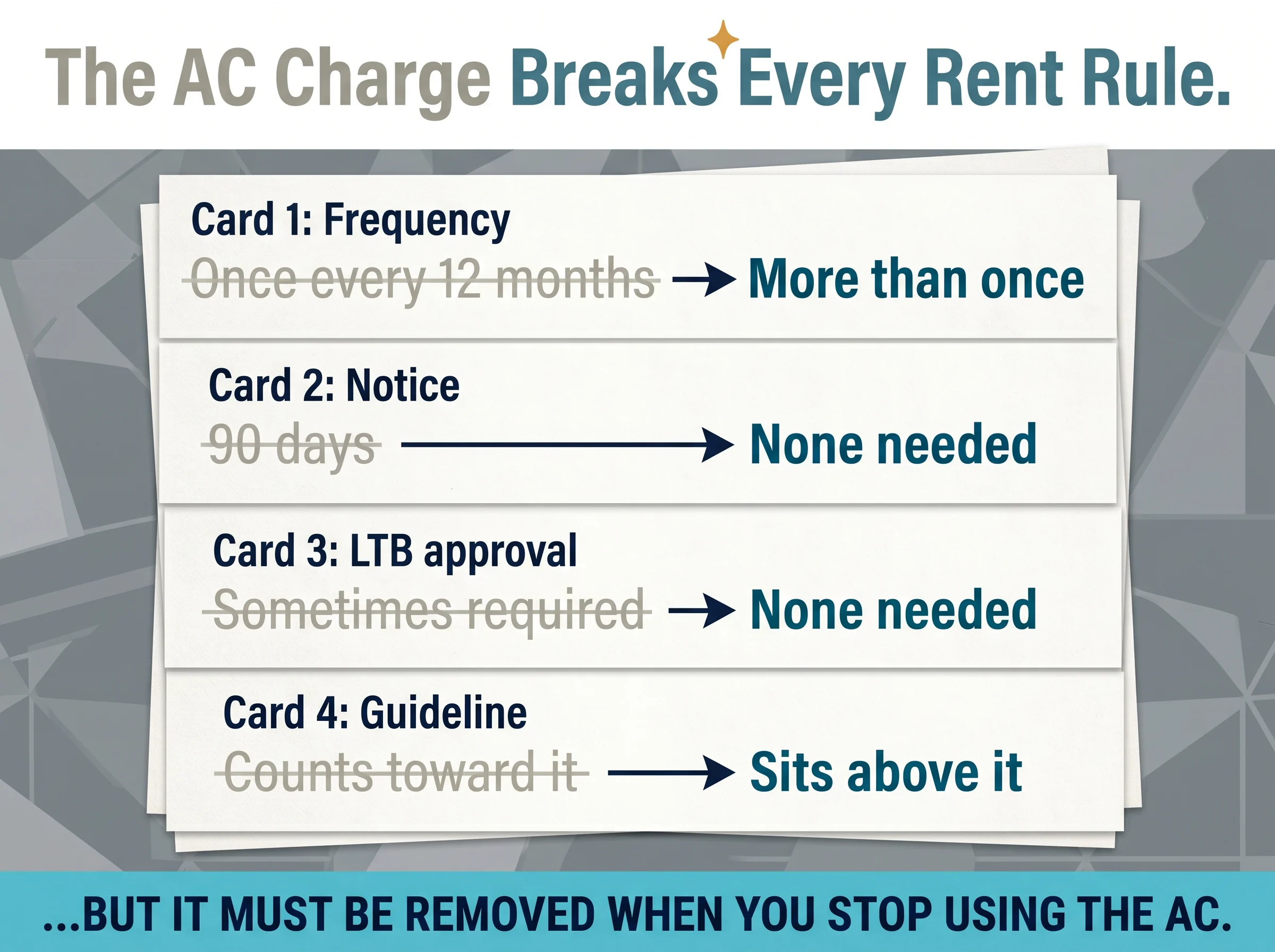
Now the strange part. Unlike every other rent increase in Ontario, this charge:
- Can change more than once in a year — up when you use the AC, and it must come back down when you stop for the season or remove the unit.
- Needs no 90-day notice — the usual N1 notice period doesn't apply.
- Needs no LTB approval.
- Sits above the annual guideline — it doesn't count toward your regular guideline increase.
Two guardrails protect tenants here. The charge must be a monthly amount tied to your rent — a one-time "$300 for the summer" lump sum is an illegal charge. And if your lease already says you can install an AC (or that installing one won't raise your rent), the landlord can't add the charge at all, even for a brand-new install.
A quick worked example makes it concrete. If running the AC adds about $30 a month to the landlord's power bill and you use it for four months, that's roughly $120 a year — which can be charged as $30 a month during those four months, or spread out to about $10 a month across the whole year by agreement. Note this is entirely separate from the annual guideline increase covered in our 2026 rent increase guide — the two don't interact.
The Landlord & Property Manager Playbook
If you own or manage rentals, the practical takeaway is to get ahead of this rather than fight it.
Start by not relying on the old clause. A blanket "no AC" term in your standard lease likely won't hold now, and leaning on it invites a tenant-rights complaint. Replace it with a simple, compliant AC policy: the written-notice process you expect, safe-installation and (where appropriate) insurance expectations, who's responsible for damage and removal, and how you'll handle electricity-cost recovery.
If you supply the electricity and want to recover the cost, charge lawfully: cap it at the actual or reasonable cost, make it a monthly amount, remove it when the tenant stops using the unit, and don't charge at all where the lease already allows AC.
Be realistic about the admin, though. In bulk-metered buildings, estimating each unit's AC cost is genuinely messy — tenancy lawyers have called the pass-through hard to administer, and disputes over the math could add to the LTB's queue. For many smaller landlords, chasing a few dollars a month simply isn't worth the paperwork. That's a legitimate choice — just make it deliberately.
Two more things. If you want to inspect a safe installation, you can — but serve proper 24-hour written notice of entry (between 8 a.m. and 8 p.m.) under the entry rules; don't just show up. And treat any disability-related AC request as a Human Rights Code accommodation, not a favour. This is general information, not legal advice — confirm specifics at ontario.ca or with the LTB.
Ontario AC Rules Cheat-Sheet
Both sides on one page — the tenant's steps, the electricity charge, and the landlord/PM playbook.
Get Free PDF →Key Takeaways
For tenants:
- Confirm your landlord doesn't already supply AC.
- Give written notice before installing — with the unit's efficiency and your expected usage if the landlord pays your hydro.
- Install safely, with no damage, and check municipal or condo by-laws first.
- Expect a lawful monthly charge only if the landlord pays your electricity — and it must drop when you stop using the AC.
- Need AC for a health reason? Request accommodation in writing, with a doctor's letter.
For landlords and property managers:
- Don't rely on a blanket "no AC" clause — write a real AC policy instead.
- Only charge where you supply electricity, capped at actual cost, monthly, and removed when the unit isn't in use.
- Don't charge where the lease already allows AC; serve proper 24-hour notice to inspect; accommodate disability requests.
Quick win for tenants: send that written notice today, before installing. Long-term move for landlords: replace the dead clause with a policy across all your leases in one clean update.
Conclusion
As of July 1, 2026, Ontario tenants can install a window or portable air conditioner where the landlord doesn't supply cooling, and a blanket lease ban likely won't stop them. The trade-offs are reasonable on both sides: tenants give written notice and install safely; landlords who pay for the electricity can recover the actual cost — through a charge that, unusually, can move up and down mid-year, needs no notice or LTB approval, but must come off when the AC isn't in use.
It's a right to cool your own home, not a fight. And for landlords, a clear written policy beats an unenforceable clause every time. This is general information, not legal advice — confirm the current details and your situation at ontario.ca or with the Landlord and Tenant Board.
Handle the AC paper trail cleanly — for both sides
From the tenant's written notice to a landlord's AC policy and any lawful charge on the ledger, Tenon10 keeps it all organized in one place.
Free • No signup required • Built for Ontario
Frequently Asked Questions
Can my landlord stop me from installing an air conditioner in Ontario?
Usually not. As of July 1, 2026, you can install a window or portable AC where the landlord doesn't supply cooling. A landlord can only prohibit it in "prescribed circumstances," which aren't defined in regulation yet — so a blanket lease ban generally won't hold, as long as the install is safe and by-law compliant.
Do I have to tell my landlord before I install an AC?
Yes — you must give written notice before installing. If the landlord pays for your electricity, include what you know about the unit's energy efficiency and how much you expect to use it. AC units already installed before July 1, 2026 are exempt from the notice requirement.
Can my landlord charge me extra for an air conditioner?
Only if the landlord pays for your electricity, and only up to the actual or reasonably estimated cost of running the AC. It must be a monthly charge, and it must be removed when you stop using the unit. If you pay your own hydro, there's no AC charge.
How much can a landlord charge for AC in Ontario?
There's no fixed amount — just the real electricity cost. As an illustration, if the AC adds about $30 a month to the landlord's power bill for four summer months, that's about $120 a year, which can be charged monthly during use or spread out by agreement.
Is air conditioning a vital service in Ontario now?
No — cooling isn't a designated vital service, so the strict no-shut-off rules for heat and water don't automatically apply. But if you need AC for a disability or health condition, you can request accommodation under the Human Rights Code.