A Saskatchewan landlord cannot take a pet deposit on top of the security deposit. The Act allows one security deposit per tenancy, capped at one month's rent, and any money held against pet damage is part of it. A monthly pet charge is safest treated as rent (Residential Tenancies Act, 2006, s.2(k), 2(n), s.25, s.26(1)(b)).
This FAQ is for landlords and tenants agreeing on a pet. For the general deposit rules, see Saskatchewan Security Deposits.
Is a pet deposit allowed in Saskatchewan?
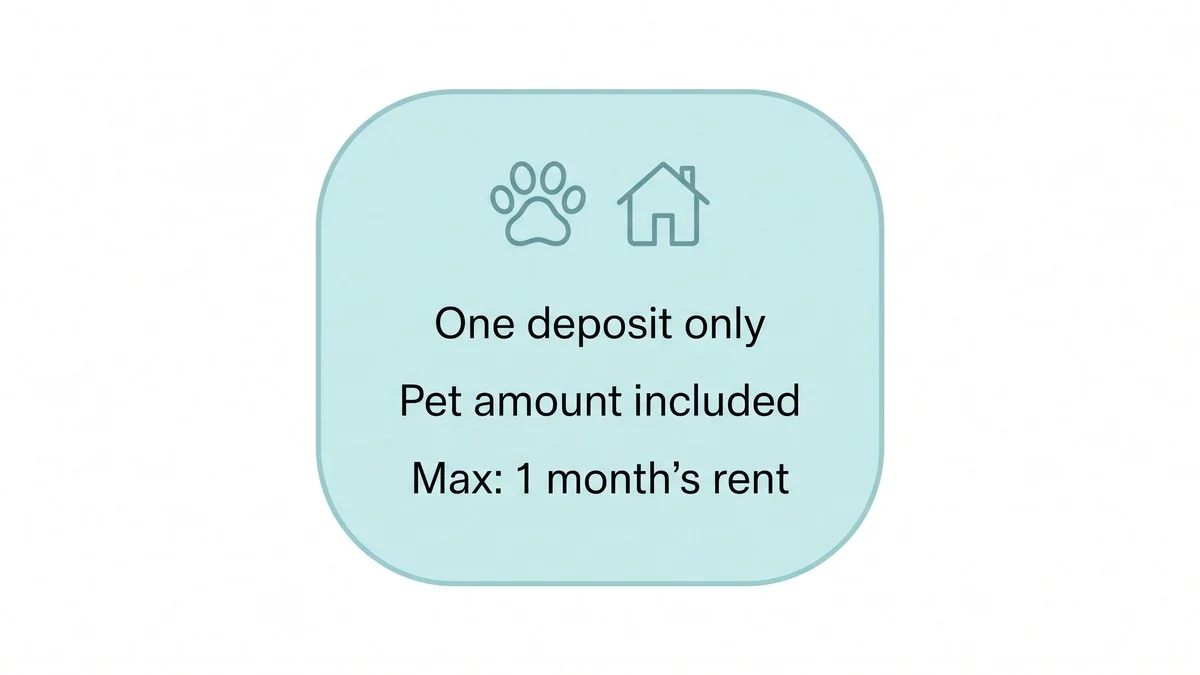
Not as a second deposit. The Act defines a security deposit as any money held as security for the tenant's obligations about the property (s.2(n)), so a "pet deposit" is a security deposit by another name. A landlord must not require or accept more than one security deposit for a tenancy (s.26(1)(b)), and the total cannot exceed one month's rent (s.25(1)).
Example: if rent is $1,400, the whole deposit, including any amount meant to cover a pet, can be no more than $1,400.
When can the deposit be collected?

Only when the tenancy agreement is entered into (s.26(1)(a)), and the landlord can require no more than half at signing, with the rest within two months after the tenant moves in (s.26(4)). So a landlord cannot ask for a pet deposit mid-tenancy when a tenant adopts a pet.
Can a landlord charge monthly pet rent?
The Act does not name pet rent. Rent includes money paid for the right to possess the unit and for services or facilities (s.2(k)), so the conservative reading is that a monthly pet charge is rent. Put it in the lease at the start. Once agreed, increasing it follows the rent increase rules (s.53–54); see Saskatchewan Rent Increase Rules.
What if the landlord took too much?
A tenant can deduct the overpayment from rent or recover it another way (s.25(2)).
Frequently asked questions
Can a landlord refuse pets?
The Act does not deal with pets directly. A landlord may set written, reasonable rules about use of the unit and enforce them (s.22.1), and the lease terms apply.
Can pet damage come out of the deposit?
Yes, damage beyond reasonable wear and tear (s.49(7)), claimed within seven business days of move-out (s.32(1)).
What if the damage costs more than the deposit?
The landlord can apply to the Office of Residential Tenancies for damages (s.70(6)(c)).
More help: the Canadian Landlord Resource Center and the Canadian Tenant Resource Center.
Set clear pet terms from day one
Start from the free Saskatchewan residential tenancy agreement and write the deposit and pet terms into it.
Free • No signup required