An RTB administrative penalty is a fine of up to $5,000 that BC's Residential Tenancy Branch can order a landlord or tenant to pay for breaking the Residential Tenancy Act, ignoring an RTB order or giving false information. A contravention that continues can be fined for each day. The penalty goes to the province, not to the person who complained.
What can the RTB fine a BC landlord or tenant for?
Under section 87.3 of the Residential Tenancy Act, the director may order a monetary penalty if satisfied, on a balance of probabilities, that a person has:
- contravened the Act or the regulations;
- failed to comply with an RTB decision or order, or a demand to produce records; or
- given false or misleading information in a dispute resolution proceeding or an investigation.
The power applies to landlords and tenants alike. If a corporation is fined, an employee, officer, director or agent who authorized or acquiesced in the contravention can also be liable (s.87.3(8)).
How much is an RTB administrative penalty?
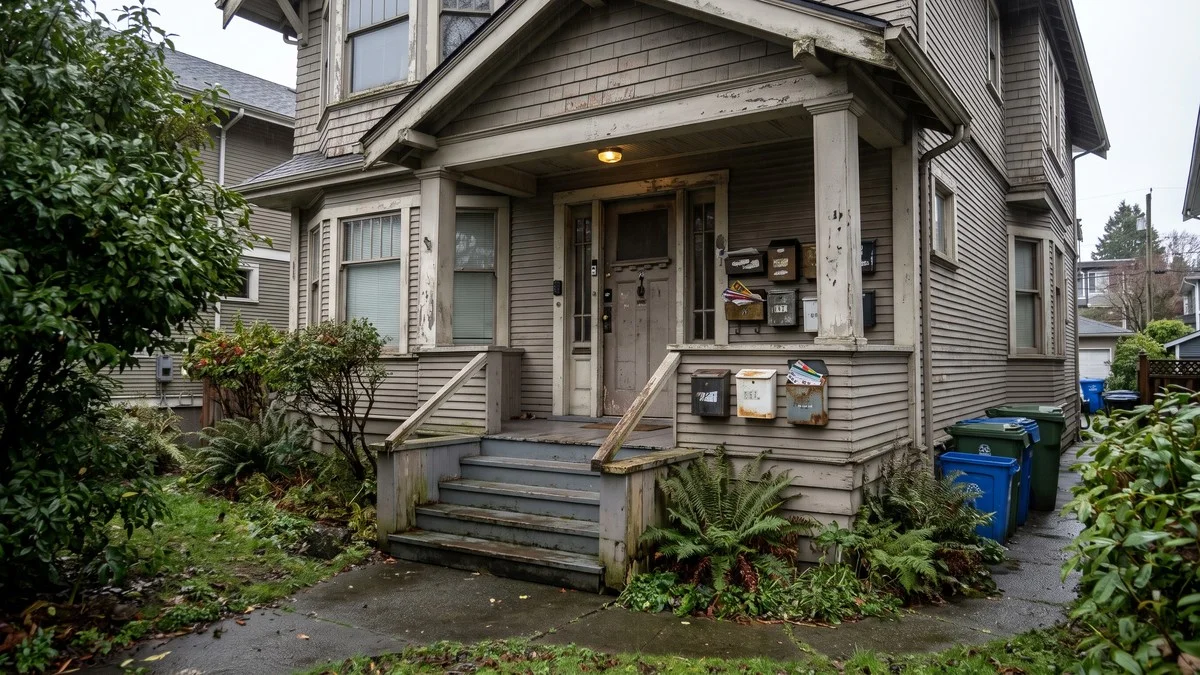
A penalty may not exceed $5,000 for each contravention, but if a contravention continues for more than one day, a separate penalty of up to $5,000 can be imposed for every day it continues (RTA s.87.4). Under the Residential Tenancy Regulation, a penalty must be paid within 60 days of the order. In setting a penalty, the director must consider:
- previous enforcement actions for similar contraventions;
- the gravity and magnitude of the contravention and the harm to others;
- whether it was repeated, continuous or deliberate;
- any economic benefit gained; and
- the person's efforts to correct it.
For a real case of separate penalties adding up (17 penalties of $5,000, one per tenancy), see the Vancouver rooming-house penalty of $93,800.
How the penalty amount is worked out

Policy Guideline 41 sets out an assessment guideline the Director of the Compliance and Enforcement Unit (DCEU) may use. Each aggravating factor is usually scored from 0 to 10, with 10 the most severe; "repeated" and "continuous" get separate scores, so there are seven aggravating scores and a possible total of 70. Efforts to correct is a mitigating factor scored from 0 to -10 and subtracted. For a contravention of the Act or regulations, the guideline's formula for the maximum penalty is:
Score × 142, rounded to the nearest $100, up to $5,000.
| Score | Calculation | Maximum penalty |
|---|---|---|
| 5 | 5 × 142 | $700 |
| 15 | 15 × 142 | $2,100 |
| 25 | 25 × 142 | $3,600 |
| 35 or more (of 70) | capped | $5,000 |
The DCEU keeps discretion to set another amount, and a score does not mean a penalty will automatically be levied. Guideline 41 illustrates two of the factors with numbers: a tenant who fails to pay $12,000 in rent has an economic benefit of $12,000, and a landlord who leaves a roof unrepaired that would cost about $30,000 to fix has a benefit of $30,000 less any rent reduction already ordered at a hearing. On gravity, its example of a serious, extensive risk is an inoperative fire alarm system left unrepaired in a multi-unit building.
For an ongoing contravention, the guideline says the DCEU generally works out the penalty for a single occurrence and can then apply it for each day. Ordinarily, daily penalties are used only where the contravention has a current and serious impact on health and safety, or where a failure to produce records significantly impedes the investigation.
How does the Compliance and Enforcement Unit decide to act?
RTB Policy Guideline 41 says the Compliance and Enforcement Unit (CEU) uses a progressive approach: education first, then verbal and written warnings, with penalties generally a last resort, though they can be used where immediate compliance is required. Not every complaint is investigated; generally only the most serious are, judged on factors such as repeated or deliberate conduct, risk and whether dispute resolution has been exhausted.
Before any penalty, the person must get an opportunity to be heard, with notice of the alleged contravention, sent within two years of the facts first coming to the director's knowledge. A penalty decision comes with a notice that names the contravention, the amount, the due date and the right to ask for a review (s.87.5).
The CEU is not a substitute for a hearing. It cannot award compensation or an order of possession, or enforce an existing order. Money claims go through a dispute resolution application; for unfixed repairs, start with how BC tenants get repairs done.
From complaint to penalty: the steps
- Initial assessment. A compliance officer checks whether the complaint concerns something a penalty can be imposed for and whether it is serious enough; the DCEU decides whether to go further, considering public interest, caseload and capacity.
- Preliminary investigation. The officer may search past RTB hearings involving the same person, contact them, explain their obligations and issue a verbal or written warning, sometimes with a note that the CEU may monitor the tenancy.
- Full investigation. An investigator can examine compliance history, consult local governments and police, speak to witnesses and demand records (s.87.2). Failing to produce records can itself be penalized for each day it continues.
- Opportunity to be heard. The person receives the investigation report, the evidence and the DCEU's preliminary assessment. Under section 33 of the Regulation the hearing may be in writing, in person or by phone or video, and notice must be given at least 21 days before the submission or hearing date. If the person does not respond, the director may decide without further notice (Regulation s.34).
- Decision. The written decision with reasons names the contravention, amount, due date and the right to a review.
Common mistakes when the CEU calls
- Ignoring the notice of an opportunity to be heard: the director can decide without you
- Treating a records demand as optional, when non-compliance is its own ground for a penalty
- Letting a known problem run on after a warning, which can make a contravention deliberate; Guideline 41 says wilful blindness can count as knowledge
- Fixing the problem without keeping receipts, photos or dates to show how promptly and completely it was corrected
Frequently asked questions
Does the person who complained get the penalty money?
No. Guideline 41 says the complainant receives no monetary compensation; a penalty is a debt owed to the Government of British Columbia.
Are RTB administrative penalties made public?
Yes. Under Policy Guideline 53, the RTB publishes the name of the person or business, the contravention and the amount, after waiting 15 days for a possible review. A decision can come down after five years if the penalty is paid and there have been no further contraventions.
Can a penalty be reduced?
Yes. Instead of enforcing it, the director may agree to reduce or cancel it on conditions (s.87.3(4) to (6)). If the conditions are not met by the agreed date, the full penalty becomes payable.
Can a penalty decision be corrected or reviewed?
Yes. Errors can be corrected or the decision clarified under s.87.7, with a request for clarification or an obvious error made within 15 days of receiving it, and the person can apply for a review under s.87.8.
On what grounds can a penalty be reviewed?
Section 87.8(4) limits a review to: being unable to be heard for unforeseeable reasons beyond your control; new and relevant evidence that was not available and materially affects the decision; a procedural error or technical irregularity that materially affected the decision or amount; or an issue the director was required to decide and did not.
What happens if a penalty is not paid?
It is a debt due to the government. Once the review period has passed, the director may file a certificate in the Supreme Court or Provincial Court, which then has the effect of a court judgment (s.87.9).
Stay on the right side of BC tenancy law
Every BC rule, form and deadline for landlords, in one place.
Free • No signup required